

P2099 on 2013-2018 Cadillac ATS 3.6L: Rich Fuel Trim Causes and Fixes
On a 2013-2018 Cadillac ATS with the 3.6L V6 engine, code P2099 is most often caused by a leaking fuel injector on Bank 2 (driver's side). A repeatedly updated GM Technical Service Bulletin (PIP4964 series) advises testing the injectors before replacing any other parts. A secondary, but common, cause is a small exhaust leak at the catalytic converter outlet flange. A single OEM injector costs around $100-$150.
- P2099 on a 2013-2018 Cadillac ATS only applies to the 3.6L V6 engine.
- The most probable cause is a leaking fuel injector on the driver's side (Bank 2), as per GM TSB #PIP4964H.
- Do not replace the oxygen sensor without first ruling out leaking fuel injectors (via balance test) and exhaust leaks (via low-pressure test).
- Driving with this code active can lead to reduced fuel efficiency and will eventually damage the catalytic converter, a costly repair.
What's Unique About the 2013-2018 Cadillac ATS
Unlike many other vehicles where an oxygen sensor is the first suspect for this code, on the GM 3.6L V6 engine platform (LFX/LGX), the most common cause is a leaking fuel injector. A specific and repeatedly updated Technical Service Bulletin (TSB #PIP4964, latest version 'H') directs technicians to perform a fuel injector balance test before any other diagnostic steps. This bulletin also identifies a small exhaust leak at the converter outlet as a secondary cause, further de-prioritizing the O2 sensor itself as the culprit. This suggests that replacing the O2 sensor first is a frequent and costly misdiagnosis on this particular engine.
Diagnostic Flowchart
Tap your situation to follow the diagnostic path that matches what you're seeing on this vehicle.
Symptoms You May Notice
- Check Engine Light illuminated
- Decreased fuel economy
- Rough or uneven idle
- Engine hesitation or stumbling during acceleration
- Noticeable smell of gasoline from the exhaust
- Black smoke from exhaust on startup in severe cases
- Replacing the downstream O2 sensor without first performing the injector balance test and exhaust leak test as specified in TSB #PIP4964. The TSB for this vehicle explicitly advises against this.
Most Likely Causes
- Leaking Fuel Injector(s) on Bank 2 🔴 High Probability A widely known issue on this GM engine platform, as documented in multiple revisions of TSB #PIP4964. High-pressure direct injection systems operate under intense stress, and injectors can fail mechanically, dripping excess fuel into a cylinder.
How to confirm: Perform a fuel injector balance test using a professional scan tool (often called an Active Fuel Injector Test or AFIT), as recommended by the TSB. A leaking injector will show a significant pressure drop. You can also check the spark plugs on Bank 2 (cylinders 2, 4, 6); a plug that is black and sooty indicates a rich condition in that cylinder.
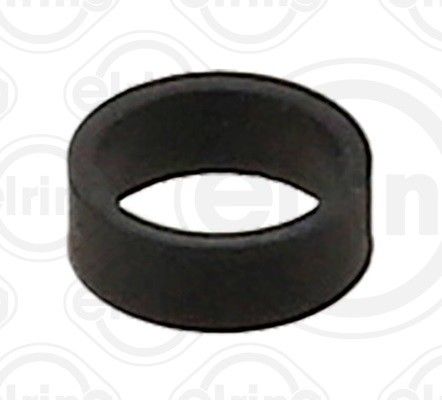
Typical fix: Replace the faulty fuel injector(s) on Bank 2. It is highly recommended to replace all three injectors on that bank at the same time, along with their Teflon seals.
Est. part cost: $100-$180 per injector (OEM) - Exhaust Leak at Catalytic Converter Outlet 🟡 Medium Probability TSB #PIP4964 explicitly lists this as a secondary cause after injectors. A leak at the flange between the catalytic converter and the intermediate pipe can pull in ambient air, confusing the downstream O2 sensor and mimicking a rich condition.
How to confirm: Perform the specific test from the TSB: Plug the tailpipe and apply 5-8 PSI of air pressure into the exhaust system. Spray the gasket area at the Bank 2 converter outlet with a soapy solution and look for large bubbles, which indicate a leak. A smoke test can also be used.
Typical fix: Replace the leaking exhaust gasket. The TSB also suggests filing the mating surface of the pipe flange to ensure a flat seal.
Est. part cost: $20-$100 - Faulty Downstream Oxygen (O2) Sensor ⚪ Low Probability
How to confirm: After confirming injectors and exhaust are good, monitor the Bank 2 Sensor 2 voltage with a scan tool. A sensor stuck high (consistently >0.8V) when it should be fluctuating indicates a problem. A definitive test is to swap the downstream sensors between Bank 1 and Bank 2. If the code changes to P2097 (Bank 1), the sensor is bad.
Typical fix: Replace the Bank 2, Sensor 2 (downstream) oxygen sensor. Note that some replacement sensors may require programming.
Est. part cost: $50-$120
Rare But Worth Checking
- Mechanical Valvetrain Issue: TSB #PIP4964 mentions that if injectors and exhaust are confirmed good, a mechanical issue like a sticking valve or a lifter follower out of place could be the cause. This may or may not be accompanied by a misfire code.
- Faulty Fuel Pressure Regulator: If fuel pressure is too high across the entire engine, it can cause a rich condition on both banks. This would likely be accompanied by code P2097 (Bank 1 rich).
- Malfunctioning Mass Airflow (MAF) Sensor: A dirty or failing MAF sensor can under-report the amount of air entering the engine, causing the PCM to inject too much fuel. This would typically affect both banks and set codes P2097 and P2099 together.
- Chafed Engine Wiring Harness: GM TSB #PI0631G notes that on some vehicles with the 3.6L engine, the engine wiring harness can rub against the transmission case, causing chafing and shorting of various wires, including those for O2 sensors, which can lead to erratic codes.
Diagnosis Steps
- Scan for other DTCs. Address any misfire, MAF, or fuel pressure codes first.
- Follow TSB #PIP4964H: Perform a fuel injector balance test (AFIT) to check for leaking injectors on Bank 2. This is the most likely cause.
- If injectors test okay, perform the TSB-specified exhaust leak test. Plug the exhaust and introduce 5-8 PSI of air, then spray the Bank 2 converter outlet flange with soapy water and look for bubbles.
- If no leaks are found, inspect the Bank 2 downstream O2 sensor wiring for damage, paying attention to the harness routing near the transmission case for any signs of chafing (per TSB PI0631G).
- Monitor the live data for the Bank 2, Sensor 2 on a scan tool. Confirm it is not stuck at a high voltage (e.g., >0.8V).
- As a final step, test the O2 sensor itself by swapping it with the Bank 1 sensor to see if the fault follows the sensor, changing the code to P2097.
Parts You'll Likely Need
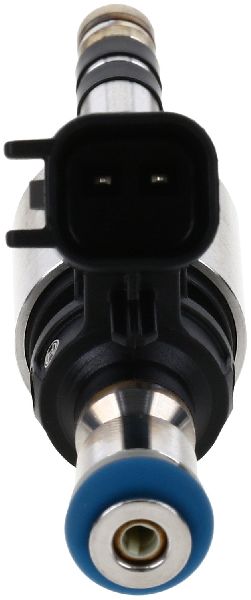
- Fuel Injector (for 3.6L LFX)
(OEM #12669384)— This is the most common failure for P2099 on this engine, as confirmed by a manufacturer TSB. Note: LGX engines (2016+) may use a different part number.
Trusted brands: ACDelco
OEM price range: $100-$180
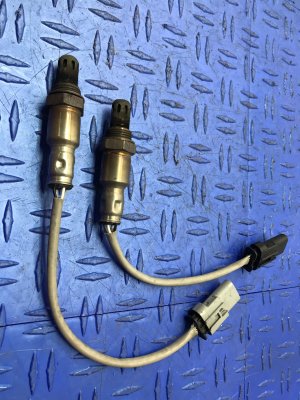
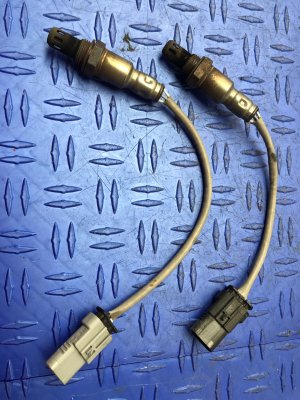
Aftermarket price range: $50-$120 - Downstream Oxygen Sensor (Bank 2, Sensor 2)
(OEM #213-4768)— This part is a common misdiagnosis but can fail. It is the sensor that detects the rich condition. May require programming.
Trusted brands: ACDelco, Denso, Bosch
OEM price range: $80-$150
Aftermarket price range: $50-$100 - Exhaust Pipe Flange Gasket — If an exhaust leak is found at the converter outlet flange, this gasket will need to be replaced.
Trusted brands: ACDelco, Fel-Pro
OEM price range: $20-$40
Aftermarket price range: $10-$25
Related Codes That Often Appear With This One
- P2097 — This is the identical 'rich' code but for Bank 1. If both appear, it points to a systemic problem affecting the whole engine, like a faulty MAF sensor, fuel pressure issue, or a calibration problem.
- P0302, P0304, P0306 — These are misfire codes for cylinders on Bank 2. A severely leaking fuel injector can foul the spark plug and cause a misfire in that specific cylinder.
Technical Service Bulletins (TSBs) & Recalls
- PIP4964F/G/H: Advises technicians to check for faulty fuel injectors using a balance test when diagnosing DTC P2097 or P2099. Also points to exhaust leaks at the converter outlet as a secondary cause.
- PI0631G: Details a condition where the engine wiring harness can rub on the transmission, causing damage to wires and leading to various DTCs.
Platform-Specific Known Issues
- TSB #PIP4964H specifically identifies fuel injectors as a likely cause for codes P2097 and P2099, recommending an injector balance test before further diagnosis.
- TSB #PI0631G warns of potential for the main engine wiring harness to chafe against the transmission housing, causing various electrical faults, including O2 sensor circuit issues.
Mechanic-Grade Diagnostic Values
- Downstream O2 Sensor (Bank 2, Sensor 2) Voltage — expected: A healthy downstream sensor should show a relatively stable voltage, typically fluctuating slowly between 0.1V and 0.9V.. Failure: A voltage signal stuck consistently high (above 0.75V - 0.8V) indicates a persistent rich condition, triggering P2099. A signal stuck low would trigger a lean code.
- High-Pressure Fuel System (LGX Engine, 2016+) — expected: The direct injection high-pressure fuel pump is capable of delivering fuel at pressures ranging from 2,000 to 2,800 PSI.. Failure: While specific test values for a P2099 scenario aren't published, a fuel pressure sensor reading significantly above or below the desired pressure commanded by the ECM would indicate a fault in the high-pressure pump or regulator, potentially causing a rich condition.
Scan Tool Commands That Help
- GDS2 (GM Global Diagnostic System 2): Active Fuel Injector Tester (AFIT) — This is the primary diagnostic step recommended by GM TSB PIP4964 to identify leaking or malfunctioning fuel injectors, which are the most common cause of P2099 on this platform.
- GDS2 (GM Global Diagnostic System 2): O2 Sensor Display / Graphing — Used to visually monitor the voltage of the Bank 2 downstream O2 sensor in real-time. This helps confirm if the sensor is stuck high, indicating a rich condition, or if it is lazy or non-responsive.
Wiring & Ground Locations
- G104 / G109 (3.6L Engine) — Located on the front of the right cylinder head (Bank 1 side).. These are primary engine grounds. While not on Bank 2, a poor ground connection here can introduce electrical noise and voltage offsets throughout the engine management system, potentially affecting sensor readings on the opposite bank and contributing to erroneous codes.
- G101 — Located at the front of the engine, lower block.. This ground serves the Engine Control Module (ECM). A compromised ECM ground can cause a wide range of unpredictable issues, including incorrect interpretation of O2 sensor data, leading to fuel trim codes like P2099.
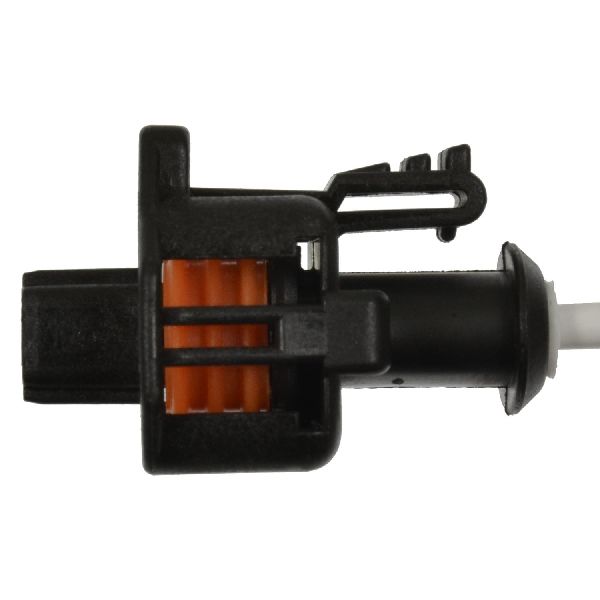
- Bank 2 O2 Sensor Harness Connector — The downstream sensor is located on the driver's side exhaust pipe, after the catalytic converter. The harness runs up the firewall to the main engine harness.. This harness is subject to high heat and potential physical damage. It's also near the transmission, as noted in TSB PI0631G, where chafing can occur, causing a short in the sensor signal or heater circuit wires.
Real Owner Repair Stories
- Reddit user in r/Cadillac (2013 ATS 3.6L (LFX), mileage 41k-112k) — Check Engine Light
❌ Tried (didn't work) Not specified, but owner was aware of timing chain concerns on older 3.6L engines.
✅ What actually fixed it The user reported only two CELs during their ownership: one for a loose vacuum tube and another for a secondary air injection solenoid. They explicitly stated no timing chain issues, attributing it to regular oil changes every 5,000 miles. This reinforces that while P2099 points to fuel issues, other codes can appear and that the LFX engine is less prone to the timing chain failures of its predecessor (the LLT).
OEM Part Supersession History
12611545, 12632255, 12638530→12669384— Standard part evolution for improved reliability or manufacturing process changes.
Heads up: Part number 12669384 is specified for the LFX engine. The LGX engine (2016+) uses a different fuel system and injectors; this part is not compatible.
Model Year Variations Within This Range
- 2013-2015 (LFX) vs. 2016-2018 (LGX): The 2016 model year introduced the updated 3.6L LGX V6. While related to the LFX, it was a significant redesign. Key differences include a larger cylinder bore, redesigned heads with larger valves for better airflow, and a different high-pressure fuel pump. While the P2099 code's meaning is the same, part numbers for fuel injectors, sensors, and the high-pressure pump are not interchangeable between LFX and LGX engines.
Used OEM Parts in Stock
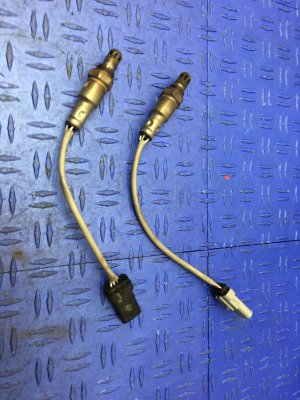
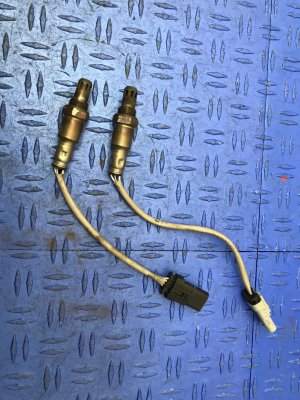
New Aftermarket Parts Available


The information in this article is provided for general reference and educational purposes only. Vehicle specifications, procedures, and part compatibility can vary by production date, trim level, and region. Always consult your vehicle's factory service manual and verify part numbers before purchasing or performing repairs. Safety-critical components such as airbags, seat belts, and braking systems should be installed by a qualified professional.
- Cadillac ATS:
- 🛍️ Shop This Part
- What's Unique About the 2013-2018 Cadillac ATS
- Diagnostic Flowchart
- Symptoms You May Notice
- Most Likely Causes
- Rare But Worth Checking
- Diagnosis Steps
- Parts You'll Likely Need
- Related Codes That Often Appear With This One
- Technical Service Bulletins (TSBs) & Recalls
- Platform-Specific Known Issues
- Mechanic-Grade Diagnostic Values
- Scan Tool Commands That Help
- Wiring & Ground Locations
- Real Owner Repair Stories
- OEM Part Supersession History
- Model Year Variations Within This Range
- 🎟️ Get 5% Off