

P2098 on 2014 Ram 3500: Causes and Fixes for Downstream Fuel Trim System 2 Lean
On a 2014 Ram 3500 with a Hemi engine, P2098 is most often caused by an exhaust leak from a warped exhaust manifold with broken bolts. Before replacing any sensors, inspect the passenger-side manifold for leaks, which often creates a 'ticking' noise when the engine is cold. A software update from a dealer may also be required as per manufacturer TSBs to fix overly sensitive diagnostics.
- For a P2098 code on a 2014 Ram 3500 Hemi, immediately suspect an exhaust leak on the passenger side.
- Listen for a distinct 'ticking' noise when the engine is cold, as this is a classic symptom of a broken manifold bolt.
- Do not replace the O2 sensor until you have definitively ruled out an exhaust leak.
- Contact a dealer to see if your truck's computer software is up-to-date, referencing TSB #18-096-16.
- The correct sensor for this code is Bank 2, Sensor 2, located on the passenger side, after the catalytic converter.
What's Unique About the 2014-2014 Ram 3500
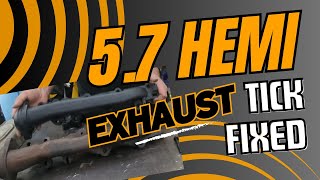
On the 2014 Ram 3500 equipped with a 5.7L or 6.4L Hemi engine, the P2098 code is very frequently linked to a specific and well-documented mechanical failure: broken exhaust manifold bolts. The thermal stress from the engine's heat cycles causes the steel manifold bolts to break, particularly at the rear of the manifold. This allows the manifold to warp, creating a leak at the gasket. This leak introduces outside air into the exhaust, which is then read by the downstream O2 sensor, triggering a false lean code. This issue is so common that an exhaust leak, often identified by a 'Hemi tick' on cold starts, should be the primary suspect.
Diagnostic Flowchart
Tap your situation to follow the diagnostic path that matches what you're seeing on this vehicle.
Symptoms You May Notice
- Check Engine Light is on
- Audible 'ticking' noise from the engine bay, especially when cold, that may quiet down as the engine warms up
- Slight decrease in fuel economy
- Reduced engine power or sluggish acceleration
- Rough idle
- Replacing the oxygen sensor before checking for exhaust leaks. The sensor is often just accurately reporting the extra oxygen from a leak.
- Replacing the upstream (Bank 2, Sensor 1) oxygen sensor. This code specifically relates to the downstream (Bank 2, Sensor 2) sensor.
- Replacing the catalytic converter when the actual problem is a simple exhaust leak, a faulty sensor, or a needed software update.
Most Likely Causes
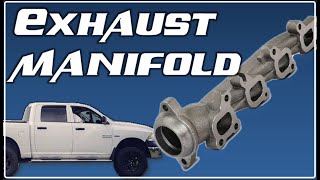
- Exhaust Leak (Warped Manifold with Broken Bolts) 🔴 High Probability Hemi V8 engines in this truck are notorious for breaking exhaust manifold bolts due to thermal expansion and contraction, particularly on the passenger side (Bank 2). The manifold itself often warps, preventing a new gasket from sealing properly.
How to confirm: Listen for a ticking noise from the passenger side of the engine on a cold start. Visually inspect the exhaust manifold for black soot trails or broken/missing bolt heads, especially the rearmost ones. A smoke test can also 🎬 See this walkthrough on replacing broken manifold bolts and gaskets. definitively identify a leak.
Typical fix: Replace the broken manifold bolts and the exhaust manifold gasket. The warped manifold must be resurfaced or, more commonly, replaced entirely. When replacing bolts, it is recommended to use high-quality replacements, potentially stainless steel, and apply anti-seize compound.
Est. part cost: $30-$250 - Failing Downstream Oxygen (O2) Sensor 🟡 Medium Probability
How to confirm: Use a scan tool to monitor the voltage of the Bank 2, Sensor 2 O2 sensor. A healthy downstream sensor should show a relatively stable voltage between 0.6V and 0.9V at idle. If it's stuck low (near 0.1V) or fluctuating wildly like an upstream sensor, it has likely failed. Swapping the downstream sensors from Bank 1 and Bank 2 can confirm if the problem follows the sensor.
Typical fix: Replace the Bank 2, Sensor 2 oxygen sensor, which is located on the passenger side after the catalytic converter. The OEM Mopar part number for the 5.7L Hemi is often cited as 5149180AA, which has been superseded by 5149180AB.
Est. part cost: $50-$150 - Powertrain Control Module (PCM) Software Update Needed 🟡 Medium Probability Ram issued TSB #18-096-16, which applies to 2014 models with the 6.4L engine, and lists P2098 as a code that can be resolved by a PCM software update to correct overly sensitive diagnostics. This should be checked before extensive parts replacement.
How to confirm: A Ram dealership or a qualified shop with a wiTECH scan tool can check the current software calibration number against the latest available version mentioned in the TSBs.
Typical fix: Reprogram (flash) the PCM with the latest manufacturer software. This must be done by a dealer or properly equipped independent shop.
Est. part cost: $100-$200 (Labor Cost)
Rare But Worth Checking
- Clogged or Failing Catalytic Converter: While less common than leaks or sensor failure, a converter that is no longer efficient can trigger this code. This should be considered after all other causes are ruled out.
- Damaged O2 Sensor Wiring or Connector: The wiring harness to the sensor can be damaged by road debris or contact with hot exhaust components, causing a short or open circuit. A visual inspection of the harness is recommended during diagnosis.
- Vacuum Leak: A significant vacuum leak (e.g., from an intake manifold gasket) can sometimes cause a lean condition that is detected by the downstream O2 sensor, though it would typically set upstream codes (like P0174) as well.
Diagnosis Steps
- Check for applicable TSBs. For a 2014 Ram 3500 with a 6.4L engine, specifically check for TSB #18-096-16 to see if 🎬 Watch: Fast and real solutions for fixing P2098 codes. a PCM software update is the recommended first step.
- Perform a thorough visual and audible inspection of the exhaust system on a cold engine. Listen for a 'ticking' sound from the Bank 2 (passenger side) exhaust manifold, which is a classic sign of a leak.
- Look for black soot marks around the manifold-to-head flange or other exhaust connections, which indicate a leak path. Check for broken or missing manifold bolt heads.
- If no obvious leaks are found, use an OBD-II scanner with live data capability to observe the Bank 2, Sensor 2 voltage. It should be relatively steady and typically between 0.6V and 0.9V. Compare it to the Bank 1, Sensor 2 voltage for reference. A voltage stuck below 0.2V suggests a lean reading or faulty sensor.
- If the B2S2 voltage is suspect, inspect the sensor's wiring and connector for damage, melting, or corrosion before condemning the sensor itself.
- If wiring is intact, consider swapping the left and right downstream O2 sensors to see if the code follows the sensor (e.g., changes to P2096). If it does, the sensor is bad.
- If a leak is suspected but not visible, a professional smoke test is the most effective way to pinpoint its location.
- If all other possibilities are exhausted, the catalytic converter's efficiency should be professionally tested.
Parts You'll Likely Need
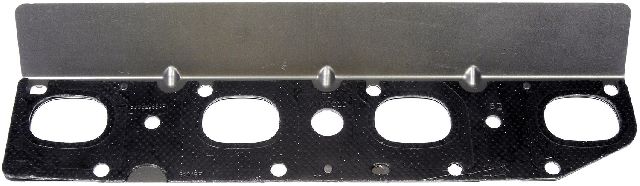
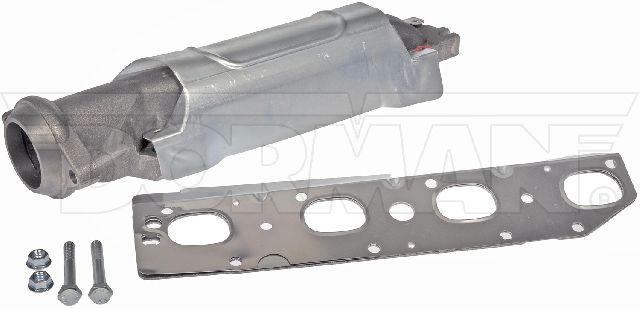
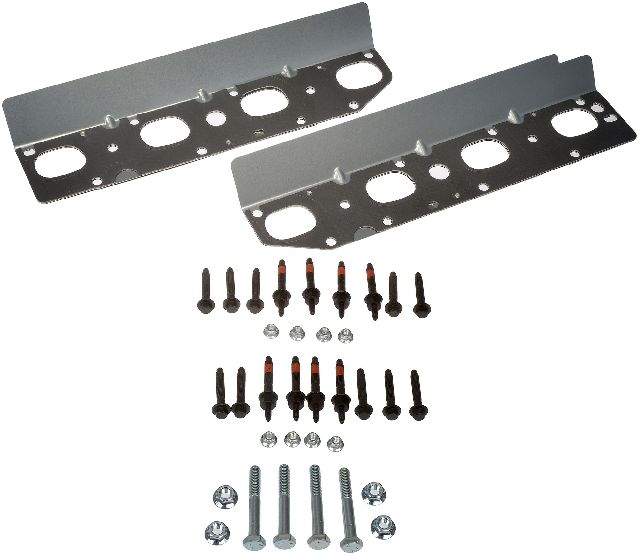
- Exhaust Manifold Gasket Kit (with bolts)
(OEM #04893870AB (Gasket, Right Side, 6.4L))— This is the most common failure point leading to an exhaust leak that triggers P2098 on Hemi engines. It is critical to get new bolts as the old ones are often broken or fatigued.
Trusted brands: Mopar, Fel-Pro, Dorman
OEM price range: $50-$100
Aftermarket price range: $25-$60 - Downstream Oxygen Sensor (Bank 2, Sensor 2)
(OEM #5149180AA (For 5.7L Hemi))— If not caused by a leak or software issue, the sensor itself is the next most likely component to fail.
Trusted brands: Mopar, Bosch, NTK, Denso
OEM price range: $80-$150
Aftermarket price range: $50-$100
Related Codes That Often Appear With This One
- P2096 — This is the identical code for Bank 1 (driver's side). If both are present, it suggests a common issue like a software problem, fuel delivery issue, or leaks on both exhaust manifolds.
- P0174 — This is an upstream lean code for Bank 2. If seen with P2098, it strongly points to a large vacuum or exhaust leak on the passenger side affecting both sensors.
- P0153 — This code for 'O2 Sensor Circuit Slow Response (Bank 2, Sensor 1)' has been reported by owners in conjunction with P2098, indicating a wider problem on Bank 2 that could stem from an exhaust leak or wiring issue.
- P0300 — A random misfire code can sometimes accompany lean codes if the air/fuel mixture is sufficiently off-balance to affect combustion stability.
Technical Service Bulletins (TSBs) & Recalls
- 18-096-16: Recommends a PCM software update to address several diagnostic trouble codes, including P2098, for 2014 Ram trucks with the 6.4L engine. The TSB notes this can fix false DTCs.
- 18-042-15: An earlier bulletin, superseded by 18-096-16, also recommending a PCM reflash to fix P2098 among other codes.
Platform-Specific Known Issues
- The 5.7L and 6.4L Hemi engines are widely known for breaking exhaust manifold bolts, which causes a leak and is a primary trigger for the P2098 code. Owners on forums like RamForum.com frequently cite this as the first place to look.
- Multiple Technical Service Bulletins (TSBs) exist that call for a PCM software update to correct false triggers of P2098 and other codes on 2014 models.
- A real-world repair story on RamForum.com involved a user with a 2014 Ram 1500 5.7L who had the passenger manifold bolts repaired and the PCM updated by a dealer, but the code returned, highlighting that sometimes multiple issues can be present or the diagnosis can be tricky.
Mechanic-Grade Diagnostic Values
- Downstream O2 Sensor (B2S2) Voltage at Idle — expected: Relatively stable voltage between 0.6V and 0.9V.. Failure: Voltage is stuck low (near 0.1V), stuck high, or fluctuating rapidly like an upstream sensor.
- O2 Sensor Heater Circuit Resistance — expected: Typically between 5 and 20 ohms.. Failure: Infinite resistance (open circuit) or zero ohms (short circuit).
- Long-Term Fuel Trim (LTFT) Bank 2 — expected: Close to 0%, typically within +/- 5%.. Failure: An excessively positive value, such as over +10%, indicates the PCM is adding fuel to compensate for a perceived lean condition.
- Upstream O2 Sensor (B2S1) Voltage — expected: Rapidly fluctuating sine wave between ~0.1V (lean) and ~0.9V (rich).. Failure: A slow, lazy wave, or a signal that is stuck at a specific voltage.
Scan Tool Commands That Help
- wiTECH or equivalent dealer-level scan tool: PCM Calibration Version Check — Use this function to compare the vehicle's current software to the latest version listed in TSBs like #18-096-16. This should be done early in the diagnosis for 6.4L models to rule out a software issue before replacing parts.
- Advanced OBD-II Scanner (e.g., Torque App, Foxwell): Live Data Graphing - O2 Sensor Voltage — Use this to visually compare the behavior of the upstream (B2S1) and downstream (B2S2) oxygen sensors. A healthy downstream sensor will have a much steadier voltage than the rapidly fluctuating upstream sensor. If B2S2 mirrors B2S1, the catalytic converter may be inefficient.
Wiring & Ground Locations
- Bank 2 Sensor 2 Connector — On the passenger side of the vehicle, on the exhaust pipe after the catalytic converter.. This is the connector for the sensor that triggers the P2098 code. It should be inspected for corrosion, damage, or loose connections, as wiring issues can mimic a failed sensor.
- Main Engine Ground Strap — One user with a similar code on a 2014 Ram 1500 found the main ground strap connecting to the back of the cylinder head had rotted off.. A poor ground connection for the engine or its sensors can cause erratic voltage readings, potentially leading to false lean codes like P2098. This is an often-overlooked cause.
Real Owner Repair Stories
- RamForum.com user (2014 Ram 1500 5.7L Hemi) — P0133 (O2 Sensor Slow Response Bank 1 Sensor 1)
❌ Tried (didn't work) Replacing the Bank 1 Sensor 1 O2 sensor.
✅ What actually fixed it The user discovered the main engine ground strap, which connects to the back of the head, had rotted and broken off. Replacing the ground strap resolved the code.
OEM Part Supersession History
5149180AA→5149180AB— Part revision or manufacturer change.
Heads up: The parts are interchangeable. 5149180AB is the newer revision.
Helpful Videos
We Have This Part in Stock



The information in this article is provided for general reference and educational purposes only. Vehicle specifications, procedures, and part compatibility can vary by production date, trim level, and region. Always consult your vehicle's factory service manual and verify part numbers before purchasing or performing repairs. Safety-critical components such as airbags, seat belts, and braking systems should be installed by a qualified professional.
- Ram 3500:
- 🎬 Helpful Videos
- 🛍️ Shop This Part
- What's Unique About the 2014-2014 Ram 3500
- Diagnostic Flowchart
- Symptoms You May Notice
- Most Likely Causes
- Rare But Worth Checking
- Diagnosis Steps
- Parts You'll Likely Need
- Related Codes That Often Appear With This One
- Technical Service Bulletins (TSBs) & Recalls
- Platform-Specific Known Issues
- Mechanic-Grade Diagnostic Values
- Scan Tool Commands That Help
- Wiring & Ground Locations
- Real Owner Repair Stories
- OEM Part Supersession History
- 🎟️ Get 5% Off