

P2098 on 2014 Chrysler 300: Downstream Lean Bank 2 Causes and Fixes
P2098 on a 2014 Chrysler 300 means the engine's Bank 2 (driver's side) is running lean, according to the oxygen sensor after the catalytic converter. For Hemi engines (5.7L/6.4L), the most common cause is an exhaust leak from a broken rear manifold bolt. Other frequent causes include a faulty downstream oxygen sensor or other exhaust leaks before the sensor.
- P2098 on your 2014 Chrysler 300 means the driver's side of the exhaust is reading too lean after the catalytic converter.
- The most likely causes are an exhaust leak (check the manifold gasket) or a bad downstream O2 sensor on the driver's side.
- Before replacing any parts, especially on a 6.4L model, check with a dealer if your vehicle needs a PCM software update, as per TSBs #18-094-16 and #18-039-15 REV-A.
- A smoke test is the most reliable way to find an exhaust or vacuum leak.
- Do not replace the expensive catalytic converter unless all other possibilities have been thoroughly ruled out.
What's Unique About the 2014-2014 Chrysler 300

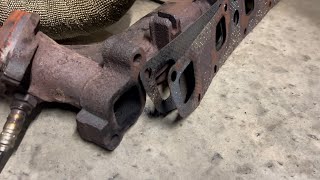
While PCM software updates can cause this code on some vehicles, the TSBs often cited for this issue (#18-039-15 REV-A and #18-094-16) apply specifically to the Dodge Challenger with a manual transmission, not the automatic-only Chrysler 300. The more platform-specific issue, especially for 5.7L and 6.4L Hemi engines, is a high frequency of exhaust manifold leaks. The rear-most manifold bolts are known to break, causing the gasket to fail and draw in outside air. This creates a false lean condition and is often identifiable by an audible 'ticking' sound from the engine bay, particularly when cold.
Diagnostic Flowchart
Tap your situation to follow the diagnostic path that matches what you're seeing on this vehicle.
Symptoms You May Notice
- Check Engine Light is on
- Reduced fuel economy
- Rough or unstable idle
- Hesitation or poor acceleration
- Audible ticking noise from the driver's side of the engine bay, especially when cold, that may quiet down as the engine warms up.
- Replacing the catalytic converter when the actual problem is an exhaust leak or a faulty O2 sensor.
- Replacing the upstream O2 sensor (Sensor 1) when the code is for the downstream (post-catalyst) system.
- Replacing the O2 sensor when the true cause is a broken exhaust manifold bolt causing a leak.
Most Likely Causes

- Exhaust Leak (Manifold Gasket/Bolts) 🔴 High Probability On Hemi engines (5.7L/6.4L), the steel exhaust manifold bolts are known to break due to thermal stress, particularly the rearmost bolts on the driver's side (Bank 2). This allows the manifold to warp slightly, creating a leak at the gasket that sucks in fresh air, causing a false lean reading. This is often called the 'Hemi tick'.
How to confirm: Perform a visual inspection of the exhaust manifold on the driver's side. Look for broken bolt heads or black soot marks around the gasket. A common symptom is a ticking noise that is loud on a cold start and diminishes as the engine heats up and the metal expands. A smoke test is the most definitive way to confirm a leak.
Typical fix: Replace the broken manifold bolts and the exhaust manifold gasket. In some cases, the warped manifold may also need to be replaced or resurfaced. Extracting the broken bolt remnant may require drilling.
Est. part cost: $20-$400 - Faulty Downstream Oxygen Sensor (Bank 2, Sensor 2) 🟡 Medium Probability Oxygen sensors have a finite lifespan and can fail over time, sending incorrect voltage signals to the PCM. Contamination from fuel additives, oil, or coolant can also cause premature failure.
How to confirm: Use a scan tool to monitor the voltage of the Bank 2, Sensor 2 O2 sensor. A healthy downstream sensor should show a relatively stable voltage above 0.5V (e.g., 0.6-0.8V) when the engine is warm and at a steady RPM. If the voltage is stuck low (below 0.4V) or not responding to induced rich/lean conditions, the sensor is likely bad.
Typical fix: Replace the Bank 2, Sensor 2 oxygen sensor. This is located on the driver's side, after the catalytic converter. 🎬 Watch: Step-by-step guide to replacing the Bank 2 Sensor 2 oxygen sensor.
Est. part cost: $40-$120 - PCM Software Update Needed ⚪ Low Probability While the specific TSBs #18-039-15 REV-A and #18-094-16 do not apply to the 300, other software calibrations for the PCM can be overly sensitive and trigger this code. It is a less common cause for this specific vehicle compared to mechanical exhaust leaks, but still possible.
How to confirm: A Chrysler dealership or a qualified shop with access to wiTECH software can check your vehicle's VIN to see if any applicable software updates are available for the Powertrain Control Module.
Typical fix: Reprogram the Powertrain Control Module (PCM) with the latest software.
Est. part cost: $0-$200 - Vacuum Leak ⚪ Low Probability Cracked or disconnected vacuum hoses (e.g., PCV hose, intake manifold gaskets) can introduce unmetered air into the engine, causing a lean condition. While this usually triggers upstream O2 sensor codes first (Bank 2 Sensor 1), it can sometimes manifest as a downstream code if the PCM's fuel trims are maxed out.
How to confirm: Visually inspect all vacuum lines for cracks or disconnections. A smoke test on the intake system is the most reliable way to find a leak.
Typical fix: Replace the leaking vacuum hose or gasket.
Est. part cost: $5-$50
Rare But Worth Checking
- Failing Catalytic Converter: While less common, a clogged or inefficient catalytic converter can alter exhaust flow and oxygen content, triggering a P2098 code. This is usually a last resort after other causes like exhaust leaks and sensors have been ruled out.
- Fuel Delivery Issue: A clogged fuel injector on Bank 2 or low fuel pressure could cause a genuine lean condition. This would typically be accompanied by other codes, such as misfire codes (P030x) or fuel pressure codes.
Diagnosis Steps
- Check for any other stored DTCs. If other codes are present, diagnose them first, as they can provide clues.
- Listen for an audible ticking noise from the driver's side engine bay on a cold start. If present, this strongly suggests an exhaust manifold leak.
- Visually inspect the exhaust system on the driver's side for any signs of leaks, such as soot marks or cracks. Pay close attention to the exhaust manifold, looking for broken bolt heads, especially the one closest to the firewall.
- Use a scan tool to observe the live data for the Bank 2 oxygen sensors. The upstream sensor (B2S1) should fluctuate rapidly between ~0.1V and ~0.9V. The downstream sensor (B2S2) should hold a relatively steady, higher voltage (above 0.5V).
- If the downstream sensor (B2S2) voltage is stuck low (e.g., <0.2V), this confirms the lean reading. This could be a bad sensor or a real leak.
- If an exhaust leak is suspected, perform a smoke test on the exhaust system to definitively pinpoint its location.
- If no leaks are found, test the O2 sensor's response. You can create a vacuum leak or add propane to the intake to see if the sensor voltage changes. If it remains stuck low, the sensor is likely faulty.
- If the sensor and exhaust are confirmed good, investigate potential vacuum leaks in the intake system or fuel delivery problems on Bank 2.
Parts You'll Likely Need

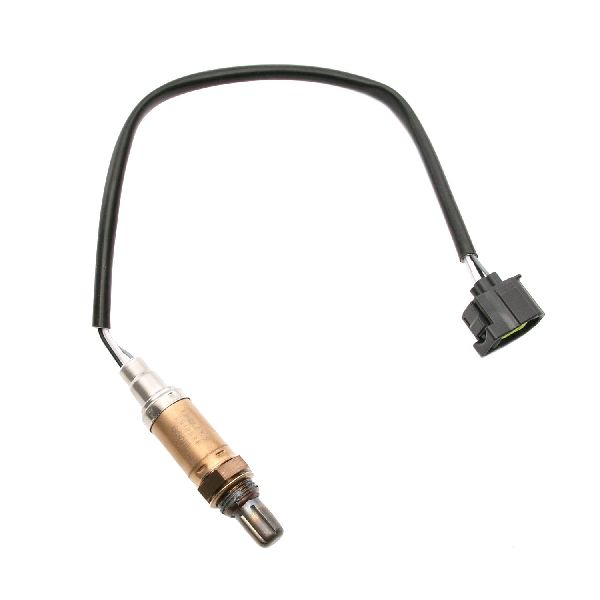
- Downstream Oxygen Sensor (Bank 2, Sensor 2)
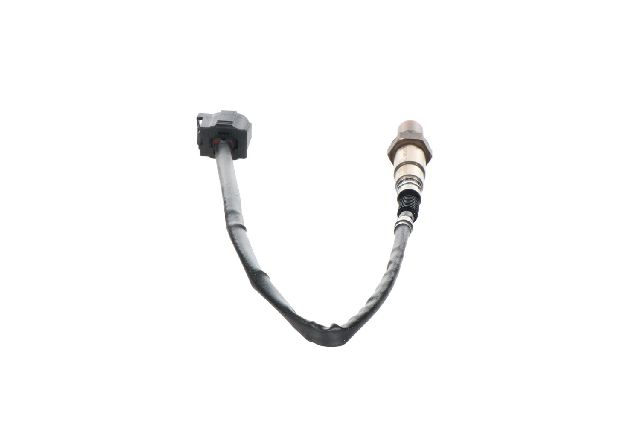
(OEM #5149171AB)— This sensor is directly responsible for the reading that triggers the P2098 code. It can fail due to age or contamination, sending an incorrect lean signal.
Trusted brands: Mopar, Denso, Bosch, NTK
OEM price range: $80-$150
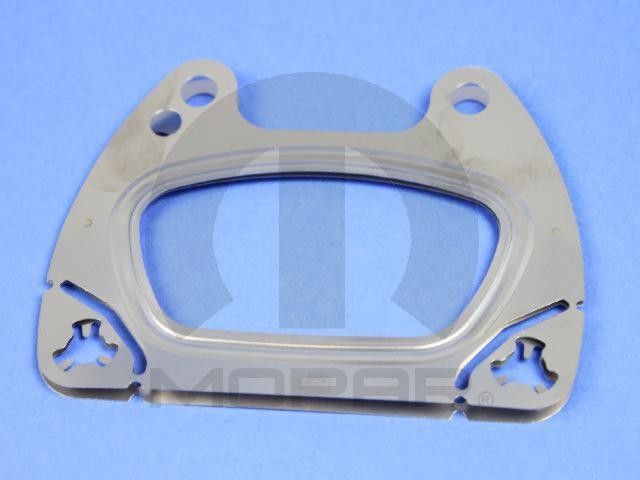
Aftermarket price range: $40-$120 - Exhaust Manifold Gasket
(OEM #53013944AA)— A leak at the exhaust manifold is a very common cause of this code on Hemi engines. The gasket fails when manifold bolts break, requiring replacement during the repair.
Trusted brands: Mopar, Fel-Pro, Mahle
OEM price range: $20-$40
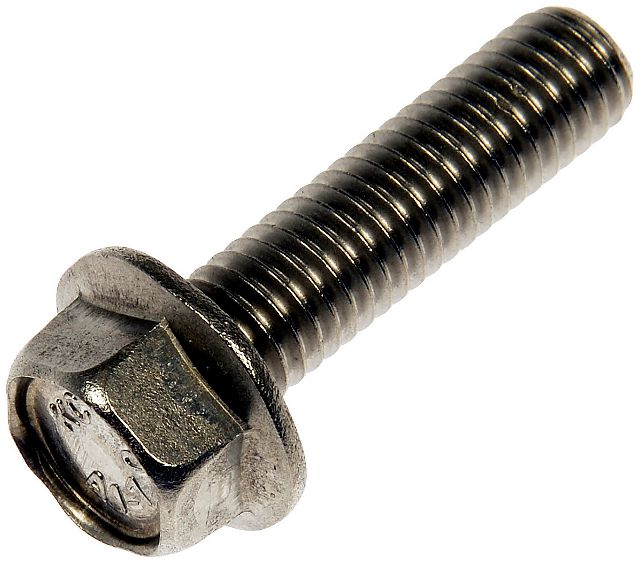
Aftermarket price range: $10-$25 - Exhaust Manifold Bolt Kit — On Hemi engines, the original bolts are prone to breaking. It is standard practice to replace all bolts on the affected manifold when repairing a leak.
Trusted brands: Mopar, Dorman
OEM price range: $30-$50
Aftermarket price range: $20-$40
Related Codes That Often Appear With This One
- P0153 — This code indicates a slow response from the upstream O2 sensor on Bank 2. A failing upstream sensor can cause incorrect fuel trims that lead to the downstream sensor setting a P2098.
- P2096 — This is the equivalent lean code for Bank 1. Seeing both P2096 and P2098 together suggests a problem common to both banks, like low fuel pressure or a major vacuum leak, rather than an issue isolated to one side of the engine.
- P0302, P0304, P0306 — Misfire codes on the Bank 2 cylinders (driver's side). A severe lean condition, whether real or perceived, can cause misfires on the affected bank.
Technical Service Bulletins (TSBs) & Recalls
- 18-094-16: Not applicable. Addresses P2098 for 2014 Dodge Challenger 6.4L with manual transmission.
- 18-039-15 REV-A: Not applicable. Addresses P2098 for 2014 Dodge Challenger 6.4L with manual transmission.
Platform-Specific Known Issues
- On models with the 5.7L or 6.4L Hemi engine, this code is very frequently caused by an exhaust leak at the driver's side manifold. The rear-most manifold bolts are prone to breaking, causing the gasket to leak. This is often heard as a 'Hemi tick' that is loudest on a cold start and may quiet down as the metal expands and seals the gap.
Mechanic-Grade Diagnostic Values

- Downstream O2 Sensor (B2S2) Voltage — expected: Relatively steady voltage between 0.5V and 0.8V on a warm, idling engine.. Failure: Voltage is stuck low (e.g., < 0.2V), confirming the lean reading seen by the PCM.
- Long-Term Fuel Trim (LTFT) Bank 2 — expected: Close to 0%, typically within +/- 5%.. Failure: Excessively positive value, such as +15% or higher, indicates the PCM is compensating for a perceived lean condition.
- O2 Sensor Heater Circuit Resistance — expected: Typically between 5 and 15 Ohms when measured across the two heater wires (often same color) on the sensor connector.. Failure: An open circuit (infinite resistance) or a direct short (0 Ohms) indicates a failed heater element.
- O2 Sensor Circuit Jumper Test — expected: With the sensor disconnected and a jumper wire between the signal and return circuits on the harness-side connector, scan tool voltage should read ~2.5V.. Failure: If voltage does not drop from the baseline of ~5.0V (with sensor disconnected) to ~2.5V with the jumper, it indicates a problem in the wiring or PCM, not the sensor itself.
Scan Tool Commands That Help
- wiTECH or equivalent professional scan tool: O2 Sensor Heater Actuation Test — To verify the integrity of the O2 sensor's internal heater and its control circuit. After turning the ignition on (engine off), a technician can command the heater on and monitor the sensor's voltage response to confirm the heater is working.
- wiTECH or equivalent professional scan tool: Module Communication Test — To ensure the PCM is communicating correctly on the CAN bus. If intermittent communication errors are present, it could point to a PCM hardware or wiring issue as the root cause of the P2098 code, rather than a sensor or exhaust leak.
Wiring & Ground Locations
- O2 Sensor Fuses — In the front fuse box (Power Distribution Center) in the engine bay, passenger side.. For 2014+ models, fuses F31, F34, F35, and F37 supply power to the engine management and O2 sensor heater circuits. A blown fuse will cause the sensor to operate incorrectly and can set a fault code.
- ASD & Fuel Pump Relays — Relay 63 (ASD) in the front fuse box and Relay 29 in the rear (trunk) fuse box.. The Auto Shutdown (ASD) relay and fuel pump relay provide power to the O2 sensor circuits. A failing relay can cut power, mimicking a bad sensor.
- G305 — A ground point listed for the 2014 Chrysler 300.. Wiring diagrams indicate this ground is used by multiple components, and a poor connection here could potentially cause erratic readings for the O2 sensors, leading to false codes.
- Bank 2 Sensor 2 Connector — On the driver's side of the vehicle, with the connector often mounted to the side of the transmission housing. The sensor itself is in the exhaust pipe after the catalytic converter.. This is the primary connector to inspect for physical damage, corrosion, or looseness when diagnosing a P2098 code. The wiring is close to the hot exhaust and can be damaged.
OEM Part Supersession History
5149171AA, 68066160AA→5149171AB— Standard part revision and consolidation by the manufacturer.
Heads up: The newer part number 5149171AB is the correct service replacement for the older numbers.
Helpful Videos


We Have This Part in Stock


The information in this article is provided for general reference and educational purposes only. Vehicle specifications, procedures, and part compatibility can vary by production date, trim level, and region. Always consult your vehicle's factory service manual and verify part numbers before purchasing or performing repairs. Safety-critical components such as airbags, seat belts, and braking systems should be installed by a qualified professional.
- Chrysler 300:
- 🎬 Helpful Videos
- 🛍️ Shop This Part
- What's Unique About the 2014-2014 Chrysler 300
- Diagnostic Flowchart
- Symptoms You May Notice
- Most Likely Causes
- Rare But Worth Checking
- Diagnosis Steps
- Parts You'll Likely Need
- Related Codes That Often Appear With This One
- Technical Service Bulletins (TSBs) & Recalls
- Platform-Specific Known Issues
- Mechanic-Grade Diagnostic Values
- Scan Tool Commands That Help
- Wiring & Ground Locations
- OEM Part Supersession History
- 🎟️ Get 5% Off