

P2097 on 2016-2019 Volkswagen Golf: Post-Catalyst Fuel Trim Too Rich Causes and Fixes
On a VW Golf, code P2097 usually points to a failing downstream (post-catalyst) oxygen sensor or an exhaust leak. Before replacing parts, inspect the exhaust system for leaks, especially the downpipe gasket. A new OEM-quality O2 sensor costs between $150 and $250. In some cases, a software update from VW may be required.
- P2097 means the exhaust is too rich after the catalytic converter.
- The most likely cause on a stock VW Golf is a failing downstream O2 sensor.
- Always inspect for exhaust leaks between the engine and the rear O2 sensor before replacing any parts.
- If your Golf is tuned or has an aftermarket downpipe, the code is very likely a side effect of the modification.
- Do not replace the expensive catalytic converter unless all other possibilities (sensor, leaks, fuel system) have been professionally ruled out.
What's Unique About the 2016-2019 Volkswagen GOLF

The 2016-2019 VW Golf (Mk7) uses a turbocharged and direct-injected engine (primarily the 1.8T EA888 and later the 1.4T). These platforms are very popular in the tuning community with companies like APR and Unitronic. As a result, a significant number of P2097 codes on these cars are related to aftermarket modifications like 'Stage 2' tunes and high-flow or catless downpipes, which can confuse the factory sensors. Owners often try to use O2 sensor spacers to prevent a P0420 (catalyst efficiency) code, but this can inadvertently trigger P2097 if the spacer pulls the sensor too far out of the exhaust stream, causing a false rich reading. In one documented case, a user installed an ARM catted downpipe, which cleared a P0420 code with a spacer but immediately triggered P2097.
Diagnostic Flowchart

Tap your situation to follow the diagnostic path that matches what you're seeing on this vehicle.
Symptoms You May Notice
- Check Engine Light is on
- Reduced fuel economy
- Rough or erratic idle
- Hesitation or stumbling during acceleration
- A noticeable fuel odor from the exhaust in some cases
- Black smoke from the exhaust, especially under load 🎬 Watch: A quick breakdown of P2097 meaning and symptoms.
- Replacing the catalytic converter when the actual problem is a much cheaper O2 sensor or an exhaust leak.
- Replacing the upstream (pre-catalyst) O2 sensor when the code specifically points to the downstream (post-catalyst) fuel trim.
- Ignoring the possibility of an exhaust leak and repeatedly replacing O2 sensors.
- On modified cars, blaming a sensor when the issue is the ECU tune or an incorrect O2 spacer.
Most Likely Causes

- Faulty Downstream (Post-Catalyst) Oxygen Sensor 🔴 High Probability Oxygen sensors are wear items and typically have a lifespan of 80,000-100,000 miles. Failure can cause them to send incorrect, falsely rich signals to the ECM. Wiring to the sensor can also be damaged by heat from the exhaust if not routed correctly.
How to confirm: Use an OBD-II scanner to monitor the live voltage data from the downstream O2 sensor (Bank 1, Sensor 2). A healthy sensor on a warm engine should show a relatively stable voltage, typically between 0.5V and 0.8V. If the voltage is stuck high (e.g., above 0.8V) or is unresponsive, the sensor is likely faulty. Also inspect the wiring for any melting or damage.
Typical fix: Replace the downstream oxygen sensor. A special 22mm O2 sensor socket is highly recommended 🎬 See this walkthrough for replacing the downstream O2 sensor. for removal. Ensure the correct OEM or equivalent part is used, as universal sensors may not work correctly.
Est. part cost: $100-$250 - Exhaust System Leak 🟡 Medium Probability Leaks can develop at gaskets, welds, or the flexible pipe section of the exhaust. A very common failure point on the Mk7 platform is the gasket between the downpipe and the turbocharger. A leak before the rear O2 sensor allows unmetered air to enter, which can paradoxically cause a rich code as the ECU adjusts fuel trims based on confusing sensor readings.
How to confirm: Visually inspect the exhaust system, especially the downpipe V-band clamp and gasket, for black soot marks which indicate a leak. A 'smoke test' is the most effective professional method to find small leaks. A forum user on golfmk7.com resolved their P2097 code by discovering and replacing a missing downpipe gasket (Part No. 5Q0253115B).
Typical fix: Repair the leak. This often involves replacing a gasket or clamp. For the common downpipe leak, replace the gasket (VW Part No. 5Q0253115B).
Est. part cost: $20-$300 - Engine Running Rich ⚪ Low Probability Issues with the fuel system can cause the engine to genuinely run rich, which the downstream sensor then correctly reports. Common causes on direct-injection engines include leaking fuel injectors or a faulty high-pressure fuel pump.
How to confirm: Check for other trouble codes, especially P0172 (System Too Rich Bank 1) or P2196 (O2 Sensor Signal Stuck Rich Bank 1 Sensor 1). Monitor short-term and long-term fuel trims with a scan tool. Consistently negative fuel trims (e.g., -10% or more) indicate the ECM is trying to compensate for a rich condition.
Typical fix: Diagnose and repair the root cause of the rich condition, such as replacing a leaking fuel injector or a faulty fuel pressure regulator.
Est. part cost: $50-$500+
Rare But Worth Checking
- Failing Catalytic Converter: While less common, a contaminated or internally damaged catalytic converter can fail to process exhaust gases correctly, leading to abnormal readings from the downstream sensor. This is usually a last resort after sensors and leaks have been ruled out.
- Aftermarket ECU Tune or Modifications: If the vehicle has an aftermarket downpipe or a 'Stage 2' (or higher) ECU tune, the P2097 code is a very common side effect. The fix often requires a software adjustment from the tuning company or finding the correct O2 spacer/adapter combination, as a standard spacer can sometimes cause this code while fixing P0420.
- ECM Software Issue: Volkswagen issued Technical Service Bulletin 01-20-02 for some 2018-2019 models (though for the Atlas, it indicates a wider potential issue) for erroneous P2097 codes. The fix is an ECM software update performed by a dealer. This should be considered if no mechanical faults can be found.
Diagnosis Steps
- Read all stored fault codes with an OBD-II scanner. Address any other codes for misfires, fuel system, or sensor circuits first, as they can cause P2097.
- If the vehicle is modified (tuned, aftermarket downpipe), investigate this first. Contact the tuning company (e.g., Unitronic, APR) and check forums for similar setups. The issue is likely the tune or O2 spacer configuration.
- Perform a thorough visual inspection of the exhaust system from the turbocharger downpipe to the rear O2 sensor. Look for black soot marks or physical damage indicating a leak. Pay very close attention to the downpipe-to-turbo gasket/clamp area.
- Inspect the downstream O2 sensor's wiring harness and connector for signs of melting, chafing, or corrosion.
- With the engine warm and running, use a scan tool to observe live data for both the upstream (B1S1) and downstream (B1S2) oxygen sensors. The upstream sensor's voltage should fluctuate rapidly between approximately 0.1V and 0.9V. The downstream sensor's voltage should be relatively stable and steady, ideally around 0.7V.
- If the downstream sensor voltage is stuck high (e.g., >0.8V) and does not respond to changes in engine RPM, it points towards a faulty sensor or a true rich condition.
- Check long-term fuel trim (LTFT) values. If they are in the double digits negative (e.g., -10% or lower), it confirms the engine is running rich, and further diagnosis of the fuel system (injectors, fuel pressure) is needed.
- If no leaks are found and sensor data is inconclusive, consider replacing the downstream O2 sensor as it is the most common faulty part.
- If the issue persists on a stock vehicle, check with a VW dealer for any applicable ECM software updates, referencing TSB 01-20-02.
Parts You'll Likely Need

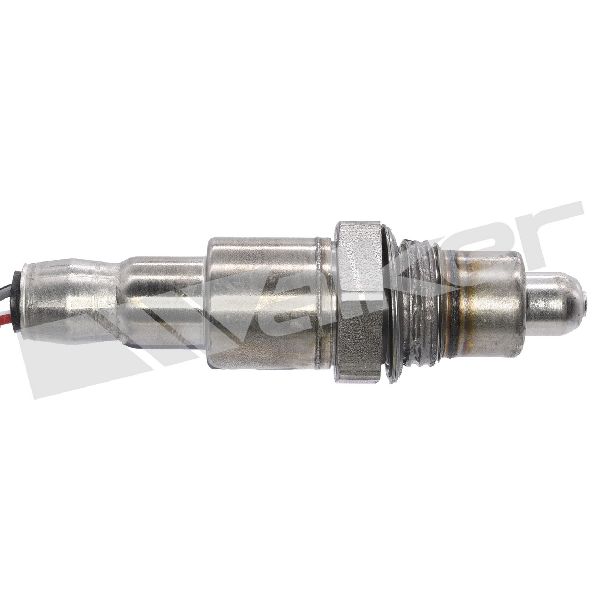
- Downstream Oxygen Sensor (Bank 1, Sensor 2)
(OEM #06K906262EA (or superseding part numbers like 1K0998262T))— This sensor is the most frequent cause of a false P2097 code. It is a critical component for monitoring catalytic converter efficiency and is a common wear-and-tear item.
Trusted brands: Bosch (OEM supplier), NTK/NGK, Denso
OEM price range: $180-$250
Aftermarket price range: $100-$180 - Downpipe Gasket (Turbo to Downpipe)
(OEM #5Q0253115B)— If an exhaust leak is found at the V-band connection between the turbocharger and the downpipe, this gasket is required to create a proper seal. This is a very common leak point that can trigger P2097.
Trusted brands: Genuine Volkswagen, Elring
OEM price range: $25-$50
Aftermarket price range: $15-$30
Related Codes That Often Appear With This One
- P0172 — P0172 means 'System Too Rich Bank 1' and is based on the upstream O2 sensor. Seeing both codes together strongly suggests the engine is genuinely running rich due to a fuel system issue (like a leaky injector), rather than a single faulty sensor.
- P0420 — P0420 means 'Catalyst System Efficiency Below Threshold'. This code can appear with P2097 if the catalytic converter is failing. It is also extremely common on cars with aftermarket high-flow or catless downpipes, and owners often trigger P2097 when trying to fix P0420 with a spacer.
Technical Service Bulletins (TSBs) & Recalls
- Bulletin #VIN4APIN20190628: A generic bulletin that mentions P2097 as a possible trouble code when a customer reports the MIL is on, but provides no specific diagnostic path.
- Bulletin #01-20-02: Published March 16, 2020, this TSB addresses several fuel trim codes including P2097 that may be stored erroneously. It instructs technicians to perform an ECM software update before replacing any components.
Platform-Specific Known Issues
- Aftermarket Downpipe and Tune Complications: A large number of P2097 reports on forums like golfmk7.com and Reddit are from owners with Stage 2 tunes and aftermarket downpipes. The combination of a high-flow cat and an O2 spacer often resolves the P0420 code but introduces the P2097 code. This indicates the spacer is pulling the sensor too far from the exhaust stream, causing a false rich reading.
- Downpipe Gasket Leaks: A recurring theme in owner forums is the discovery of an exhaust leak at the turbo-to-downpipe connection. In a detailed thread on golfmk7.com, a user who had installed an aftermarket downpipe chased lean and rich codes (P2
Mechanic-Grade Diagnostic Values

- Downstream O2 Sensor (B1S2) Heater Circuit Resistance — expected: 5-7 Ω. Failure: A reading significantly outside this range, or an open circuit (infinite resistance), indicates a failed heater element within the sensor.
- Long Term Fuel Trim (LTFT) with VCDS or OBD-II Scanner — expected: Close to 0%, ideally within +/- 5%. Failure: Consistently in the double digits negative (e.g., -10% or more) suggests the ECU is compensating for a persistent rich condition caused by an issue like a leaking injector or faulty fuel pressure regulator.
- VCDS Lambda Value (Advanced Measurement Blocks) — expected: Should try to maintain Lambda 1 (which corresponds to a 14.7:1 air/fuel ratio).. Failure: A value consistently below 1 indicates a rich mixture.
Wiring & Ground Locations
- Point 15 — On the cylinder head.. The cylinder head is a primary grounding location for many engine sensors. A poor connection here can cause erratic sensor readings, including from the systems that influence fuel mixture.
- Point 81 — In the center of the engine compartment, near the battery.. This is a major chassis ground point. Corrosion or a loose connection can affect the entire engine management system, potentially leading to incorrect fuel trim calculations.
- Point 104 — An earth connection located in the front right wiring harness, specifically for sensors.. This is a dedicated sensor ground. A fault at this specific point could directly impact the O2 sensor circuit, causing false readings that trigger a P2097 code even if the sensor itself is good.
Real Owner Repair Stories
- Reddit user on r/GolfGTI, referencing a golfmk7.com thread (VW Golf Mk7 with an aftermarket ARM catted downpipe.) — Initially had a P0420 (Catalyst Efficiency) code. After installing an O2 spacer, the P0420 code cleared, but a P2097 code and EPC light appeared immediately.
❌ Tried (didn't work) Installing an O2 spacer to fix the P0420 code, which then caused the P2097 code.
✅ What actually fixed it The user found that the V-band clamp on the downpipe gasket was loose. Retightening the clamp and backing the O2 spacer further out of the exhaust stream resolved the P2097 code. - Reddit user on r/VWMK7 (2013 Golf Mk7 1.4TSI (CHPA engine)) — Jerking under acceleration, rough idle, and CEL with codes P2196 (Stuck Rich) and P2270 (Stuck Lean).
❌ Tried (didn't work) Replacing the throttle body., Replacing the upstream (B1S1) O2 sensor., Intake manifold carbon cleaning.
✅ What actually fixed it The user replaced the ignition coils and spark plugs, which immediately fixed all symptoms and codes. The user suspected the ignition coils were the primary culprit.
"I Checked Everything" — The Actual Cause
- A common diagnostic step for P2097 is an exhaust smoke test to find leaks. However, if the test comes back clean, the root cause may be an intake-side vacuum leak that an exhaust test cannot find. A failed PCV (Positive Crankcase Ventilation) valve diaphragm is a very common issue on TSI engines that creates a significant vacuum leak. Symptoms include a whistling noise from the engine, a rough or high idle, and the engine stumbling or stalling when the oil filler cap is removed. This unmetered air entering the intake system can disrupt the air-fuel ratio, leading the ECU to make incorrect fuel trim adjustments that can result in a P2097 code.
Model Year Variations Within This Range
- 2019-2019 (North American Market): During the Mk7.5 refresh, the standard Golf in North America began transitioning from the 1.8T EA888 engine to the 1.4T EA211 engine. While the meaning of P2097 is the same for both engines, the physical oxygen sensors have different part numbers and are not interchangeable.
Helpful Videos
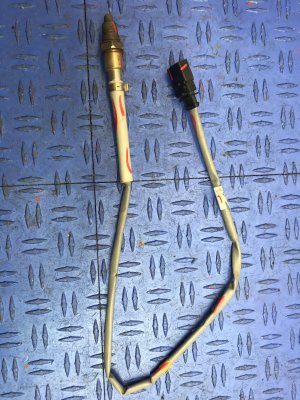
Used OEM Parts in Stock
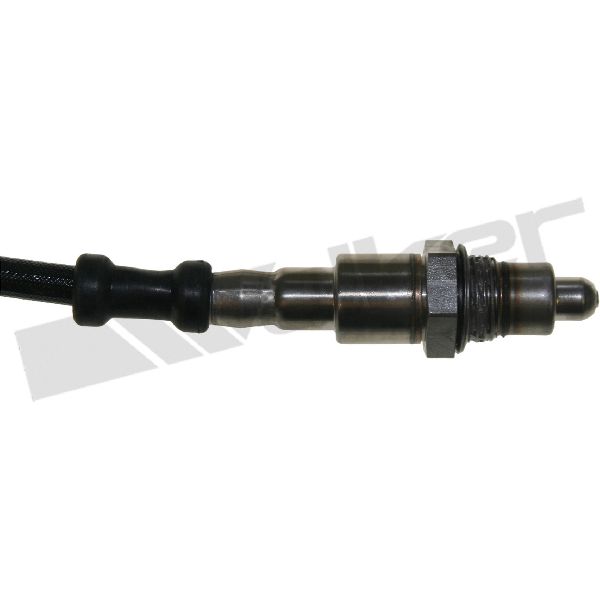
New Aftermarket Parts Available



The information in this article is provided for general reference and educational purposes only. Vehicle specifications, procedures, and part compatibility can vary by production date, trim level, and region. Always consult your vehicle's factory service manual and verify part numbers before purchasing or performing repairs. Safety-critical components such as airbags, seat belts, and braking systems should be installed by a qualified professional.
- Volkswagen GOLF:
- 🎬 Helpful Videos
- 🛍️ Shop This Part
- What's Unique About the 2016-2019 Volkswagen GOLF
- Diagnostic Flowchart
- Symptoms You May Notice
- Most Likely Causes
- Rare But Worth Checking
- Diagnosis Steps
- Parts You'll Likely Need
- Related Codes That Often Appear With This One
- Technical Service Bulletins (TSBs) & Recalls
- Platform-Specific Known Issues
- Mechanic-Grade Diagnostic Values
- Wiring & Ground Locations
- Real Owner Repair Stories
- "I Checked Everything" — The Actual Cause
- Model Year Variations Within This Range
- 🎟️ Get 5% Off