

P2097 on 2007-2011 Toyota Camry 3.5L V6: Post-Catalyst Rich Condition Causes and Fixes
This code means the sensor after the catalytic converter on Bank 1 is detecting too much fuel in the exhaust. The most common causes are an exhaust leak before the sensor or a failing downstream oxygen sensor. Bank 1 is the rear cylinder bank near the firewall, which is harder to access. Expect to pay $100-$250 for a replacement sensor.
- P2097 means the exhaust is too rich on Bank 1 (the cylinder bank near the firewall).
- Before buying parts, check for exhaust leaks between the engine and the rear oxygen sensor.
- The most likely part to fail is the downstream oxygen sensor (Bank 1, Sensor 2).
- Do not immediately assume the catalytic converter is bad; it's an expensive part and often misdiagnosed for this code.
- Ensure you are working on Bank 1 (rear) and not Bank 2 (front) to avoid replacing the wrong sensor.
What's Unique About the 2007-2011 Toyota Camry
On the 2GR-FE V6 engine, identifying the correct bank is crucial. Bank 1 is the rear bank, near the firewall, which can make accessing its sensors significantly more difficult than Bank 2, which is at the front of the vehicle near the radiator. The Bank 1 Sensor 2 (downstream) is located underneath the car, but its wiring connector may be routed up in a tight space. Owners often confuse the two banks, leading to replacing the wrong sensor. The primary cause is often an aging oxygen sensor or an exhaust leak, rather than more complex fuel system issues.
Symptoms You May Notice
- Check Engine Light is on
- Reduced fuel economy
- Rough or erratic idling
- Engine hesitation or stumbling during acceleration
- A strong smell of gasoline or rotten eggs from the exhaust
- Black smoke from the tailpipe in some cases
- Replacing the catalytic converter when the actual problem is a faulty oxygen sensor or an exhaust leak.
- Replacing the wrong oxygen sensor (e.g., replacing a Bank 2 sensor for a Bank 1 code, or the upstream sensor instead of the downstream one).
Most Likely Causes
- Failing Downstream Oxygen Sensor (Bank 1, Sensor 2) 🔴 High Probability Oxygen sensors have a finite lifespan (typically around 100,000 miles) and can degrade from heat and contaminants, sending inaccurate signals to the computer.
How to confirm: Use an OBD-II scanner to monitor the live voltage data from the Bank 1 Sensor 2. A healthy downstream sensor should show a relatively steady voltage (e.g., 0.6-0.8V). If it's stuck high (above 0.8V) or fluctuating rapidly like the upstream sensor, it has likely failed.
Typical fix: Replace the Bank 1, Sensor 2 oxygen sensor. This sensor is located on the exhaust pipe after the catalytic converter for the rear cylinder bank (near the firewall). Access is from underneath the vehicle. Using an O2 sensor socket and penetrating oil on the threads is recommended. 🎬 Watch: Step-by-step guide to removing and installing the oxygen sensor.
Est. part cost: $80-$200 - Exhaust Leak 🟡 Medium Probability Gaskets and exhaust pipe flanges, especially the flex pipe, can corrode and fail over time, allowing outside air to enter the exhaust stream before the sensor, which can paradoxically cause a rich code interpretation by the ECM.
How to confirm: Visually and audibly inspect the exhaust system from the engine manifold to the downstream O2 sensor for any cracks, holes, or black soot indicating a leak. A common spot is the gasket between the manifold and the catalytic converter. A professional smoke test is the most definitive way to find small leaks.
Typical fix: Replace the leaking gasket or repair the damaged section of the exhaust pipe. For small cracks, exhaust putty or wrap can be a temporary fix. For larger holes or flex pipe leaks, welding or pipe replacement by a muffler shop is often necessary.
Est. part cost: $20-$150 - Failing Upstream Air/Fuel Ratio Sensor (Bank 1, Sensor 1) ⚪ Low Probability A faulty or slow-responding upstream sensor can send incorrect data to the ECM, causing it to command an incorrect fuel mixture. The downstream sensor then correctly reports the resulting rich condition.
How to confirm: Monitor live data for the Bank 1, Sensor 1. If its readings are biased, stuck, or slow to respond to throttle changes, it may be the root cause. This is often considered after the downstream sensor and exhaust leaks have been ruled out.
Typical fix: Replace the Bank 1, Sensor 1 Air/Fuel Ratio sensor. This is located on the exhaust manifold of the rear cylinder bank, accessible from the top of the engine bay, but in a tight spot against the firewall.
Est. part cost: $120-$250
Rare But Worth Checking
- Leaking Fuel Injector(s) on Bank 1: This would cause a genuinely rich condition. It would likely be accompanied by other codes, such as cylinder misfire codes (e.g., P0301, P0303, P0305) or a strong fuel smell. You can check spark plugs on Bank 1; a black, sooty plug indicates a rich condition in that cylinder. 🎬 See this walkthrough for replacing Bank 1 spark plugs and sensors.
- Failing Catalytic Converter: A contaminated or failing catalytic converter can't properly store oxygen and process exhaust gases, which can lead to a rich reading from the downstream sensor. This is less common and should be considered after other causes are eliminated. A temperature check before and after the converter can help diagnose a clog.
- Engine Coolant Temperature (ECT) Sensor Failure: A faulty ECT sensor that is stuck reading cold will cause the ECM to command a richer fuel mixture continuously, which the downstream O2 sensor will then report. This would likely affect both banks and may be accompanied by other symptoms like hard starting.
Diagnosis Steps
- Read all fault codes with an OBD-II scanner. Note any other codes present, as they can point to the root cause (e.g., misfire codes, Bank 2 codes).
- Clear the codes and perform a drive cycle to see if the P2097 code returns.
- Visually and audibly inspect the exhaust system for leaks, from the exhaust manifold gaskets on the rear bank all the way past the downstream O2 sensor. Look for cracks, rust holes, or soot trails.
- Use a scan tool to observe live data. Warm the engine to operating temperature (closed loop).
- Observe the Bank 1, Sensor 2 (downstream) voltage. It should be relatively stable, typically between 0.5V and 0.8V. If it is stuck high (>0.8V) or fluctuating rapidly like the upstream sensor, the O2 sensor is faulty or the catalytic converter is inefficient.
- Compare Bank 1 Sensor 2 to Bank 2 Sensor 2. If both banks show rich trim issues, the problem is likely systemic (fuel pressure, MAF, etc.). If only Bank 1 is affected, the problem is isolated to that bank.
- If no exhaust leaks are found and the downstream sensor appears to be reading correctly (i.e., reporting a genuinely rich condition), investigate potential causes of the rich condition itself: the upstream A/F sensor, leaking fuel injectors on Bank 1, or high fuel pressure.
- As a final check, inspect the catalytic converter for damage or signs of clogging. A temperature gun can be used to check for a significant temperature drop across the converter, indicating it's not working.
Parts You'll Likely Need
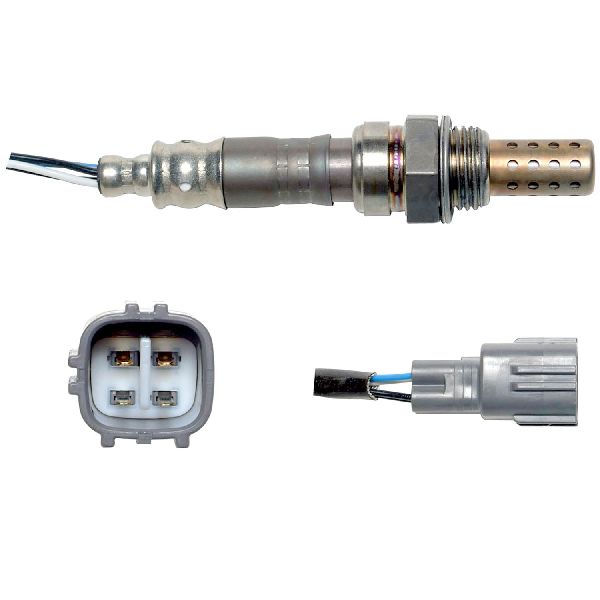
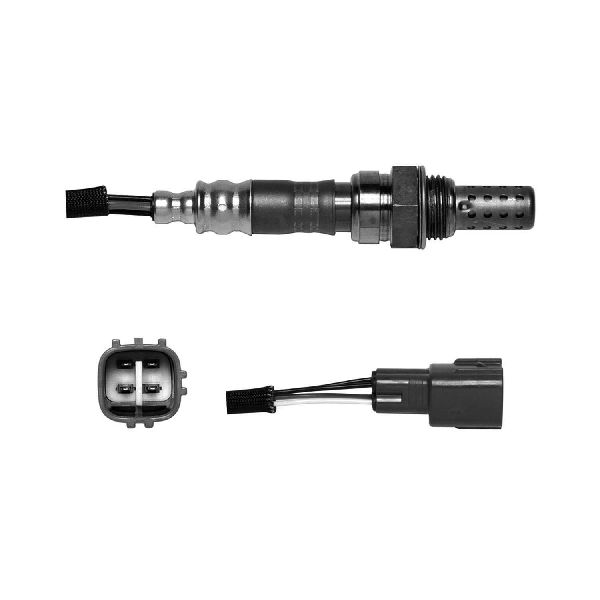
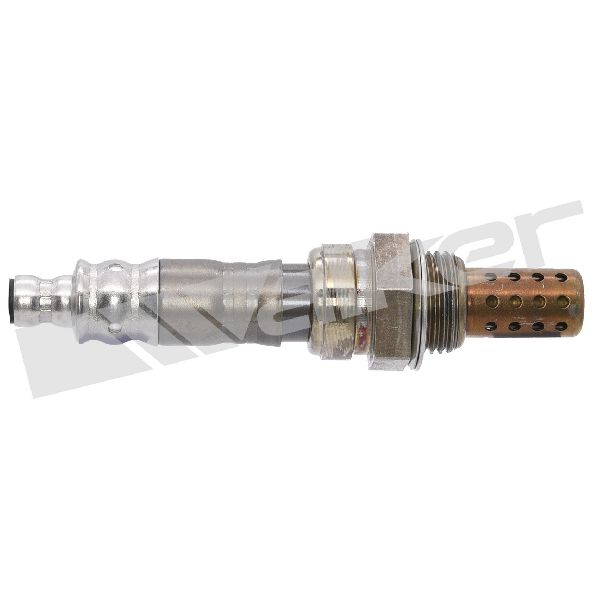
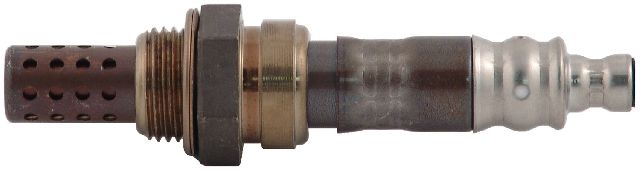
- Downstream Oxygen Sensor (Bank 1, Sensor 2)
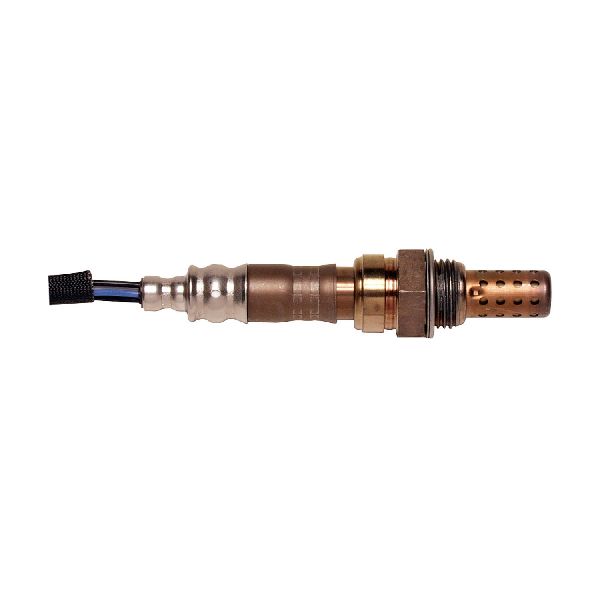
(OEM #89465-06150)— This is the sensor that triggers the code. Due to age and heat cycles, it is the most common failure point.
Trusted brands: Denso (OEM supplier), Bosch
OEM price range: $180-$250
Aftermarket price range: $80-$150 - Exhaust Manifold Gasket (Bank 1) — If an exhaust leak is the cause, this gasket between the manifold and the catalytic converter is a frequent culprit.
Trusted brands: Fel-Pro, Mahle
OEM price range: $30-$50
Aftermarket price range: $15-$30
Related Codes That Often Appear With This One
- P0300, P0301, P0303, P0305 — If a fuel injector on Bank 1 is leaking, it can cause misfires on the cylinders of that bank (1, 3, and 5), which would be reported alongside the P2097 code.
- P2096 — This is the equivalent 'Too Rich' code for Bank 2. Seeing both codes together might point to a more systemic issue like a faulty MAF sensor, incorrect fuel pressure, or a bad ECT sensor affecting both banks.
Technical Service Bulletins (TSBs) & Recalls
- EG037-04 (superseded) - Provided general guidance on identifying engine banks for sensor replacement on various Toyota engines, including the 2GR-FE.
- Limited Service Campaign (LSC) for VVT-i Oil Line - While not directly related to P2097, this campaign addressed a critical engine flaw on the Bank 1 side of early 2GR-FE engines, replacing a rubber oil line with an all-metal one (15772-31030) to prevent catastrophic oil loss.
Platform-Specific Known Issues
- Access to the Bank 1 (rear) sensors is notoriously tight due to the proximity of the firewall and other components. While possible for a DIYer, it requires patience and sometimes specific tools like swivel sockets.
Mechanic-Grade Diagnostic Values
- Downstream O2 Sensor (Bank 1, Sensor 2) Voltage — expected: Relatively stable voltage between 0.6V and 0.8V at warm idle in closed loop.. Failure: Voltage is stuck high (above 0.8V), stuck low, or fluctuating rapidly like an upstream sensor.
- Fuel Pressure (at fuel rail) — expected: 304 to 343 kPa (44 to 50 psi) at idle.. Failure: Pressure significantly above or below this range indicates a fuel pump or pressure regulator issue.
- Fuel Injector Resistance — expected: 11.6 to 12.4 Ω at 20°C (68°F) across the injector terminals.. Failure: Resistance outside this range suggests a faulty injector coil.
- Mass Air Flow (MAF) Sensor Rate — expected: 2 to 5 g/sec at idle.. Failure: Readings significantly outside this range, or that don't increase smoothly with RPM, can indicate a dirty or failed MAF sensor.
Scan Tool Commands That Help
- Toyota Techstream: Active Test: 'Control the Injection Volume for A/F Sensor' — This function is used to verify the responsiveness of both the upstream A/F sensor and the downstream O2 sensor. A technician can command a rich (+12.5%) or lean (-12.5%) mixture and watch the sensor voltage/lambda values respond in real-time. If the downstream sensor voltage doesn't change accordingly, it points towards a faulty sensor or a failing catalytic converter.
Wiring & Ground Locations
- Engine Harness Ground (Head) — There are two main harness grounds on the engine itself: one on the side of the rear cylinder head directly under the throttle body, and another on the front cylinder head.. A poor ground connection at these points can introduce electrical noise or incorrect voltage offsets into sensor readings, potentially causing the ECM to misinterpret the O2 sensor signal and set a false code.
- Chassis Grounds (Valve Cover) — Ground straps run from each valve cover to the chassis frame, with attachment points near the strut towers.. These ensure the engine block has a solid ground path to the vehicle's chassis and battery negative terminal. A corroded or loose strap can cause a variety of difficult-to-diagnose electrical issues, including sensor faults.
- B1S2 Connector (C22/C52) — The electrical connector for the Bank 1 Sensor 2 is located on the vehicle's subframe, where the sensor harness plugs into the main engine harness. Service manuals may refer to this connector as C22 or C52.. This connector is a common point for corrosion or damage. The release tab is known to be difficult to operate, and inspecting the pins for moisture or damage is a key diagnostic step before replacing the sensor.
- ECM Power/Ground Pins — At the ECM, power is supplied via pins A55-1 and A55-2 (+B, +B2). The main ground is pin C55-81 (E1).. When performing advanced diagnostics (e.g., checking for voltage drop), these are the specific pins to test to ensure the ECM itself is properly powered and grounded.
OEM Part Supersession History
89465-33440→89465-06150— Standard part update/revision by Toyota.
Heads up: The new part number (89465-06150) is the correct and direct replacement for the original.
Model Year Variations Within This Range
- 2007-2011: No significant variations related to the P2097 code, its causes, or its diagnosis have been documented within this model year range. The 2GR-FE engine and associated emissions components remained consistent.
Diagnostic Flowchart
Other Known Issues on This Vehicle
Issues unrelated to this code that are worth knowing about as an owner of this generation:
- VVT-i Oil Line Rupture 🔴 High — Common on early production models (2007-early 2010). A rubber section of the Bank 1 VVT-i oil line can degrade and burst, causing catastrophic oil loss and engine seizure. (Ref: Toyota issued a Limited Service Campaign (LSC) to replace the rubber hose with an all-metal line (Part No. 15772-31030).)
- Water Pump Failure 🟠 Medium — Water pumps on the 2GR-FE are a known wear item and can fail prematurely, sometimes before 100,000 miles. Symptoms include coolant leaks (pink residue), overheating, and whining/growling noises from the front of the engine.
- Transmission Shudder (Torque Converter) 🟡 Low — More prevalent in the next generation (2012-2014), but some owners of later XV40 models report a shudder or vibration during light acceleration between 20-50 mph. This is often related to the torque converter lock-up clutch. (Ref: A TSB was issued for later models to update the transmission software and/or replace the torque converter.)
- Melting/Sticky Dashboard 🟡 Low — Very common in vehicles exposed to hot climates. The dashboard material can become sticky, shiny, and even crack over time. (Ref: Toyota initiated a Warranty Enhancement Program (ZE6) to address this issue for many affected vehicles.)
Used vs. New Parts: Buying Guide for This Vehicle
When a used part is the smart pick: For this repair, buying used parts is generally not recommended for sensors. A used catalytic converter from a verified low-mileage, accident-free donor vehicle could be a cost-saving measure, but it carries significant risk.
Donor-vehicle mileage cap: roughly under 80000 miles for the part to have meaningful remaining life.
What to inspect on the donor part:
- For a catalytic converter, inspect for heavy rust, dents, or physical damage.
- Shake the converter to ensure there is no rattling, which indicates a broken internal substrate.
- Ask for the VIN of the donor car to verify its mileage and history if possible.
OEM-only on this vehicle (don't cheap out):
- Oxygen Sensor / Air-Fuel Ratio Sensor
- Catalytic Converter
Aftermarket brands forum-validated for this vehicle:
- Denso (for sensors - this is the OEM supplier)
- Bosch (for sensors)
Brands owners have reported issues with on this vehicle:
- Unbranded, 'white-box' sensors from online marketplaces are frequently reported to be unreliable or fail prematurely.
Real Owner Stories
Aggregated from forums and TSBs cited above. Mileages and costs reflect what owners reported in those sources.
2007-2011 Toyota Camry 3.5L 2GR-FE V6
Symptoms: Persistent P2097 code after patching an exhaust leak.
What fixed it: The community advised that if patching the leak didn't work, the next step is to replace the sensor as the patch may not have been the root cause or other leaks existed.
Source hint: Reddit r/MechanicAdvice
Related OBD-II Codes
Frequently Asked Questions
Where is the Bank 1, Sensor 2 oxygen sensor located on my 3.5L V6 Camry?
Is there a TSB for the oil line issue on my 2007-2011 Camry 2GR-FE?
How difficult is it to replace the Bank 1 sensors on this specific V6 model?
What part number should I use if I need to replace the VVT-i oil line while fixing Bank 1 issues?
Can an exhaust leak cause a P2097 code on my Camry even if the car smells like it's running rich?
Should I replace the upstream or downstream sensor first for a P2097 code?
Helpful Videos


We Have This Part in Stock


The information in this article is provided for general reference and educational purposes only. Vehicle specifications, procedures, and part compatibility can vary by production date, trim level, and region. Always consult your vehicle's factory service manual and verify part numbers before purchasing or performing repairs. Safety-critical components such as airbags, seat belts, and braking systems should be installed by a qualified professional.
- Toyota Camry:
- 🎬 Helpful Videos
- 🛍️ Shop This Part
- What's Unique About the 2007-2011 Toyota Camry
- Symptoms You May Notice
- Most Likely Causes
- Rare But Worth Checking
- Diagnosis Steps
- Parts You'll Likely Need
- Related Codes That Often Appear With This One
- Technical Service Bulletins (TSBs) & Recalls
- Platform-Specific Known Issues
- Mechanic-Grade Diagnostic Values
- Scan Tool Commands That Help
- Wiring & Ground Locations
- OEM Part Supersession History
- Model Year Variations Within This Range
- Diagnostic Flowchart
- Other Known Issues on This Vehicle
- Used vs. New Parts: Buying Guide for This Vehicle
- Real Owner Stories
- 2007-2011 Toyota Camry 3.5L 2GR-FE V6
- Related OBD-II Codes
- Frequently Asked Questions
- 🎟️ Get 5% Off