

P2097 on 2015-2022 Subaru WRX: Causes and Fixes for Post Catalyst Fuel Trim Too Rich
On a 2015-2022 Subaru WRX, code P2097 is most often caused by a failing front Air/Fuel (A/F) ratio sensor tricking the ECU into adding too much fuel. The second most common cause is an exhaust leak, typically from a failed gasket between the turbo and downpipe. Less commonly, the rear O2 sensor itself is the issue. A proper diagnosis involves checking for exhaust leaks first, then analyzing sensor data before replacing parts.
- P2097 means the rear O2 sensor sees a rich condition that the ECU cannot correct.
- Do not immediately replace the rear O2 sensor. The most common causes on a WRX are exhaust leaks or a faulty *front* A/F sensor.
- A smoke test is the most reliable way to diagnose exhaust leaks, which are a frequent issue.
- Use a scan tool to watch live data from both the front and rear sensors to properly diagnose the issue before buying parts.
- If your WRX is modified with an aftermarket downpipe or tune, this code is much more likely to appear and may require a revised tune to fix.
What's Unique About the 2015-2022 Subaru WRX
The Subaru WRX platform, with its turbocharged direct-injection engines (FA20DIT and FA24F), is highly sensitive to changes in airflow and exhaust pressure. This code is frequently triggered by aftermarket modifications like non-standard intakes or downpipes that are installed without a corresponding ECU tune. Furthermore, the system is complex; the code is set by the rear O2 sensor, but the root cause is often a faulty front Air/Fuel sensor providing incorrect data, leading the ECU to enrich the mixture unnecessarily. Many owners use a Cobb Accessport to monitor A/F Learning values; sustained negative values beyond -8% to -10% often precede this code, indicating the ECU is consistently removing fuel to counteract a perceived rich condition.
Diagnostic Flowchart
Tap your situation to follow the diagnostic path that matches what you're seeing on this vehicle.
Generation note: This range covers two WRX generations: the 2015-2021 (VA) with the 2.0L FA20DIT engine, and the 2022+ (VB) with the 2.4L FA24F engine. While the code's meaning is the same, specific part numbers for sensors and exhaust components will differ between these generations. The diagnostic principles, however, remain identical.
Symptoms You May Notice
- Check Engine Light is on
- Decreased fuel economy.
- Rough or erratic idle
- Hesitation during acceleration.
- Smell of fuel or black smoke from the exhaust in some cases.
- Inability to pass an emissions test.
- Immediately replacing the rear O2 sensor without checking for exhaust leaks or diagnosing the front A/F sensor first. The rear sensor is often just the messenger, not the cause.
- Replacing the catalytic converter when the issue is actually a faulty sensor or an exhaust leak. This is an expensive mistake.
- Ignoring the impact of aftermarket parts. Many owners install intakes or exhausts without a proper tune, which is a direct cause of this code on the WRX platform.
Most Likely Causes
- Faulty Front Air/Fuel (A/F) Ratio Sensor 🔴 High Probability The front A/F sensor is the primary input for fuel control. If it incorrectly reads a lean condition (or is slow to respond), the ECM will add fuel, causing a genuinely rich condition that the rear O2 sensor then reports, triggering P2097. This is a very common failure pattern on the FA20DIT engine.
How to confirm: Use a scan tool (like a Cobb Accessport) to monitor live data. A healthy front A/F sensor should show rapidly changing current values (AF Sens 1 Curr.) at idle. If the sensor's readings are lazy, stuck, or cause the long-term fuel trim (A/F Learning 1) to be highly negative (e.g., -10% or more), it is likely faulty.
Typical fix: Replace the front A/F ratio sensor (Bank 1, Sensor 1). Disconnecting the battery for a few minutes after replacement is recommended to reset fuel trims.
Est. part cost: $120-$250 - Exhaust Leak (Upstream of Rear O2 Sensor) 🔴 High Probability Subaru exhaust systems, especially the donut gasket between the turbo and downpipe (J-pipe), are common failure points. Aftermarket exhausts can also develop leaks if not installed perfectly or if gaskets fail. A leak before the rear O2 sensor can draw in outside air, confusing the sensor and leading to incorrect fuel trim adjustments.
How to confirm: Perform a visual inspection of the exhaust system from the engine to the rear O2 sensor, looking for black soot around flanges. A smoke test is the most effective way to pinpoint a leak. A DIY method involves spraying soapy water on cold exhaust joints and starting the engine, looking for bubbles.
Typical fix: Replace the leaking gasket or tighten the exhaust flange bolts. The turbo-to-downpipe gasket is a frequent culprit.
Est. part cost: $10-$50 - Faulty Rear Oxygen (O2) Sensor 🟡 Medium Probability While less common than the front sensor failing, the rear O2 sensor that sets the code can also fail, sending a false rich signal. This is often misdiagnosed as the first problem to fix.
How to confirm: After confirming the front A/F sensor is working correctly and there are no exhaust leaks, the rear sensor becomes the prime suspect. Its voltage (AF Sensor 3 Volts) should be relatively stable on a warm engine with a healthy catalytic converter (e.g., 0.6-0.8V). If it reads consistently high (e.g., >0.8V) without reason, it may be faulty.
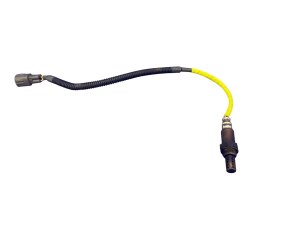
Typical fix: Replace the rear oxygen sensor (Bank 1, Sensor 2).
Est. part cost: $80-$180
Rare But Worth Checking
- Aftermarket Intake or Exhaust without Proper Tune: Installing an aftermarket intake or downpipe changes the engine's airflow characteristics. The stock ECU tune is not calibrated for these changes and can lead to inaccurate A/F sensor readings, often causing P2097. An ECU tune (e.g., from Cobb or a professional tuner) is required to recalibrate the system.
- Leaking Fuel Injectors: A fuel injector stuck open will dump excess fuel, causing a true rich condition. This is often accompanied by other codes, like a cylinder misfire (P030X), and may be noticeable by checking the spark plugs for fouling.
- Failing Catalytic Converter: A clogged or inefficient catalytic converter can trap unburnt fuel and alter exhaust flow, leading to incorrect readings by the rear O2 sensor. This should be considered only after ruling out sensors and leaks, as it is an expensive repair.
- Carbon Buildup on Intake Valves: On direct-injection (DIT) engines like the FA20DIT, carbon buildup can affect engine breathing and combustion efficiency, potentially leading to fuel trim issues. Subaru has issued TSB 02-193-24 which supersedes 09-74-21R, outlining a walnut blasting procedure for cleaning. While not a direct cause, severe buildup can contribute to rough running and fuel trim problems.
Diagnosis Steps
- Read all stored DTCs with an OBD-II scanner to check for any other related codes.
- Perform a thorough visual inspection of the exhaust system from the turbocharger back to the rear O2 sensor. Look for soot stains at gaskets (especially the turbo-to-downpipe flange) or cracks in the piping.
- For best results, have a shop perform a smoke test on the exhaust to find any hard-to-see leaks.
- Use a scan tool to monitor live data. Key parameters for the WRX are 'A/F Learning 1', 'A/F Correction 1', 'AF Sensor 1 Ratio' (front sensor), and 'AF Sensor 3 Voltage' (rear sensor).
- On a fully warmed-up engine at idle, A/F Learning 1 should be within +/- 8%. If it is consistently high negative (e.g., -10% or more), the ECU is trying to correct a rich condition detected by the front A/F sensor, making it a prime suspect.
- A healthy rear O2 sensor ('AF Sensor 3 Voltage') should show a relatively steady voltage, typically between 0.6V and 0.8V. If it is stuck high (>0.8V), it is signaling a rich condition.
- If no exhaust leaks are found and the front A/F sensor appears to be causing large negative fuel trims, the front A/F sensor is the most likely culprit.
- If the front sensor and fuel trims appear normal, but the rear sensor reads consistently rich, the rear O2 sensor itself may be faulty.
- If sensors and exhaust are confirmed good, investigate the fuel system (fuel pressure, injector balance) for issues causing a true rich condition.
Parts You'll Likely Need
- Front Air/Fuel Ratio Sensor (Bank 1 Sensor 1)
(OEM #22641AA660 (for 2015-2021 WRX, verify by VIN))— This is the most common point of failure that causes the ECU to incorrectly enrich the fuel mixture, leading to the P2097 code. The OEM manufacturer is Denso.
Trusted brands: Subaru (Denso), Denso (e.g., 234-9136 as a common cross-reference, but always verify fitment)
OEM price range: $200-$250
Aftermarket price range: $120-$180 - Rear Oxygen Sensor (Bank 1 Sensor 2)
(OEM #22690AB010 (for 2015-2021 WRX, verify by VIN))— This sensor is what triggers the code. If it has failed and is sending a false rich signal, it will need to be replaced.
Trusted brands: Subaru (Denso), Denso (e.g., 234-4596 as a common cross-reference, but always verify fitment)
OEM price range: $150-$200
Aftermarket price range: $80-$130 - Turbo to Downpipe Gasket
(OEM #44022AA180 (for 2015-2021 WRX, verify by VIN))— This is a very common location for an exhaust leak that can cause this code. Many owners upgrade to a thicker aftermarket gasket for better sealing.
Trusted brands: Subaru OE, GrimmSpeed, Permatex Copper Gasket Maker (as a supplement)
OEM price range: $20-$30
Aftermarket price range: $15-$30
Related Codes That Often Appear With This One
- P2096 — This code is for 'Post Catalyst Fuel Trim System Too Lean'. It's the opposite of P2097 and can sometimes appear intermittently if the underlying problem (like a faulty sensor) is causing erratic fuel trims.
- P0172 — This code for 'System Too Rich (Bank 1)' indicates the front A/F sensor is detecting a rich condition. If both the front and rear sensors agree the system is rich, it points more strongly toward a fuel delivery issue like a leaking injector or a problem with the MAF sensor.
Technical Service Bulletins (TSBs) & Recalls
- 18-228-25R: 'This bulletin announces the diagnostic procedures to be used when DTCs P2096 (POST CATALYST FUEL TRIM SYSTEM TOO LEAN BANK 1) and P2097 (POST CATALYST FUEL TRIM SYSTEM TOO RICH BANK 1) are detected by the Engine Control Module (ECM). It provides a specific diagnostic flowchart for technicians.'
- 02-193-24 (Supersedes 09-74-21R): Provides a service procedure for removing carbon deposits on DIT engines using a walnut blasting machine to address symptoms like rough idle and black smoke, which can be related to fuel trim codes.
Platform-Specific Known Issues
- A voluntary emissions recall (WRA-25) was issued for some 2017 WRX models for rear catalyst performance, which could be related to this code. The remedy involved replacing the rear catalyst and, for manual transmission cars, reprogramming the ECU.
- Modified Vehicles: This code is extremely common on WRXs with aftermarket air intakes or J-pipes/downpipes that do not have a corresponding professional ECU tune. The stock tune cannot compensate for the change in airflow, leading to fuel trim errors.
Helpful Videos

![How to Fix SUBARU P2097 Engine Code in 4 Minutes [2 DIY Methods / Only $9.53]](https://img.youtube.com/vi/5NXvlfvN8_w/mqdefault.jpg)
![How to Fix P2097 Engine Code in 4 Minutes [2 DIY Methods / Only $9.84]](https://img.youtube.com/vi/rCwtzRmhMwY/mqdefault.jpg)
Used OEM Parts in Stock


New Aftermarket Parts Available


The information in this article is provided for general reference and educational purposes only. Vehicle specifications, procedures, and part compatibility can vary by production date, trim level, and region. Always consult your vehicle's factory service manual and verify part numbers before purchasing or performing repairs. Safety-critical components such as airbags, seat belts, and braking systems should be installed by a qualified professional.
- Subaru WRX:
- 🎬 Helpful Videos
- 🛍️ Shop This Part
- What's Unique About the 2015-2022 Subaru WRX
- Diagnostic Flowchart
- Symptoms You May Notice
- Most Likely Causes
- Rare But Worth Checking
- Diagnosis Steps
- Parts You'll Likely Need
- Related Codes That Often Appear With This One
- Technical Service Bulletins (TSBs) & Recalls
- Platform-Specific Known Issues
- 🎟️ Get 5% Off