

P2097 on 2015-2022 Subaru Outback: Causes and Fixes for Rich Fuel Trim
On a 2015-2022 Subaru Outback, code P2097 most often points to a failing rear (downstream) oxygen sensor or an exhaust leak. Replacing the sensor is the most common fix, costing around $70-$150 for the part. Checking for exhaust leaks, especially around the front pipe on 2015-2016 models, is a critical second step.
- P2097 means your Outback's computer thinks the engine is running too rich after the exhaust has been treated by the catalytic converter.
- The most likely cause is a failing rear oxygen sensor, which is a common wear item.
- Before replacing any parts, perform a thorough inspection of the exhaust system for leaks, as this is another common cause.
- Continuing to drive with this code can lead to poor gas mileage and may eventually damage your catalytic converter, a much more expensive repair.
- Using an OEM-brand sensor like Denso for replacement is highly recommended for reliability.
What's Unique About the 2015-2022 Subaru OUTBACK
For this generation of Subaru Outback, the P2097 code is a well-documented issue. Subaru has issued a specific Technical Service Bulletin (TSB #18-228-25R) that outlines diagnostic procedures for this exact code, indicating it's a known pattern that applies to a wide range of Subaru models from 2015-2025. While the root cause is often a standard component failure like an O2 sensor, owners should be aware that Subaru has a defined process for technicians to follow, which can lead to a more accurate and faster diagnosis than generic troubleshooting. Furthermore, a specific recall campaign (WUJ-95) for 2015-2016 models addresses cracks in the front exhaust pipe, a direct cause for this code.
Diagnostic Flowchart
Tap your situation to follow the diagnostic path that matches what you're seeing on this vehicle.
Generation note: This range covers two Outback generations: the 5th Gen (2015-2019) and the 6th Gen (2020-2022). While the causes for P2097 are similar, there is a service campaign (WUJ-95) for potential front exhaust pipe cracks on 2015-2016 models, which could be a cause. Additionally, a TSB for rear O2 sensors on 2020-2024 models suggests an updated part is available for the 6th generation.
Symptoms You May Notice
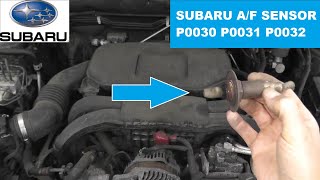
- Check Engine Light is on 🎬 Watch this video to see a real P2097 diagnosis on a Subaru.
- Decreased fuel economy
- Rough or erratic idle
- Lack of engine performance or hesitation
- Strong fuel or "rotten egg" smell from the exhaust
- Black smoke from the tailpipe in some cases
- Replacing the front Air/Fuel Ratio sensor when the rear Oxygen Sensor is the actual problem.
- Replacing O2 sensors when an undetected exhaust leak is the true cause. Many forum users report replacing sensors only to have the code return, later finding a small leak in a gasket or pipe weld.
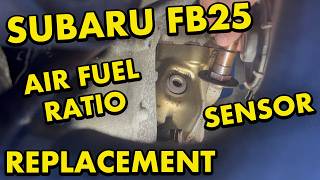
- Replacing the rear O2 sensor when the front A/F sensor is actually at fault, causing the system to run rich.
Most Likely Causes
- Failing Rear (Downstream) Oxygen Sensor 🔴 High Probability Oxygen sensors are wear-and-tear items that degrade over time. On many modern vehicles, including Subarus, they are a frequent cause for post-catalyst fuel trim codes. Coolant contamination from prior repairs like head gasket replacements can also cause premature sensor failure.
How to confirm: Use a scan tool to monitor the live voltage data from the Bank 1 Sensor 2. A healthy downstream sensor should show a relatively stable voltage (typically 0.6-0.8V) when the engine is warm and at a steady RPM. If the voltage is stuck high (above 0.8V) or fluctuating wildly like the upstream sensor, it is likely faulty. A technician noted a reading of 0.875 volts on an Outback with this code.
Typical fix: Replace the rear oxygen sensor (Bank 1, Sensor 2). It is highly recommended to use an OEM or Denso-branded sensor, as some owners report issues with generic aftermarket sensors.
Est. part cost: $70-$180 - Exhaust Leak 🟡 Medium Probability Leaks can develop at gaskets or welds, especially on older vehicles or those in rust-prone climates. A service campaign (WUJ-95) for 2015-2016 models noted potential cracks in the bellows of the front exhaust pipe. A leak before the rear O2 sensor can draw in outside air, confusing the sensor and leading to an incorrect rich reading. This is common after repairs requiring exhaust removal, like a clutch replacement, if old gaskets are reused.
How to confirm: Visually inspect the exhaust system from the engine to the tailpipe for soot marks, cracks, or holes, paying close attention to the flexible bellows on the front pipe and flange gaskets. Listen for hissing or ticking sounds that may get louder with acceleration. A professional smoke test is the most definitive way to find small leaks.
Typical fix: Repair the leak. This may involve replacing a gasket, tightening bolts, or welding a crack. For 2015-2016 models under the WUJ-95 campaign, the front exhaust pipe assembly is replaced by the dealer.
Est. part cost: $10-$500 - Failing Front (Upstream) Air/Fuel Ratio Sensor ⚪ Low Probability The front sensor (Bank 1, Sensor 1) is critical for primary fuel control. If it provides incorrect (biased lean) data to the ECM, it can cause an actual rich condition that the rear sensor then correctly reports. This is a classic case of 'shooting the messenger' where the downstream sensor is blamed for a problem caused by the upstream sensor.
How to confirm: Monitor live data for both the upstream and downstream sensors. If the upstream sensor is lazy, slow to respond, or its readings seem incorrect for the engine load, it may be the true cause. On a similar Subaru, a technician noted a reading of 2.8 volts from the upstream sensor when a P2097 code was present.
Typical fix: Replace the front Air/Fuel Ratio sensor (Bank 1, Sensor 1).
Est. part cost: $100-$220 - Leaking Fuel Injector(s) ⚪ Low Probability An injector that is stuck open or leaking will dump excess fuel into a cylinder, causing a genuine rich condition.
How to confirm: This will usually be accompanied by other codes, like a misfire code for a specific cylinder (e.g., P0301). A mechanic can perform a fuel injector balance test or check spark plugs for signs of being fuel-fouled (dark and sooty) to confirm.
Typical fix: Replace the faulty fuel injector(s).
Est. part cost: $150-$400 per injector
Rare But Worth Checking
- Clogged or Failing Catalytic Converter: While a failing converter can cause this code, it's less common than sensor or leak issues. It's usually a result of a long-term rich condition, not the initial cause. A temperature check before and after the converter can help diagnose a clog. Metal flakes seen in the exhaust pipe can also indicate a failing converter.
- ECM Software Issue: Sometimes, the ECM's logic for interpreting sensor data can be too sensitive. Subaru has issued ECM updates for other issues like battery charging logic (TSB 11-174-17R), so checking for available updates is a valid diagnostic step.
- Faulty Mass Airflow (MAF) Sensor: A dirty or failing MAF sensor can provide incorrect airflow data to the ECM, leading to an improper fuel mixture. This may not always throw a specific MAF code.
Diagnosis Steps
- Scan for Codes: Use an OBD-II scanner to confirm P2097 and check for any other stored codes, such as misfire (P030x) or catalyst efficiency (P0420) codes.
- Inspect for Exhaust Leaks: Visually and audibly inspect the entire exhaust system for cracks, holes, or bad gaskets, particularly between the engine and the rear O2 sensor. On 2015-2016 models, pay special attention to the flexible bellows on the front pipe per campaign WUJ-95.
- Analyze Live Sensor Data: Use a scan tool to monitor the voltage of the rear O2 sensor (Bank 1, Sensor 2). It should fluctuate slowly around a steady voltage (e.g., ~0.7V). If it's stuck high (rich, >0.8V), there is a problem. A reading of 0.875V was noted on a vehicle with this code.
- Compare Front and Rear Sensors: Observe the front A/F sensor (Bank 1, Sensor 1) as well. Its readings should be active and responsive to throttle changes. If the front sensor seems lazy or biased, it could be causing the rich condition that the rear sensor is detecting.
- Perform a Smoke Test: If a leak is suspected but not visible, a smoke test is the most effective way to pinpoint its location. This is a common professional step when visual inspection fails.
- Test the Fuel System: If sensors and exhaust are confirmed to be good, investigate for fuel system issues like leaking injectors or incorrect fuel pressure. Check spark plugs for black, sooty deposits indicating a rich condition in a specific cylinder.
- Check for TSBs and Software Updates: Ask a dealership to check your VIN for any open campaigns (like WUJ-95) or available ECM software updates related to emissions or fuel trim.
Parts You'll Likely Need
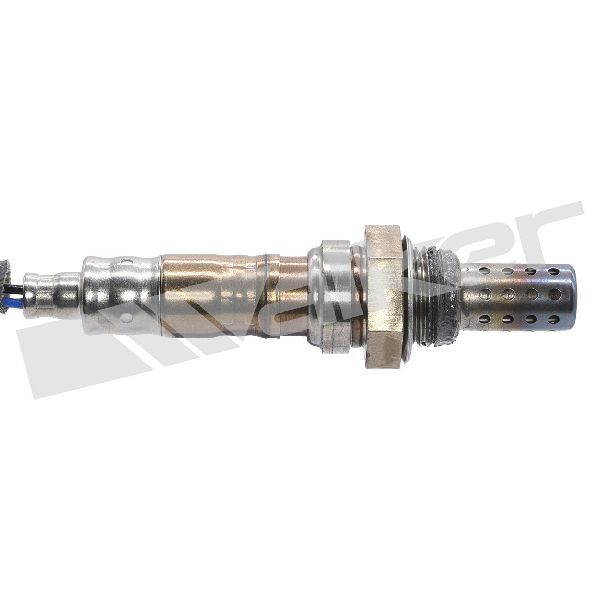
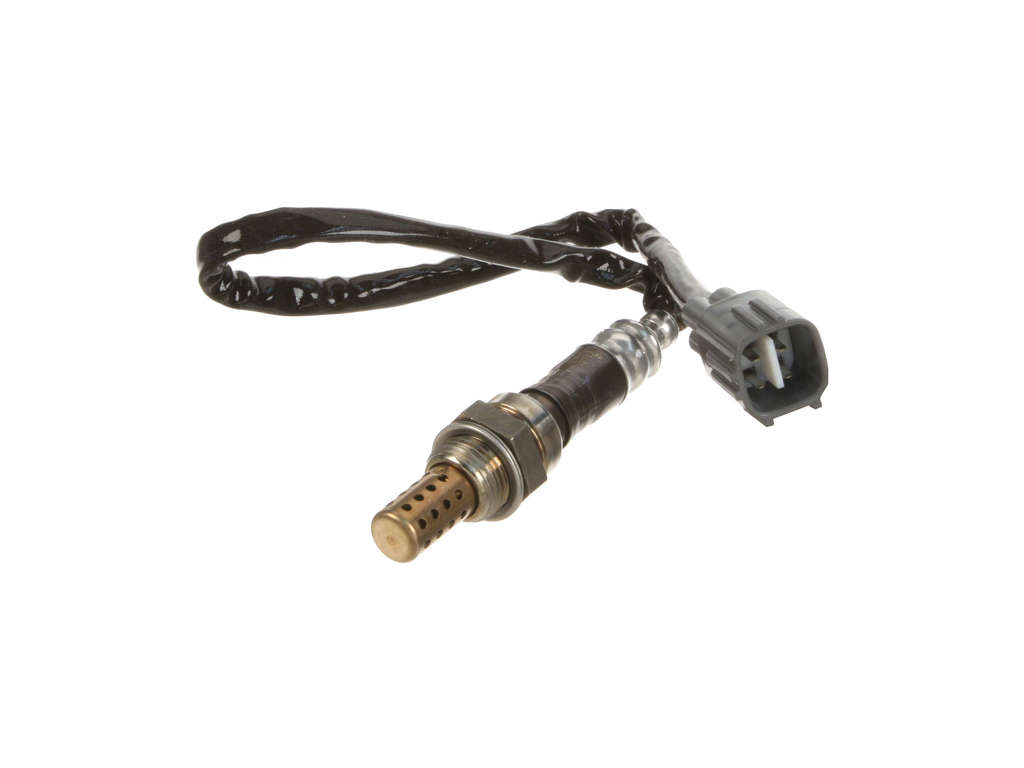
- Rear Oxygen Sensor (Bank 1, Sensor 2)
(OEM #22690AA81A)— This is the most frequent failure point for code P2097. The sensor's reading is what directly triggers the code. Part number 22690AA81A is listed for the 2.5L non-turbo Legacy/Outback.
Trusted brands: Denso (OEM supplier), NGK/NTK
OEM price range: $120-$180
Aftermarket price range: $70-$130 - Exhaust Gasket — If an exhaust leak is found at a flange, replacing the gasket is the required fix. This is a common and inexpensive part to replace during exhaust work, and failure to do so after a repair like a clutch replacement can cause this code.
Trusted brands: Fel-Pro, Walker Exhaust, Subaru (OEM)
Related Codes That Often Appear With This One
- P2096 — This is the opposite code, 'Post Catalyst Fuel Trim System Too Lean'. The same TSB (#18-228-25R) covers both, indicating they relate to the same system and diagnostic process.
- P030X (e.g., P0301, P0302) — A cylinder-specific misfire code can appear if a leaking fuel injector is the root cause of the rich condition.
- P0420 — This code for 'Catalyst System Efficiency Below Threshold' can sometimes precede or accompany P2097, as issues with the sensors or exhaust leaks can affect the catalytic converter's performance.
Technical Service Bulletins (TSBs) & Recalls
- 18-228-25R: Announces diagnostic procedures for DTCs P2096 (Too Lean) and P2097 (Too Rich) on Bank 1. This TSB applies to a wide range of 2015-2025 Subaru models, including the Outback.
- WUJ-95: A voluntary emissions recall/service campaign for 2015-2016 Legacy and Outback 2.5L models to replace the front exhaust pipe due to potential cracks in the bellows section.
Platform-Specific Known Issues
- Subaru issued Technical Service Bulletin #18-228-25R, which provides specific diagnostic procedures for codes P2096 and P2097.
- A service campaign (WUJ-95) was initiated for some 2015-2016 Outback models for cracks in the front exhaust pipe, which can cause exhaust leaks leading to this code.
- For 2020 and newer models, TSB #09-115-24 indicates an updated rear oxygen sensor part is available to address premature failures, although it lists different trouble codes.
- Owners strongly recommend using OEM (Subaru) or Denso brand oxygen sensors, as they report that cheaper aftermarket sensors can fail prematurely or not resolve the code.
Mechanic-Grade Diagnostic Values
- Downstream O2 Sensor (Bank 1, Sensor 2) Voltage — expected: ~0.6V - 0.8V (stable). Failure: Stuck high, above 0.8V. A technician on a 2005 Outback with P2097 reported a live data reading of 0.875 volts.
- Upstream A/F Sensor (Bank 1, Sensor 1) Voltage — expected: Should fluctuate rapidly.. Failure: A technician noted a reading of 2.8 volts on an Outback with P2097, which may indicate the front sensor is causing the rich condition.
- Rear O2 Sensor Heater Circuit Resistance — expected: Refer to factory service manual for specific ohm range.. Failure: A reading of infinity (open circuit) or zero (short circuit) indicates a failed heater element within the sensor.
Scan Tool Commands That Help
- Manual Procedure (No Scan Tool Required): Subaru Master Reset and System Relearn Procedure — After replacing a component like an O2 sensor or disconnecting the battery, this procedure forces the vehicle's computers to relearn base values for the engine, transmission, and stability control. It can resolve issues caused by corrupted adaptation data. The steps include battery disconnection/reconnection, key cycles, steering angle sensor calibration, throttle position relearn, and transmission adaptive learning drives.
Wiring & Ground Locations
- Rear O2 Sensor Connector (Gen 5) — On the 2015-2019 Outback, the sensor is at the bottom passenger side of the engine compartment. The connector is accessed by removing the front corner of the passenger-side inner fender liner and reaching in behind it.. Damage to this connector or harness during service can cause incorrect sensor readings, triggering P2097. Knowing its location is key for inspection and replacement.
- Rear O2 Sensor Harness Routing — The sensor's harness runs up the side of the transmission and plugs into the main vehicle harness on top of the bell housing on many Subaru models.. This area can be disturbed during transmission or clutch service. A disconnected or damaged harness here will cause sensor codes.
- Rear O2 Sensor Connector Pins (Typical 4-wire) — At the sensor connector.. For manual testing: Pins 1 & 2 are typically for the heater circuit (two white wires on the sensor side). Pin 4 is the signal wire (black wire on sensor side). This allows a technician to test for voltage, ground, and resistance directly at the connector.
Real Owner Repair Stories
- Melniks Automotive YouTube Channel (2010 Subaru Impreza WRX (similar EJ-series engine platform)) — Check Engine Light with P2097, very poor fuel economy (dropped to 17.4 MPG).
✅ What actually fixed it Replacing the rear (downstream) oxygen sensor. After replacement and clearing the code, fuel economy improved to over 20 MPG, confirming the fix. - Reddit user nesquik1030 on r/subaru (2005 Subaru Impreza RS) — P2097 code appeared consistently after a clutch and rear main seal replacement, a job which requires removing the exhaust system.
❌ Tried (didn't work) Using a fuel system cleaner (Cataclean)., Replacing the downstream O2 sensor.
✅ What actually fixed it The strong suspicion and consensus in the thread was an exhaust leak from a manifold gasket that was not replaced during the clutch job. The user acknowledged this was the likely cause, as the problem started immediately after the exhaust was re-installed.
When the Usual Fixes Don't Work
- While replacing the rear O2 sensor is the most common fix, it is not a guaranteed solution. In one documented case involving a 2005 Outback with P2097, a technician replaced the rear O2 sensor, which did not resolve the code. A subsequent ECM re-flash performed by a Subaru dealer also failed to provide a permanent fix, with the code returning after two days. This indicates the root cause was likely something else, such as a persistent exhaust leak, a failing front A/F sensor providing bad data, or a wiring issue. Another owner reported replacing the downstream sensor did not fix the P2097 code that appeared after a clutch replacement; the likely cause was determined to be an exhaust leak from a reused gasket.
OEM Part Supersession History
22690AA810→22690AA81A— Part number consolidation or minor revision by the manufacturer.
Heads up: Part 22690AA81A is the more commonly cited replacement for the specified vehicle range, though 22690AA810 and 22690AA93A are also listed as related part numbers. Always verify with VIN.
Model Year Variations Within This Range
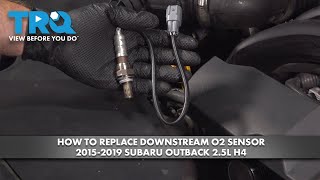
- 2015-2019 (Gen 5): The service procedure to access the rear O2 sensor on the 5th generation Outback specifically involves removing push clips from the front corner of the passenger-side inner fender liner and pulling it back to gain access to the sensor and its electrical connector.
Helpful Videos

We Have This Part in Stock

The information in this article is provided for general reference and educational purposes only. Vehicle specifications, procedures, and part compatibility can vary by production date, trim level, and region. Always consult your vehicle's factory service manual and verify part numbers before purchasing or performing repairs. Safety-critical components such as airbags, seat belts, and braking systems should be installed by a qualified professional.
- Subaru OUTBACK:
- 🎬 Helpful Videos
- 🛍️ Shop This Part
- What's Unique About the 2015-2022 Subaru OUTBACK
- Diagnostic Flowchart
- Symptoms You May Notice
- Most Likely Causes
- Rare But Worth Checking
- Diagnosis Steps
- Parts You'll Likely Need
- Related Codes That Often Appear With This One
- Technical Service Bulletins (TSBs) & Recalls
- Platform-Specific Known Issues
- Mechanic-Grade Diagnostic Values
- Scan Tool Commands That Help
- Wiring & Ground Locations
- Real Owner Repair Stories
- When the Usual Fixes Don't Work
- OEM Part Supersession History
- Model Year Variations Within This Range
- 🎟️ Get 5% Off