

P2097 on 2015-2022 Subaru Legacy: Post-Catalyst Rich Causes & Fixes
On a 2015-2022 Subaru Legacy, code P2097 is most often caused by a failing front air/fuel ratio (A/F) sensor or an exhaust leak before the catalytic converter. While the code points to the rear O2 sensor, it's often just reporting the problem. Replacing the front A/F sensor (Bank 1, Sensor 1) is the most common fix. In some cases, an ECM software update may be required.
- Don't immediately replace the rear oxygen sensor; the problem is likely upstream.
- The most common cause for P2097 on a 2015-2022 Legacy is a faulty front Air/Fuel (A/F) ratio sensor.
- Thoroughly inspect the exhaust system for leaks between the engine and catalytic converter before replacing any parts.
- Addressing this code promptly will save you money on fuel and prevent potential damage to your catalytic converter.
- Use a scan tool to check live data from both front and rear sensors to properly diagnose the issue.
What's Unique About the 2015-2022 Subaru LEGACY
On many vehicles, a P2097 code points directly to a bad rear O2 sensor. However, on Subaru platforms like the Legacy, it's very common for the issue to originate upstream. The front Air/Fuel (A/F) ratio sensor is frequently the actual culprit, failing in a way 🎬 Watch: Diagnostic tips for testing A/F vs O2 sensors that causes the ECM to add too much fuel. The rear O2 sensor then correctly reports this rich condition, setting the P2097 code. Owners often mistakenly replace the rear sensor first when the front sensor was the root cause, a common theme in owner forums. Additionally, Subaru has issued Technical Service Bulletins (TSBs) that involve reprogramming the ECM to correct the logic for this code, indicating it's a known software sensitivity.
Diagnostic Flowchart
Tap your situation to follow the diagnostic path that matches what you're seeing on this vehicle.
Generation note: This range covers the end of the sixth generation (2015-2019) and the beginning of the seventh generation (2020-2022) of the Subaru Legacy. The sixth-gen used 2.5L FB25 and 3.6L EZ36 engines, while the seventh-gen introduced a direct-injected 2.5L FB25DI and a turbocharged 2.4L FA24F. While the causes are similar, part numbers for sensors will differ between these engines. The diagnostic procedure is largely the same, as confirmed by Subaru TSBs covering these models.
Symptoms You May Notice
- Check Engine Light is on
- Flashing cruise control light (a common Subaru behavior when a CEL is triggered)
- Noticeable decrease in fuel economy
- Slightly rough or uneven idle
- Hesitation or stumbling when accelerating from a stop.
- Strong smell of unburned fuel or rotten eggs from the tailpipe.
- Black smoke from the exhaust.
- Immediately replacing the rear oxygen sensor. The P2097 code is reported by the rear O2 sensor, but the root cause is often an issue upstream, like a bad front A/F sensor or an exhaust leak. Diagnosing the system instead of just replacing the reporting part is crucial.
Most Likely Causes
- Faulty Front Air/Fuel (A/F) Ratio Sensor 🔴 High Probability The front A/F sensor is a primary input for fuel control. If it becomes lazy or inaccurate, it can incorrectly tell the ECM that the engine is running lean, causing the ECM to add excess fuel. The rear O2 sensor then reports the resulting rich mixture. This is the most widely reported fix in owner forums for the P2097 code on Subarus.
How to confirm: Use a scan tool to monitor live data for Bank 1, Sensor 1. A healthy front A/F sensor should show rapid voltage fluctuations. If its readings are stuck, slow to respond, or biased, it is likely faulty. Often, replacing the front sensor resolves the P2097 code.
Typical fix: Replace the front A/F ratio sensor (Bank 1, Sensor 1).
Est. part cost: $100-$250 - Exhaust Leak 🟡 Medium Probability Subaru exhaust systems use several gasketed flanges that can develop leaks over time, particularly the donut gasket between the catalytic converter and mid-pipe, and the manifold gaskets. A leak before or near the front A/F sensor can introduce outside air, tricking the sensor into thinking the engine is lean. This leads to over-fueling and a P2097 code downstream. This is especially common after exhaust work, like a clutch replacement where the exhaust was removed.
How to confirm: Perform a visual inspection of the exhaust manifold, gaskets, and pipes for black soot trails or cracks. A professional smoke test is the most effective way to find small leaks. You may also hear a hissing or ticking sound from the engine bay that changes with RPM.
Typical fix: Replace the leaking exhaust gasket (e.g., donut gasket, manifold gasket) or repair the leaking section of the pipe.
Est. part cost: $20-$80 - Faulty Rear Oxygen Sensor ⚪ Low Probability
How to confirm: While the code points to this sensor, it's often just doing its job. However, if the front A/F sensor and exhaust system are confirmed to be good, the rear sensor could be failing. Check its live data on a scan tool; it should show a relatively steady voltage (typically between 0.4V and 0.7V) on a warm engine with a good catalytic converter. If it's stuck high (rich) for no reason, it may be faulty.
Typical fix: Replace the rear oxygen sensor (Bank 1, Sensor 2).
Est. part cost: $80-$180 - ECM Software Update Needed ⚪ Low Probability Subaru has released TSBs (e.g., 11-174-17R) for certain models to address issues including incorrect diagnostic logic that can trigger codes like P2097. In some cases, the sensor thresholds are too sensitive and an ECM re-flash with updated software is the correct fix.
How to confirm: A Subaru dealership or a well-equipped independent shop can check your vehicle's current ECM calibration ID against the latest available version from Subaru. If it's outdated, a re-flash is needed.
Typical fix: Reprogram the Engine Control Module (ECM) with the latest software.
Est. part cost: $0-$150 (Labor for reprogramming)
Rare But Worth Checking
- Leaking Fuel Injector: A fuel injector that is stuck open or leaking will dump excess fuel into the cylinder, causing a genuine rich condition that the rear O2 sensor will detect. This may also be accompanied by misfire codes (e.g., P030x) and a raw fuel smell.
- High Fuel Pressure: A failing fuel pressure regulator can cause system-wide high fuel pressure, leading to a rich mixture across all cylinders. This can be checked with a fuel pressure gauge connected to the fuel rail.
- Failing Catalytic Converter: While less common for a rich code, a chemically inefficient or physically damaged (e.g., clogged, melted) catalytic converter can fail to process exhaust gases correctly, leading to inaccurate readings by the rear O2 sensor. This is often preceded by a P0420 code.
Diagnosis Steps
- Read all stored trouble codes with an OBD-II scanner. Note any other codes present.
- Inspect the entire exhaust system from the engine to the tailpipe for any signs of leaks, paying close attention to gaskets (manifold, donut) and welds. A smoke test is recommended for accuracy.
- Use a scan tool to view live data. Observe the behavior of both the front A/F sensor (Bank 1, Sensor 1) and the rear O2 sensor (Bank 1, Sensor 2) at idle and while driving.
- The front A/F sensor (B1S1) voltage should fluctuate rapidly. If it's slow, stuck, or biased lean (causing the ECM to add fuel), it's the primary suspect.
- The rear O2 sensor (B1S2) should have a relatively stable voltage, typically above 0.5V for a rich condition. If it's stuck high (e.g., >0.8V) even when fuel trims are negative, the sensor itself may be faulty. If it fluctuates wildly like the front sensor, the catalytic converter may be failing.
- Check long-term and short-term fuel trims (LTFT and STFT). For P2097, you will likely see negative fuel trims as the ECM tries to pull fuel to correct the rich condition.
- If sensors and exhaust appear fine, investigate the fuel system. Check for leaking injectors and verify fuel pressure is within specification.
- Check with a dealer for any open TSBs or required ECM software updates for your vehicle's VIN.
Parts You'll Likely Need
- Front Air/Fuel Ratio Sensor
(OEM #Denso 234-9123 (for 2.5L FB25 engine, verify for specific year))— This is the most frequent cause of P2097 on this platform. A failing front sensor provides bad data to the ECM, causing an actual rich condition that the rear sensor correctly reports.
Trusted brands: Denso, NTK
OEM price range: $200-$300
Aftermarket price range: $100-$180 - Exhaust Gasket — Exhaust leaks before the sensors are a common cause of incorrect fuel trim adjustments leading to this code. The donut gasket is a frequent failure point.
Trusted brands: Fel-Pro, Bosal, Subaru OEM
OEM price range: $30-$60
Aftermarket price range: $15-$40 - Rear Oxygen Sensor
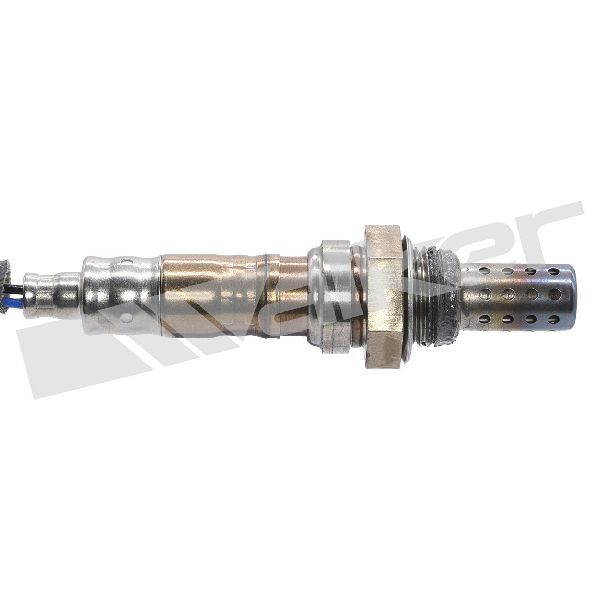
(OEM #Denso 234-4732 (for 2.5L FB25 engine, verify for specific year))— Replaced when it is confirmed to be faulty, but it is less commonly the root cause than the front sensor or an exhaust leak.
Trusted brands: Denso, Bosch
OEM price range: $150-$250
Aftermarket price range: $80-$150
Related Codes That Often Appear With This One
- P0172 — System Too Rich (Bank 1). This code indicates the front A/F sensor is also detecting a rich condition, suggesting a more systemic problem like a leaking injector or fuel pressure issue.
- P0420 — Catalyst System Efficiency Below Threshold. If the rich condition persists long enough, it can damage the catalytic converter, leading to a P0420 code appearing alongside or before the P2097.
Technical Service Bulletins (TSBs) & Recalls
- 18-228-25R: This bulletin announces the diagnostic procedures to be used when DTCs P2096 (POST CATALYST FUEL TRIM SYSTEM TOO LEAN BANK 1) and P2097 (POST CATALYST FUEL TRIM SYSTEM TOO RICH BANK 1) are detected by the Engine Control Module (ECM).
Platform-Specific Known Issues
- The TSB #18-228-25R specifically addresses the diagnostic procedure for P2097, indicating it's a recognized issue by Subaru.
- TSB #11-174-17R suggests that for some 2017 models, an ECM reprogram is necessary to fix faulty logic that can contribute to various issues, which may include setting this code under certain conditions.
Mechanic-Grade Diagnostic Values
- Downstream O2 Sensor (B1S2) Voltage — expected: Relatively steady around 0.45V on a healthy, warm engine.. Failure: A steady voltage above 0.45V (e.g., 0.875V) indicates a rich condition. If it fluctuates rapidly like the upstream sensor, the catalytic converter may be bad.
- Upstream A/F Sensor (B1S1) Voltage — expected: Should fluctuate rapidly between approximately 0.1V (lean) and 0.9V (rich).. Failure: A slow, stuck, or biased reading indicates a faulty sensor.
- O2 Sensor Heater Circuit Resistance — expected: Typically between 5-7 Ω, but manufacturer specs should be confirmed.. Failure: A reading outside the specified range indicates a failed heater circuit within the sensor.
- Long Term Fuel Trim (LTFT) — expected: Should be close to 0%.. Failure: For a P2097, the ECM will be commanding negative fuel trims to compensate for the rich reading. However, a user reported a persistent P2097 with a LTFT of +4.7%, indicating the complexity of the issue.
Wiring & Ground Locations
- O2/AF Sensor Connectors — The electrical connectors for both the upstream and downstream sensors are located under the car, on the passenger side, near the transmission.. These connectors must be disconnected to replace the sensors. They can also be a point of failure due to corrosion or damage, causing the same symptoms as a bad sensor.
- Sensor Wiring Harness — The rear sensor harness runs up the side of the transmission and connects to the main harness on top of the bell housing.. This harness can be damaged during transmission or clutch work, leading to sensor codes. Knowing its routing is crucial for inspection.
- Sensor Wires (Universal Color Code) — On the sensor itself, not the car's harness.. For universal sensors, aftermarket wire colors are often two white wires (heater), one black wire (signal), and one gray wire (signal ground). This is critical if splicing a universal sensor.
Real Owner Repair Stories
- YouTube user 'melniks automotive' (2010 Subaru Impreza WRX (Similar EJ-series engine platform and diagnostics)) — Check Engine Light, flashing cruise control, traction light on, poor fuel economy (dropped from ~20 MPG to 17.4 MPG). No hesitation or lack of power.
❌ Tried (didn't work) The owner initially suspected the aftermarket Magnaflow exhaust but ruled it out.
✅ What actually fixed it Replacing the rear oxygen sensor (post-catalyst, Bank 1 Sensor 2) resolved the issue. The fuel economy immediately and dramatically improved to over 20 MPG on subsequent drives, confirming the fix. - Ultimate Subaru Message Board user 'Sapper 157' (2005 Subaru Forester XS (Similar EJ25 engine and diagnostic principles)) — Persistent P2097 code, but with smooth idle, good engine response, and seemingly normal fuel economy (23-24 MPG).
❌ Tried (didn't work) Replaced the downstream O2 sensor with a Denso part., Noted the front A/F sensor had been replaced with an OEM part only 11,000 miles prior.
✅ What actually fixed it The thread concluded with a master technician suggesting the only remaining likely causes were a failing (but not yet P0420-triggering) catalytic converter or an ECM logic issue. The final recommended solutions were to either replace the catalytic converter with an OEM part or use a Tactrix cable to re-flash the ECU and delete the post-catalyst trim monitoring system, with the latter being a more certain and cheaper fix.
When the Usual Fixes Don't Work
- While the common wisdom for Subarus is that P2097 is usually caused by the front A/F sensor, there are confirmed cases where the vehicle exhibited no other major symptoms besides poor fuel economy, and the problem was definitively solved by replacing the rear O2 sensor. This highlights that while less common, a faulty rear O2 sensor should not be completely dismissed after the primary suspects (front A/F sensor, exhaust leaks) are checked.
Helpful Videos
![How to Fix SUBARU P2097 Engine Code in 4 Minutes [2 DIY Methods / Only $9.53]](https://img.youtube.com/vi/5NXvlfvN8_w/mqdefault.jpg)

We Have This Part in Stock


The information in this article is provided for general reference and educational purposes only. Vehicle specifications, procedures, and part compatibility can vary by production date, trim level, and region. Always consult your vehicle's factory service manual and verify part numbers before purchasing or performing repairs. Safety-critical components such as airbags, seat belts, and braking systems should be installed by a qualified professional.
- Subaru LEGACY:
- 🎬 Helpful Videos
- 🛍️ Shop This Part
- What's Unique About the 2015-2022 Subaru LEGACY
- Diagnostic Flowchart
- Symptoms You May Notice
- Most Likely Causes
- Rare But Worth Checking
- Diagnosis Steps
- Parts You'll Likely Need
- Related Codes That Often Appear With This One
- Technical Service Bulletins (TSBs) & Recalls
- Platform-Specific Known Issues
- Mechanic-Grade Diagnostic Values
- Wiring & Ground Locations
- Real Owner Repair Stories
- When the Usual Fixes Don't Work
- 🎟️ Get 5% Off