

P2097 on 2008-2010 Saturn VUE: Causes and Fixes for Post-Catalyst Rich Trim
Code P2097 on a 2008-2010 Saturn VUE often points to a leaking fuel injector, a known issue highlighted in GM Technical Service Bulletin #PIP4964F. Before replacing any oxygen sensors, which is a common misdiagnosis, perform a fuel injector balance test to rule out this highly probable cause.
- P2097 means the exhaust is too rich after the catalytic converter on Bank 1.
- For the 2008-2010 Saturn VUE, a leaking fuel injector is a highly probable cause, backed by a manufacturer TSB.
- Always test fuel injectors and check for exhaust leaks before you decide to replace the more commonly blamed oxygen sensor.
- Driving with this code for too long can damage your catalytic converter, leading to a much more expensive repair.
What's Unique About the 2008-2010 Saturn VUE
For this specific generation of Saturn VUE and other contemporary GM vehicles, there is a known issue with fuel injectors that can cause a P2097 code. A General Motors Technical Service Bulletin (TSB #PIP4964F) explicitly advises technicians to perform a fuel injector balance test 🎬 Watch: How to perform a GM fuel injector balance test. *before* proceeding with other diagnostics. This suggests that leaking injectors are a more common cause on this platform than on other vehicles, where a faulty oxygen sensor might be the first suspect. Ignoring this TSB can lead to replacing parts that are not broken, wasting time and money. Additionally, the direct-injection 3.6L V6 engine option is susceptible to carbon buildup on intake valves, another potential root cause.
Diagnostic Flowchart
Tap your situation to follow the diagnostic path that matches what you're seeing on this vehicle.
Symptoms You May Notice
- Check Engine Light is on
- Reduced fuel economy
- A strong smell of gasoline or rotten eggs from the exhaust
- Rough or erratic idle
- Hesitation or stumbling during acceleration
- Black smoke from the tailpipe in extreme cases
- Difficulty starting the engine, especially when warm after a short drive
- Immediately replacing the downstream oxygen sensor without first testing the fuel system. The TSB for this vehicle strongly suggests checking the fuel injectors first, as a leaking injector will cause a real rich condition that a new O2 sensor will not fix.
- Replacing the catalytic converter when it is actually just a symptom of an unaddressed rich condition from a leaking injector or other fuel system fault.
Most Likely Causes
- Leaking Fuel Injector(s) 🔴 High Probability A GM Technical Service Bulletin (PIP4964F) specifically directs technicians to check for injector issues when this code appears on 2008-2010 models, indicating it's a known, common fault.
How to confirm: Perform a fuel injector balance test using a professional scan tool or an injector testing kit. A leaking injector will show a greater pressure drop than the others. You can also check spark plugs on Bank 1; a plug that is black and sooty indicates a rich condition in that cylinder.
Typical fix: Replace the faulty fuel injector(s). It is often recommended to replace them as a set to ensure balanced flow and prevent future failures of other original injectors.
Est. part cost: $40-$90 per injector (aftermarket), $90-$150 (OEM) - Faulty Downstream Oxygen Sensor (Bank 1, Sensor 2) 🟡 Medium Probability
How to confirm: Use a scan tool to monitor the live voltage data from the downstream O2 sensor after the engine is fully warmed up. The voltage should be relatively stable, typically between 0.4V and 0.6V. If it's stuck high (above 0.7V) or fluctuating rapidly like the upstream sensor, it may be faulty or biased.
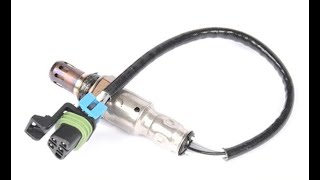
Typical fix: Replace the Bank 1 Sensor 2 oxygen sensor. 🎬 See this walkthrough for replacing a Saturn Vue oxygen sensor. Ensure you clear the codes after replacement.
Est. part cost: $50-$150 - Exhaust Leak 🟡 Medium Probability Leaks can develop at gasket joints or flex pipes due to age, corrosion, and vibration. On the 2.4L engine specifically, the exhaust manifold itself is a known failure point that can crack and cause leaks.
How to confirm: Visually inspect the exhaust system from the engine manifold to the catalytic converter for cracks, rust holes, or broken gaskets. Listen for hissing or ticking sounds, especially when the engine is cold. A simple method is to spray soapy water on suspected leak points with the engine cold and then use a shop vac or leaf blower in reverse to pressurize the exhaust from the tailpipe; bubbles will form at the leak.
Typical fix: Repair the leak. This may involve replacing a gasket, welding a crack, or replacing a section of the exhaust pipe or the entire manifold.
Est. part cost: $10-$300+ - Failing Catalytic Converter ⚪ Low Probability A catalytic converter can become contaminated and fail due to a persistent rich condition, such as from a leaking fuel injector. It is usually the victim, not the cause.
How to confirm: A properly functioning converter should have a higher outlet temperature than inlet. Use an infrared thermometer to check. If the downstream O2 sensor voltage mimics the upstream sensor's fluctuations, the converter is likely not working. This should be the last part to check after ruling out fuel and other exhaust issues.
Typical fix: Replace the catalytic converter. This should only be done after confirming it has failed and addressing the root cause (like a bad injector) to prevent damaging the new part.
Est. part cost: $400-$1200+
Rare But Worth Checking
- High Fuel Pressure: A faulty fuel pressure regulator can force too much fuel through the injectors. This is less common than a single leaking injector but worth checking if all injectors seem to be over-fueling or if you also have a P2099 code on a V6.
- Faulty Mass Air Flow (MAF) Sensor: A dirty or failing MAF sensor can under-report airflow, causing the ECM to command an overly rich fuel mixture. Cleaning the sensor with a dedicated MAF cleaner is a simple first step before considering replacement.
- PCM Software Issue: On some GM vehicles, particularly Flex Fuel models, a software glitch can cause a false P2097 code. A software update (reflash) from a GM dealer is the required fix. While less documented for the Vue specifically, it's a known issue on platform mates.
Diagnosis Steps
- Scan for all stored DTCs. Note any other codes like P0172, P2099, or P030x, as they provide valuable clues.
- Using a scan tool, observe live data for long-term and short-term fuel trims, as well as the voltage readings for both upstream (Sensor 1) and downstream (Sensor 2) oxygen sensors on Bank 1.
- Crucial Step: Following the guidance of TSB #PIP4964F, perform a fuel injector balance test to check for leaking injectors. A pressure drop of more than 5 psi in one minute on a cylinder often indicates a leak.
- Thoroughly inspect the exhaust system for any leaks between the engine and the downstream O2 sensor. Pay close attention to the exhaust manifold gasket and any flex pipes. Use the soapy water method for a definitive check.
- Connect a fuel pressure gauge and test the fuel pressure at idle and under load to ensure it is within the manufacturer's specifications.
- Inspect and clean the Mass Air Flow (MAF) sensor. A contaminated sensor can send incorrect data.
- If all fuel system and exhaust checks are normal, test the downstream O2 sensor directly. If its voltage reading is stuck high (e.g., >0.7V) and does not respond to induced lean/rich conditions, it is likely the cause.
- As a final step, inspect the catalytic converter for signs of damage, clogging, or inefficiency by comparing inlet and outlet temperatures.
Parts You'll Likely Need
- Fuel Injector
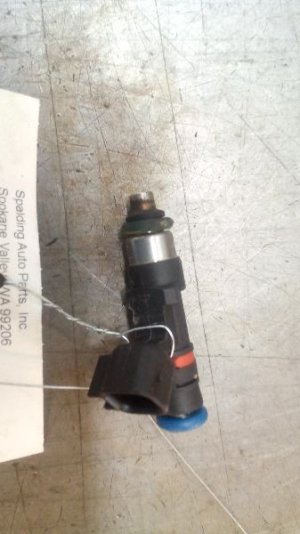
(OEM #ACDelco 217-3433 (for 2.4L, superseded by 12633784), ACDelco 217-3158 (for 3.6L))— A leaking fuel injector is a documented common cause for this code on this vehicle, as per GM TSB #PIP4964F.
Trusted brands: ACDelco, Bosch, Standard Motor Products
OEM price range: $90-$150
Aftermarket price range: $40-$90 - Downstream Oxygen Sensor (Bank 1, Sensor 2)
(OEM #ACDelco 213-3853 or 213-4229 (Varies by engine and emissions package, verify by VIN))— If the fuel system is operating correctly, the sensor itself may have failed and is sending false rich signals.
Trusted brands: ACDelco, Denso, Bosch, NTK
OEM price range: $100-$180
Aftermarket price range: $50-$120
Related Codes That Often Appear With This One
- P2099 — This is the same code but for Bank 2. If you have a V6 engine and see both P2097 and P2099, it points to a systemic issue like high fuel pressure or a faulty MAF sensor affecting both banks.
- P0172 — This code means 'System Too Rich (Bank 1)' as detected by the *upstream* O2 sensor. Seeing them together confirms the engine is running rich, strengthening the case for a leaking injector or fuel pressure issue.
- P0300-P0306 — These are cylinder misfire codes. A leaking injector can foul a spark plug and cause a misfire in a specific cylinder, helping to pinpoint the faulty component.
Technical Service Bulletins (TSBs) & Recalls
- PIP4964F: Addresses P2097/P2099 codes and recommends performing a fuel injector balance test or using an Active Fuel Injector Tester (AFIT) prior to further diagnosis. This is the primary vehicle-specific guidance.
Platform-Specific Known Issues
- A General Motors Technical Service Bulletin (TSB #PIP4964F) was issued for 2008 models that may exhibit a P2097 or P2099 code. The bulletin advises technicians to perform an injector balance test before proceeding with other diagnostics, highlighting leaking fuel injectors as a known problem that should be checked first.
Mechanic-Grade Diagnostic Values
- Downstream O2 Sensor (Bank 1, Sensor 2) Voltage — expected: Stable between 0.4V and 0.6V at warm idle.. Failure: Stuck at a steady high voltage (above 0.7V) or fluctuating wildly like the upstream sensor.
- Long-Term Fuel Trim (LTFT) Bank 1 — expected: Between -10% and +10% at warm idle.. Failure: Consistently more negative than -10% (e.g., -15%), indicating the ECM is trying to remove a large amount of fuel.
- Upstream O2 Sensor (Bank 1, Sensor 1) Voltage — expected: Rapidly fluctuating between approximately 0.1V and 0.9V.. Failure: Stuck at a steady high voltage (above 0.8V), indicating a consistent rich condition before the catalytic converter.
Scan Tool Commands That Help
- GM GDS2 / Tech 2 / High-End Scan Tool: Active Fuel Injector Tester (AFIT) / Injector Balance Test — This is the first step recommended by TSB #PIP4964F to identify a leaking or imbalanced fuel injector, which is a primary cause of P2097 on this platform.
- High-End Scan Tool: Catalyst Efficiency Test — Use this function after ruling out fuel system issues. It compares upstream and downstream O2 sensor readings to determine if the catalytic converter is functioning correctly or has been damaged by the rich condition.
- High-End Scan Tool: EVAP Purge/Seal — If a faulty EVAP purge valve is suspected of being stuck open and causing a vacuum leak/rich condition, this command can be used to actuate the valve and check its function without removing it.
Wiring & Ground Locations
- ECM (Engine Control Module) — On the left front of the engine compartment for V6 engines, or the left rear for the 2.4L I4 engine.. The ECM receives signals from all relevant sensors (O2, MAF, Fuel Pressure) and controls the fuel injectors. A poor connection or corrosion at the ECM connector could cause this code.
- G107 — A primary engine ground located at the rear of the engine.. A poor ground connection at G107 can cause erratic sensor readings and incorrect operation of engine components, potentially leading to fuel control issues and triggering a P2097.
- Underhood Fuse Block — Located on the left side of the engine compartment.. This panel contains fuses and relays essential for the engine management system, including power for the ECM, fuel pump, and O2 sensor heaters. A faulty relay or corroded fuse socket here can cause issues.
Real Owner Repair Stories
- YouTube user 'Chirs Peters DIY' (2008 Saturn Vue with 3.6L V6) — Poor fuel economy and hard starting after the engine was warm (e.g., after a short drive to the store). It would crank but not start on the first try, then fire up on the second.
❌ Tried (didn't work) The user consulted with dealership technicians before attempting a repair.
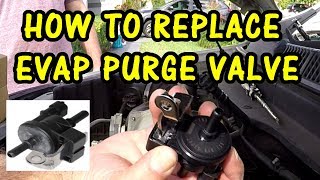
✅ What actually fixed it Replacing the EVAP vapor canister purge valve/solenoid. The user noted that a faulty purge valve was the most likely scenario suggested by friends at a dealership for these specific symptoms.
OEM Part Supersession History
ACDelco 217-3433→12633784— Standard part evolution for improved reliability or manufacturing process changes for the 2.4L I4 fuel injector.ACDelco 213-4229→12609457— This is an alternate OE number for the downstream oxygen sensor. Using the vehicle's VIN to confirm the correct part is crucial as multiple parts may fit.
Model Year Variations Within This Range
- 2008-2010: The 3.6L V6 (LLT) engine uses direct injection, while the 2.4L I4 and 3.5L V6 use port injection. The direct-injection engine is significantly more prone to P2097 being caused by leaking high-pressure fuel injectors or carbon buildup on the intake valves.
Helpful Videos
Used OEM Parts in Stock

New Aftermarket Parts Available


The information in this article is provided for general reference and educational purposes only. Vehicle specifications, procedures, and part compatibility can vary by production date, trim level, and region. Always consult your vehicle's factory service manual and verify part numbers before purchasing or performing repairs. Safety-critical components such as airbags, seat belts, and braking systems should be installed by a qualified professional.
- Saturn VUE:
- 🎬 Helpful Videos
- 🛍️ Shop This Part
- What's Unique About the 2008-2010 Saturn VUE
- Diagnostic Flowchart
- Symptoms You May Notice
- Most Likely Causes
- Rare But Worth Checking
- Diagnosis Steps
- Parts You'll Likely Need
- Related Codes That Often Appear With This One
- Technical Service Bulletins (TSBs) & Recalls
- Platform-Specific Known Issues
- Mechanic-Grade Diagnostic Values
- Scan Tool Commands That Help
- Wiring & Ground Locations
- Real Owner Repair Stories
- OEM Part Supersession History
- Model Year Variations Within This Range
- 🎟️ Get 5% Off