

P2097 on 2005-2008 Porsche 911 (997.1): M97 Engine Rich Fuel Trim Causes & Fixes
On a 2005-2008 Porsche 911, P2097 is most often caused by unmetered air from a vacuum or exhaust leak, not a bad O2 sensor. The prime suspect is a failing Air-Oil Separator (AOS), which creates a significant vacuum leak. A smoke test is the most important diagnostic step before replacing any parts, especially the O2 sensor.
- Do not immediately replace the oxygen sensor. P2097 on an M97 engine is more likely an air leak.
- A smoke test is the most important diagnostic tool for this code. Test both the intake and exhaust.
- Check for classic signs of a failing Air-Oil Separator (AOS), such as excessive vacuum at the oil cap and smoke on startup.
- This guide applies specifically to the 2005-2008 (997.1) models with the M97 engine, not the later 2009+ (997.2) models.
- Bank 1 is the driver's side of the engine in a US-market car.
What's Unique About the 2005-2012 Porsche 911
The M97 engine in the 997.1 generation is notoriously prone to vacuum leaks from specific components, which can trigger this code. The Air-Oil Separator (AOS) is a very common failure point that creates a massive unmetered air leak, leading to incorrect fuel mixture adjustments and this fault. When the AOS fails, it can also suck oil into the intake, causing smoke. Owners and technicians often mistakenly replace the oxygen sensor first, when the root cause is frequently an air leak elsewhere in the system that requires a smoke test to locate.
Generation note: The specified year range 2005-2012 covers two different Porsche 911 generations. This guide is specific to the 2005-2008 Porsche 911 (997.1 generation), which is equipped with the 3.6L (M96.05) or 3.8L (M97.01) engine. The 2009-2012 models (997.2 generation) use a completely different, direct-injected 9A1 engine which does not share the same AOS failure patterns or other common M97 issues.
Symptoms You May Notice
- Check Engine Light illuminated
- Reduced fuel economy
- Slightly rough or uneven idle
- Faint fuel smell from the exhaust
- Whistling or squealing noise from the engine, indicating a failing AOS
- Blue-white smoke from exhaust on startup that quickly clears
- Immediately replacing the post-catalyst (downstream) oxygen sensor without performing a smoke test to check for intake and exhaust leaks first.
Most Likely Causes
- Vacuum Leak (Unmetered Air) 🔴 High Probability The Air-Oil Separator (AOS) is a well-documented failure point on M97 engines, creating a large vacuum leak. Intake boots, plenum gaskets, the oil filler cap, and other rubber or plastic components also perish with age and heat, causing cracks and leaks.
How to confirm: Perform a professional smoke test on the intake system. A failing AOS may also cause a high-pitched whistle, significant smoke from the exhaust on startup, and a very strong vacuum at the oil cap when the engine is running (making the cap difficult to remove). A manometer can be used to measure crankcase vacuum; for an M97 engine, it should be 4-6 inches of water column. Excessively high readings (e.g., -10.0" to -15.0" H2O) indicate AOS failure.
Typical fix: Replace the failing component. If it's the AOS, it is highly recommended to replace the associated vent hoses at the same time as they become brittle and often crack during removal. Clean any oil residue from the throttle body and intake.
Est. part cost: $150-$300 for an AOS kit; variable for other hoses. - Exhaust Leak 🔴 High Probability Cracked headers or leaking gaskets between the cylinder head, header, or catalytic converter are common. The extreme heat cycles cause metal fatigue and gasket failure. The manifold bolts can also corrode and break. An exhaust leak before the O2 sensors allows outside air to be drawn in, fooling the sensor into reporting a false lean condition, which causes the DME to add fuel, resulting in a genuinely rich mixture and the P2097 code.
How to confirm: Perform a smoke test on the exhaust system. You can also visually inspect for black soot marks around flanges and listen for ticking/hissing sounds when the engine is cold.
Typical fix: Replace the cracked component or leaking gasket. This may require removing the catalytic converter and dealing with seized or broken bolts.
Est. part cost: $50-$200 for gaskets; $500+ for headers. - Faulty Post-Catalyst Oxygen Sensor (Bank 1) 🟡 Medium Probability O2 sensors are wear items and fail over time due to heat and contamination. However, they are often replaced unnecessarily when the root cause is a leak.
How to confirm: With a scan tool, monitor live data. The post-cat sensor voltage should be relatively stable and high (e.g., >0.7V) for a rich condition. If it's fluctuating rapidly like the pre-cat sensor, or stuck low, it may be faulty. The best confirmation is to swap the Bank 1 and Bank 2 post-cat sensors and see if the code changes to P2099 (Bank 2 Rich). If it does, the sensor is bad.
Typical fix: Replace the Bank 1, post-catalyst (downstream) oxygen sensor. The OEM supplier is Bosch.
Est. part cost: $100-$180 for a Bosch sensor.
Rare But Worth Checking
- Failing Catalytic Converter: A converter can lose its efficiency to store and use oxygen, causing the downstream sensor to read rich. This should only be considered after all leaks and sensor issues are ruled out, as it's an expensive fix.
- Leaking Fuel Injector: A fuel injector stuck open or leaking on Bank 1 can dump excess fuel, causing a genuinely rich condition. This can sometimes lead to hydrolocking if the leak is severe. A fuel rail pressure leak-down test can help diagnose this. This issue is also a known contributor to cylinder bore scoring on M97 engines.
- Faulty Mass Air Flow (MAF) Sensor: A dirty or failing MAF sensor can under-report airflow, causing the DME to enrich the fuel mixture across both banks. This would typically set codes for both banks (P2097 and P2099) and possibly a MAF-specific code like P1095.
Diagnosis Steps
- Scan the DME for all stored fault codes. Note any other codes that may point to the root cause (e.g., lean codes, MAF codes).
- With the engine running, carefully try to remove the oil filler cap. If there is a very strong vacuum making it difficult to remove, this is a classic sign of a failed Air-Oil Separator (AOS).
- Perform a thorough visual inspection of the intake and exhaust systems. Look for cracked hoses, loose clamps, and black soot marks around exhaust flanges indicating leaks.
- Perform a professional smoke test. This is the most critical step. Test both the intake system (from the airbox) and the exhaust system to find any unmetered air leaks.
- If no leaks are found, use a quality scan tool (like Durametric or PIWIS) to view live data. Observe the voltage of the Bank 1 post-catalyst O2 sensor (Sensor 2). For a rich code, it should be steady and high (>0.7V). Compare it to the Bank 2 sensor.
- Check long-term fuel trims (LTFT) for both banks. High positive fuel trims (e.g., > +10%) indicate the DME is adding fuel to compensate for what it perceives as a lean condition, often caused by a vacuum leak.
- If a sensor is suspected, swap the post-catalyst O2 sensors between Bank 1 and Bank 2. Clear the codes and drive the vehicle. If the fault returns as P2099 (Bank 2 Rich), the sensor you moved is faulty.
- Only after ruling out all leaks and sensor issues should you consider testing the catalytic converter for efficiency or checking for leaking fuel injectors.
Parts You'll Likely Need
- Air-Oil Separator (AOS)
(OEM #99610702652 (for 3.6L), 99710703801 (for 3.8L))— This is the most common cause of vacuum leaks on the M97 engine that can lead to fuel trim faults like P2097.
Trusted brands: Porsche (Genuine), Vaico, URO Parts
OEM price range: $200-$250
Aftermarket price range: $150-$200 - Post-Catalyst Oxygen Sensor (Bank 1)
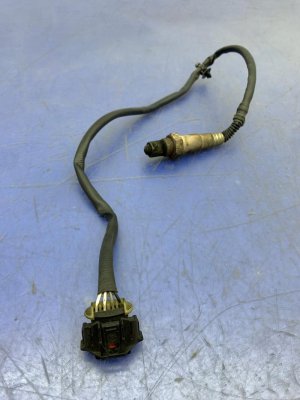
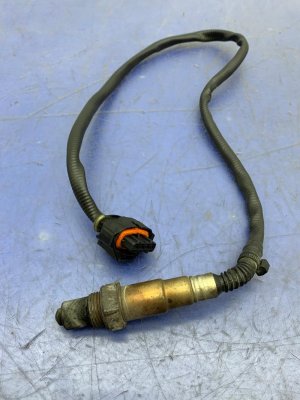
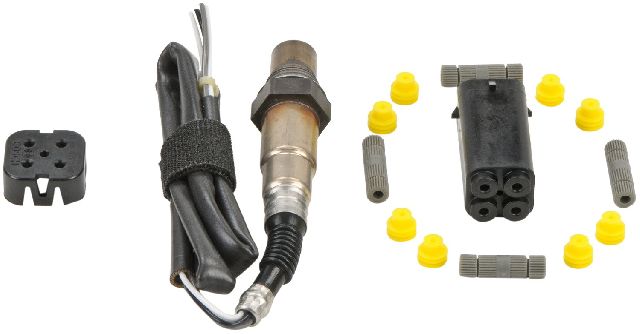
(OEM #99760617702 (Bosch 16825))— This sensor is what detects the fault condition. While often not the root cause, it can fail and is a common replacement part for this code.
Trusted brands: Bosch
OEM price range: $250-$334
Aftermarket price range: $62-$180 - Exhaust Manifold Gasket — If an exhaust leak is found at the cylinder head or collector flange, these gaskets will need to be replaced.
Trusted brands: Porsche (Genuine), Victor Reinz
OEM price range: $20-$40 per gasket
Aftermarket price range: $10-$20 per gasket
Related Codes That Often Appear With This One
- P2187 — Lean at Idle, Bank 1. This code often points directly to a vacuum leak, which is a primary cause of P2097 as the DME tries to compensate by adding fuel.
- P1095 — Air Mass (HFM) Ahead of Throttle Valve - Implausible. This code can also indicate unmetered air entering the system, particularly after modifications to the intake. A user on 6SpeedOnline encountered this code along with P2097 after swapping MAF sensors for diagnosis.
- P2099 — Post Catalyst Fuel Trim System Too Rich, Bank 2. If this code appears with P2097, it points to a systemic issue affecting both banks, such as a faulty MAF sensor or fuel pressure regulator, rather than a bank-specific leak.
Platform-Specific Known Issues
- Air-Oil Separator (AOS) failure is a very common and well-documented issue on the M96/M97 engine platform, leading to a wide range of symptoms including oil consumption, smoking, and fuel trim-related check engine lights. It is considered a preventative maintenance item, with replacement recommended every 30,000-75,000 miles.
- A Rennlist user provided a detailed DIY for the 997.1 C2S AOS replacement, listing optional but highly recommended vent lines to replace at the same time, such as Vent Line 997-107-146-03.
Mechanic-Grade Diagnostic Values
- Engine Crankcase Vacuum (at idle, warm engine) — expected: 4.0 to 6.0 inches of water column (inH2O). Failure: A reading significantly higher than 6.0 inH2O (e.g., 10-15 inH2O) strongly indicates a failed Air-Oil Separator (AOS). A reading lower than 4.0 inH2O may indicate a vacuum leak or poor piston ring seal.
- Post-Catalyst (Downstream) O2 Sensor Voltage (at idle, warm engine) — expected: Relatively stable voltage, typically between 0.6V and 0.8V.. Failure: For a P2097 (rich) code, the voltage will be stuck high, above 0.7V. If the sensor is faulty, it might fluctuate rapidly similar to the upstream sensor (0.1V to 0.9V) or be stuck at a low voltage, which would contradict the rich code and point to a sensor failure.
- Pre-Catalyst (Upstream) O2 Sensor Voltage (at idle, warm engine) — expected: Rapidly fluctuating between approximately 0.1V (lean) and 0.9V (rich).. Failure: A sensor that is slow to respond or stuck at a specific voltage is faulty. This is the sensor the DME uses for primary fuel control.
Scan Tool Commands That Help
- PIWIS / Durametric: Erase adaptation values — After replacing a major component that affects fuel mixture, such as an AOS, MAF sensor, or fuel injectors. This forces the DME to relearn the fuel trims from a baseline, which can be necessary to clear the P2097 code if the old, incorrect adaptations are still stored.
Wiring & Ground Locations
- O2 Sensor Connectors — In the engine bay, behind the motor mounts at the rear of the car. The connectors are often mounted to a bracket and may have a red locking tab that needs to be released.. Corrosion or damage to the O2 sensor connectors or wiring can cause incorrect readings, mimicking a sensor failure. The wiring for the post-cat sensor on the driver's side (Bank 1) follows a tight path and can be difficult to access without removing other components.
- DME Connector III (52-pin) — This is one of the main connectors on the DME (engine computer).. This specific connector contains the pins for the fuel injectors. For advanced diagnosis, a technician might test for continuity or signals at these pins to rule out a wiring issue between the DME and a suspected leaking injector.
Real Owner Repair Stories
- 6SpeedOnline user (Porsche 997.1 Turbo (M97 engine family)) — P2097 code (Post catalyst fuel trim system too rich bank 1) appeared during normal driving.
❌ Tried (didn't work) The user first suspected O2 sensors or vacuum leaks.
✅ What actually fixed it The user reported the problem was ultimately solved, though the specific fix was not detailed in the available snippet. However, the diagnostic journey started with the P2097 code and later included a P1095 (MAF implausible) code after swapping parts. - Rennlist user (Porsche 997.1) — P2097 code
❌ Tried (didn't work) Initial diagnosis pointed towards common causes like O2 sensors or vacuum leaks.
✅ What actually fixed it A cracked exhaust header was found to be the root cause. The crack allowed air to be drawn into the exhaust stream, fooling the O2 sensors and causing the DME to incorrectly enrich the fuel mixture.
OEM Part Supersession History
99610702601→99610702602, then 99610702652— Revisions to improve the reliability and function of the Air-Oil Separator for the 3.6L M96.05 engine.
Heads up: The AOS for the 3.6L (M96.05) and 3.8L (M97.01) engines are different parts and are not interchangeable. 3.8L uses part number 99710703801.
Model Year Variations Within This Range
- 2005-2008 (997.1): These models use the M96.05 (3.6L) and M97.01 (3.8L) port-injected engines, which are prone to AOS failures and vacuum leaks that cause P2097.
- 2009-2012 (997.2): These models use the completely redesigned 9A1 direct-injection (DFI) engine. This engine does not have an Intermediate Shaft (IMS) bearing and has a different crankcase ventilation system, making the common causes for P2097 on a 997.1 (like AOS failure) not applicable.
Diagnostic Flowchart
Used vs. New Parts: Buying Guide for This Vehicle
When a used part is the smart pick: Used parts are generally not recommended for the key failure items related to P2097. The primary causes are wear-and-tear items like the AOS, O2 sensors, and gaskets. A used AOS or sensor will have limited remaining life and carries a high risk of premature failure, negating any initial cost savings.
Donor-vehicle mileage cap: roughly under 30000 miles for the part to have meaningful remaining life.
What to inspect on the donor part:
- For hard parts like exhaust headers, inspect carefully for hairline cracks, especially around welds and flanges.
- Verify the part came from a vehicle that was not involved in a major accident, which could have stressed the component.
OEM-only on this vehicle (don't cheap out):
- Air-Oil Separator (AOS): While some aftermarket versions exist, forum users have reported premature failures with certain brands (e.g., URO Parts), leading them to replace it again with a Genuine Porsche part. Given the labor-intensive nature of the replacement, using an OEM part is a wise investment.
- Catalytic Converter: Aftermarket catalytic converters may not have the same efficiency or precious metal loading as OEM, potentially failing to resolve the code or causing it to return, and may not pass stringent emissions tests.
Aftermarket brands forum-validated for this vehicle:
- Bosch for Oxygen Sensors (Bosch is the OEM supplier).
- Fabspeed, Soul Performance for exhaust headers (often chosen for performance upgrades, but known for quality construction).
Brands owners have reported issues with on this vehicle:
- URO Parts for Air-Oil Separator (AOS): A Rennlist user reported a new URO AOS failed to properly control oil flow at high RPM, requiring replacement with a Genuine Porsche unit.
Real Owner Stories
Aggregated from forums and TSBs cited above. Mileages and costs reflect what owners reported in those sources.
2006 Porsche 911 Carrera S — 131000 miles
Symptoms: Check Engine Light with codes P2097, P2099, and P0420. The codes would only appear after driving for about 150 miles.
What fixed it: The issue was unresolved. The owner had already replaced all four O2 sensors and a leaking throttle body, and a smoke test showed no leaks, but the codes kept returning. A failing catalytic converter was suspected but not confirmed.
Source hint: RennTech.org - Miserable Fault Codes-Help
2007 Porsche 911 Turbo — 43000 miles
Symptoms: An intermittent Check Engine Light appeared with code P2097. After clearing the code, it returned two weeks later. At one point, a P2099 code for Bank 2 also appeared.
What fixed it: The issue was not resolved in the report. The owner replaced the MAF sensors, which seemed to work temporarily, but the rich code (P2099) came back after 1300 miles.
Source hint: Rennlist
Related OBD-II Codes
Frequently Asked Questions
My 911 is making a whistling noise and has a P2097 code. What's the likely cause?
I have a P2097 code. Should I just replace the Bank 1 oxygen sensor?
What is the single most important diagnostic step for P2097 on this Porsche?
How can I check for a failed AOS on my 911 without special tools?
If I need to replace the AOS, are there any other parts I should replace at the same time?
My mechanic says an exhaust leak is causing my P2097 rich code. How is that possible?
I have a 2007 Porsche Cayman S with a P2097 code. Is this 911 article relevant?
Used OEM Parts in Stock
New Aftermarket Parts Available

The information in this article is provided for general reference and educational purposes only. Vehicle specifications, procedures, and part compatibility can vary by production date, trim level, and region. Always consult your vehicle's factory service manual and verify part numbers before purchasing or performing repairs. Safety-critical components such as airbags, seat belts, and braking systems should be installed by a qualified professional.
- Porsche 911:
- 🛍️ Shop This Part
- What's Unique About the 2005-2012 Porsche 911
- Symptoms You May Notice
- Most Likely Causes
- Rare But Worth Checking
- Diagnosis Steps
- Parts You'll Likely Need
- Related Codes That Often Appear With This One
- Platform-Specific Known Issues
- Mechanic-Grade Diagnostic Values
- Scan Tool Commands That Help
- Wiring & Ground Locations
- Real Owner Repair Stories
- OEM Part Supersession History
- Model Year Variations Within This Range
- Diagnostic Flowchart
- Used vs. New Parts: Buying Guide for This Vehicle
- Real Owner Stories
- 2006 Porsche 911 Carrera S — 131000 miles
- 2007 Porsche 911 Turbo — 43000 miles
- Related OBD-II Codes
- Frequently Asked Questions
- 🎟️ Get 5% Off