

P2097 on 2008-2009 Pontiac G8 6.0L: Rich Fuel Trim Causes and Fixes
On a 2008-2009 Pontiac G8 with the 6.0L V8, code P2097 is most often caused by a leaking fuel injector on the driver's side (Bank 1). A GM Technical Service Bulletin (PIP4964F) advises testing the injectors before replacing the oxygen sensors to avoid a common misdiagnosis. Owners on forums like g8board.com confirm that replacing the injectors often resolves the code after other attempts fail.
- For the 2008-2009 Pontiac G8 6.0L, P2097 is most likely caused by a leaking fuel injector on the driver's side (Bank 1).
- Do not replace the oxygen sensor without first testing the fuel injectors as recommended by GM Technical Service Bulletin #PIP4964F.
- Real-world owner experiences from forums confirm that replacing the Bank 1 fuel injectors is the most common successful repair for this code.
What's Unique About the 2008-2009 Pontiac G8
While many vehicles with a P2097 code suffer from a bad oxygen sensor or an exhaust leak, the Pontiac G8 with the L76 V8 is different. General Motors issued a Technical Service Bulletin (TSB #PIP4964F) that specifically identifies leaking fuel injectors as a primary cause for this code on this platform. This bulletin advises technicians to perform a fuel injector balance test early in the diagnostic process, making a leaking injector the top suspect, not the O2 sensor. Real-world owner experiences shared on forums corroborate this, with many users successfully fixing the code by replacing the Bank 1 injectors.
Symptoms You May Notice
- Check Engine Light is on
- Reduced fuel economy
- Rough or uneven idle
- Engine hesitation during light acceleration
- Black smoke from the exhaust under load
- Strong fuel smell from exhaust
- Replacing the post-catalyst (downstream) O2 sensor without first testing the fuel injectors. The GM TSB for this platform specifically warns against this, and forum members frequently report this failing to fix the issue.
Most Likely Causes
- Leaking Fuel Injector(s) on Bank 1 🔴 High Probability A known issue identified in GM Technical Service Bulletin #PIP4964F for this specific engine platform. Forum discussions on g8board.com frequently cite this as the definitive fix after misdiagnosing other components.
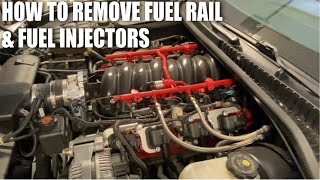
How to confirm: Perform a fuel injector balance test with a capable scan tool (like a Tech 2). Alternatively, remove the Bank 1 (driver's side) fuel rail and injectors, pressurize the system, and visually check for drips. Sooty or wet spark plugs on Bank 1 cylinders (1, 3, 5, 7) are also strong indicators.
Typical fix: Replace the faulty fuel injector(s). It is often recommended to replace all four injectors on Bank 1 at the same time for balanced fuel delivery. The OEM part number is ACDelco 12576341, which cross-references to Bosch part number 0280158051.
Est. part cost: $40-$100 per injector - Exhaust Leak 🟡 Medium Probability Gaskets and pipe connections can degrade from age and heat cycles. Leaks before the post-catalyst O2 sensor can introduce outside air, causing the sensor to read incorrectly and trigger a rich code.
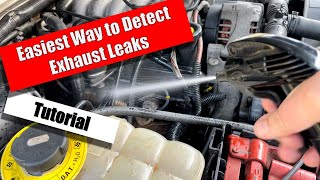
How to confirm: Visually inspect the exhaust system from the exhaust manifold to the post-catalyst O2 sensor for cracks, holes, or loose flange connections. A smoke test is the most effective method to find small leaks. Pay close attention to the manifold-to-head gasket and collector flanges.
Typical fix: Repair the leak by replacing the gasket (e.g., ACDelco, Fel-Pro), tightening bolts, or welding the cracked component.
Est. part cost: $10-$50 for gaskets - Faulty Post-Catalyst Oxygen Sensor (Bank 1, Sensor 2) ⚪ Low Probability
How to confirm: Use a scan tool to monitor the voltage of the Bank 1 Sensor 2. It should show a relatively stable voltage (typically 0.5V-0.8V) on a warm engine. If it is stuck high (above 0.8V) even when the engine is forced to run lean, the sensor is likely faulty. This should only be suspected after confirming injectors and exhaust are good, per TSB #PIP4964F.
Typical fix: Replace the Bank 1, Sensor 2 oxygen sensor. The OEM part number is GM 92210450. Trusted aftermarket brands include ACDelco, Denso, and NTK.
Est. part cost: $50-$120
Rare But Worth Checking
- Failing Catalytic Converter: A contaminated or failing catalytic converter can no longer properly process exhaust gases, which can lead to incorrect readings by the downstream O2 sensor. This is usually a result of a long-term rich condition caused by leaking injectors and not the initial cause.
- Powertrain Control Module (PCM) Issue: In rare cases, the PCM may have a software glitch or internal fault causing it to misinterpret sensor data. This should be the last item to consider after all other possibilities are exhausted.
Diagnosis Steps
- Scan for other DTCs. Codes like P0172 or cylinder misfire codes (P030x) on Bank 1 strongly suggest a fuel delivery issue.
- Check Fuel Injectors. Following GM TSB #PIP4964F, perform a fuel injector balance test. This is the most critical step for this vehicle. This is the confirmed fix in multiple owner forum threads.
- Inspect Spark Plugs. Remove and inspect the spark plugs on Bank 1 (driver's side). Plugs that are black, sooty, or wet with fuel are a strong indicator of a leaking injector in that cylinder.
- Inspect for Exhaust Leaks. Carefully check the exhaust system for any leaks between the cylinder head and the rear O2 sensor. A smoke test is the most reliable method. Pay close attention to manifold gaskets and flange connections.
- Analyze O2 Sensor Data. Use a scan tool to observe live data for the Bank 1 Sensor 2 (post-cat). If injectors and exhaust are confirmed good, and the sensor voltage is stuck high (above 0.8V), the sensor itself may be the problem.
- Test Fuel Pressure. Check the fuel pressure at the rail to ensure it's within the specified range (typically 55-60 PSI for the L76 engine) to rule out a faulty fuel pressure regulator.
- Test the O2 Sensor. If suspected, test the sensor's heater circuit and wiring for continuity and proper voltage before replacing it.
Parts You'll Likely Need
- Fuel Injector
(OEM #ACDelco 12576341 / Bosch 0280158051)— This is the most common cause of P2097 on the 6.0L G8, as identified by GM TSB #PIP4964F and confirmed by numerous owner repair stories.
Trusted brands: ACDelco, Bosch
OEM price range: $90-$150
Aftermarket price range: $40-$100 - Post-Catalyst Oxygen Sensor (Bank 1, Sensor 2)
(OEM #GM 92210450 / ACDelco 213-4546)— This part can fail and cause the code, but it is often replaced unnecessarily. It should only be replaced after ruling out fuel injectors and exhaust leaks.
Trusted brands: ACDelco, Denso, NTK, Bosch
OEM price range: $80-$150
Aftermarket price range: $50-$120
Related Codes That Often Appear With This One
- P0172 — System Too Rich (Bank 1). This code indicates the upstream O2 sensor is also detecting a rich condition, strengthening the case for a leaking injector or other fuel system issue.
- P0300, P0301, P0303, P0305, P0307 — A severely leaking fuel injector on Bank 1 can foul the spark plug in a specific cylinder, leading to a misfire code for that cylinder or the entire bank.
- P2099 — Post Catalyst Fuel Trim System Too Rich Bank 2. If this code appears alongside P2097, it suggests a problem affecting both banks, such as high fuel pressure or a faulty MAF sensor, rather than an isolated injector leak.
Technical Service Bulletins (TSBs) & Recalls
- PIP4964F - "SES Light With A P2097 Or P2099": This bulletin advises technicians to check for leaking fuel injectors as a primary cause for rich fuel trim codes like P2097, before replacing oxygen sensors. It also mentions checking for small exhaust leaks.
Platform-Specific Known Issues
- GM Technical Service Bulletin #PIP4964F points to leaking fuel injectors as a more probable cause for P2097 on this engine than on other vehicles.
- A user on g8board.com with a 2009 G8 GT reported getting the P2097 code. Following the TSB's advice, they skipped O2 sensor replacement and went straight for the injectors. Replacing all 8 fuel injectors successfully cleared the code and resulted in a noticeably smoother running engine.
Mechanic-Grade Diagnostic Values
- Fuel Pressure (Key-On, Engine-Off) — expected: 55-60 PSI. Failure: Pressure significantly below 55 PSI may indicate a weak fuel pump. Pressure that bleeds down quickly after the pump primes could indicate a leaking injector or faulty check valve.
- Injector Balance Test (Pressure Drop) — expected: All injectors should have a similar pressure drop. The difference between the maximum and minimum pressure drop across all injectors should be less than 20 kPa (3 PSI).. Failure: An injector with a pressure drop significantly higher than others is likely leaking.
- Downstream O2 Sensor (Bank 1, Sensor 2) Voltage — expected: A relatively stable voltage between 0.5V and 0.8V on a warm, running engine at steady RPM.. Failure: A voltage signal stuck consistently high (above 0.8V) indicates the rich condition that triggers P2097.
- OEM Fuel Injector Coil Resistance — expected: Approximately 9.1 Ohms (High Impedance) for the stock Bosch-style injectors.. Failure: A reading significantly higher (open circuit) or lower (shorted) than the specification indicates a failed injector coil.
Scan Tool Commands That Help
- Tech 2 / GDS2 (or equivalent professional scanner): Injector Balance Test — This is the primary diagnostic step recommended by GM's TSB for P2097 on this platform. It directly tests for a leaking injector by measuring the fuel pressure drop as the scan tool individually pulses each injector.
- Tech 2 / GDS2 (or equivalent professional scanner): Fuel Composition Reset / Fuel Alcohol Percentage — If P2097 is accompanied by P2099 (rich on both banks) or if the cause is elusive. The ECM can incorrectly learn a high percentage of alcohol in the fuel, causing it to command a richer mixture. Viewing and resetting this value can fix software-induced rich conditions.
- Tech 2 / GDS2 (or equivalent professional scanner): EVAP Purge/Seal — To test the EVAP canister purge solenoid. This command allows the technician to command the valve open and closed to check for proper function and sealing, ruling it out as a source of un-commanded fuel vapors.
Wiring & Ground Locations
- G103 — In the engine compartment, a strap from the passenger side (RH) cylinder head to the EBCM (ABS) bracket.. This is considered a primary engine block ground. A poor connection here can introduce electrical noise and unstable reference voltages for sensors on the entire engine, including the O2 sensors and injectors, potentially causing false rich readings.
- G112 — From the rear of the driver's side (LH) cylinder head to the engine harness.. This ground is specific to Bank 1. A loose or corroded connection here can directly impact the signal quality of the Bank 1 O2 sensors and injectors, making it a critical point of inspection for a Bank 1-specific code like P2097.
- Engine Harness Chafe Point — Inspect the engine wiring harness for chafing at the front corner of the driver's side (left-hand) cylinder head.. General Motors has noted this as a potential chafe point on V8 engines. Damage here could short the O2 sensor heater or signal wires, leading to erratic readings or related codes like P0030.
Real Owner Repair Stories
- g8board.com & Go-Parts aggregated article (2009 Pontiac G8 GT) — Check Engine Light with code P2097.
❌ Tried (didn't work) Initially considered replacing the O2 sensor based on the code definition.
✅ What actually fixed it Based on TSB #PIP4964F, the owner decided to test the fuel injectors first. The test confirmed a fault, and replacing all 8 fuel injectors resolved the P2097 code and improved engine smoothness. - YouTube video comment on a related GM rich code diagnosis (2019 Camaro SS 6.2L (similar architecture)) — Persistent negative long-term fuel trims, bucking at light throttle, black soot on rear of car, codes P015B/P015D (O2 sensor delay) but no P2097/P0172.
❌ Tried (didn't work) Replacing high-pressure fuel pump, Replacing injectors, Replacing O2 sensors, Replacing spark plugs and wires, Replacing MAF sensor, Replacing PCV, coolant temp sensor, thermostat
✅ What actually fixed it The owner discovered that unplugging the EVAP purge valve solenoid improved engine operation. When plugged back in, fuel trims went extremely negative (-30%). This strongly pointed to a faulty (leaking) purge solenoid as the root cause of the rich condition.
"I Checked Everything" — The Actual Cause
- A standard exhaust smoke test will not detect the most common cause of P2097 on this vehicle: a leaking fuel injector. The leak introduces excess fuel directly into the combustion chamber, which is downstream of where an exhaust leak test is effective. Technicians must follow the TSB and perform an injector balance test instead of relying solely on a smoke test.
- A faulty EVAP canister purge solenoid that is stuck open or leaking will introduce fuel vapor into the intake manifold, causing a rich condition. This is an intake-side fault and will not be found by an exhaust smoke test.
Model Year Variations Within This Range
- 2008-2009: There are no significant mechanical or engine management system differences between the 2008 and 2009 model years for the 6.0L L76 engine that would alter the diagnosis or common causes of a P2097 code. Minor cosmetic changes, such as the removal of center stack gauges in 2009, are irrelevant to this fault.
Diagnostic Flowchart
Other Known Issues on This Vehicle
Issues unrelated to this code that are worth knowing about as an owner of this generation:
- AFM/DOD Lifter Failure (L76 V8) 🔴 High — Common issue, especially on higher mileage vehicles or those with poor oil maintenance. Can occur as early as 28k miles but more common after 60k-100k. A ticking noise from the top of the engine is the primary symptom. (Ref: TSB #PIP4568S)
- Premature Front Suspension Bushing Wear 🟠 Medium — Very common. The front radius rod (caster arm) bushings and lower control arm bushings are known to fail prematurely, causing clunking noises, steering wander, and uneven tire wear. Failure can happen at low mileage (under 10k miles). (Ref: TSB #15289 (Special Coverage 10yr/120k miles for ball joint boot corrosion))
- Collapsing Front Strut Mounts 🟠 Medium — A widely reported issue where the OEM rubber strut mount bushings collapse, causing the strut to move upwards and creating a gap in the engine bay. This affects alignment and handling. Many owners upgrade to aftermarket polyurethane units.
- Ignition Key Can Be Bumped Out of 'Run' Position 🔴 High — Affects certain 2008-2009 models. The driver's knee can bump the key fob, causing the ignition to switch to the 'accessory' or 'off' position, resulting in a loss of engine power, power steering, and disabling airbags. (Ref: Recall #14V540000)
Used vs. New Parts: Buying Guide for This Vehicle
When a used part is the smart pick: For this repair, using used parts is generally not recommended for the primary failure components. A used fuel rail or engine wiring harness from a low-mileage donor could be a cost-effective option if those parts are confirmed to be the issue, but they are rarely the cause of P2097.
Donor-vehicle mileage cap: roughly under 70000 miles for the part to have meaningful remaining life.
What to inspect on the donor part:
- For a wiring harness, check for any signs of brittleness, previous repairs (splices, tape), or chafing on the loom.
- For a fuel rail, ensure there is no rust or debris inside the rail and that the mounting points are not damaged.
OEM-only on this vehicle (don't cheap out):
- Catalytic Converter: While expensive, OEM converters are strongly recommended. Aftermarket units for this platform have a reputation for failing prematurely or not having enough precious metal content to satisfy the ECM, leading to catalyst efficiency codes down the road.
Aftermarket brands forum-validated for this vehicle:
- Fuel Injectors: Bosch (OEM supplier), DeatschWerks, Fuel Injector Clinic (FIC). If not buying new OEM, using a service that cleans, tests, and flow-matches a set is a viable option.
- O2 Sensors: ACDelco (OEM), Denso, NTK, Bosch. These brands are trusted suppliers and consistently perform to OEM standards.
Brands owners have reported issues with on this vehicle:
- Unbranded, no-name 'OEM-style' fuel injectors and oxygen sensors from online marketplaces. These often have high failure rates, incorrect flow rates, or slow response times, leading to persistent codes and poor performance.
Real Owner Stories
Aggregated from forums and TSBs cited above. Mileages and costs reflect what owners reported in those sources.
2009 Pontiac G8 GT 6.0L L76 V8
Symptoms: The owner reported a P2097 code and followed TSB advice to check injectors. The engine was not running as smoothly as it could.
What fixed it: Replacing all 8 fuel injectors successfully cleared the code and resulted in a noticeably smoother running engine.
Source hint: g8board.com forum discussion cited in Go-Parts article
2007-2013 Holden Commodore (VE) 6.0L V8
Symptoms: Experienced a P2097 code; the owner noted the issue was inherent to the VE platform which shares the G8's chassis and L76 engine.
What fixed it: Diagnosis and repair of the rich fuel trim condition consistent with the L76 platform's known injector/exhaust issues.
Source hint: justcommodores.com.au forum thread
Related OBD-II Codes
Frequently Asked Questions
Does GM Technical Service Bulletin #PIP4964F apply to my 2008-2009 Pontiac G8 with the 6.0L L76 engine?
Should I replace my Bank 1 Sensor 2 oxygen sensor first to fix P2097?
What are the recommended replacement fuel injectors for the G8 GT?
Can an exhaust leak cause a rich code like P2097 on the L76 V8?
Are there any other major engine issues I should watch for while diagnosing this code?
Is the P2097 issue unique to the Pontiac G8?
Helpful Videos
Used OEM Parts in Stock

New Aftermarket Parts Available



The information in this article is provided for general reference and educational purposes only. Vehicle specifications, procedures, and part compatibility can vary by production date, trim level, and region. Always consult your vehicle's factory service manual and verify part numbers before purchasing or performing repairs. Safety-critical components such as airbags, seat belts, and braking systems should be installed by a qualified professional.
- Pontiac G8:
- 🎬 Helpful Videos
- 🛍️ Shop This Part
- What's Unique About the 2008-2009 Pontiac G8
- Symptoms You May Notice
- Most Likely Causes
- Rare But Worth Checking
- Diagnosis Steps
- Parts You'll Likely Need
- Related Codes That Often Appear With This One
- Technical Service Bulletins (TSBs) & Recalls
- Platform-Specific Known Issues
- Mechanic-Grade Diagnostic Values
- Scan Tool Commands That Help
- Wiring & Ground Locations
- Real Owner Repair Stories
- "I Checked Everything" — The Actual Cause
- Model Year Variations Within This Range
- Diagnostic Flowchart
- Other Known Issues on This Vehicle
- Used vs. New Parts: Buying Guide for This Vehicle
- Real Owner Stories
- 2009 Pontiac G8 GT 6.0L L76 V8
- 2007-2013 Holden Commodore (VE) 6.0L V8
- Related OBD-II Codes
- Frequently Asked Questions
- 🎟️ Get 5% Off