

P2097 on 2012-2017 Land Rover Range Rover Evoque: Causes and Fixes for Rich Fuel Trim
On a 2012-2017 Evoque, code P2097 is frequently caused by a PCM software error that requires a dealer update. Before replacing any parts, check if your vehicle is covered by Technical Service Bulletin LTB00902NAS4, NAS18.12.016, or others. If not a software issue, the next most likely causes are an exhaust leak (including from a cracked exhaust manifold) or a faulty downstream oxygen sensor.
- First, check for software updates. This is the most likely and unique fix for a P2097 on a 2012-2017 Evoque, and is often performed for free by dealers.
- If the software is up to date, perform a thorough exhaust inspection, including a smoke test for leaks and a visual check for cracks in the exhaust manifold/turbo assembly.
- Only consider replacing the downstream O2 sensor after ruling out software issues and exhaust leaks.
What's Unique About the 2012-2017 Land Rover RANGE ROVER EVOQUE
For this specific generation of Range Rover Evoque and its platform-mate, the Discovery Sport, the P2097 code is very often a ghost issue caused by overly sensitive software in the Powertrain Control Module (PCM). Land Rover has issued multiple Technical Service Bulletins (TSBs) acknowledging that a "PCM software error" or incorrect "catalyst fueling adaption" can incorrectly trigger this code under specific driving cycles. This makes it critical for owners to investigate software updates before spending money on physical parts like oxygen sensors or exhaust repairs.
Diagnostic Flowchart
Tap your situation to follow the diagnostic path that matches what you're seeing on this vehicle.
Symptoms You May Notice
- Check Engine Light (Malfunction Indicator Lamp) is on
- Reduced fuel economy
- Poor engine performance, such as hesitation or rough idle
- Black smoke from the exhaust in some cases
- Exhaust fumes smelled in the cabin, particularly if caused by a cracked manifold
- A ticking or puffing noise from the engine bay, especially when cold, indicating an exhaust leak
- Replacing the oxygen sensor without first checking for software updates or exhaust leaks. Given the numerous TSBs, a software check should always be the first step for this vehicle.
- Replacing the catalytic converter when the actual issue is a software glitch, a less expensive exhaust leak, or a faulty sensor.
Most Likely Causes
- Powertrain Control Module (PCM) Software Error 🔴 High Probability Multiple TSBs (LTB00902NAS4, NAS18.12.016, N272NAS1, SSM72584) confirm that the original PCM software is prone to incorrectly flagging a rich condition due to diagnostic sensitivity or incorrect fuel adaption logic.
How to confirm: A Land Rover dealer or a qualified independent shop with access to the TOPIx system can check your vehicle's VIN to see if it's eligible for a software update campaign like N272NAS1.
Typical fix: Update the PCM software to the latest version. This is not a DIY repair and requires dealer-level diagnostic equipment. The cost is often covered under warranty or as part of a specific Service Action.
Est. part cost: $0 - Exhaust System Leak 🟡 Medium Probability Leaks in the exhaust system, especially between the engine and the downstream O2 sensor, can allow outside air to enter. This can confuse the sensor and lead to incorrect fuel trim adjustments. TSB SSM72584 specifically calls out checking for exhaust leaks as a primary step, even when a software issue is suspected.
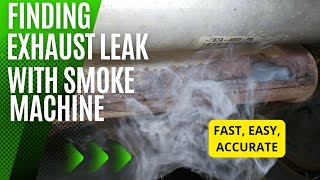
How to confirm: Perform a visual inspection of the exhaust manifold, gaskets, and pipes for cracks or soot trails. A smoke test is the most effective way to pinpoint hard-to-see leaks. 🎬 See how to find exhaust leaks using a smoke machine. TSB SSM72584 specifies using a high-pressure diagnostic leak detector and notes that a total leak rate of less than 12 L/min is acceptable.
Typical fix: Replace the leaking gasket or repair/replace the cracked exhaust component. TSB SSM72584 advises checking that the 3 exhaust manifold-to-catalytic-converter bolts are tightened to 24Nm (18 lb-ft).
Est. part cost: $20-$150 - Cracked Exhaust Manifold 🟡 Medium Probability The integrated turbocharger/exhaust manifold on the 2.0L GTDi engine is known to develop cracks, creating a significant exhaust leak before the O2 sensors. This can cause exhaust fumes in the cabin and trigger fuel trim codes. Owners have reported this failure at around 70,000 miles.
How to confirm: A visual inspection may reveal a crack, often accompanied by black soot marks. The crack can be near the turbo wastegate housing or on the manifold itself. A ticking noise when cold is a strong indicator.
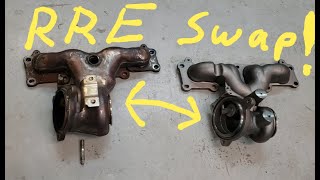
Typical fix: Official repair is to replace the entire turbocharger/manifold assembly, which is very expensive. Some owners have successfully had the crack professionally welded for a fraction of the cost. One owner reported a $1000 total repair cost for welding versus a $5300 dealer quote for replacement. 🎬 Watch: This walkthrough shows the turbo exhaust manifold replacement process.
Est. part cost: $100 (welding) - $4000 (new OEM assembly) - Faulty Downstream Oxygen (O2) Sensor 🟡 Medium Probability
How to confirm: Use an OBD-II scanner to monitor the live data from the downstream O2 sensor (Bank 1, Sensor 2). Its voltage should be relatively stable (typically around 0.6V to 0.7V) on a warm, running engine. If it's stuck high (above 0.8V), biased, or fluctuating rapidly like the upstream sensor, it is likely faulty.
Typical fix: Replace the downstream oxygen sensor. TSB SSM72584 advises checking that the O2 sensors are tightened to 48 Nm (35 Lb-ft).
Est. part cost: $50-$150 - Leaking Fuel Injectors ⚪ Low Probability
How to confirm: Perform a fuel pressure leak-down test. If pressure drops quickly after the engine is turned off, it could indicate one or more leaking injectors. This would typically be accompanied by other symptoms like rough starts or misfire codes.
Typical fix: Replace the faulty fuel injector(s).
Est. part cost: $100-$300 per injector
Rare But Worth Checking
- Clogged or Failing Catalytic Converter: While a failing converter more commonly causes a P0420 code, a contaminated or partially clogged converter can affect the post-catalyst sensor readings, leading to P2097. This should be considered after other, more common causes are ruled out. A temperature check before and after the converter can help diagnose a clog.
Diagnosis Steps
- Scan for Codes: Use an OBD-II scanner to confirm P2097 and check for any other stored codes, like P2096 or misfire codes.
- Check for TSBs: This is the most critical step. Have a dealer or qualified shop check your VIN for applicable software updates related to P2097, such as N272NAS1 or LTB00902NAS4. If an update is available, perform it before any other repairs. The update requires dealer-level tools.
- Inspect for Exhaust Leaks: Visually inspect the entire exhaust system, paying close attention to the manifold/turbo assembly for cracks and soot trails. A smoke test is highly recommended. Per TSB SSM72584, ensure manifold-to-cat bolts are torqued to 24Nm.
- Analyze O2 Sensor Live Data: Use a scanner to observe the voltage of the downstream O2 sensor (Bank 1, Sensor 2). On a fully warmed engine at steady RPM, a healthy downstream sensor should show a steady voltage, often around 0.6-0.7V. If it's stuck high (e.g., >0.8V) or fluctuating rapidly like the upstream sensor, the sensor itself or the catalytic converter may be at fault.
- Check O2 Sensor Tightness: As per TSB SSM72584, verify the downstream O2 sensor is tightened to the correct torque of 48 Nm (35 Lb-ft), as a loose sensor can also cause incorrect readings.
- Test Fuel System: If no leaks or sensor issues are found, investigate the fuel system. Check fuel pressure and perform a leak-down test to identify potentially leaking injectors.
Parts You'll Likely Need
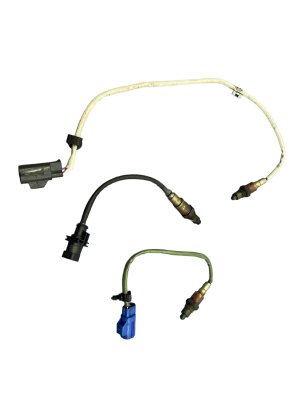
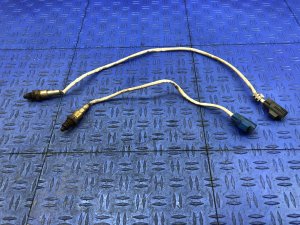
- Downstream Oxygen Sensor
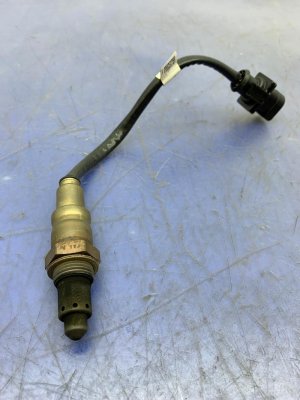
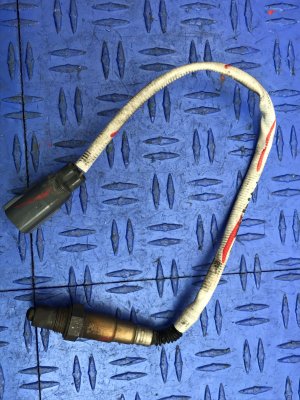
(OEM #LR174557 (replaces LR098282, LR140067, LR028931))— If not a software issue or exhaust leak, the sensor itself is the next most likely component to fail, sending false rich signals.
Trusted brands: Bosch, Denso, NGK, Walker
OEM price range: $150-$250
Aftermarket price range: $50-$150 - Exhaust Manifold Gasket — A common source of exhaust leaks that can trigger this code. Replacement is necessary if the manifold is removed for repair or replacement.
Trusted brands: Victor Reinz, Mahle, Fel-Pro
OEM price range: $40-$80
Aftermarket price range: $20-$40
Related Codes That Often Appear With This One
- P2096 — This is the partner code for 'Post Catalyst Fuel Trim System Too Lean Bank 1'. The TSBs for the Evoque often mention both P2096 and P2097 being caused by the same PCM software issue.
- P0300, P0301, P0302, P0303, P0304 — TSB LTB00902NAS4 notes that random or specific cylinder misfire codes may be stored after P2097 is triggered, also due to the PCM software error.
- P0170 — This is a general 'Fuel Trim Malfunction' code. A user on Land Rover Forums reported seeing P0170 alongside P2097 on their 2017 Evoque.
Technical Service Bulletins (TSBs) & Recalls
- LTB00902NAS4: States the engine MIL may illuminate with P2096 or P2097 due to a PCM software error, potentially accompanied by misfire codes.
- NAS18.12.016 / N272NAS1: Mentions that incorrect catalyst fueling adaption may trigger P2096 or P2097.
- SSM72584: References a PCM software concern combined with specific drive cycles causing P2096/P2097 and provides diagnostic steps for checking exhaust leaks and component torque values.
Platform-Specific Known Issues
- A known software issue in the Powertrain Control Module (PCM) can cause this code to be set erroneously. TSBs NAS18.12.016, LTB00902NAS4, N272NAS1, and SSM72584 all reference this problem, stating that catalyst fueling adaption may be incorrect or that a concern in the diagnostic software exists.
- The integrated exhaust manifold and turbocharger assembly is prone to cracking, which is a significant and expensive potential cause for this code.
Mechanic-Grade Diagnostic Values
- Downstream O2 Sensor (Bank 1, Sensor 2) Voltage at Idle — expected: Relatively stable voltage between 0.45V and 0.7V on a fully warm engine.. Failure: Voltage is stuck high (above 0.8V), indicating a persistent rich reading.
- Upstream O2 Sensor (Bank 1, Sensor 1) Voltage — expected: Fluctuating rapidly between approximately 0.1V (lean) and 0.9V (rich).. Failure: Sluggish or non-responsive sensor that does not fluctuate quickly.
Hidden / Shadow Codes Worth Checking
- P2097-00: The '-00' suffix is a Failure Type Code (FTC) used by Jaguar Land Rover. While not providing deep diagnostic data, its presence on a dealer scanner (like SDD or Pathfinder) confirms the code is being set without any additional specific component information, which often reinforces the likelihood of a general software or adaptation issue as described in the TSBs. (see via JLR SDD or Pathfinder diagnostic tool.)
Scan Tool Commands That Help
- JLR SDD / Pathfinder: Powertrain Control Module - 'Update software' or 'Configure new module' — This is the primary function required to apply the fix detailed in TSBs LTB00902NAS4, NAS18.12.016, and N272NAS1. It reprograms the PCM with corrected diagnostic logic.
- JLR SDD / Pathfinder: Reset Adaptations / Clear Learned Values — After replacing a physical component like an O2 sensor or repairing a major exhaust leak, this function should be used to clear the old, incorrect fuel trim adjustments from the PCM's memory, allowing it to learn fresh values based on the new hardware.
Wiring & Ground Locations
- ECM Location — Located in the engine compartment at the center rear, on the bulkhead (firewall).. Physical inspection of the ECM and its connectors for corrosion or damage is a final check if all other diagnostics fail.
- G1D130A / G1D129B — Main engine ground point located on the left front of the engine compartment.. The ECM and its sensors rely on a clean ground connection. A loose or corroded ground at this location can cause erratic sensor readings, potentially leading to incorrect fuel trim calculations and codes like P2097.
- Downstream O2 Sensor Connector — On the exhaust pipe after the catalytic converter.. The connector shell for the downstream O2 sensor on Land Rover vehicles of this era is typically grey, helping to distinguish it from the upstream sensor's orange connector during inspection or replacement.
OEM Part Supersession History
LR028931→LR098282, then LR140067, then finally LR174557— Standard part revisions for improved performance, reliability, or supplier change.
Heads up: The latest part number, LR174557, is the correct service replacement for all previous versions on this vehicle. Using older, new-old-stock parts is not recommended as they lack the latest revisions.
Model Year Variations Within This Range
- 2012-2017: While the first-generation Evoque received a facelift for the 2016 model year (new bumpers, grille, infotainment), the 2.0L Si4 GTDi petrol engine and its core management system remained the same through 2017. The primary variation affecting this code is the software version installed in the PCM, not a physical parts change on the petrol model.
Helpful Videos
Used OEM Parts in Stock


New Aftermarket Parts Available



The information in this article is provided for general reference and educational purposes only. Vehicle specifications, procedures, and part compatibility can vary by production date, trim level, and region. Always consult your vehicle's factory service manual and verify part numbers before purchasing or performing repairs. Safety-critical components such as airbags, seat belts, and braking systems should be installed by a qualified professional.
- Land Rover RANGE ROVER EVOQUE:
- 🎬 Helpful Videos
- 🛍️ Shop This Part
- What's Unique About the 2012-2017 Land Rover RANGE ROVER EVOQUE
- Diagnostic Flowchart
- Symptoms You May Notice
- Most Likely Causes
- Rare But Worth Checking
- Diagnosis Steps
- Parts You'll Likely Need
- Related Codes That Often Appear With This One
- Technical Service Bulletins (TSBs) & Recalls
- Platform-Specific Known Issues
- Mechanic-Grade Diagnostic Values
- Hidden / Shadow Codes Worth Checking
- Scan Tool Commands That Help
- Wiring & Ground Locations
- OEM Part Supersession History
- Model Year Variations Within This Range
- 🎟️ Get 5% Off