

P2097 on 2020-2026 Kia Telluride: Post-Catalyst Fuel Trim Too Rich Bank 1 Causes and Fixes
This code means the engine is running rich on the rear cylinder bank (Bank 1). The most common cause is a failing downstream oxygen sensor on the firewall side of the engine. Expect to pay $70-$150 for an aftermarket sensor or $280-$420 for an OEM part.
- P2097 on a Telluride means the rear cylinder bank (Bank 1) is running rich, according to the post-catalytic converter O2 sensor.
- The most likely fix is replacing the downstream O2 sensor on the firewall side of the engine (Bank 1, Sensor 2).
- Before replacing any parts, check for exhaust leaks between the engine and the sensor.
- Do not replace the catalytic converter; it is almost always the victim of the rich condition, not the cause.
- If the engine oil smells strongly of gas, a leaking fuel injector is a possible cause that requires further diagnosis.
What's Unique About the 2020-2026 Kia Telluride
While there are no specific TSBs or widespread issues for the P2097 code on the Telluride, its 3.8L GDI (Gasoline Direct Injection) engine is shared with the Hyundai Palisade. Similar Hyundai/Kia GDI engines have shown susceptibility to fuel injector issues, which can cause a true rich condition. Therefore, while an oxygen sensor is the most frequent culprit for this code on any vehicle, a leaking fuel injector on the rear bank (Bank 1) is a noteworthy possibility on this platform.
Symptoms You May Notice
- Check Engine Light is on
- Reduced fuel economy
- Rough or unstable idle
- Engine hesitation during acceleration
- A smell of gasoline from the exhaust
- Black smoke from the tailpipe in some cases.
- Replacing the catalytic converter first. The converter is almost never the root cause of a fuel trim code; it's the victim of an unresolved rich condition.
- Replacing the upstream O2 sensor (Sensor 1) when the code is for the post-catalyst system, which is monitored by the downstream O2 sensor (Sensor 2).
Most Likely Causes
- Failing Downstream Oxygen (O2) Sensor (Bank 1, Sensor 2) 🔴 High Probability O2 sensors are wear-and-tear items that degrade over time from heat and contaminants. This is the sensor that directly triggers the code, and a faulty sensor can send an incorrect rich signal.
How to confirm: Use an OBD-II scan tool to monitor the live voltage data for the 'B1S2' (Bank 1, Sensor 2) sensor. A healthy downstream sensor should show a relatively steady voltage (e.g., 0.6V-0.8V) when the engine is warm and in closed loop. If the voltage is stuck high (e.g., above 0.8V) or fluctuating wildly like an upstream sensor, it is likely faulty.
Typical fix: Replace the Bank 1, Sensor 2 oxygen sensor. This sensor is located on the rear exhaust manifold (firewall side), after the catalytic converter.
Est. part cost: $70-$150 - Exhaust Leak 🟡 Medium Probability Exhaust gaskets and pipe welds can fail over time, allowing outside air to be drawn into the exhaust stream upstream of the sensor. This can confuse the oxygen sensors, leading to an incorrect fuel trim adjustment.
How to confirm: Visually inspect the exhaust system from the engine to the rear O2 sensor for any signs of black soot, cracks, or holes. Listen for ticking or hissing sounds when the engine is cold. A smoke test is the most definitive way to find small leaks.
Typical fix: Repair the leak by replacing the faulty gasket or section of pipe. Exhaust putty can be a temporary fix for small holes.
Est. part cost: $10-$200 - Leaking Fuel Injector(s) on Bank 1 ⚪ Low Probability GDI engines run very high fuel pressure, and injectors can sometimes fail by leaking excess fuel into a cylinder. This creates a true rich condition that the O2 sensors detect.
How to confirm: Check the engine oil for a strong smell of gasoline, which indicates fuel dilution. A professional diagnostic test involves monitoring fuel trims and performing a cylinder balance test. This is a more complex diagnosis. 🎬 See how to diagnose leaking GDI injectors and fuel smells.
Typical fix: Replace the faulty fuel injector(s) on the rear bank. It is critical to also replace the single-use Teflon seals.
Est. part cost: $100-$250 per injector
Rare But Worth Checking
- Failing Upstream Oxygen (O2) Sensor (Bank 1, Sensor 1): A faulty upstream sensor can feed bad data to the computer, causing it to inject too much fuel. This would create a genuine rich condition that the downstream sensor then reports, setting the P2097 code. This would often be accompanied by a P0172 code.
- Clogged or Failing Catalytic Converter: This is rare and is usually the *result* of a long-term rich condition, not the cause. If the converter is clogged or internally damaged, it can trap gases and cause strange readings. Do not replace the converter unless all other causes have been ruled out.
- Powertrain Control Module (PCM) Issue: In rare cases, the PCM itself may have a software glitch or internal fault causing it to misinterpret sensor data and set a false P2097 code. This may require a software update from a Kia dealership.
Diagnosis Steps
- Scan for any other DTCs. If codes like P0172 or any fuel injector codes are present, diagnose those first.
- Using a scan tool, observe the live data for the Bank 1 Sensor 2 (B1S2) O2 sensor. A healthy downstream sensor should hold a fairly steady voltage (typically 0.6V - 0.8V) once the engine is in closed loop. If it's stuck high or fluctuating rapidly, the sensor is suspect.
- Visually and audibly inspect the entire exhaust system for leaks, especially between the engine and the downstream O2 sensor. Pay close attention to the manifold and converter gaskets.
- If the sensor appears to be reading correctly and there are no leaks, investigate potential causes of a true rich condition. Check the engine oil for a strong gasoline smell, which points to a leaking injector.
- If a leaking injector is suspected, further diagnosis by a professional may be needed to confirm which cylinder is at fault.
- As a final, less common check, inspect the O2 sensor wiring for any damage, melting, or corrosion, as it runs near hot exhaust components.
Parts You'll Likely Need
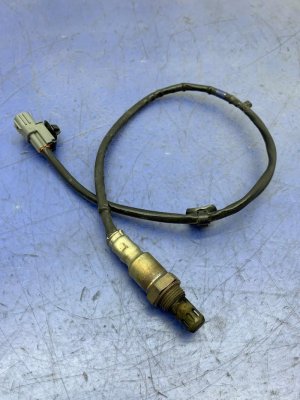
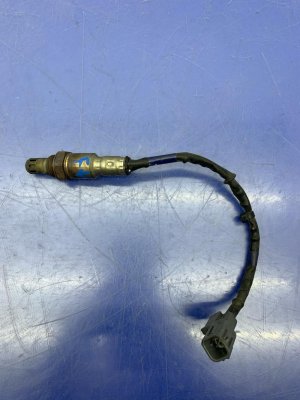
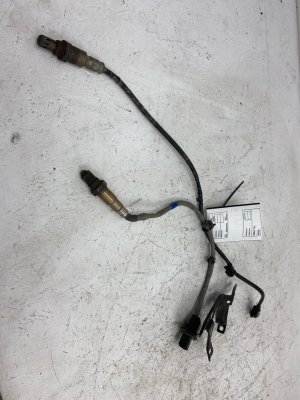
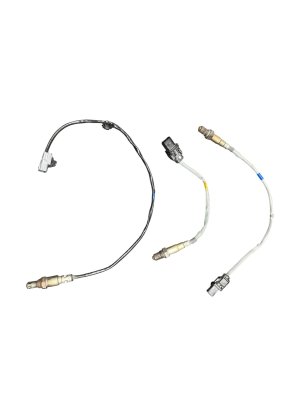
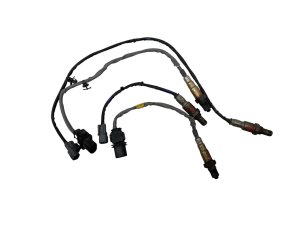
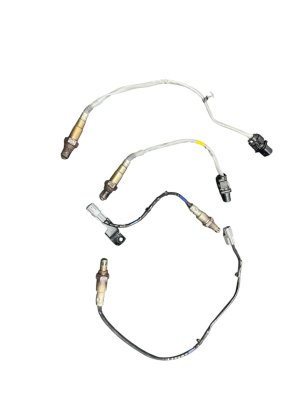
- Downstream Oxygen Sensor (Bank 1, Rear)
(OEM #39210-3LNB0)— This is the sensor that measures the exhaust gas after the catalytic converter for Bank 1 and is the most common failure point for a P2097 code. It is also described as the 'Rear Left' sensor.
Trusted brands: Kia (OEM), Bosch, Denso, NGK, Walker
OEM price range: $280-$420
Aftermarket price range: $70-$150
Related Codes That Often Appear With This One
- P0172 — P0172 means 'System Too Rich Bank 1' and is detected by the *upstream* O2 sensor. If both appear, it strongly suggests a true rich condition exists (like a leaking injector) rather than just a faulty downstream sensor.
- P2099 — This is the same 'Post Catalyst Fuel Trim Too Rich' code, but for Bank 2 (the front bank). Seeing both P2097 and P2099 together would point to a problem affecting both banks, such as a faulty mass airflow sensor or fuel pressure issue.
Mechanic-Grade Diagnostic Values
- Downstream O2 Sensor (B1S2) Voltage — expected: Relatively steady voltage between 0.6V and 0.8V on a healthy, warm engine in closed loop.. Failure: Voltage is stuck high (above 0.8V) or fluctuates rapidly like an upstream sensor.
- O2 Sensor Heater Circuit Resistance — expected: Approximately 5.0 to 7.0 Ohms.. Failure: A reading of 0 Ohms (short circuit) or infinite/OL (open circuit) indicates a failed heater element.
- O2 Sensor Heater Circuit Voltage — expected: Battery voltage (11V-14V) at the sensor connector with the key on, engine off.. Failure: No voltage suggests a wiring or PCM power supply issue.
- GDI Fuel Injector Resistance — expected: 12.5 - 13.5 Ohms for the OEM injector (PN 35310-3L200).. Failure: A reading significantly outside this range, or a variance of more than 1.0 Ohm from other injectors, points to a faulty injector.
- High-Pressure Fuel System (GDI) — expected: Idle: 400-600 PSI. Under Load: 1500-2500+ PSI.. Failure: Pressure that is excessively high at idle or does not respond correctly to load can indicate a faulty high-pressure pump or regulator, contributing to a rich condition.
- Oxygen Sensor Installation Torque — expected: 30 - 35 lb-ft (45 - 49 N.m).. Failure: Under-torquing can cause exhaust leaks; over-torquing can damage the sensor threads or body.
Model Year Variations Within This Range
- 2020-2025: The information in this article, particularly regarding the 3.8L Lambda II GDI V6 engine, applies to the 2020-2025 model years. Reports indicate the 2026 or 2027 model year will introduce new, smaller displacement turbocharged and hybrid powertrains, replacing the 3.8L V6. Therefore, this guide is not applicable to the second-generation Telluride.
Diagnostic Flowchart
Other Known Issues on This Vehicle
Issues unrelated to this code that are worth knowing about as an owner of this generation:
- Spontaneously Cracking Windshields 🟠 Medium — Widespread enough to trigger multiple class-action lawsuits for 2020-2023 models. Owners report cracks appearing without impact. (Ref: Kia issued a 'goodwill gesture' replacement program rather than a formal recall, but owner experiences with dealer acceptance have been mixed.)
- Tow Hitch Wiring Harness Fire Risk 🔴 High — Affects 2020-2022 models equipped with the genuine Kia 4-pin tow hitch harness. Moisture can cause a short circuit, leading to a fire even when parked. (Ref: NHTSA Recall 22V-626 (Kia Service Campaign SC247). Owners were advised to park outside until a remedy was performed.)
- Forward Collision-Avoidance (FCA) System Malfunctions 🟡 Low — Owners report intermittent 'Radar Blocked' warnings even when the sensor is clean, disabling the system. This can be caused by weather, direct sunlight, or sensor/software faults. (Ref: No specific recall, but Kia documentation notes many conditions can cause the system to be disabled.)
- Blank or Failing Instrument Cluster/LCD Screen 🟠 Medium — A known issue on 2022-2023 models where the screen can go blank, losing all driver information. (Ref: Kia issued recalls to update the instrument panel software to fix the issue.)
- Noisy or Failing Rear Self-Leveling Shocks 🟡 Low — Common on 2020-2021 models, owners report noise from the rear suspension. Kia has not considered this a safety issue or covered it under warranty in many cases. (Ref: TSB CHA113_R1 addresses 'Rear Shock Absorber Assembly Noise'.)
- Loose Exterior Trim Pieces 🟡 Low — Owners have reported black plastic trim pieces, particularly between the doors, coming loose or detaching, especially after car washes.
Used vs. New Parts: Buying Guide for This Vehicle
When a used part is the smart pick: A used part is generally not recommended for fixing the common causes of P2097. The only exception might be a section of exhaust pipe if a physical leak is found, but even then, new gaskets are required.
Donor-vehicle mileage cap: roughly under 15000 miles for the part to have meaningful remaining life.
What to inspect on the donor part:
- For exhaust components: Check for heavy rust, cracks near welds, and intact mounting flanges.
- For sensors/injectors: Avoid used parts entirely. They are wear items with an unknown remaining lifespan and are not worth the labor risk.
OEM-only on this vehicle (don't cheap out):
- Catalytic Converter: Aftermarket converters for modern GDI engines frequently fail to meet the required efficiency standards, leading to a recurring P0420 code shortly after installation. OEM is strongly advised to ensure a long-term fix.
- GDI Fuel Injectors: Due to the high pressures and precise nature of direct injection, OEM injectors are recommended for reliability and correct performance. Aftermarket quality can be inconsistent.
Aftermarket brands forum-validated for this vehicle:
- NTK (part of NGK): Widely regarded as a top-tier OEM supplier for oxygen sensors, often preferred for Asian vehicles.
- Denso: Another high-quality OEM supplier for oxygen sensors with a strong reputation for reliability.
Brands owners have reported issues with on this vehicle:
- Generic, unbranded 'universal' oxygen sensors that require splicing wires. These often have lower quality heater elements and sensor materials, leading to premature failure and incorrect readings.
Real Owner Stories
Aggregated from forums and TSBs cited above. Mileages and costs reflect what owners reported in those sources.
2021 Kia Rio (Brand-specific reference) — 82000 miles
Symptoms: Owner reported the P2097 code appearing and was concerned about driving safety and common causes for the brand.
What fixed it: The context mentions the user was seeking advice on common causes; typical brand-specific fixes include O2 sensor replacement or checking for exhaust leaks.
Source hint: r/kia on Reddit - A user with a 2021 Kia Rio (different model, but same brand) posted about a P2097 code at 82k miles
Related OBD-II Codes
Frequently Asked Questions
Is there a TSB for the P2097 code on my 2020-2021 Kia Telluride?
Could my Telluride's P2097 code be related to the tow hitch recall?
Where is the Bank 1 Sensor 2 located on the 3.8L Lambda II GDI V6 engine?
Can I use a universal O2 sensor to fix the P2097 code on my Telluride?
Does the Hyundai Palisade experience the same P2097 issues as the Telluride?
Could a leaking fuel injector be causing the rich signal on my 2020+ Telluride?
Helpful Videos
We Have This Part in Stock

The information in this article is provided for general reference and educational purposes only. Vehicle specifications, procedures, and part compatibility can vary by production date, trim level, and region. Always consult your vehicle's factory service manual and verify part numbers before purchasing or performing repairs. Safety-critical components such as airbags, seat belts, and braking systems should be installed by a qualified professional.
- Kia Telluride:
- 🎬 Helpful Videos
- 🛍️ Shop This Part
- What's Unique About the 2020-2026 Kia Telluride
- Symptoms You May Notice
- Most Likely Causes
- Rare But Worth Checking
- Diagnosis Steps
- Parts You'll Likely Need
- Related Codes That Often Appear With This One
- Mechanic-Grade Diagnostic Values
- Model Year Variations Within This Range
- Diagnostic Flowchart
- Other Known Issues on This Vehicle
- Used vs. New Parts: Buying Guide for This Vehicle
- Real Owner Stories
- 2021 Kia Rio (Brand-specific reference) — 82000 miles
- Related OBD-II Codes
- Frequently Asked Questions
- 🎟️ Get 5% Off