

P2097 on 2011-2015 Honda Civic: Causes and Fixes for Post-Catalyst Rich Fuel Trim
On a 2011-2015 Honda Civic, code P2097 is most often caused by a failing downstream oxygen (O2) sensor. Replacing this sensor is a common DIY fix, with parts costing between $50 and $150. However, before replacing parts, it is crucial to rule out exhaust leaks between the upstream and downstream sensors.
- P2097 means the sensor *after* the catalytic converter sees a rich fuel mixture.
- The most likely cause on your Civic is a faulty downstream O2 sensor (Sensor 2).
- Before buying parts, check for exhaust leaks between the two O2 sensors.
- Use a scan tool to watch live O2 sensor data; the downstream sensor's voltage should be steady, not stuck high or fluctuating wildly.
- The OEM part number for the downstream oxygen sensor is 36532-R1A-A01.
What's Unique About the 2011-2015 Honda Civic 🎬 Watch: A quick overview of the P2097 code for this Civic.

For the 9th generation Honda Civic (2011-2015), this code points to an issue in the emissions control system that is monitored by two sensors: an upstream Air/Fuel (A/F) sensor and a downstream heated oxygen sensor (HO2S). While the code can be triggered by a true rich-running condition, it's very commonly a fault with the downstream sensor itself providing an inaccurate reading to the computer. Before assuming an expensive catalytic converter failure, it is critical to rule out the more common and less expensive causes like the sensor or an exhaust leak.
Symptoms You May Notice
- Check Engine Light is on
- Decreased fuel economy
- Rough or erratic idle
- Vehicle may hesitate during acceleration or feel sluggish
- A faint smell of fuel or rotten eggs from the exhaust
- Black smoke from the exhaust
- Replacing the catalytic converter first. This is the most expensive part in the system and should only be replaced after confirming it has failed through proper diagnostics, such as checking for a significant temperature difference before and after the converter.
- Replacing the upstream A/F sensor when the downstream O2 sensor is the actual cause.
- Ignoring a small exhaust leak, which can be the true root cause.
Most Likely Causes

- Failing Downstream Oxygen Sensor (Sensor 2) 🔴 High Probability Oxygen sensors are wear-and-tear items that degrade over time from heat and contaminants in the exhaust, eventually sending incorrect voltage signals. It's possible for the sensor to fail and send a false rich signal even when no other issue exists.
How to confirm: Use an OBD-II scanner to monitor the live data for the downstream O2 sensor (Bank 1, Sensor 2). A healthy sensor on a warm, running engine should show a relatively steady voltage. If the voltage is stuck high (e.g., above 0.8V) or doesn't respond to changes in throttle, the sensor is likely faulty. Also inspect the sensor's wiring and connector for damage, moisture, or corrosion.
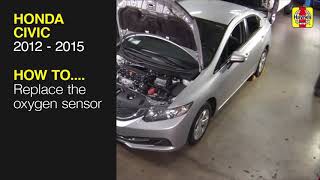
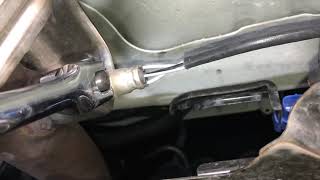
Typical fix: Replace the downstream oxygen sensor. It is located on the exhaust system after the catalytic converter. An oxygen sensor socket is recommended for removal. 🎬 Watch: Step-by-step DIY guide to replacing your O2 sensor.
Est. part cost: $50-$150 - Exhaust Leak 🟡 Medium Probability Exhaust gaskets (especially at the manifold) and flex pipes can degrade, crack, or rust over time, creating leaks. A leak between the upstream and downstream sensors can allow outside air to enter the exhaust, which can paradoxically cause the downstream sensor to report a rich condition as the PCM tries to compensate for what it thinks is a lean mixture.
How to confirm: Perform a thorough visual inspection of the exhaust system from the engine to the tailpipe, looking for black soot marks, cracks, or holes, especially around gaskets and welds. A smoke test is the most effective way to pinpoint small, hard-to-see leaks. 🎬 See this guide on how to find tricky exhaust leaks. You can also listen for a whistling or hissing sound from the exhaust when the engine is running.
Typical fix: Repair the leak. This may involve replacing a gasket, patching a small hole with exhaust putty for a temporary fix, or replacing the leaking section of pipe.
Est. part cost: $10-$300 - Failing Upstream Air/Fuel Ratio Sensor (Sensor 1) ⚪ Low Probability If the upstream sensor incorrectly tells the ECM the engine is lean, the ECM will add more fuel, creating a genuinely rich condition that the downstream sensor then correctly reports.
How to confirm: This is often accompanied by code P0172 (System Too Rich). Monitor live data for both sensors. If the upstream sensor's readings are erratic, biased, or not fluctuating rapidly as they should on a warm engine, it may be the root cause.
Typical fix: Replace the upstream Air/Fuel ratio sensor.
Est. part cost: $100-$250
Rare But Worth Checking
- Leaking Fuel Injector(s): A fuel injector stuck open will dump excess fuel into a cylinder, causing a true rich condition. This is usually accompanied by other symptoms like a strong fuel smell, black smoke, potential misfire codes (e.g., P030x), and noticeably poor performance.
- Failing Catalytic Converter: A clogged or inefficient catalytic converter can fail to process the exhaust gases correctly, leading to incorrect readings by the downstream sensor. This is an expensive fix, so it should be the last thing to consider after all other causes are ruled out.
- Engine Control Module (ECM) Software Issue: While no specific Honda TSB was found for the 2011-2015 Civic for P2097, other manufacturers like GM have issued software updates to correct logic errors that falsely trigger this code. It remains a rare possibility for Honda. A dealer would need to check for available PCM/ECM updates.
Diagnosis Steps

- Read all fault codes with an OBD-II scanner. If other codes like P0172 or P030x (misfire) are present, address them first as they can cause the P2097 code.
- Perform a thorough visual inspection of the exhaust system. Look for any signs of leaks (soot, cracks, rust holes) between the engine and the downstream O2 sensor. Pay close attention to gaskets.
- With the engine fully warmed up (in closed loop), use a scanner to observe live data. Watch the voltage for 'O2S1' (upstream) and 'O2S2' (downstream).
- The upstream A/F sensor (S1) voltage/equivalence ratio should fluctuate rapidly. The downstream sensor (S2) voltage should be relatively stable and steady. If S2 is stuck high (above 0.8V), it points to a bad sensor or a true rich condition.
- If S2 is fluctuating rapidly in a similar pattern to S1, it suggests the catalytic converter is not working correctly and may trigger a P0420 code.
- If an exhaust leak is suspected but not visible, perform a smoke test to confirm its location and severity.
- If a true rich condition is suspected (e.g., P0172 is also present), investigate the fuel system, including fuel pressure and injector function. Check for leaking injectors.
- Based on the evidence, replace the component identified as faulty, starting with the most likely and least expensive causes (exhaust leaks, downstream O2 sensor). After replacement, clear the codes and perform a drive cycle to see if the code returns.
Parts You'll Likely Need

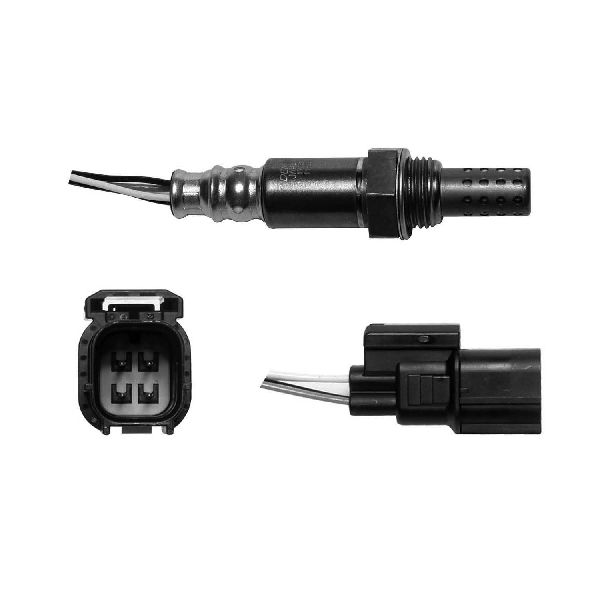
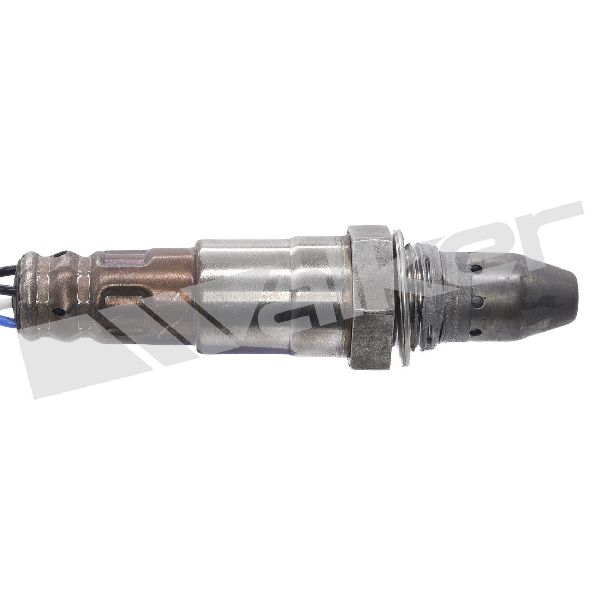
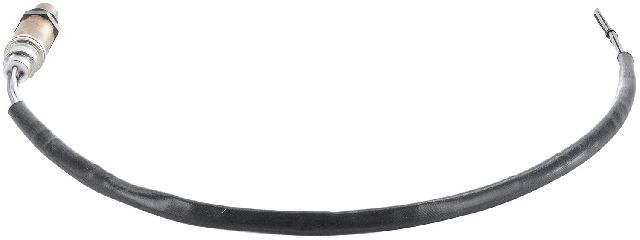
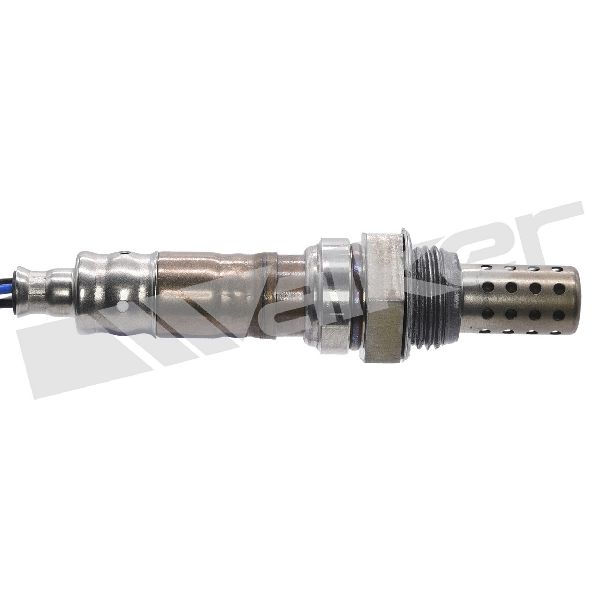
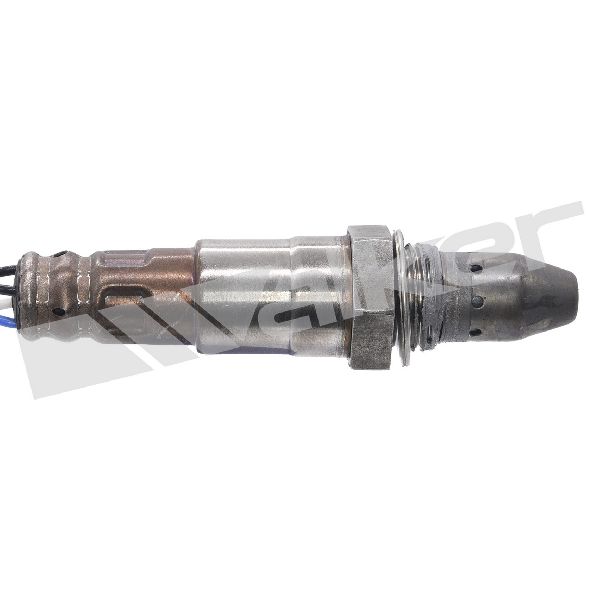
- Downstream Oxygen Sensor (Bank 1, Sensor 2)
(OEM #36532-R1A-A01)— This sensor is the most common failure point for a P2097 code when no other codes are present. It is a critical component for monitoring emissions and is exposed to extreme heat, causing it to fail over time.
Trusted brands: Denso, NGK/NTK, Bosch
OEM price range: $120-$180
Aftermarket price range: $50-$100
Related Codes That Often Appear With This One
- P0172 — If the engine is actually running rich due to a fuel delivery or upstream sensor issue, P0172 (System Too Rich Bank 1) will often appear alongside P2097.
- P0420 — If the catalytic converter is failing, a P0420 (Catalyst System Efficiency Below Threshold) code may be present, as the downstream O2 sensor readings will be erratic, similar to the upstream sensor.
- P2096 — This code for 'Post Catalyst Fuel Trim System Too Lean' is the direct opposite of P2097. Seeing them intermittently or having one appear after a repair for the other can point towards an erratic sensor or a difficult-to-diagnose exhaust leak.
Technical Service Bulletins (TSBs) & Recalls
- No specific TSB for P2097 on the 2011-2015 Civic was found. However, Honda has issued TSBs for other models and codes related to software updates (e.g., TSB 15-034 for P0657 on other models), indicating that PCM software updates to fix erroneous codes are a possibility, though rare for this specific issue.
Platform-Specific Known Issues
- On some modified Civics, particularly those with a catless downpipe, this code is common. Owners often use a defouler or 'mini-cat' on the O2 sensor to trick the ECU, though this may not be emissions-legal.
Mechanic-Grade Diagnostic Values
- Downstream O2 Sensor (Sensor 2) Voltage — expected: Relatively stable voltage between 0.4V and 0.6V at idle on a fully warmed engine.. Failure: Voltage is stuck high (above 0.7V), indicating a rich condition or biased sensor. Voltage fluctuating rapidly similar to the upstream sensor suggests a failed catalytic converter.
- Upstream A/F Sensor (Sensor 1) Voltage — expected: Should fluctuate rapidly and consistently between approximately 0.1V (lean) and 0.9V (rich).. Failure: A slow, lazy, or non-responsive sensor will not fluctuate correctly and can cause the actual fuel mixture to be incorrect.
- Honda-Specific Diagnostic Test Condition — expected: With the engine warm (radiator fan cycles on), hold engine speed at 3,000 RPM (no load) to get stable sensor readings for diagnosis.. Failure: Inability to get stable or expected sensor readings under these controlled conditions points towards a component or wiring fault.
Scan Tool Commands That Help
- Honda Diagnostic System (HDS): ECM/PCM Idle Learn Procedure — After replacing an Air/Fuel (O2) sensor or clearing codes, this procedure should be performed to allow the engine control module to relearn the baseline idle and fuel trim values with the new sensor input.
- Honda Diagnostic System (HDS): OBD Status Check for P2097 — After performing a repair, a specific drive cycle (engine temp > 158°F/70°C, 4th gear, speed between 15-75 mph for at least one minute) is required. Use the HDS to monitor if the test completes and passes to confirm the fix.
Wiring & Ground Locations
- G101 — Left rear of the engine compartment, often under the battery tray on non-Si models.. A poor main engine ground can cause erratic voltage readings on various sensors, including the oxygen sensors, leading to false diagnostic codes.
- G202 — Right front of the engine compartment.. This ground point serves various components in the engine bay. Corrosion or a loose connection here can introduce electrical noise and interfere with sensor signals.
- G401 — Located in the driver's side kick panel area.. This is a major interior/chassis ground point. Issues here can affect the Powertrain Control Module (PCM) and its ability to correctly interpret sensor data.
- Battery Ground Cable Assembly — Connects the negative battery terminal to the chassis and transmission.. The primary ground path for the entire electrical system. Degradation of this cable (part # 32600-TR0-000 for '12-'13 models) is a common source of hard-to-diagnose electrical issues.
Real Owner Repair Stories
- 2CarPros Forum User (2013 Honda Civic) — Check engine light with code P2097 appeared after a front-end collision.
❌ Tried (didn't work) Replacing the downstream oxygen sensor.
✅ What actually fixed it The code returned shortly after replacing the sensor. The user noted the collision had damaged the radiator, coolant temperature sensor, and intake/intercooler piping. The unresolved issue strongly implies the root cause was related to wiring or exhaust system damage from the collision, not a simple sensor failure.
When the Usual Fixes Don't Work
- In a documented case on a 2013 Civic, the P2097 code appeared after a front-end collision. The owner followed the common advice and replaced the downstream O2 sensor, but the check engine light returned quickly. This serves as strong counter-evidence to the idea that P2097 is always a simple sensor failure; it highlights that external factors like physical damage to wiring or the exhaust system must be considered, especially if the code's appearance coincides with a physical event.
OEM Part Supersession History
36532-R1A-A01→36532-R1B-A01— Part update for later model years.
Heads up: Part number 36532-R1B-A01 is specified for 2014-2015 Civic models. While it may be physically compatible with earlier years, using the exact part number specified for the vehicle's model year is critical to ensure correct sensor calibration and avoid issues.
Model Year Variations Within This Range
- 2013-2015: The 2013 model year received a significant refresh with updated exterior styling, different alloy wheels, and higher-quality interior materials compared to the 2012 model. A backup camera became standard, indicating changes to vehicle wiring harnesses.
- 2014-2015: The downstream oxygen sensor part number changes to 36532-R1B-A01 for these model years, from the earlier 36532-R1A-A01. This indicates a possible internal revision to the sensor.
Diagnostic Flowchart
Real Owner Stories
Aggregated from forums and TSBs cited above. Mileages and costs reflect what owners reported in those sources.
2013 Honda Civic EX-L
Symptoms: Poor fuel economy (~20 MPG city) and a 'check emissions system' light with code P2097.
What fixed it: The issue was not resolved. The owner replaced the catalytic converter, both O2 sensors, spark plugs, MAF sensor, and air filter, but the code remained permanent.
Source hint: Reddit r/MechanicAdvice - Engine runs too rich and fuel trims show too lean.
2013 Honda Civic
Symptoms: Check engine light with code P2097 appeared shortly after a front-end collision.
What fixed it: Replacing the downstream O2 sensor did not fix the code; diagnosis pointed toward collision damage to the wiring or exhaust system.
Source hint: 2CarPros - 2013 Honda Civic Error Code P2097
Modified Honda Civic (Catless)
Symptoms: Check engine light Code P2097 triggered after installing a catless downpipe.
What fixed it: Used an O2 sensor defouler or an ECU tune to eliminate the code.
Source hint: Reddit r/CivicX - Check engine light Code P2097
2017 Honda Civic Si
Symptoms: Check engine light with code P2097 accompanied by a P0137 (O2 Sensor Circuit Low Voltage).
What fixed it: Replaced the downstream O2 sensor.
Source hint: Reddit r/MechanicAdvice - Pgm-fi ficm - code p2097 (2017 Honda Civic Si)
Related OBD-II Codes
Frequently Asked Questions
Is there a specific Honda TSB for the P2097 code on my 2011-2015 Civic?
I installed a catless downpipe on my 9th Gen Civic and got a P2097 code. Is this normal?
My 2013 Civic was in a front-end collision and now has a P2097 code. Could they be related?
Can a cracked exhaust manifold cause a P2097 on this engine?
Does the 2013-2015 Acura ILX share this P2097 issue with the Civic?
Helpful Videos

We Have This Part in Stock


The information in this article is provided for general reference and educational purposes only. Vehicle specifications, procedures, and part compatibility can vary by production date, trim level, and region. Always consult your vehicle's factory service manual and verify part numbers before purchasing or performing repairs. Safety-critical components such as airbags, seat belts, and braking systems should be installed by a qualified professional.
- Honda Civic:
- 🎬 Helpful Videos
- 🛍️ Shop This Part
- What's Unique About the 2011-2015 Honda Civic
- Symptoms You May Notice
- Most Likely Causes
- Rare But Worth Checking
- Diagnosis Steps
- Parts You'll Likely Need
- Related Codes That Often Appear With This One
- Technical Service Bulletins (TSBs) & Recalls
- Platform-Specific Known Issues
- Mechanic-Grade Diagnostic Values
- Scan Tool Commands That Help
- Wiring & Ground Locations
- Real Owner Repair Stories
- When the Usual Fixes Don't Work
- OEM Part Supersession History
- Model Year Variations Within This Range
- Diagnostic Flowchart
- Real Owner Stories
- 2013 Honda Civic EX-L
- 2013 Honda Civic
- Modified Honda Civic (Catless)
- 2017 Honda Civic Si
- Related OBD-II Codes
- Frequently Asked Questions
- 🎟️ Get 5% Off