

P2097 on 2016-2023 GMC Acadia: Post-Catalyst Rich Fuel Trim Causes and Fixes
On a 2017-2023 GMC Acadia, code P2097 is frequently caused by leaking fuel injectors, a known issue highlighted in GM Technical Service Bulletins (TSBs). Before replacing the more common suspect—the oxygen sensor—the fuel system, including the EVAP system and injectors, must be tested. A single OEM fuel injector costs around $90-$120, while an O2 sensor is about $40-$60.
- For a 2017-2023 GMC Acadia, do not assume P2097 is a bad oxygen sensor. The most likely cause is a faulty fuel injector.
- Diagnosis should follow GM's specific TSBs, which call for an injector balance test early in the process.
- Driving with this code active can lead to costly catalytic converter damage over time.
- A common misdiagnosis is replacing the O2 sensor, which will not fix the code if the root cause is a leaking injector.
- The issue is well-documented for second-generation (2017+) Acadias.
What's Unique About the 2016-2023 Gmc ACADIA
While on many vehicles a P2097 code points directly to a bad oxygen sensor, on the second-generation (2017+) GMC Acadia, this is often not the case. General Motors has issued specific Technical Service Bulletins (TSBs) advising technicians to investigate the fuel system as the primary cause. TSB #PIP5534A for the 2.5L engine instructs technicians to first rule out the EVAP purge system, then perform specialized fuel injector tests early in the diagnostic process. This guidance suggests that leaking injectors are a known and common problem for this platform that can be missed with standard troubleshooting that defaults to O2 sensor replacement.
Diagnostic Flowchart
Tap your situation to follow the diagnostic path that matches what you're seeing on this vehicle.
Generation note: The 2016-2023 year range covers two generations of the GMC Acadia. The first generation ended in 2016 (with a 'Limited' model in 2017). The second generation began in 2017. The authoritative NHTSA and TSB data for this code, particularly regarding fuel injector issues, applies specifically to the second-generation (2017-2023) models with the 2.5L LCV and 3.6L LGX engines.
Symptoms You May Notice
- Check Engine Light is on
- Reduced fuel economy
- Rough or erratic idle
- Engine hesitation or stumbling during acceleration
- Black smoke from the exhaust in some cases
- A noticeable fuel odor
- Engine is hard to start when hot
- Replacing the downstream oxygen sensor without first performing a fuel injector balance test as recommended by GM service bulletins.
- Replacing the catalytic converter, which is an expensive part that is often damaged by the root problem (like a leaking injector) rather than being the cause itself.
- Blaming a bad battery, as reported by one owner, which does not address the underlying fuel system issue. [ODI #11458936]
Most Likely Causes
- Leaking or Faulty Fuel Injector(s) 🔴 High Probability GM has issued multiple TSBs (PIP4964F, PIP5534A) for this generation of vehicles that specifically identify faulty fuel injectors as a primary cause for P2097, requiring special diagnostic steps.
How to confirm: A technician should perform a fuel injector balance test or use an Active Fuel Injector Tester (AFIT) as recommended by GM TSBs. This test measures the flow rate of each injector to find leaks or imbalances.
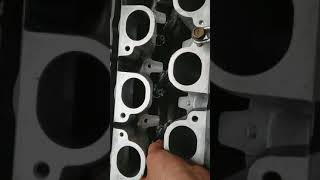
Typical fix: Replace the faulty fuel injector(s). 🎬 See this walkthrough for replacing GM direct injection fuel injectors TSB #PIP5534A notes that for the 2.5L engine, if an individual faulty injector cannot be identified, all four should be replaced.
Est. part cost: $60-$120 per injector - EVAP System Fault (e.g., Purge Valve) 🟡 Medium Probability TSB #PIP5534A explicitly instructs technicians to verify the EVAP purge system is not the cause before proceeding with other diagnostics. A stuck-open purge valve can introduce excess fuel vapors, creating a rich condition.
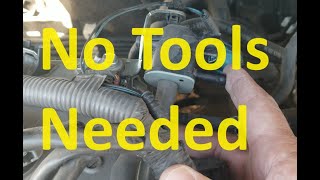
How to confirm: The technician should disconnect the purge solenoid vacuum source 🎬 Watch: How to test if your purge valve is stuck open and block off the intake port, then monitor fuel trims to see if the rich condition resolves.
Typical fix: Replace the faulty EVAP purge solenoid or repair the leaking line.
Est. part cost: $25-$70 - Faulty Downstream Oxygen Sensor (Bank 1, Sensor 2) 🟡 Medium Probability
How to confirm: Use a scan tool to monitor the live voltage data from the Bank 1 Sensor 2. A healthy downstream sensor should show a relatively steady voltage. If it's sending a persistently high (rich) signal or fluctuating wildly like the upstream sensor, it may be faulty, but only after ruling out all fuel system and exhaust leak issues first.
Typical fix: Replace the Bank 1 downstream oxygen sensor.
Est. part cost: $40-$60 - Exhaust Leak ⚪ Low Probability Exhaust manifold and flex pipe gaskets can fail over time, creating leaks.
How to confirm: Visually inspect the exhaust system from the engine manifold to the catalytic converter for cracks, holes, or leaking gaskets. A leak before the O2 sensors can introduce air and cause incorrect fuel trim adjustments. A smoke test can pinpoint the leak's location.
Typical fix: Repair the leak by replacing the damaged pipe section or gasket.
Est. part cost: $20-$200
Rare But Worth Checking
- Faulty Mass Airflow (MAF) Sensor: A dirty or failing MAF sensor can send incorrect airflow data to the ECM, causing it to command a rich fuel mixture. TSB #PIP5534A mentions this as a possibility to check.
- Clogged or Failing Catalytic Converter: While a failing converter can cause this code, it's more often a symptom of a long-term rich condition. It should not be replaced without first diagnosing fuel and sensor issues thoroughly.
- Specific Driving Habits: TSB #PIP5534 mentions that a "digital driver"—one who rapidly accelerates and then coasts repeatedly—can sometimes induce a P2097 code without an actual vehicle fault.
Diagnosis Steps
- Scan for all DTCs. Note any other codes present, especially misfire (P030x) or Bank 2 (P2099) codes.
- Review GM Technical Service Bulletins. Acknowledge TSBs #PIP4964F and #PIP5534A, which prioritize fuel system checks.
- Test EVAP System. As per TSB #PIP5534A, the first diagnostic step is to disconnect the purge solenoid vacuum source from the intake and plug the port to ensure a faulty purge valve isn't causing the rich condition.
- Analyze Fuel Trims. With a scan tool, monitor long-term fuel trim at idle, in drive with the brake applied, and while driving at a steady 50+ MPH to see how the value changes under different loads.
- Perform Fuel Injector Test. Following TSB guidance, perform an injector balance test or use an Active Fuel Injector Tester (AFIT) to check for leaking or poorly performing injectors. This is the most critical step for this specific vehicle.
- Inspect for Exhaust and Vacuum Leaks. Visually and audibly inspect the exhaust manifold and pipes for leaks ahead of the O2 sensors. A smoke test is effective here. Check for any vacuum leaks in the intake system.
- Analyze Live Sensor Data. If fuel injectors and leaks are ruled out, use a scan tool to monitor the downstream (Bank 1 Sensor 2) O2 sensor. A sensor with a steady high voltage reading (>0.8V) is likely faulty or biased.
- Inspect O2 Sensor Wiring. Check the wiring and connector for the O2 sensor for any damage, melting, or corrosion.
- Test the Catalytic Converter. Only if all other causes are ruled out, test the catalytic converter's efficiency, as it may have been damaged by the long-term rich condition.
Parts You'll Likely Need
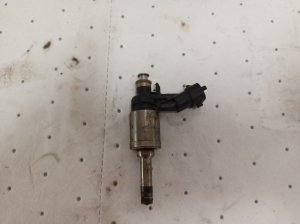
- Fuel Injector (2.5L LCV)
(OEM #12662564)— This is a highly probable cause on 2.5L Acadia models, as identified by multiple GM TSBs.
Trusted brands: ACDelco, Standard Motor Products, GB Remanufacturing
OEM price range: $85-$110
Aftermarket price range: $60-$90 - Fuel Injector (3.6L LGX)
(OEM #12692884)— A likely cause for P2097/P2099 on the V6 engine, following the diagnostic logic established in GM TSBs for rich fuel trim codes.
Trusted brands: ACDelco, Carquest Premium
OEM price range: $115-$140
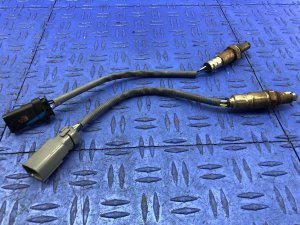
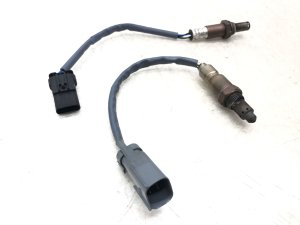
Aftermarket price range: $80-$100 - Downstream Oxygen Sensor (Bank 1 Sensor 2)
(OEM #ACDelco for 3.6L: W0133-2517785; for 2.5L: W0133-2549475)— This is a common failure part for this code on many vehicles and may be the cause if the fuel system checks out. It is often replaced incorrectly when the real fault is an injector.
Trusted brands: ACDelco, Denso (234-8054 for 3.6L), NGK (21084 for 3.6L), Bosch
OEM price range: $45-$65
Aftermarket price range: $35-$55
Related Codes That Often Appear With This One
- P2099 — This is the same code but for Bank 2. Seeing both P2097 and P2099 together on the 3.6L V6 points to a systemic issue affecting both engine banks, such as a MAF sensor, EVAP fault, or fuel pressure problem.
- P0300-P0306 — These are misfire codes. A leaking fuel injector can cause a cylinder to run too rich, leading to incomplete combustion and a misfire on that specific cylinder.
Technical Service Bulletins (TSBs) & Recalls
- PIP4964F: Advises technicians to perform an injector balance or Active Fuel Injector Tester (AFIT) test prior to further diagnosis for P2097 or P2099.
- PIP5534A: Provides additional, specific diagnostics for P2097 on 2.5L and 2.0L engines, focusing on checking the EVAP system, fuel trim analysis, and injector testing, and even recommending replacing all injectors if a single culprit isn't found.
- PIP5215A: Corroborating TSB for a 2013 Malibu with the 2.5L LCV engine that also points to lean conditions (intake leaks, restricted injectors) as a cause for a P2097 code, reinforcing the diagnostic pattern.
Platform-Specific Known Issues
- TSB #PIP5534A for the 2.5L engine notes that after checking for vacuum leaks and skewed MAF sensors, an AFIT test should be performed. It explicitly states: "If no individual lean injector(s) can be found, replace all four injectors." This indicates a known issue where injectors can cause a rich condition without failing a simple balance test.
- TSB #PIP5534 also notes that certain driving styles, described as 'digital driving' (rapid acceleration followed by coasting, in a repeating pattern), can induce a P2097 code without any actual fault in the vehicle.
Mechanic-Grade Diagnostic Values
- Downstream O2 Sensor (Bank 1, Sensor 2) Voltage — expected: Relatively steady reading around 0.45V in closed loop.. Failure: A persistently high voltage (above 0.8V) indicates a rich condition. Fluctuating rapidly similar to the upstream sensor suggests a failing catalytic converter.
- Upstream O2 Sensor (Bank 1, Sensor 1) Voltage — expected: Rapidly switching between 0.1V (lean) and 0.9V (rich) in closed loop.. Failure: A sensor that is slow to respond or stuck at a certain voltage is faulty.
- Fuel Injector Coil Resistance — expected: 11-14 ohms when the engine coolant temperature is between 10-32°C (50-90°F).. Failure: A resistance value outside of this range, or a variance of more than 3 ohms between injectors, indicates a faulty injector.
- Long-Term Fuel Trim (LTFT) — expected: Close to 0%, ideally within +/- 10%.. Failure: Consistently negative numbers (e.g., -15% or more) confirm the ECM is compensating for a rich condition by reducing fuel delivery.
Scan Tool Commands That Help
- GDS2 (GM Global Diagnostic System 2): Injector Test (using AFIT CH-47976) — This is the GM-specified procedure to test for leaking or improperly functioning fuel injectors, which is a primary cause of P2097 on these vehicles. It can perform balance tests and detect leaks that a simple resistance test would miss.
- GDS2 (GM Global Diagnostic System 2): EVAP Purge/Seal — To command the EVAP purge solenoid valve open and closed to test for proper function. A stuck-open valve is a common cause of rich conditions and is a required check per TSB PIP5534A.
- GDS2 (GM Global Diagnostic System 2): Fuel Trim Reset — After replacing a component that affects fuel mixture (like injectors, MAF sensor, or O2 sensor), this function should be used to clear the learned long-term fuel trim values, allowing the ECM to relearn new values faster.
Wiring & Ground Locations
- Bank 1 Sensor 2 Connector — For the 3.6L V6, Bank 1 is the firewall side (rear) of the engine. Sensor 2 is located after the catalytic converter. For the 2.5L I4, there is only one bank, and Sensor 2 is downstream of the catalytic converter.. The connector and its wiring are exposed to high heat and road debris. Damage, corrosion, or melting at the 4-wire connector can cause incorrect signals, mimicking a sensor failure.
- ECM/PCM Ground Locations — Key engine grounds (often designated G103, G107, etc.) are typically located on the engine block, cylinder head, or near the battery tray on the chassis. A wiring diagram is needed for exact placement.. A poor ground connection for the Engine Control Module or the sensor circuits can introduce electrical noise and voltage offsets, leading to inaccurate sensor readings and incorrect fuel trim calculations.
Real Owner Repair Stories
- AcadiaForum.net user report (2018 GMC Acadia 3.6L V6) — Check Engine Light with code P2097.
❌ Tried (didn't work) Replaced the Bank 1 Sensor 2 (downstream) oxygen sensor., Replaced the Bank 1 Sensor 1 (upstream) oxygen sensor., Replaced the EVAP purge solenoid.
✅ What actually fixed it The dealership performed an injector flow test and found two fuel injectors on Bank 1 were leaking. Replacing the two faulty injectors and the associated seals resolved the P2097 code.
OEM Part Supersession History
12627093, 12633913, 12662570→12662564— Part consolidation and design updates for the 2.5L LCV fuel injector.12647362, 12650300→12692884— Part consolidation and design updates for the 3.6L LGX fuel injector.
Model Year Variations Within This Range
- 2020-2023: A mid-cycle refresh for the 2020 model year introduced a new standard 2.0L Turbo (LSY) engine on SLT and Denali trims and a new 9-speed automatic transmission across all engine options, replacing the previous 6-speed. The base 2.5L LCV engine was discontinued after the 2021 model year. These changes mean that diagnostic procedures for transmission-related symptoms or engine issues on the 2.0T will differ from earlier models.
- 2017-2019: These models primarily used the 2.5L LCV or 3.6L LGX engines paired with a 6-speed automatic transmission. The TSBs pointing to fuel injectors are highly relevant to these years.
Helpful Videos

Used OEM Parts in Stock
New Aftermarket Parts Available


The information in this article is provided for general reference and educational purposes only. Vehicle specifications, procedures, and part compatibility can vary by production date, trim level, and region. Always consult your vehicle's factory service manual and verify part numbers before purchasing or performing repairs. Safety-critical components such as airbags, seat belts, and braking systems should be installed by a qualified professional.
- Gmc ACADIA:
- 🎬 Helpful Videos
- 🛍️ Shop This Part
- What's Unique About the 2016-2023 Gmc ACADIA
- Diagnostic Flowchart
- Symptoms You May Notice
- Most Likely Causes
- Rare But Worth Checking
- Diagnosis Steps
- Parts You'll Likely Need
- Related Codes That Often Appear With This One
- Technical Service Bulletins (TSBs) & Recalls
- Platform-Specific Known Issues
- Mechanic-Grade Diagnostic Values
- Scan Tool Commands That Help
- Wiring & Ground Locations
- Real Owner Repair Stories
- OEM Part Supersession History
- Model Year Variations Within This Range
- 🎟️ Get 5% Off