

P2097 on 2015-2017 Ford F-150 5.0L: Post-Catalyst Fuel Trim Too Rich Bank 1 Causes and Fixes
This code on a 2015-2017 F-150 5.0L most often points to an exhaust leak before the downstream O2 sensor or a failing O2 sensor on Bank 1 (passenger side). A thorough inspection for exhaust leaks (cracked manifolds, bad gaskets, flex pipe holes) is the most critical first step. If no leaks are found, suspect the Bank 1 Sensor 2 (downstream) oxygen sensor.
- P2097 means the exhaust is too rich on the passenger side (Bank 1) after the catalytic converter.
- Before buying any parts, thoroughly inspect the exhaust system on Bank 1 for leaks, from the engine to behind the catalytic converter.
- If no leaks are found, the most likely culprits are the oxygen sensors on Bank 1 (either upstream or downstream).
- Using a scan tool to view live O2 sensor data is the best way to diagnose a faulty sensor without guesswork.
- Do not replace the catalytic converter unless it has been specifically diagnosed as failed; it is rarely the cause of this code.
What's Unique About the 2015-2017 Ford F-150
On the 2015-2017 F-150 platform with the 5.0L V8, while universal causes apply, there is a notable susceptibility to exhaust system leaks. Owners frequently report issues with exhaust manifold warping, broken manifold studs, and leaks from gaskets or flex pipes. An exhaust leak between the engine and the downstream O2 sensor is a very common cause for this code on these trucks. The leak allows un-metered air into the exhaust pipe, which can paradoxically cause the downstream O2 sensor to read rich under certain conditions, or it can corrupt the readings of the upstream sensor, leading the PCM to add fuel unnecessarily.
Symptoms You May Notice
- Check Engine Light is on
- Reduced fuel economy
- Rough or uneven idle
- Hesitation or stumbling during light acceleration
- A noticeable smell of fuel or rotten eggs from the exhaust
- Black smoke from the tailpipe in extreme cases
- Popping or ticking noise from the engine bay/exhaust, especially on a cold start, indicating an exhaust leak
- Immediately replacing the catalytic converter. The converter is expensive and is usually not the root cause. The P2097 code is an indication of what's happening *in* the exhaust stream, not necessarily a failure of the converter itself.
- Replacing the downstream O2 sensor without checking for exhaust leaks first. An exhaust leak is a very common cause and a thorough inspection can save you the cost of an unnecessary sensor replacement.
Most Likely Causes
- Exhaust Leak 🔴 High Probability These trucks can develop leaks at the exhaust manifolds (warped surfaces or broken studs), collector gaskets, or at the flex pipe located before the muffler. This is a widely reported issue in owner forums.
How to confirm: Visually inspect the exhaust system from the engine block to the downstream O2 sensor on the passenger side. Look for black soot trails, cracks, or listen for ticking/hissing noises, especially on a cold start when the metal is contracted. A smoke test is the most definitive way to find small leaks.
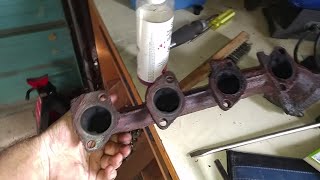
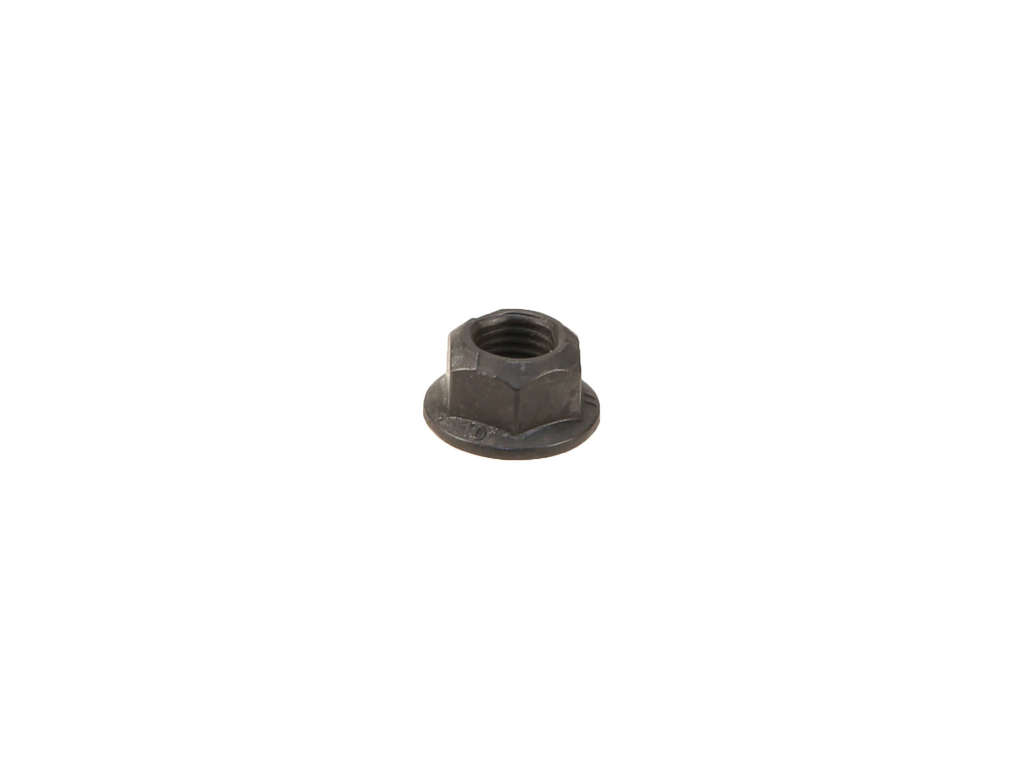
Typical fix: Replace the leaking gasket, repair the cracked pipe, or replace the warped exhaust manifold. 🎬 Watch: F150 exhaust manifold repair tips and tricks This may require replacing manifold studs and nuts as well. Small cracks or holes can sometimes be sealed with exhaust putty or a heat wrap as a temporary fix.
Est. part cost: $20-$400 - Faulty Downstream Oxygen Sensor (Bank 1, Sensor 2) 🟡 Medium Probability O2 sensors are wear items that operate in a harsh environment. Their performance degrades over time and can lead to false, biased readings.
How to confirm: Use a scan tool to monitor the voltage of the Bank 1 Sensor 2 with the engine fully warmed up. A healthy downstream sensor should show a relatively steady voltage, typically between 0.6V and 0.8V. If it's stuck high (above 0.8v) or fluctuating rapidly like the upstream sensor, it is likely faulty or confirming a separate issue. 🎬 See how to troubleshoot O2 sensors using FORScan
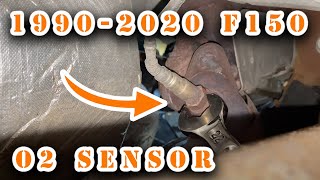
Typical fix: Replace the Bank 1, Sensor 2 oxygen sensor. An O2 sensor socket is required for this job. 🎬 Watch: Easy walkthrough for replacing up and downstream sensors
Est. part cost: $50-$150 - Faulty Upstream Oxygen Sensor (Bank 1, Sensor 1) 🟡 Medium Probability The upstream sensor (Air/Fuel Ratio sensor) is critical for fuel control. If it fails and sends an incorrect lean signal, the PCM will add too much fuel, causing a genuine rich condition that the downstream sensor correctly reports.
How to confirm: Use a scan tool to observe the live data for the Bank 1 Sensor 1. On these wideband sensors, you should monitor Equivalence Ratio and sensor current (mA). At idle, the current should be near 0 mA. It will go negative (e.g., -1.0 mA) during rich conditions like acceleration and positive (e.g., +2.0 mA) during lean conditions like deceleration. If it is stuck, biased, or slow to respond, it may be the cause.
Typical fix: Replace the Bank 1, Sensor 1 oxygen sensor.
Est. part cost: $60-$180 - Leaking Fuel Injector(s) ⚪ Low Probability While not specific to this platform, an injector can become stuck partially open, dumping excess fuel into a cylinder on Bank 1. This would create a true rich condition.
How to confirm: Perform a fuel pressure leak-down test. After priming the system, the pressure should hold steady. A rapid drop indicates a leak, possibly from an injector. Another method is to pull the spark plugs on Bank 1 and check for one that is wet with fuel or significantly blacker than the others.
Typical fix: Replace the faulty fuel injector(s). It is often recommended to replace them as a set on the affected bank.
Est. part cost: $70-$200 per injector - Damaged O2 Sensor Wiring or Connectors ⚪ Low Probability Wiring is routed near hot exhaust components and can become brittle, melted, or corroded over time. Some owners have reported issues with the factory harness installation, leading to chafing.
How to confirm: Visually inspect the wiring harness and connectors for both Bank 1 O2 sensors. Look for any signs of melting, chafing, corrosion, or loose pins. Check for continuity with a multimeter if visual inspection is inconclusive. A test light can be used to check signal wire integrity from the connector to the PCM.
Typical fix: Repair the damaged section of the harness or replace the connector pigtail.
Est. part cost: $15-$50
Rare But Worth Checking
- Clogged Catalytic Converter: While a clogged converter more often causes lean codes or low power, an internally damaged converter can sometimes lead to incorrect readings by the downstream O2 sensor.
- Faulty Mass Airflow (MAF) Sensor: A dirty or failing MAF sensor can provide incorrect airflow data to the PCM, leading to improper fuel mixture calculations across both banks. This would usually be accompanied by other codes.
- Failing EVAP Purge Valve: If the EVAP canister purge valve sticks open, it can create a vacuum leak that allows un-metered fuel vapors into the intake manifold, potentially causing a rich condition. This is more likely to set codes on both banks but can sometimes manifest on just one.
Diagnosis Steps
- Check for Other Codes: Use an OBD-II scanner to see if any other codes are present. Additional codes (e.g., P0172, misfire codes) are critical clues.
- Inspect for Exhaust Leaks: This is the most critical first step for this vehicle. With the engine cool, start it and listen for any ticking or hissing sounds from the passenger side exhaust manifold and downpipe. A mechanic's stethoscope can help isolate the noise. Look for black soot trails. For best results, have a shop perform a smoke test on the exhaust system.
- Analyze Live Sensor Data: Use a scan tool to monitor live data with the engine at operating temperature. Watch the readings for Bank 1 Sensor 1 (upstream) and Bank 1 Sensor 2 (downstream).
- - Upstream (B1S1): For this wideband sensor, monitor current in milliamps (mA). It should hover near 0 mA at idle, go negative on acceleration (rich), and positive on deceleration (lean).
- - Downstream (B1S2): Should hold a relatively steady voltage, typically above 0.5V (e.g., 0.6V-0.8V). If it's stuck high (e.g., 0.9V) or switching rapidly like the upstream sensor, it may be faulty or confirming a true rich condition/failed catalyst.
- Check Fuel Trims: Observe the Short Term Fuel Trim (STFT) and Long Term Fuel Trim (LTFT) for Bank 1. With a P2097, you will likely see negative numbers (e.g., -10% or more), indicating the PCM is trying to remove fuel to correct the perceived rich condition.
- Inspect O2 Sensor Wiring: Visually inspect the wiring and connectors for both Bank 1 sensors for any signs of damage, melting, or corrosion. Pay close attention to where the harness is secured and if it's rubbing against the frame or engine components. Use a test light connected to battery positive to probe the signal wire at the sensor connector (unplugged); the scan tool should show a high voltage reading (e.g., 1.6V+), confirming wire integrity to the PCM.
- Investigate Fuel System: If sensors and exhaust appear fine, the issue may be a true rich condition. Check fuel pressure and perform a leak-down test to check for leaking injectors.
- Swap Components: As a diagnostic step, if you suspect an O2 sensor or fuel injector, you can swap the component from Bank 1 to Bank 2 and see if the trouble code follows (e.g., changes to P2099).
Parts You'll Likely Need
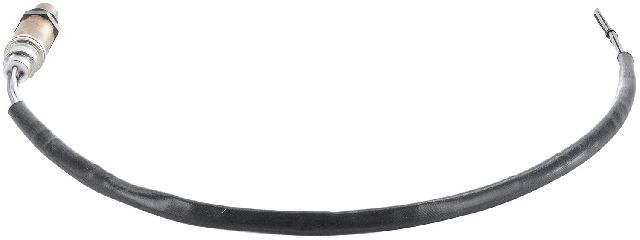
- Downstream Oxygen Sensor (Bank 1, Sensor 2)
(OEM #FL3Z-9G444-D (Motorcraft DY1325))— This sensor provides the reading that triggers the code. It is a common failure point due to age and harsh operating conditions.
Trusted brands: Motorcraft, Bosch, Denso, NTK/NGK
OEM price range: $70-$110
Aftermarket price range: $50-$90 - Upstream Oxygen Sensor (Bank 1, Sensor 1)
(OEM #GL3Z-9F472-A (Motorcraft DY1288))— A faulty upstream sensor can cause the engine to run rich, leading the downstream sensor to correctly report the issue.
Trusted brands: Motorcraft, Bosch, Denso, NTK/NGK
OEM price range: $60-$180
Aftermarket price range: $50-$150 - Exhaust Manifold Gasket
(OEM #FR3Z-9448-A)— Exhaust leaks between the cylinder head and the manifold are a common cause of this code on the 5.0L V8.
Trusted brands: Motorcraft, Fel-Pro, Mahle
OEM price range: $20-$30
Aftermarket price range: $10-$20
Related Codes That Often Appear With This One
- P0172 — System Too Rich (Bank 1). This code indicates the upstream sensor is also detecting a rich condition, suggesting a true fuel delivery problem like a leaking injector, rather than just a sensor fault.
- P0300, P0301-P0308 — Random or specific cylinder misfire codes. A severe rich condition can foul spark plugs and lead to misfires.
Technical Service Bulletins (TSBs) & Recalls
- SSM 46159 (NHTSA ID: #10091127): While not for the F-150 specifically, this TSB mentions DTC P2097 for other 2016 Ford vehicles with the 3.5L GTDI engine, indicating Ford is aware of issues causing this code across its lineup.
Platform-Specific Known Issues
- Exhaust Manifold Warping: The cast iron exhaust manifolds on the 5.0L V8 can be prone to warping from thermal cycles, causing leaks at the gasket surface against the cylinder head. This often presents as a ticking noise on cold starts that may quiet down as the engine warms and the metal expands.
- Broken Manifold Studs: Corrosion and stress can cause the studs that secure the exhaust manifold to the cylinder head to break, resulting in a significant exhaust leak that will almost certainly trigger O2 sensor-related codes like P2097.
Mechanic-Grade Diagnostic Values
- Upstream O2 Sensor (B1S1) Current at Idle — expected: Near 0 mA. Failure: Significant positive or negative current at idle, or slow/no response to throttle changes.
- Upstream O2 Sensor (B1S1) Current at WOT — expected: Approx. -1.0 mA to -2.0 mA (Rich). Failure: Sensor current does not go negative or does not respond quickly during wide-open throttle.
- Upstream O2 Sensor (B1S1) Current on Deceleration — expected: Approx. +2.0 mA (Lean). Failure: Sensor current does not go positive during fuel-cut deceleration.
- Downstream O2 Sensor (B1S2) Voltage at Idle (warmed up) — expected: Relatively steady 0.6V - 0.8V. Failure: Voltage is stuck high (above 0.8V), stuck low, or fluctuating rapidly like an upstream sensor.
- Long Term Fuel Trim (Bank 1) — expected: Within +/- 5%. Failure: A strongly negative value (e.g., -10% or more) indicates the PCM is consistently removing fuel to compensate for a perceived rich condition.
Scan Tool Commands That Help
- Ford IDS (or FORScan): Reset All Adaptations / Clear Transmission Adaptive Tables / Reset KAM — After a repair, such as replacing a fuel injector or fixing a major vacuum/exhaust leak, resetting the Keep Alive Memory (KAM) forces the PCM to relearn fuel trims and idle strategies from a clean slate. This can resolve persistent issues after the mechanical fault is fixed.
- Ford IDS: Power Balance Test — If a leaking fuel injector is suspected, this bidirectional test can help identify a specific cylinder that is contributing less power than others, which can be a symptom of a rich condition fouling the spark plug.
Wiring & Ground Locations
- C175B — This is the center connector on the Powertrain Control Module (PCM), which is typically located on the passenger-side firewall in the engine bay.. The O2 sensor signal and heater circuit wires run to this connector. A pinout diagram for C175B is necessary to test for continuity and shorts in the harness between the sensors and the PCM.
- HO2S Sensor Connector (Bank 1, Sensor 2) — On the passenger side of the vehicle, in the exhaust pipe after the catalytic converter.. This is the primary connector to inspect for damage, corrosion, or melting. It's also the point where a technician would back-probe to test the sensor's voltage signal or test the integrity of the wiring harness going back to the PCM.
Real Owner Repair Stories
- f150forum.com user (2015 F-150 5.0L) — P2097 code, rough idle, poor fuel economy.
❌ Tried (didn't work) Replaced both upstream and downstream O2 sensors on Bank 1., Performed a smoke test which showed no leaks., Cleaned the MAF sensor.
✅ What actually fixed it The intake manifold runner control (IMRC) linkage was broken on the back of the intake manifold for Bank 1. This caused the runner flaps to be stuck in a position that created a rich condition at idle and low RPMs. Replacing the entire intake manifold assembly resolved the code.
"I Checked Everything" — The Actual Cause
- In one documented case, a 2015 F-150 5.0L passed a smoke test, but the P2097 code persisted. The root cause was found to be a broken intake manifold runner control (IMRC) linkage on Bank 1, which is not something an exhaust smoke test would identify. The faulty runner position led to an incorrect air-fuel mixture that the O2 sensors correctly identified as rich.
OEM Part Supersession History
FL3Z-9G444-B→FL3Z-9G444-D— Standard part revision by the manufacturer, likely for improved durability or material changes.
Model Year Variations Within This Range
- 2015-2017: The 5.0L Coyote V8 in the 2015-2017 F-150 is the second generation of this engine for trucks. It features revised cylinder heads, larger valves, and stiffer valve springs compared to the 2011-2014 version. While the fundamental causes of P2097 are the same, these engine changes mean that parts like intake manifolds or cylinder heads are not interchangeable with the previous generation.
Diagnostic Flowchart
Real Owner Stories
Aggregated from forums and TSBs cited above. Mileages and costs reflect what owners reported in those sources.
Ford F-150 5.0L V8
Symptoms: Heard a popping noise coming from the passenger side of the engine bay.
What fixed it: Identified as a classic exhaust manifold leak, which is known to lead to O2 sensor codes.
Source hint: f150forum.com - 'Possible 5.0 Exhaust Manifold Leak (maybe?)'
Ford F-150
Symptoms: Triggered a similar rich/lean code (Code 172).
What fixed it: Traced the issue back to an exhaust leak, highlighting how downstream leaks can affect sensor readings.
Source hint: f150forum.com - '172 Code'
Ford F-150
Symptoms: Triggered code P2098 (the opposite bank lean code).
What fixed it: Followed the identical diagnostic process for P2097, reinforcing the need to check for leaks and bad connections before replacing the sensor.
Source hint: f150forum.com - 'p2098'
Related OBD-II Codes
Frequently Asked Questions
Does SSM 46159 apply to my 5.0L V8 F-150 for code P2097?
Why do I hear a ticking noise on cold starts with this code?
How do I test the upstream O2 sensor (Bank 1 Sensor 1) on my 5.0L?
What should the downstream O2 sensor (Bank 1 Sensor 2) read on a healthy F-150?
Can a leaking fuel injector cause P2097 on this truck?
Where are the most common exhaust leaks located on the 2015-2017 5.0L F-150?
Helpful Videos
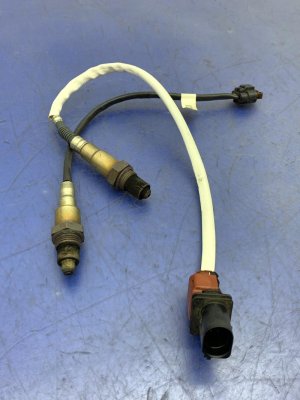
Used OEM Parts in Stock
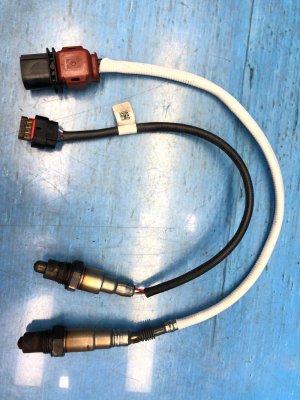
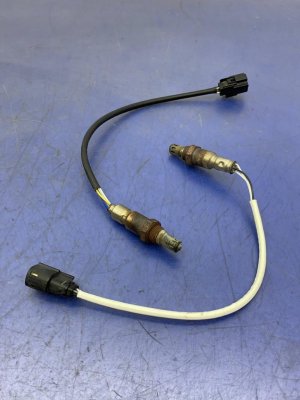
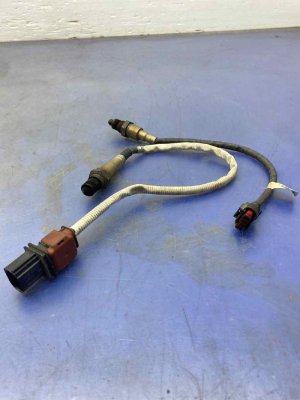
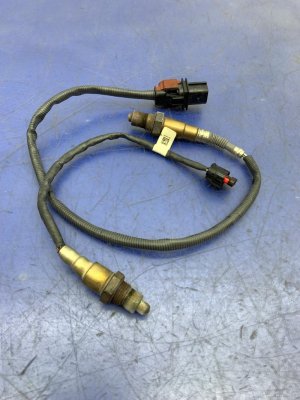
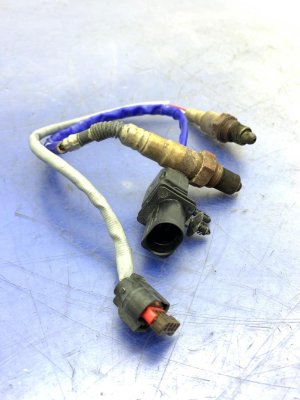
New Aftermarket Parts Available


The information in this article is provided for general reference and educational purposes only. Vehicle specifications, procedures, and part compatibility can vary by production date, trim level, and region. Always consult your vehicle's factory service manual and verify part numbers before purchasing or performing repairs. Safety-critical components such as airbags, seat belts, and braking systems should be installed by a qualified professional.
- Ford F-150:
- 🎬 Helpful Videos
- 🛍️ Shop This Part
- What's Unique About the 2015-2017 Ford F-150
- Symptoms You May Notice
- Most Likely Causes
- Rare But Worth Checking
- Diagnosis Steps
- Parts You'll Likely Need
- Related Codes That Often Appear With This One
- Technical Service Bulletins (TSBs) & Recalls
- Platform-Specific Known Issues
- Mechanic-Grade Diagnostic Values
- Scan Tool Commands That Help
- Wiring & Ground Locations
- Real Owner Repair Stories
- "I Checked Everything" — The Actual Cause
- OEM Part Supersession History
- Model Year Variations Within This Range
- Diagnostic Flowchart
- Real Owner Stories
- Ford F-150 5.0L V8
- Ford F-150
- Ford F-150
- Related OBD-II Codes
- Frequently Asked Questions
- 🎟️ Get 5% Off