

P2097 on 2010-2011 Dodge Dakota: Rich Fuel Trim Causes and Fixes
The P2097 code on a 2010-2011 Dodge Dakota means the engine is running rich on Bank 1. The most common causes are a failing downstream oxygen (O2) sensor or an exhaust leak near the sensor. A critical first step for this specific vehicle is to check if a manufacturer TSB for a PCM software update has been performed, as it directly addresses false rich codes.
- P2097 means the exhaust is too rich on Bank 1, as detected by the sensor after the catalytic converter.
- Before replacing any parts, check if your Dakota needs a PCM software update as specified in TSB #18-066-16 REV. A.
- The most common hardware fixes are replacing the downstream (Bank 1, Sensor 2) oxygen sensor or repairing an exhaust leak.
- Do not immediately assume the catalytic converter is bad; it is often misdiagnosed when the O2 sensor is the real culprit.
- Driving for an extended time with this code can lead to reduced fuel efficiency and potential damage to the catalytic converter.
What's Unique About the 2010-2011 Dodge DAKOTA
For the 2010-2011 Dakota with the 3.7L or 4.7L engine, this code is specifically addressed in Technical Service Bulletin (TSB) #18-066-16 REV. A. While the code often points to physical parts like O2 sensors or exhaust leaks, Dodge released a software update for the Powertrain Control Module (PCM) to correct overly sensitive diagnostic parameters that could falsely trigger fuel trim codes. The TSB explicitly notes that for 3.7L/4.7L engines, it addresses an EVAP diagnostic enhancement that could be related. Therefore, it's crucial for owners to have a dealer check if the vehicle's software is up-to-date before replacing parts, as this may be the sole required fix. The 3.7L and 4.7L engines in this truck are also known for breaking exhaust manifold bolts, which creates leaks that can trigger this code.
Diagnostic Flowchart
Tap your situation to follow the diagnostic path that matches what you're seeing on this vehicle.
Symptoms You May Notice
- Check Engine Light is on
- Decreased fuel economy
- Rough or erratic idling
- Engine hesitation or stumbling during acceleration
- Strong smell of fuel from the exhaust or black smoke
- Engine is hard to start when hot
- Replacing the catalytic converter when the actual problem is a faulty O2 sensor, an exhaust leak, or outdated PCM software.
- Replacing the upstream (Bank 1, Sensor 1) O2 sensor when the code specifically points to the post-catalyst (downstream) system. The P2097 code is based on the reading from the downstream sensor.
- Ignoring the TSB for the PCM flash and proceeding directly to expensive hardware replacement.
Most Likely Causes
- Faulty Downstream Oxygen Sensor (Bank 1, Sensor 2) 🔴 High Probability O2 sensors are wear-and-tear items that degrade over time. They can become biased or slow to respond, sending incorrect rich signals to the PCM. Contaminants like oil, coolant, or fuel additives can also cause premature failure.
How to confirm: Use an OBD-II scanner to monitor the live voltage data from the Bank 1 Sensor 2. A healthy downstream sensor should show a relatively stable voltage, typically between 0.6V and 0.8V after the engine is warm. If it's stuck high (above 0.8V) or fluctuating rapidly like the upstream sensor, it's likely faulty. Also, inspect the sensor's wiring and connector for damage, melting, or corrosion.
Typical fix: Replace the Bank 1, Sensor 2 oxygen sensor. Owners on forums strongly recommend using OEM (Mopar) or OEM-supplier brands like NTK or Denso, as some have reported persistent issues with aftermarket brands like Bosch on these trucks.
Est. part cost: $40-$120 - Exhaust System Leak 🟡 Medium Probability Exhaust components, especially gaskets at the manifold or flanges and the pipe welds, can corrode and leak over time. A leak located before the downstream O2 sensor can draw in outside air, which paradoxically causes the PCM to enrich the fuel mixture, leading to a P2097 code. The 3.7L and 4.7L engines are particularly known for exhaust manifold bolts breaking.
How to confirm: Visually inspect the exhaust system from the manifold to the tailpipe for rust, holes, or black soot marks indicating a leak. A common failure point is the exhaust manifold gasket. A smoke test is the most effective way to pinpoint the exact location of a small leak. You can also use a shop towel to temporarily block the tailpipe while the engine is running and listen for hissing sounds.
Typical fix: Repair the leak by replacing the faulty gasket, patching the hole with exhaust putty or wrap for small leaks, or replacing the affected section of the exhaust pipe.
Est. part cost: $10-$200 - Outdated Powertrain Control Module (PCM) Software 🟡 Medium Probability Dodge issued TSB #18-066-16 REV. A, which applies to 2010-2011 Dakotas (vehicle code ND) with the 3.7L and 4.7L engines built before Feb 1, 2011. This bulletin involves reprogramming the PCM to correct various issues, including false settings of fuel trim codes by adjusting diagnostic sensitivity.
How to confirm: A Dodge dealership or a qualified repair shop with a wiTECH scan tool can check the current software calibration ID against the latest version listed in the TSB. This is not a DIY check.
Typical fix: Reprogram the PCM with the latest available software. This is not a DIY repair and must be done by a professional with the correct equipment. Out-of-warranty costs reported by owners for similar flashes range from $175 to $350.
Est. part cost: $0 (if under warranty) - $350 - Leaking Fuel Injector(s) on Bank 1 ⚪ Low Probability Injectors can become stuck open or leak fuel due to internal wear or contamination, causing an overly rich condition in one or more cylinders on Bank 1.
How to confirm: If other causes are ruled out, a fuel injector balance test can be performed. An easier check is to pull the spark plugs on Bank 1 (passenger side); a plug that is black, sooty, and smells of fuel compared to others indicates an overly rich cylinder, likely from a leaking injector.
Typical fix: Replace the leaking fuel injector(s). It is often recommended to replace all injectors on that bank at the same time.
Est. part cost: $50-$150 per injector
Rare But Worth Checking
- Failing Catalytic Converter: While less common, a clogged or inefficient catalytic converter can trap gases and cause incorrect readings from the downstream O2 sensor. This is often a result of a long-term unaddressed rich condition (like a leaking injector) that has damaged the converter, not the initial cause of the P2097 code.
- High Fuel Pressure: A faulty fuel pressure regulator or a failing fuel pump can cause excessive fuel pressure, leading to a system-wide rich condition. This would likely trigger codes for both banks (P2097 and P2099), not just P2097 alone.
Diagnosis Steps
- Read the code and any other stored codes with an OBD-II scanner. Note the freeze frame data to see the conditions under which the code was set.
- Crucially for this vehicle, check for applicable Technical Service Bulletins (TSBs), specifically #18-066-16 REV. A. Contact a dealer to see if your vehicle's VIN is eligible and if the update has been performed.
- Perform a thorough visual and auditory inspection of the exhaust system for any leaks, cracks, or damage, especially at manifold gaskets and pipe flanges between the engine and the downstream O2 sensor. A smoke test is highly recommended.
- Use a scan tool to observe the live data stream for the Bank 1, Sensor 2 (downstream) oxygen sensor. The voltage should be relatively steady between 0.6V-0.8V once the engine is at operating temperature. If it is stuck high (above 0.8V) or fluctuating rapidly like the upstream sensor, the sensor is suspect.
- Inspect the wiring and connector for the downstream O2 sensor for any damage, corrosion, or loose connections. Ensure the harness is not melted or chafed against the exhaust or driveshaft.
- If no exhaust leaks or sensor issues are found, investigate potential causes of a true rich condition. Pull spark plugs on Bank 1 to check for black, sooty deposits that would indicate a leaking fuel injector.
- Check fuel pressure to ensure it is within the manufacturer's specification. High pressure would likely set codes for both banks.
- If all else fails, consider the possibility of a failing catalytic converter, which can be tested by comparing its inlet and outlet temperatures or by checking for backpressure.
Parts You'll Likely Need
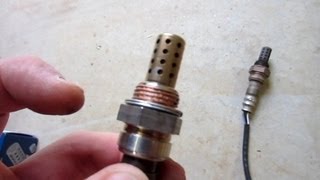
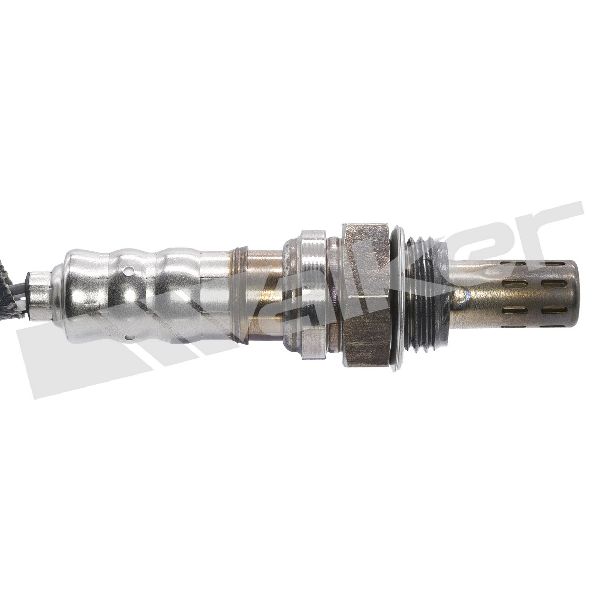
- Downstream Oxygen Sensor (Bank 1, Sensor 2)
(OEM #56029050AA)— This sensor is the primary input for this code and is a common failure point. It directly measures the condition that triggers the P2097 code. This part number fits a wide range of Chrysler/Dodge vehicles from 2005-2011, including the Dakota with 3.7L and 4.7L engines.
Trusted brands: Mopar, NTK (OEM Supplier), Denso
OEM price range: $70-$120
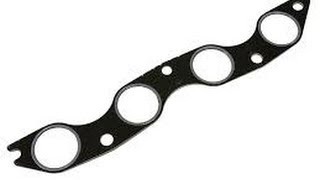
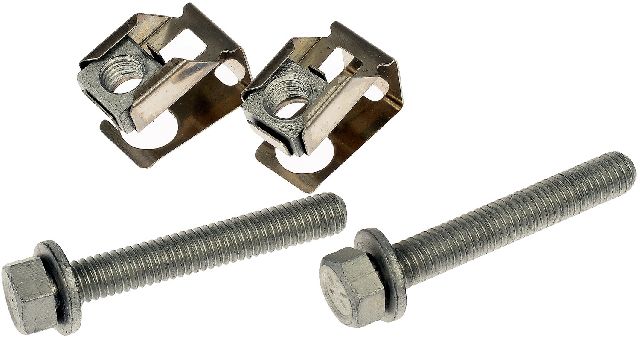
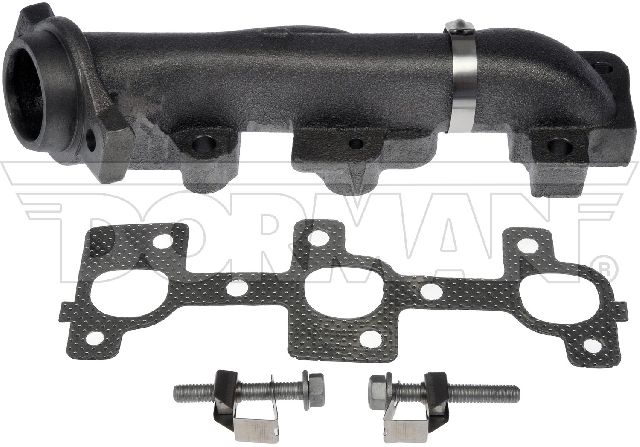
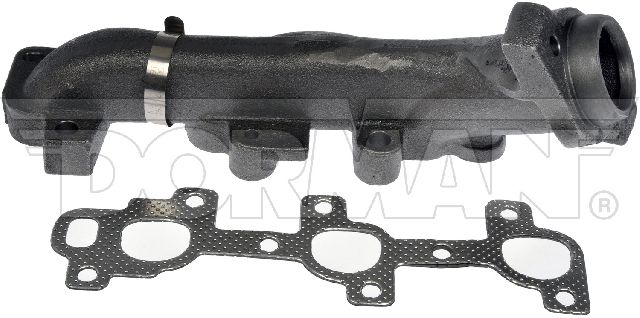
Aftermarket price range: $40-$80 - Exhaust Manifold Gasket — If an exhaust leak is found at the manifold-to-head connection on Bank 1 (passenger side), replacing the gasket is the correct repair. This is a common leak point.
Trusted brands: Fel-Pro, Walker Exhaust, Mopar
OEM price range: $20-$40
Aftermarket price range: $10-$25
Related Codes That Often Appear With This One
- P0301, P0303, P0305, P0307 — If a leaking fuel injector is the cause, you may also get a misfire code for the corresponding cylinder on Bank 1. For the V6/V8, Bank 1 cylinders are 1, 3, 5, 7.
- P2099 — Post Catalyst Fuel Trim System Too Rich Bank 2. If both P2097 and P2099 are present, it points to a systemic issue like high fuel pressure or a faulty MAF sensor rather than a Bank 1-specific problem.
- P0135, P0155 — Heater circuit malfunctions for the O2 sensors can sometimes accompany fuel trim codes, indicating a failing sensor.
Technical Service Bulletins (TSBs) & Recalls
- 18-066-16 REV. A: Flash: Powertrain Diagnostic And System Enhancements. This TSB applies to 2010-2011 Dodge Dakotas (ND) with 3.7L or 4.7L engines and involves a PCM software update that can resolve erroneous fuel trim codes. It specifically mentions improvements for EVAP diagnostics and other drivability concerns.
Platform-Specific Known Issues
- A software update for the Powertrain Control Module (PCM) was issued under TSB #18-066-16 REV. A for 2010-2011 Dakotas with 3.7L and 4.7L engines to correct false fuel trim codes.
Mechanic-Grade Diagnostic Values
- Fuel Pressure (Key On, Engine Off) — expected: 407 kPa ± 34 kPa (59 psi ± 5 psi). Failure: Pressure significantly above this range could cause a system-wide rich condition. Pressure below this range is not typically associated with a rich code.
- Downstream O2 Sensor (Bank 1, Sensor 2) Voltage — expected: Relatively steady voltage between 0.6V and 0.8V when the engine is warm and in closed loop.. Failure: A voltage stuck high (above 0.8V) indicates a rich reading or a biased sensor. Rapid fluctuations similar to the upstream sensor (0.1V to 0.9V) suggest a failing catalytic converter.
- Upstream O2 Sensor (Bank 1, Sensor 1) Voltage — expected: Constantly fluctuating between approximately 0.1V and 0.9V as the PCM adjusts the air/fuel ratio.. Failure: A lazy or non-responsive upstream sensor can cause the PCM to make incorrect fuel adjustments, leading to a downstream rich condition.
Scan Tool Commands That Help
- wiTECH (Dodge/Chrysler Dealer Tool): ASD Fuel System Test — This bidirectional command allows a technician to manually activate the fuel pump to test the fuel delivery system and check for correct pressure without the engine running.
- wiTECH (Dodge/Chrysler Dealer Tool): View/Update PCM Calibration ID — This is used to verify if the PCM software is outdated and if the update from TSB #18-066-16 REV. A has been applied. This is a critical first step for this specific vehicle and code.
Wiring & Ground Locations
- G107 — Located on the right side of the engine compartment.. This is a primary engine compartment ground. A poor connection here can cause erratic behavior from various engine sensors, including the oxygen sensors.
- G101 — Located on the left front of the engine compartment.. Another key engine compartment ground point. Ensuring all main grounds are clean and tight is a fundamental step in diagnosing any electronic fault code.
- Bank 1 Sensor 2 Connector — The Right Rear oxygen sensor is located near the right rear of the transmission, in the exhaust pipe.. This is the specific connector for the sensor that triggers the P2097 code. It should be inspected for damage, corrosion, or being melted by contact with the exhaust.
- Firewall Ground Strap — A ground strap is located on the firewall behind the oil dipstick, connecting to the back of the cylinder head.. This engine-to-chassis ground is crucial for providing a stable reference for all engine sensors. A corroded or broken strap can lead to floating grounds and unpredictable sensor readings.
OEM Part Supersession History
56029050AA→This part number remains current for many applications.— N/A
Heads up: This Mopar part number (56029050AA) is a 4-pin sensor with a grey connector and is approximately 19 inches long. It is used in various positions (upstream/downstream, left/right) across a wide range of 2004-2011 Chrysler/Dodge/Jeep vehicles. It is critical to verify the specific application, as it is listed for both V6 and V8 engines in different locations. Owners and mechanics strongly advise against using Bosch brand sensors on this platform, recommending Mopar, NTK, or Denso instead to avoid compatibility issues.
Model Year Variations Within This Range
- 2011: For the 2011 model year, the truck was officially rebranded from the 'Dodge Dakota' to the 'Ram Dakota' as part of Chrysler's restructuring that made Ram a standalone truck brand. For diagnostic and parts purposes for this final model year, it is often necessary to search under both 'Dodge' and 'Ram'. The underlying mechanicals and engine options (3.7L V6, 4.7L V8) remained the same as the 2010 model.
Helpful Videos
![How to Fix P2097 Engine Code in 4 Minutes [2 DIY Methods / Only $9.84]](https://img.youtube.com/vi/rCwtzRmhMwY/mqdefault.jpg)

We Have This Part in Stock


The information in this article is provided for general reference and educational purposes only. Vehicle specifications, procedures, and part compatibility can vary by production date, trim level, and region. Always consult your vehicle's factory service manual and verify part numbers before purchasing or performing repairs. Safety-critical components such as airbags, seat belts, and braking systems should be installed by a qualified professional.
- Dodge DAKOTA:
- 🎬 Helpful Videos
- 🛍️ Shop This Part
- What's Unique About the 2010-2011 Dodge DAKOTA
- Diagnostic Flowchart
- Symptoms You May Notice
- Most Likely Causes
- Rare But Worth Checking
- Diagnosis Steps
- Parts You'll Likely Need
- Related Codes That Often Appear With This One
- Technical Service Bulletins (TSBs) & Recalls
- Platform-Specific Known Issues
- Mechanic-Grade Diagnostic Values
- Scan Tool Commands That Help
- Wiring & Ground Locations
- OEM Part Supersession History
- Model Year Variations Within This Range
- 🎟️ Get 5% Off