

P2097 on 2013-2015 Chrysler 300: Rich Fuel Trim Causes and Fixes
On 2013-2015 Chrysler 300s, especially those with the 5.7L V8, code P2097 often points to a needed software update from the manufacturer. Before replacing parts, check for Technical Service Bulletins (TSBs). If no software update is available, the most common causes are a failing downstream oxygen sensor, an exhaust leak before the sensor, or a genuinely rich running condition caused by another component.
- For the 2013-2015 Chrysler 300, especially with the 5.7L V8, your first step for a P2097 code should be checking with a dealer for a required PCM software update.
- If no software update is needed, the most likely causes are an exhaust leak before the rear O2 sensor or a faulty rear O2 sensor itself (Bank 1, Sensor 2).
- Do not replace the expensive catalytic converter unless all other possibilities, including software, leaks, and sensors, have been thoroughly ruled out.
- Bank 1 is the passenger side of the engine on the V8, and the side of the engine closer to the front of the car on the V6.
What's Unique About the 2013-2015 Chrysler 300
For this generation of Chrysler 300, particularly with the 5.7L V8 engine, the P2097 code is frequently addressed by a manufacturer-issued software update for the Powertrain Control Module (PCM). Multiple Technical Service Bulletins (TSBs) have been released to correct diagnostic logic that could falsely trigger this code. This makes checking for an available PCM reflash a critical first step before assuming a hardware failure 🎬 Watch: Understanding P2097 causes and common fixes, potentially saving hundreds of dollars on unnecessary parts.
Diagnostic Flowchart
Tap your situation to follow the diagnostic path that matches what you're seeing on this vehicle.
Symptoms You May Notice
- Check Engine Light is on
- Reduced fuel economy
- Engine bucking or a delay feeling during low-speed driving
- Rough idle
- Reduced engine performance or hesitation upon acceleration
- Black smoke from the exhaust in some cases
- A strong fuel or 'rotten egg' odor from the exhaust
- Replacing the catalytic converter before diagnosing exhaust leaks, O2 sensors, or checking for software updates. Converters are expensive and often replaced unnecessarily.
- Replacing the upstream O2 sensor (Bank 1, Sensor 1) when the code specifically points to the post-catalyst (downstream) fuel trim.
- Ignoring the possibility of an exhaust leak and immediately replacing the O2 sensor. An exhaust leak will cause the new sensor to report the same false rich condition.
Most Likely Causes
- Powertrain Control Module (PCM) Software Update Needed 🔴 High Probability Multiple TSBs (e.g., #18-084-16, #18-033-17 REV. A) were issued by Chrysler for the 5.7L engine to correct oversensitive diagnostic logic that could falsely set a P2097 code, often along with other codes like P219A/B or misfires.
How to confirm: A Chrysler dealership or a qualified shop with a wiTECH scan tool can check the vehicle's current software calibration number against the latest version available in the TSBs. They can verify by VIN if the update applies.
Typical fix: Reprogramming (flashing) the PCM with the latest manufacturer software. This is a non-mechanical repair that adjusts the code's trigger parameters.
Est. part cost: $0-$250 - Exhaust Leak 🟡 Medium Probability Leaks in the exhaust manifold, gaskets, or pipes upstream of the Bank 1 downstream O2 sensor can allow outside air to enter the exhaust stream. This fresh air causes the sensor to incorrectly read a rich condition, as the PCM tries to compensate for what it perceives as an imbalance. Broken exhaust manifold bolts are a known issue on Hemi engines.
How to confirm: Visually inspect the exhaust system from the engine to the catalytic converter for cracks, rust, or black soot trails indicating a leak. A smoke test is the most effective method to pinpoint hard-to-see leaks. A shop can perform this by injecting smoke into the exhaust and looking for where it escapes.
Typical fix: Repairing the leak, which may involve replacing a gasket (like an exhaust manifold gasket), tightening bolts, or welding a cracked pipe.
Est. part cost: $20-$200 - Failing Downstream Oxygen Sensor (Bank 1, Sensor 2) 🟡 Medium Probability The O2 sensor itself can become slow, biased, or fail entirely, sending incorrect rich signals to the PCM even when the fuel mixture is normal. Contamination from engine oil or coolant can also cause failure.
How to confirm: Use a scan tool to monitor the live data from the Bank 1 Sensor 2. A healthy downstream sensor on a warm engine should show a relatively steady voltage, typically around 0.45V. If it's stuck high (e.g., above 0.8V) or fluctuating wildly like the upstream sensor, it's likely faulty.
Typical fix: Replace the Bank 1, Sensor 2 oxygen sensor. Also inspect the wiring and connector for melting or damage, as they are close to the hot exhaust.
Est. part cost: $50-$150 - Leaking Fuel Injector(s) on Bank 1 ⚪ Low Probability A fuel injector that is stuck open or leaking will dump excess fuel into a cylinder, creating a genuine rich condition that the O2 sensors will detect. This is less common than software or sensor issues but is a valid cause.
How to confirm: Perform a fuel pressure leak-down test. A rapid drop in pressure after the engine is off can indicate a leaking injector. A professional fuel injector balance test is more definitive. Pulling the spark plugs on Bank 1 may also reveal one that is black and sooty, indicating a rich condition in that cylinder.
Typical fix: Replace the faulty fuel injector(s). It is often recommended to replace all injectors on that bank at the same time.
Est. part cost: $70-$250 per injector
Rare But Worth Checking
- Failing Catalytic Converter: While less common, a contaminated or failing catalytic converter can lose its efficiency and be unable to process the exhaust gases correctly, leading to incorrect readings by the downstream O2 sensor. This should be considered after all other causes, especially software updates and exhaust leaks, are ruled out.
- High Fuel Pressure: A failing fuel pressure regulator can cause system-wide high fuel pressure, leading to a rich condition. This would likely affect both banks and may be accompanied by other codes.
Diagnosis Steps
- Scan for Codes: Use an OBD-II scanner to confirm P2097 and check for any other accompanying codes. Note the freeze frame data.
- Check for TSBs: This is the most critical first step for this vehicle. Use the VIN to check with a dealer or online service for open service bulletins related to P2097 or PCM updates, such as TSB #18-084-16 or #18-033-17 REV. A. If an update is available, perform this before any other repairs.
- Inspect for Exhaust Leaks: Visually and audibly inspect the exhaust manifold and piping for Bank 1 (passenger side on V8, front side on V6) for any signs of leaks, such as black soot, audible ticking, or cracks. Broken manifold bolts are a common failure point. A smoke test is the most reliable method.
- Analyze O2 Sensor Live Data: Use a scan tool to observe the voltage of the Bank 1 Sensor 2 (downstream). Once the engine is fully warmed up (closed loop), the voltage should be relatively stable around 0.45V. If it is stuck high (above 0.8V) or fluctuating rapidly like the upstream sensor, the sensor is suspect or the catalytic converter may be failing.
- Inspect O2 Sensor Wiring: Check the wiring and connector for the downstream O2 sensor for any damage, melting, corrosion, or loose connections.
- Test Fuel System: If a true rich condition is suspected (e.g., black smoke, fuel smell), test the fuel pressure to ensure it's within spec. Consider a fuel injector leak-down or balance test if pressure is normal.
- Evaluate Catalytic Converter: If all other possibilities are exhausted, the catalytic converter's efficiency may need to be professionally tested. This is the last step due to the high cost of replacement.
Parts You'll Likely Need
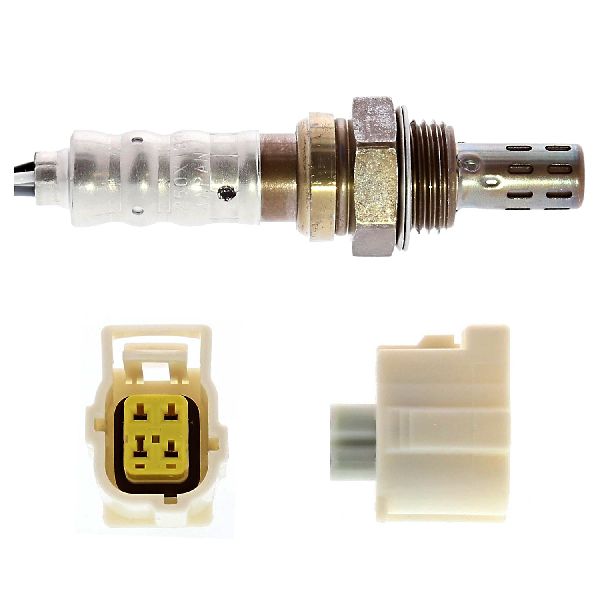
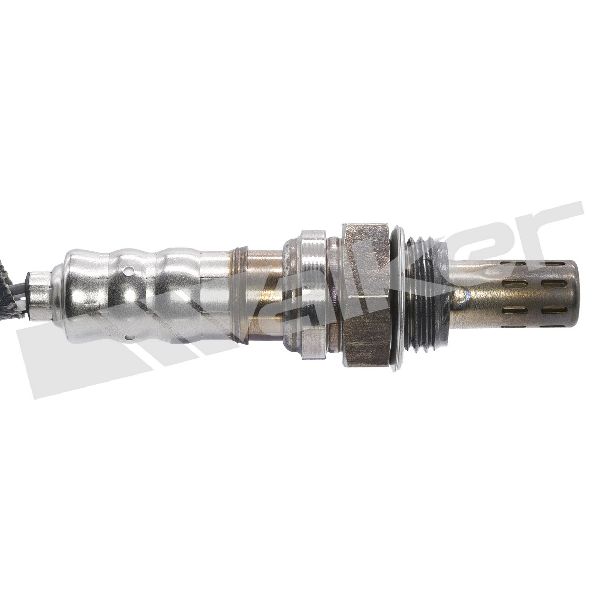
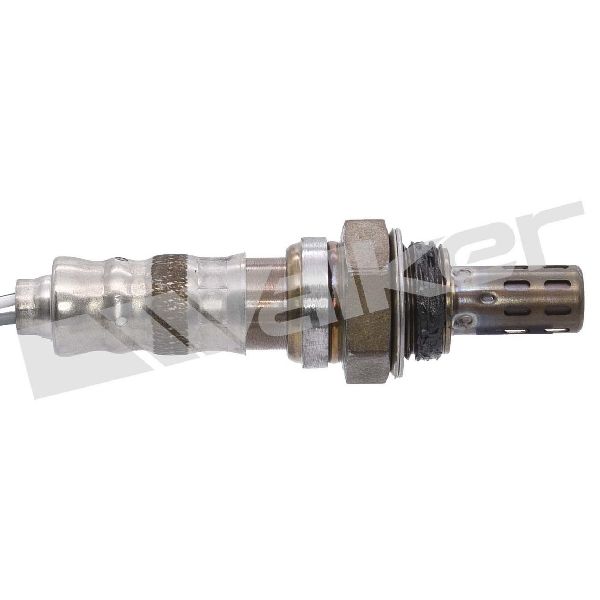
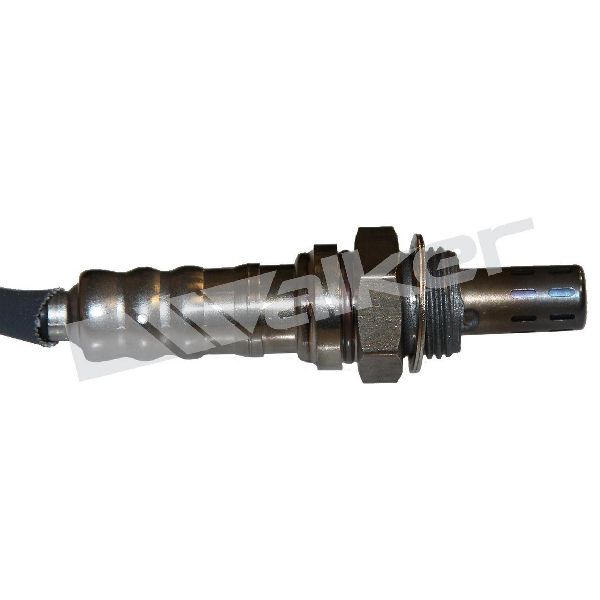
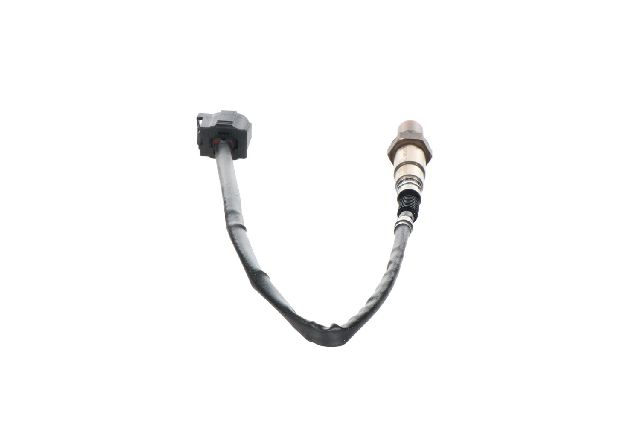
- Downstream Oxygen Sensor (Bank 1, Sensor 2)
(OEM #5149171AA)— This sensor is the primary input for the P2097 code. If it fails, it can send false 'rich' signals to the computer. Bank 1 Sensor 2 is on the passenger side, after the catalytic converter.
Trusted brands: Mopar, Denso, NTK, Bosch
OEM price range: $90-$180
Aftermarket price range: $50-$120 - Exhaust Manifold Gasket — A common source of exhaust leaks that can trigger this code. If a leak is found at the manifold, this gasket will need to be replaced.
Trusted brands: Fel-Pro, Mahle, Mopar
OEM price range: $30-$60
Aftermarket price range: $15-$40
Related Codes That Often Appear With This One
- P2096 — This is the 'lean' counterpart for the same bank. Seeing them together or intermittently could point to an erratic sensor or a significant exhaust leak that is confusing the PCM.
- P219A / P219B — These codes for 'Air-Fuel Ratio Imbalance' are often cited in the same TSBs as P2097, indicating a related software logic issue that is resolved with the same PCM flash.
- P0300 / P0307 — Misfire codes, especially on a specific cylinder like P0307 (Cylinder 7), can occur alongside P2097 if a leaking injector is causing both the rich condition and the misfire. This is also mentioned in related TSBs.
Technical Service Bulletins (TSBs) & Recalls
- 18-084-16: Flash: 5.7L Diagnostic And System Improvements, which lists P2097 as a code that can be resolved with a PCM software update.
- 18-073-20: Flash: 5.7L/6.4L Diagnostic and System Enhancements, also lists P2097 as a code addressed by software.
- 18-046-15: Flash: 5.7L Diagnostic And System Improvements, connects P2097 to drivability symptoms and a software fix.
- 18-033-17 REV. A: Flash: Powertrain Diagnostic And System Enhancements, supersedes previous bulletins and addresses P2097 along with a host of other DTCs for 5.7L engines.
Platform-Specific Known Issues
- A significant number of 2013-2015 Chrysler 300 models with the 5.7L engine are subject to TSB #18-084-16, which involves a PCM software update to correct false P2097 codes, among others.
Mechanic-Grade Diagnostic Values
- Downstream O2 Sensor (B1S2) Voltage — expected: Relatively steady at approximately 0.45V on a warm engine.. Failure: Voltage is stuck high (above 0.8V) or fluctuates rapidly similar to the upstream sensor.
- Upstream O2 Sensor (B1S1) Voltage — expected: Rapidly switching between 0.1V (lean) and 0.9V (rich).. Failure: Slow or no switching, or biased to one end of the voltage range.
- O2 Sensor Heater Circuit Resistance — expected: Typically 5-7 Ω.. Failure: Resistance is out of specification (open or shorted).
- O2 Sensor Circuit Jumper Test (Advanced) — expected: Voltage should drop from 5.0V to 2.5V when a jumper wire is connected between the signal and return circuits in the sensor harness connector.. Failure: Voltage does not drop as described, indicating a wiring or PCM issue.
Scan Tool Commands That Help
- wiTECH: Reprogram the PCM — This is the primary repair step if a TSB is available for the P2097 code to update the PCM's diagnostic logic.
- wiTECH: PROXI Configuration Alignment — This routine should be performed after replacing or reprogramming certain modules (like the PCM or TCM) to ensure all modules on the vehicle network are properly aligned and communicating.
- wiTECH: TCM VIN Verification — This function, located in the TCM 'Misc Functions' menu, is used to write the VIN to a new or reprogrammed Transmission Control Module.
- wiTECH: Restore Vehicle Configuration — After a PCM reflash, this function is used to finalize the process and restore vehicle-specific settings.
Wiring & Ground Locations
- O2 Sensor Fuses (Front Fuse Box) — In the fuse box located on the passenger side of the engine compartment.. For 2014+ models, fuses F34, F35, F36, and F37 power the O2 sensor heaters and circuits. A blown fuse will cause the sensor to operate incorrectly and can set a fault code.
- O2 Sensor Relays (Front/Rear Fuse Boxes) — Relay 63 (ASD) in the front fuse box and Relay 29 in the rear (trunk) fuse box.. These relays provide power to the O2 sensor circuits; a failure can mimic a bad sensor.
- G305 — A ground point listed for the 2014 Chrysler 300.. Wiring diagrams indicate this ground is used by multiple components, including potentially the O2 sensors. A poor ground connection can cause erratic sensor readings.
- Bank 1 Sensor 2 Connector — On the passenger side of the vehicle, mounted to the side of the transmission. The sensor itself is in the exhaust pipe after the catalytic converter.. This is the primary connector to inspect for damage, corrosion, or looseness when diagnosing code P2097.
OEM Part Supersession History
5149171AA, 68066160AA→05149171AB— Standard part revision and consolidation by the manufacturer.
Heads up: The new part number 05149171AB is the correct replacement for the previous numbers.
Model Year Variations Within This Range
- 2015: The 2015 model year received a significant facelift and a standard 8-speed automatic transmission for the 5.7L V8 (previously 5-speed). This change in transmission also involves different Powertrain Control Module (PCM) and Transmission Control Module (TCM) software and calibrations compared to 2013-2014 models. TSB #18-073-20 specifically calls out software enhancements for the 2015 MY.
Helpful Videos

We Have This Part in Stock


The information in this article is provided for general reference and educational purposes only. Vehicle specifications, procedures, and part compatibility can vary by production date, trim level, and region. Always consult your vehicle's factory service manual and verify part numbers before purchasing or performing repairs. Safety-critical components such as airbags, seat belts, and braking systems should be installed by a qualified professional.
- Chrysler 300:
- 🎬 Helpful Videos
- 🛍️ Shop This Part
- What's Unique About the 2013-2015 Chrysler 300
- Diagnostic Flowchart
- Symptoms You May Notice
- Most Likely Causes
- Rare But Worth Checking
- Diagnosis Steps
- Parts You'll Likely Need
- Related Codes That Often Appear With This One
- Technical Service Bulletins (TSBs) & Recalls
- Platform-Specific Known Issues
- Mechanic-Grade Diagnostic Values
- Scan Tool Commands That Help
- Wiring & Ground Locations
- OEM Part Supersession History
- Model Year Variations Within This Range
- 🎟️ Get 5% Off