

P2097 on 2016-2019 Chevrolet Malibu 1.5L: Post Catalyst Rich Fuel Trim Causes, TSBs, and Fixes
On a 2016-2019 Malibu with the 1.5L engine, code P2097 is very often caused by a software glitch. GM issued Technical Service Bulletins (TSBs) 19-NA-017 (for 2016-2017 models) and 19-NA-058 (for 2019 models) recommending an ECM reprogram at a dealership as the first step. This software update often fixes the problem without replacing any parts and is covered under the 8-year/80,000-mile federal emissions warranty. Other common causes include exhaust leaks and faulty oxygen sensors.
- Before buying any parts for a P2097 code on this Malibu, check with a dealer about TSB 19-NA-017 and 19-NA-058.
- The most likely fix is a simple ECM software update, not a new oxygen sensor.
- If the software is up to date, the next steps are to inspect for exhaust leaks and check for loose intake manifold bolts.
- Do not replace the expensive catalytic converter unless all other possibilities have been exhausted and a P0420 code is also present.
What's Unique About the 2016-2019 Chevrolet Malibu
For this specific Malibu and 1.5L engine, the most significant issue is a known software anomaly. General Motors released Technical Service Bulletin (TSB) 19-NA-017, which specifically targets 2016-2017 models for this issue. TSB 19-NA-058 was later issued for 2019 models, addressing P2097 caused by a software issue related to false knock detection. Unlike many other vehicles where this code points to a bad sensor or exhaust leak, the primary documented first step for the Malibu is an ECM software update performed by a dealer. Ignoring these TSBs can lead to unnecessary and expensive parts replacement, a common misdiagnosis.
Symptoms You May Notice
- Check Engine Light illuminated
- Reduced fuel economy
- Poor or hesitant acceleration
- Rough or erratic idle
- Stalling
- Engine misfires in some cases
- Replacing the downstream oxygen sensor without first checking for TSBs or exhaust leaks. The sensor is often just accurately reporting a problem that exists elsewhere. 🎬 Watch: Understanding the P2097 code and common fixes
- Replacing the catalytic converter. This is an expensive part and is rarely the cause of P2097 unless a P0420 (Catalyst Efficiency) code is also present and the converter is confirmed to be clogged.
Most Likely Causes
- ECM Software Anomaly 🔴 High Probability GM issued specific TSBs for this exact issue. TSB 19-NA-017 applies to 2016-2017 models, and TSB 19-NA-058 applies to 2019 models, both citing a software anomaly as the cause.
How to confirm: A GM dealership or a shop with access to GM's service information can check your VIN to see if the ECM has the latest software version and if TSB 19-NA-017 or 19-NA-058 applies.
Typical fix: Reprogram the Engine Control Module (ECM) with the latest software. This must be done by a dealership or a qualified shop with the correct tools. The repair is often covered under the 8-year/80,000-mile federal emissions warranty.
Est. part cost: $0 - Exhaust System Leak 🟡 Medium Probability Leaks can occur at gaskets or flex pipes, allowing outside air to enter the exhaust, which can confuse the oxygen sensors and lead to an inaccurate rich reading.
How to confirm: Visually inspect the exhaust system from the engine to the tailpipe for cracks, rust, or loose connections. A smoke test is the most effective method to pinpoint hard-to-see leaks. For very small leaks, GM recommends pressurizing the exhaust to 5 PSI and using soapy water to find bubbles, per TSB PIP5535A.
Typical fix: Repair or replace the leaking section of the exhaust. This may involve replacing a gasket, welding a crack, or using exhaust putty for a temporary fix.
Est. part cost: $20-$150 - Faulty Downstream Oxygen (O2) Sensor 🟡 Medium Probability The sensor is exposed to extreme heat and can fail over time. However, it is often misdiagnosed when the real issue is a software problem or an exhaust leak. The sensor may also be sending inaccurate information without being completely failed.
How to confirm: Use a scan tool to monitor the voltage from the downstream O2 sensor 🎬 See how to use a scan tool for proper diagnosis (Bank 1, Sensor 2). A healthy, warm sensor should show a relatively steady voltage. If the voltage is stuck high (above 0.8V), the sensor is likely biased rich or faulty. Also check wiring for damage.
Typical fix: Replace the downstream oxygen sensor (Bank 1, Sensor 2).
Est. part cost: $40-$90 - Loose Intake Manifold Bolts ⚪ Low Probability This is a documented issue on some GM engines where the bolts can back out, creating a vacuum leak. The ECM detects unmetered air and may overcompensate with fuel, leading to a rich condition detected by the downstream sensor.
How to confirm: With the engine off, gently try to move the plastic intake manifold by hand. If it wiggles, the bolts are loose. They can also be checked for proper torque (typically 12 Nm or 108 in-lbs).
Typical fix: Torque the intake manifold bolts to the manufacturer's specification. The gasket usually does not need to be replaced.
Est. part cost: $0
Rare But Worth Checking
- Leaking Fuel Injector: A fuel injector stuck open or leaking can dump excess fuel into a cylinder, causing a rich condition. This would likely be accompanied by other symptoms like a rough idle, misfires (P030x codes), or a strong fuel smell.
- High Fuel Pressure: A failing fuel pressure regulator or an issue with the high-pressure fuel pump can cause the entire system to run rich. A Reddit user with P2097 on a 2016 Malibu reported a shop found abnormally high fuel rail pressure (449 psi). This should be diagnosed by checking fuel pressure with a proper gauge.
Diagnosis Steps
- Check for Technical Service Bulletins (TSBs): This is the most critical first step. Contact a GM dealer or use a professional database to see if TSB 19-NA-017 (for 2016-2017) or 19-NA-058 (for 2019) applies to your VIN. If so, an ECM reprogram is the most likely fix and may be covered by the 8-year/80,000-mile emissions warranty.
- Inspect for Exhaust Leaks: Carefully inspect the entire exhaust system for any signs of leaks, especially at the flex pipe and gaskets between the engine and the downstream O2 sensor. A smoke test is recommended. If it passes, consider a more sensitive test with 5 PSI of air and soapy water as per TSB PIP5535A.
- Check for Intake Leaks: Check that the intake manifold bolts are tight. With the engine off, see if the manifold can be wiggled by hand.
- Analyze O2 Sensor Data: Use a scan tool to observe live data. The downstream sensor's voltage should be relatively stable. If it's stuck high (e.g., >0.8V), it points towards a rich condition or a failed sensor. If it fluctuates wildly like the upstream sensor, it could indicate a failing catalytic converter (though this would likely set a P0420 code).
- Test the Downstream O2 Sensor: If the steps above don't reveal the cause, test the O2 sensor's heater circuit and response. If it's slow, non-responsive, or the wiring is damaged, it should be replaced.
- Check Fuel System: If all else fails, investigate the fuel system. Check fuel rail pressure to ensure it's within spec. Consider having fuel injectors tested for leaks, especially if misfire codes are also present.
Parts You'll Likely Need
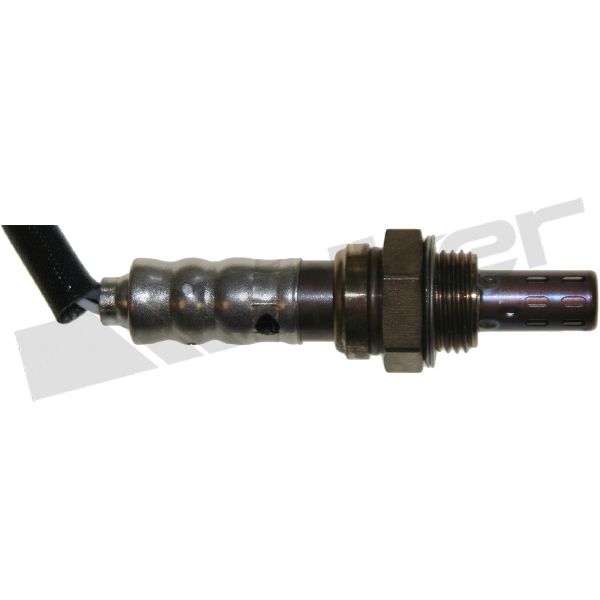
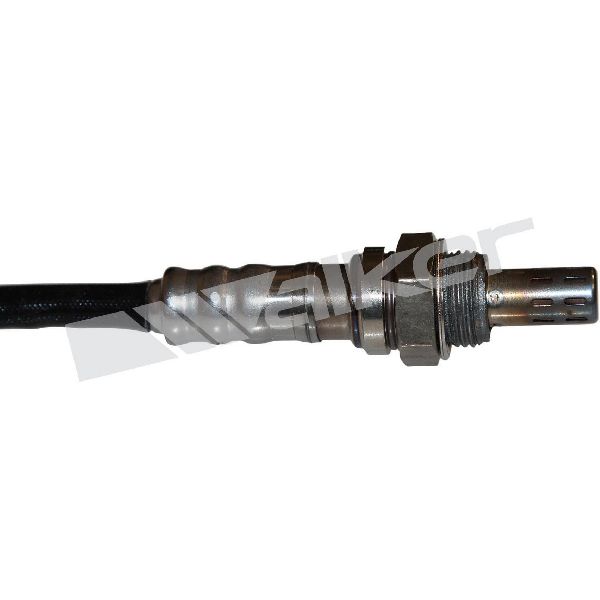
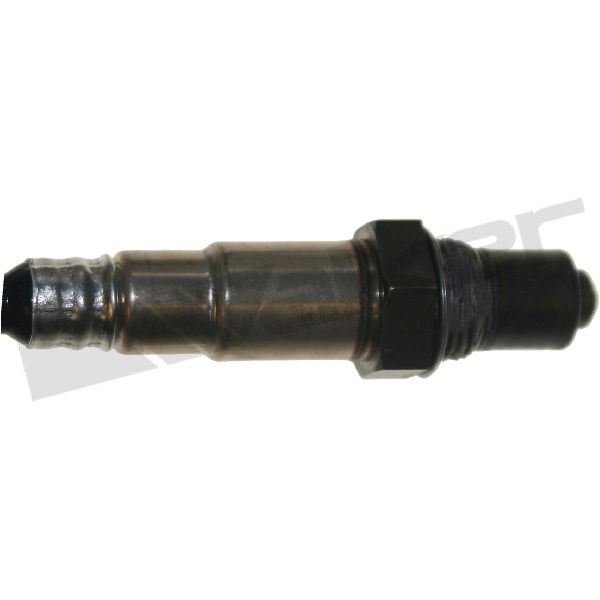
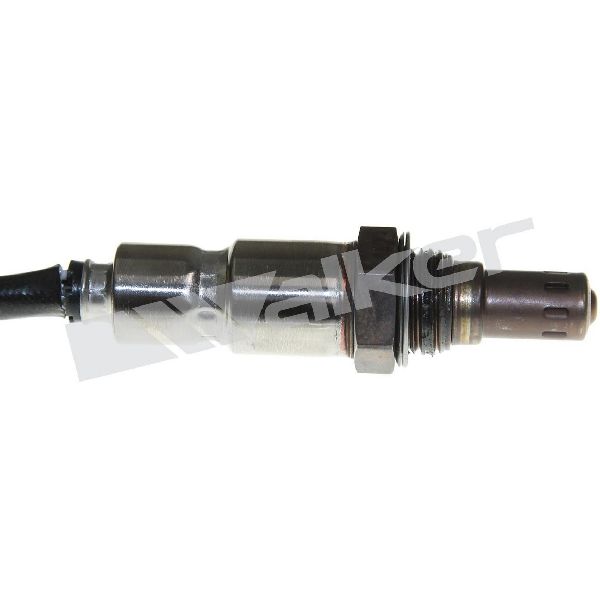
- Downstream Oxygen Sensor (Bank 1, Sensor 2)
(OEM #ACDelco 12701634 (supersedes 12663317))— If the ECM software is up to date and there are no leaks, the sensor itself may have failed. It is the component that takes the reading for this code. 🎬 Watch: Step-by-step guide to replacing the O2 sensor
Trusted brands: ACDelco, Denso, Bosch
OEM price range: $80-$150
Aftermarket price range: $40-$90
Related Codes That Often Appear With This One
- P2096 — This is the opposite code ('Too Lean'). The same software anomalies and sensor issues that can cause P2097 can also sometimes trigger P2096. GM TSBs 19-NA-017 and 19-NA-058 list both codes together.
- P0171 — This code for 'System Too Lean' can appear if a vacuum leak (like from loose intake bolts) is the root cause. The ECM may detect a lean condition first, then overcompensate with fuel, leading to the P2097 code being set.
Technical Service Bulletins (TSBs) & Recalls
- 19-NA-017: 'Malfunction Indicator Lamp (MIL) Illuminated - DTC P2096 and/or P2097.' Specifically for 2016-2017 models. States the cause may be a software anomaly and the correction is to reprogram the ECM. The fix is covered under the 8yr/80k mile emissions warranty.
- 19-NA-058: 'Hesitation or Low Power Due to False Knock Detection and/or Malfunction Indicator Lamp (MIL) Illuminated, DTC P2096 / P2097 Set.' Applies to 2019 models. Also points to a software anomaly fixed by an ECM reprogram.
- PIP5535A/B: Addresses P2097 returning after a software update on 2016-2017 models. Directs technicians to check for minor exhaust leaks with pressurized air and to check for an overfilled engine oil crankcase.
- PIP5445A: Instructs technicians to meticulously check the rear O2 sensor circuit wiring and connections for high resistance before replacing the sensor.
Platform-Specific Known Issues
- A software anomaly is a primary cause for P2097 on 2016-2017 models with the 1.5L engine, addressed by TSB 19-NA-017.
- TSB 19-NA-058 also addresses P2097 on 2019 models as a result of a software issue causing false knock detection, with the fix being an ECM reprogram.
Mechanic-Grade Diagnostic Values
- Downstream O2 Sensor (B1S2) Voltage — expected: Relatively steady voltage between 0.6V and 0.8V on a warm, closed-loop engine.. Failure: Voltage is stuck high (above 0.8V) or fluctuates rapidly like the upstream sensor.
- Short-Term Fuel Trim (STFT) in Freeze Frame Data — expected: Typically within +/- 10%.. Failure: A value of -100% was observed in freeze frame data when the P2097 code set, indicating the ECM was at its maximum fuel reduction limit.
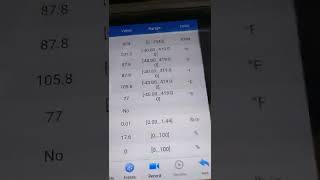
- Intake Air Temperature (IAT) in Freeze Frame Data — expected: A plausible ambient temperature.. Failure: A reading of -40°F, which is a default value indicating a sensor or circuit fault that occurred at the same time as the P2097 code.
- Downstream O2 Sensor Heater Circuit Resistance — expected: 7 - 9 Ohms.. Failure: An open circuit (infinite resistance) or a value significantly outside the expected range.
- Engine Oil Crankcase Capacity (1.5L LFV) — expected: 4.2 Quarts.. Failure: A level significantly above the full mark on the dipstick can contribute to P2097 returning after repairs.
Hidden / Shadow Codes Worth Checking
- Implied IAT Fault: A diagnostic video of a P2097 fault showed that the freeze frame data captured an Intake Air Temperature (IAT) reading of -40°F at the exact moment the code was set. This is a default value indicating a circuit failure for the IAT sensor (often integrated into the MAF sensor). This suggests the P2097 code may be triggered by a broader electrical or sensor circuit issue, not just the O2 sensor itself. (see via Reviewing the full freeze frame data on a professional scan tool when a P2097 code is stored.)
Scan Tool Commands That Help
- GDS2 (GM Global Diagnostic System 2): ECM Reprogramming with SPS — This is the specific function required to perform the software update outlined in TSBs 19-NA-017 and 19-NA-058, which is the primary fix for a software-induced P2097 code.
- GDS2 (GM Global Diagnostic System 2): Clear DTCs & Reset Non-Volatile Memory — Per TSB PIP5535B, if both O2 sensors are replaced, after clearing codes with GDS2, the technician MUST disconnect the 12-volt battery for two minutes. This is required to reset the non-volatile memory where secondary fuel trim values are stored.
Wiring & Ground Locations
- Engine Harness under Battery Tray — Under the front of the primary under-hood battery tray.. A GM service bulletin notes that the engine wiring harness may have been damaged by the battery tray during vehicle assembly. This chafe point can cause various electrical faults, including erratic sensor readings that could lead to a P2097 code.
- G103 — Located at the left rear of the engine compartment on the cowl, above the brake booster.. This is a critical ground point that serves the Engine Control Module (ECM), Body Control Module (BCM), and Data Link Connector (DLC). A poor connection at G103 can cause unpredictable electronic issues, including false sensor readings. A related TSB suggests rotating this ground terminal to provide more clearance for the engine harness.
Real Owner Repair Stories
- YouTube channel 'Real Fixes Real Fast' (2013 Chevrolet Malibu 2.5L (Note: older model, but diagnosis is highly relevant)) — Check Engine Light with code P2097.
❌ Tried (didn't work) Initial assumption was a bad downstream O2 sensor or exhaust leak.
✅ What actually fixed it A deep dive into the freeze frame data showed STFT at -100% and, critically, an IAT reading of -40°F. This pointed the diagnosis away from the O2 sensor and towards a fault in the MAF/IAT sensor or its circuit, which was causing the ECM to calculate fuel delivery incorrectly, leading to the rich condition detected downstream. The fix was to address the MAF/IAT circuit issue. - NHTSA ODI #11255637 — An owner of a new vehicle with only 500 miles reported the P2097 code triggered a check engine light. The owner noticed decreased engine power when pressing the gas pedal, a slight shimmy from the motor while sitting, and the car stalled on start.
- NHTSA ODI #11221744 — An owner reported an ongoing issue where the dashboard would go blank while driving, accompanied by multiple codes including P2097. This specific case involved the accelerator pedal being replaced three times within a two-month timeframe along with the throttle harness.
"I Checked Everything" — The Actual Cause
- According to GM TSB PIP5535A, if a standard smoke test does not reveal any exhaust leaks, a smaller leak may still be present. The bulletin instructs technicians to use a more sensitive method: seal the throttle body and tailpipe, then apply regulated shop air at 5 PSI through the upstream O2 sensor port and spray the exhaust system with soapy water to look for bubbles. This can identify tiny leaks that a smoke test might miss but are still large enough to trigger P2097.
OEM Part Supersession History
ACDelco 12663317→ACDelco 12701634— Standard part revision by the manufacturer.
Model Year Variations Within This Range
- 2016-2017: These years are specifically covered by TSB 19-NA-017 for an ECM software anomaly causing P2097. They are also the subject of TSB PIP5535A/B if the code returns after the reprogram.
- 2018: The 2018 model year is notably absent from the two main software-related TSBs (19-NA-017 and 19-NA-058). This suggests the software anomaly was likely corrected in the 2018 production, and diagnosis should focus more on traditional causes like leaks or sensor failures.
- 2019: This year is covered by TSB 19-NA-058, which links P2097 to a software issue related to false knock detection, also corrected by an ECM reprogram.
Diagnostic Flowchart
Other Known Issues on This Vehicle
Issues unrelated to this code that are worth knowing about as an owner of this generation:
- Cracked Pistons from Pre-Ignition (LSPI) 🔴 High — Common on 2016-2017 models. Can occur at relatively low mileage (under 100k). Addressed by updated pistons and software. (Ref: TSB 19-NA-122, Customer Satisfaction Program 17019 / N182195660.)
- "Shift to Park" Message 🟠 Medium — Very common across 2016-2019 models. The vehicle fails to recognize it is in Park, preventing it from shutting off and draining the battery. (Ref: A TSB exists for a faulty inline shifter wiring harness; however, the more common cause is a failed microswitch in the shifter assembly.)
- Clogged PCV Orifice in Valve Cover 🟠 Medium — A known high-failure item on the 1.5L LFV engine, leading to excessive crankcase pressure, oil leaks, and codes like P1101. (Ref: TSB 20-NA-047)
- Reduced Engine Power / Limp Mode 🟠 Medium — Widely reported issue where the car suddenly loses power. Can be caused by a faulty electronic throttle body or accelerator pedal position sensor. (Ref: A TSB was issued for reduced power related to the throttle body.)
- Failing High-Pressure Fuel Pump (HPFP) 🟡 Low — A rollover pin in the HPFP can slide out of place, causing noise that the ECM interprets as knock, leading to retarded timing and sluggish performance. (Ref: GM issued a TSB for this condition.)
Used vs. New Parts: Buying Guide for This Vehicle
When a used part is the smart pick: For this specific repair, using used parts is generally not recommended. The primary fixes involve a software update (no parts), tightening bolts (no parts), or replacing the O2 sensor, which is a sensitive electronic component and wear item.
Donor-vehicle mileage cap: roughly under 15000 miles for the part to have meaningful remaining life.
What to inspect on the donor part:
- If considering a used part like an exhaust component, inspect thoroughly for rust, cracks, or damage, especially at flex pipes and flanges.
- Never buy a used oxygen sensor. Its remaining lifespan is unknown, and it may be contaminated or slow to respond.
OEM-only on this vehicle (don't cheap out):
- Catalytic Converter: While not a common cause for P2097, if replacement is needed for other reasons (like a P0420 code), using an OEM converter is strongly advised. Aftermarket converters frequently fail to meet the precise efficiency monitoring standards of modern ECMs, leading to recurring codes.
Aftermarket brands forum-validated for this vehicle:
- For oxygen sensors, brands like Denso and NTK (NGK) are highly regarded OEM suppliers and are considered reliable alternatives to ACDelco.
Brands owners have reported issues with on this vehicle:
- Avoid unbranded, 'white-box' oxygen sensors. While cheaper, they have a high failure rate and can provide inaccurate readings, leading to continued diagnostic frustration.
Real Owner Stories
Aggregated from forums and TSBs cited above. Mileages and costs reflect what owners reported in those sources.
2016 Chevrolet Malibu 1.5L LFV
Symptoms: Check engine light illuminated with code P2097 (Post Catalyst Fuel Trim System High Limit).
What fixed it: The dealership performed a software update (ECM reprogram) as per the TSB.
Source hint: Reddit r/MechanicAdvice: 'Help - 2016 Chevy Malibu, P2097 Post Catalyst Fuel Trim System High Limit, not sure if the dealership/service center is jerking me around.'
Related OBD-II Codes
Frequently Asked Questions
Does TSB 19-NA-017 apply to my 2016 Chevrolet Malibu 1.5L?
Will the repair for P2097 be covered under warranty for my 2019 Malibu?
My 2017 Malibu has P2097 even after a software update; what else should be checked?
Can loose intake manifold bolts cause a P2097 on this vehicle?
Is there a specific TSB for the wiring of the oxygen sensor on the 1.5L LFV engine?
What is the specific cause of P2097 mentioned for the 2019 Malibu 1.5L?
Helpful Videos

We Have This Part in Stock



The information in this article is provided for general reference and educational purposes only. Vehicle specifications, procedures, and part compatibility can vary by production date, trim level, and region. Always consult your vehicle's factory service manual and verify part numbers before purchasing or performing repairs. Safety-critical components such as airbags, seat belts, and braking systems should be installed by a qualified professional.
- Chevrolet Malibu:
- 🎬 Helpful Videos
- 🛍️ Shop This Part
- What's Unique About the 2016-2019 Chevrolet Malibu
- Symptoms You May Notice
- Most Likely Causes
- Rare But Worth Checking
- Diagnosis Steps
- Parts You'll Likely Need
- Related Codes That Often Appear With This One
- Technical Service Bulletins (TSBs) & Recalls
- Platform-Specific Known Issues
- Mechanic-Grade Diagnostic Values
- Hidden / Shadow Codes Worth Checking
- Scan Tool Commands That Help
- Wiring & Ground Locations
- Real Owner Repair Stories
- "I Checked Everything" — The Actual Cause
- OEM Part Supersession History
- Model Year Variations Within This Range
- Diagnostic Flowchart
- Other Known Issues on This Vehicle
- Used vs. New Parts: Buying Guide for This Vehicle
- Real Owner Stories
- 2016 Chevrolet Malibu 1.5L LFV
- Related OBD-II Codes
- Frequently Asked Questions
- 🎟️ Get 5% Off