

P2097 on 2014-2019 Chevrolet Impala 2.5L: Rich Fuel Trim Causes and Fixes
On a 2014-2019 Impala 2.5L, code P2097 is most often caused by a leaking fuel injector or loose intake manifold bolts, not a bad oxygen sensor. GM Technical Service Bulletins (TSBs) direct technicians to perform an injector balance test and check intake bolt torque before replacing other parts. A single OEM fuel injector (part #12662564) costs around $80-$120.
- For a P2097 code on a 2014-2020 Impala 2.5L, suspect a leaking fuel injector before a bad oxygen sensor.
- Do not replace the downstream O2 sensor unless you have definitively diagnosed it as faulty; it is usually just reporting the problem, not causing it.
- A thorough diagnosis must include checking for exhaust leaks and performing a fuel injector balance test as per GM service information.
- Check for loose intake manifold bolts, a known issue on this engine, as a possible cause of a vacuum leak.
- Ignoring the code, even with no other symptoms, can lead to expensive catalytic converter damage in the long run.
What's Unique About the 2014-2020 Chevrolet Impala
For many vehicles, a P2097 code points directly to a faulty oxygen sensor. However, on this specific GM platform, that is a very common misdiagnosis. GM has issued several Technical Service Bulletins (TSBs), including PIP4964F, PIP5534A, and PIP5529B, that direct technicians to investigate other causes first. These include leaking fuel injectors (PIP4964F), vacuum leaks from loose intake manifold bolts (PIP5529B), and even specific driving habits (PIP5534A). GM specifically advises against replacing the O2 sensor for this code unless a separate sensor circuit DTC is also present.
Symptoms You May Notice
- Check Engine Light is on
- Decreased fuel economy
- Rough idle, bogging, or stalling when coming to a stop. 🎬 Watch: How to diagnose stalling and reduced engine power issues.
- Exhaust may smell like rotten eggs or raw fuel.
- Poor or hesitant acceleration.
- No noticeable drivability issues in many cases.
- Replacing the downstream oxygen sensor without proper diagnosis. The sensor is usually just reporting the rich condition, not causing it.
- Replacing the catalytic converter. This is an expensive last resort and should only be considered after all other possibilities (injectors, leaks, sensors) have been ruled out.
Most Likely Causes
- Leaking Fuel Injector(s) 🔴 High Probability Manufacturer TSBs #PIP4964F and #PIP5534A specifically call out fuel injector testing as a key diagnostic step for this code on this platform, suggesting it's a known pattern failure.
How to confirm: Perform a fuel injector balance test using a professional scan tool with Active Fuel Injector Tester (AFIT) capabilities, as recommended by GM TSB PIP4964F. If no single injector is found to be faulty, TSB PIP5534A suggests replacing all four injectors as a set.
Typical fix: Replace the faulty fuel injector(s). It is often recommended to replace them as a set to ensure balanced performance. A user on a Chevrolet Malibu forum with the same 2.5L engine confirmed that replacing all four injectors was the ultimate fix after replacing multiple sensors failed to solve the P2097 code.
Est. part cost: $50-$120 per injector - Loose Intake Manifold Bolts 🔴 High Probability This is a well-documented issue on the 2.5L LCV/LKW engine, covered by TSB PIP5529B for multiple fuel trim and sensor codes, including P2097. The bolts can back out over time, creating a vacuum leak. The ECM overcompensates by adding fuel, leading to the P2097 code.
How to confirm: With the engine off, physically check the intake manifold for looseness; it may wiggle by hand. A hissing sound may be audible with the engine running. A smoke test will definitively show a leak. Check the torque of the intake manifold bolts.
Typical fix: Re-torque the intake manifold bolts to 10 Nm (89 lb-in) per TSB PIP5529B. Applying blue threadlocker is often recommended to prevent them from backing out again. The gasket typically does not need to be replaced.
Est. part cost: $5-$15 for threadlocker - Exhaust System Leak 🟡 Medium Probability Leaks can occur at gaskets or flex pipes, and some Impalas are noted to develop cracks in the exhaust manifold. A leak before the downstream O2 sensor allows outside air to enter the exhaust stream, causing incorrect sensor readings that lead to a rich command from the ECM.
How to confirm: Visually inspect the exhaust system from the engine to the catalytic converter for black soot, cracks, or damage. A smoke test is the most effective way to pinpoint a leak. TSB PIP4964F also describes a method of pressurizing the exhaust with 5-8 PSI of air and spraying soapy water on joints to find bubbles.
Typical fix: Repair the leak by replacing the faulty gasket, welding the crack, or replacing the damaged exhaust component.
Est. part cost: $10-$300 - Faulty Downstream Oxygen Sensor ⚪ Low Probability While possible, this is a very common misdiagnosis on this platform. The sensor is often correctly reporting a problem that originates elsewhere, such as a leak or injector issue.
How to confirm: Use a scan tool to monitor the downstream O2 sensor voltage (Bank 1, Sensor 2) with the engine warm and at a steady 2000 RPM. The voltage should be stable (e.g., 0.6-0.8V). If it is stuck high (above 0.8V) or fluctuates rapidly like the upstream sensor, it may be faulty.
Typical fix: Replace the downstream (post-catalyst) oxygen sensor.
Est. part cost: $60-$120
Rare But Worth Checking
- Specific Driving Habits: TSB PIP5534A notes that a 'digital driver' style (rapid on-off throttle) or extensive stop-and-go driving can induce a P2097 code on this engine without any mechanical fault. GM states there is no vehicle fix for this driving style and advises dealers to consult their district manager.
- ECM Software Anomaly: For some GM vehicles, TSBs have been issued for software anomalies that can falsely trigger a P2097 code. TSBs like 19-NA-017 and PIP5393A address this for the platform-mate Malibu, recommending an ECM reprogram. It is worth checking with a dealer if a software update is available for your Impala's VIN.
- High Fuel Pressure: A faulty fuel pressure regulator or high-pressure fuel pump can cause a system-wide rich condition. This should be verified with a fuel pressure gauge.
- Poor Engine Ground: A real-world repair story on a related 2013 Malibu 2.5L with P2097 found the root cause to be a loose main engine ground connection at the starter. A poor ground can cause erratic sensor readings and incorrect fuel trim adjustments.
Diagnosis Steps
- Check for other Diagnostic Trouble Codes (DTCs). Address codes like P0171, P0068, or misfire codes first, as they can point to the root cause.
- Physically check the intake manifold bolts for looseness. This is a quick, common, and well-documented fix for the 2.5L engine per TSB PIP5529B.
- Visually inspect the entire exhaust system for leaks, paying close attention to the manifold, flex pipe, and gaskets before the downstream O2 sensor. A smoke test is recommended for finding small leaks.
- Use a scan tool to monitor live data, specifically long-term fuel trims (LTFT) and the voltage of both upstream and downstream O2 sensors. A downstream sensor stuck high ( >0.7V) indicates a rich condition.
- Following GM TSB PIP4964F, perform a fuel injector balance test with an AFIT-capable scan tool to identify any leaking injectors.
- Test fuel pressure to ensure it is within the manufacturer's specifications to rule out a faulty pump or regulator.
- If all other causes are ruled out, test the downstream oxygen sensor's function and wiring for shorts or damage.
Parts You'll Likely Need
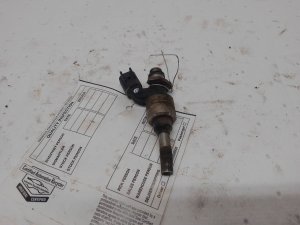
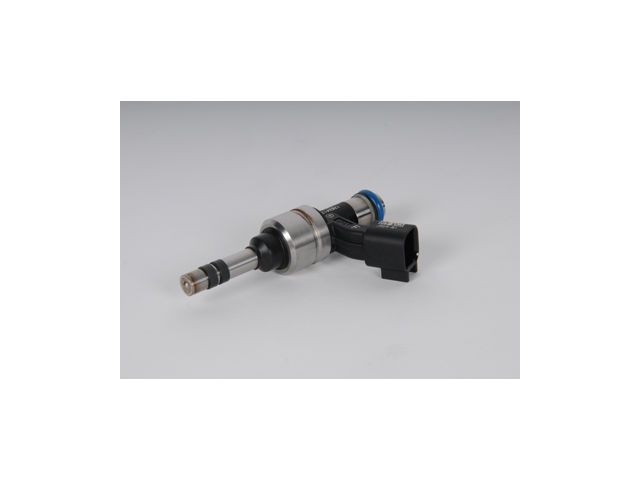
- Fuel Injector
(OEM #12662564)— This is the most likely cause according to GM Technical Service Bulletins for this specific engine and code. This part number supersedes 12627093, 12633913, and 12662570.
Trusted brands: ACDelco, Bosch
OEM price range: $80-$120
Aftermarket price range: $50-$90 - Downstream Oxygen Sensor
(OEM #12661898)— This part is often replaced by mistake, but can fail. It is responsible for sending the signal that triggers the code. This part number supersedes 12643903.
Trusted brands: ACDelco, Denso, NGK
OEM price range: $60-$100
Aftermarket price range: $40-$80 - Intake Manifold Gasket — While often not needed when re-torquing the manifold bolts, it may need replacement if it was damaged by the looseness or during the repair.
Trusted brands: ACDelco, Fel-Pro
OEM price range: $20-$40
Aftermarket price range: $10-$25
Related Codes That Often Appear With This One
- P0172 — Indicates 'System Too Rich (Bank 1)', which is a direct cause of the post-catalyst system also reading rich.
- P0171 — Indicates 'System Too Lean (Bank 1)'. This can seem contradictory, but a vacuum leak (like loose intake bolts) can cause a P0171, prompting the ECM to add so much fuel in compensation that it triggers a P2097 downstream.
- P0068 — Indicates 'MAP/MAF - Throttle Position Correlation'. This code is also linked to loose intake manifold bolts in TSB PIP5529B and can appear alongside P2097.
- P2099 — This is the equivalent code for Bank 2. It would not appear on the 4-cylinder LCV engine but could be seen on V6 Impala models with similar underlying issues.
Technical Service Bulletins (TSBs) & Recalls
- PIP4964F: Advises performing a fuel injector balance test (AFIT) before further diagnosis for P2097, as injectors are a primary suspect.
- PIP5534A: Communicates additional diagnostics for P2097, including checks for vacuum leaks, skewed MAF sensors, and noting that specific driving habits can induce the code.
- PIP5529B: Points to loose intake manifold bolts as the cause for a list of DTCs including P0068, P0171, and P2097 on 2.5L LCV/LKW engines, recommending they be re-torqued.
Platform-Specific Known Issues
- TSB PIP4964F points directly to faulty fuel injectors as a likely cause for P2097.
- TSB PIP5534A provides advanced diagnostics for P2097 and notes that certain driving styles ('digital driver') can trigger the code without a mechanical fault.
- TSB PIP5529B identifies loose intake manifold bolts as a known cause for a variety of codes on the 2.5L engine, including P0171 and P0068, which can lead to P2097.
Mechanic-Grade Diagnostic Values
- Long Term Fuel Trim (LTFT) — expected: -13% to +13%. Failure: A value consistently higher than +13% at idle that drops toward a normal range when held at 2000 RPM strongly suggests a vacuum leak.
- Downstream O2 Sensor (B1S2) Voltage — expected: Relatively steady voltage, e.g., 0.45V - 0.65V on a warm engine.. Failure: Voltage that is stuck high (consistently >0.7V) confirms the ECM is seeing a rich condition.
- Intake Manifold Bolt Torque — expected: 10 Nm (89 lb-in). Failure: Bolts are loose or can be turned by hand.
Scan Tool Commands That Help
- GDS2 / Professional Scan Tool: Active Fuel Injector Test (AFIT) — This is the GM-recommended procedure (per TSB PIP4964F) to identify leaking or poorly flowing fuel injectors, which are a primary cause of P2097 on this engine. It can individually test injectors to find a fault.
- GDS2 / Professional Scan Tool: Fuel Trim Monitoring — Per TSB PIP5534A, monitoring LTFT at idle (in Park and Drive) and at a steady 50 MPH cruise helps differentiate between vacuum leaks, sensor issues, or driving-style-induced codes.
- GDS2 / Professional Scan Tool: EVAP Purge/Seal — To test the EVAP purge valve. Commanding it closed and performing a smoke test on the intake can rule out a stuck-open valve causing a vacuum leak, which is a preliminary step in TSB PIP5534A.
Wiring & Ground Locations
- Engine Control Module (ECM) — Inside the air cleaner assembly on the 2.5L engine.. This is the source of power and control for the fuel injectors and O2 sensors. Its location is critical for any pin-out testing of sensor or actuator circuits.
- Heated Oxygen Sensor 2 (Downstream) — On the left side bottom of the engine, in the exhaust pipe after the catalytic converter.. This is the sensor that triggers the P2097 code. Knowing its location is essential for inspection and replacement.
- G105 / G106 — Engine compartment grounds, often located near the hood hinges or on a frame cross rail.. These are major engine and chassis ground points. A poor connection can cause erratic voltage and unstable sensor readings, potentially leading to false fuel trim codes.
- G121 / G122 — Located at the rear center of the engine compartment.. These are specific ground points identified in the wiring diagram for the 2014 Impala 2.5L that serve various engine components.
Real Owner Repair Stories
- Chevrolet Malibu Forum User (Chevrolet Malibu with the same 2.5L LCV engine) — Persistent P2097 code
❌ Tried (didn't work) Replacing multiple sensors
✅ What actually fixed it Replacing all four fuel injectors as a set finally resolved the code.
"I Checked Everything" — The Actual Cause
- According to GM TSB PIP5534A, after standard diagnostics (including checking the EVAP system for leaks) find no faults, the P2097 code can be induced by specific driving habits. A 'digital driver' (rapid on/off throttle) or extensive stop-and-go traffic can cause the code to set without any mechanical or electrical failure. GM states there is no vehicle fix for this scenario.
OEM Part Supersession History
12627093, 12633913, 12662570→12662564— Part consolidation and potential design improvements by the manufacturer.12643903→12661898— Part consolidation and potential design improvements by the manufacturer.
Model Year Variations Within This Range
- 2014-2019: The 2.5L LCV engine was the base engine during these years.
- 2020: The 2.5L LCV engine was discontinued for the Impala's final model year. All 2020 models came with the 3.6L V6, so this guide does not apply.
- 2015-2019: Stop/Start technology became standard on the 2.5L engine starting in 2015. While this adds a dual-battery system, it does not fundamentally change the common causes of P2097.
Diagnostic Flowchart
Other Known Issues on This Vehicle
Issues unrelated to this code that are worth knowing about as an owner of this generation:
- Excessive Oil Consumption 🔴 High — Commonly reported, often linked to piston ring design or PCV system issues. (Ref: PIP5247A (related to detaching piston oil nozzles))
- Carbon Buildup on Intake Valves 🟠 Medium — Common on direct-injection engines, typically requires cleaning (walnut blasting) around 100,000 miles to prevent rough idle and misfires.
- Water Pump Failure 🟠 Medium — Prone to becoming noisy and developing coolant leaks, sometimes before 100,000 miles.
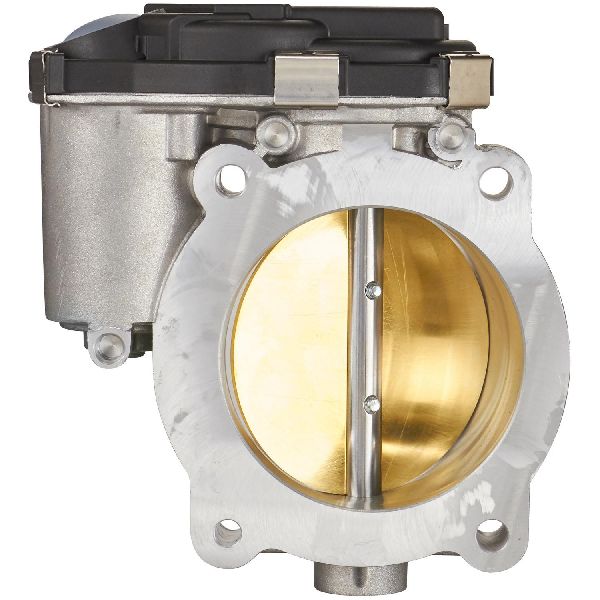
- Reduced Engine Power (Throttle Body Failure) 🟠 Medium — Often triggers a 'Reduced Engine Power' message and code P2135 due to throttle position sensor failure. (Ref: 11-06-04-007B)
- Leaking Coolant Temperature Sensor 🟡 Low — The sensor can leak coolant through its body, which can then travel down the wiring harness and contaminate the ECM connector.
Used vs. New Parts: Buying Guide for This Vehicle
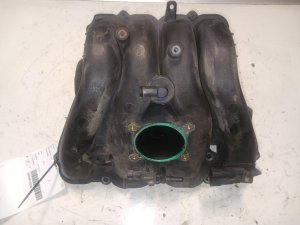
When a used part is the smart pick: An intake manifold is a good candidate for a used part. The component is a durable piece of plastic and the primary failure mode on this engine is loose bolts, not a cracked manifold. A used manifold from a low-mileage donor is a cost-effective option.
Donor-vehicle mileage cap: roughly under 80000 miles for the part to have meaningful remaining life.
What to inspect on the donor part:
- Check for cracks or damage around the bolt holes.
- Ensure all threaded inserts for sensors or brackets are intact.
- Verify the gasket surfaces are not warped or deeply scored.
OEM-only on this vehicle (don't cheap out):
- Fuel Injectors
- Oxygen Sensors
Aftermarket brands forum-validated for this vehicle:
- Denso (for Oxygen Sensors)
- NTK (for Oxygen Sensors)
Brands owners have reported issues with on this vehicle:
- Unbranded or 'white-box' oxygen sensors and fuel injectors are highly discouraged, as they are a common cause of persistent or recurring fuel trim codes on GM vehicles.
Real Owner Stories
Aggregated from forums and TSBs cited above. Mileages and costs reflect what owners reported in those sources.
2013-2018 Chevrolet Malibu 2.5L LCV/LKW
Symptoms: The owner unsuccessfully replaced multiple sensors trying to solve the P2097 code.
What fixed it: Replacing all four fuel injectors was the ultimate fix, corroborating guidance in TSB PIP5534A.
Source hint: chevymalibuforum.com
2017 Chevrolet Malibu 2.5L
Symptoms: Vehicle threw codes P0171, P0131, and P2097.
What fixed it: Tightening loose intake manifold bolts.
Source hint: NHTSA ODI Complaint #11581909
Related OBD-II Codes
Frequently Asked Questions
My 2.5L Impala has a P2097 code; should I start by replacing the downstream oxygen sensor?
Is there a specific TSB for loose intake manifold bolts on the 2.5L LCV engine?
What diagnostic test does GM recommend for P2097 on the Impala 2.5L?
Can my driving style cause the P2097 code to trigger on my 2014-2020 Impala?
If one fuel injector is leaking on my 2.5L engine, do I have to replace all of them?
Are there any other common mechanical issues on the Impala 2.5L I should watch for while fixing P2097?
Helpful Videos


Used OEM Parts in Stock




New Aftermarket Parts Available


The information in this article is provided for general reference and educational purposes only. Vehicle specifications, procedures, and part compatibility can vary by production date, trim level, and region. Always consult your vehicle's factory service manual and verify part numbers before purchasing or performing repairs. Safety-critical components such as airbags, seat belts, and braking systems should be installed by a qualified professional.
- Chevrolet Impala:
- 🎬 Helpful Videos
- 🛍️ Shop This Part
- What's Unique About the 2014-2020 Chevrolet Impala
- Symptoms You May Notice
- Most Likely Causes
- Rare But Worth Checking
- Diagnosis Steps
- Parts You'll Likely Need
- Related Codes That Often Appear With This One
- Technical Service Bulletins (TSBs) & Recalls
- Platform-Specific Known Issues
- Mechanic-Grade Diagnostic Values
- Scan Tool Commands That Help
- Wiring & Ground Locations
- Real Owner Repair Stories
- "I Checked Everything" — The Actual Cause
- OEM Part Supersession History
- Model Year Variations Within This Range
- Diagnostic Flowchart
- Other Known Issues on This Vehicle
- Used vs. New Parts: Buying Guide for This Vehicle
- Real Owner Stories
- 2013-2018 Chevrolet Malibu 2.5L LCV/LKW
- 2017 Chevrolet Malibu 2.5L
- Related OBD-II Codes
- Frequently Asked Questions
- 🎟️ Get 5% Off