

P2097 on 2016-2018 Chevrolet Equinox: Rich Fuel Trim Causes and Fixes
On a 2016-2018 Equinox, code P2097 usually points to a leaking fuel injector, a faulty downstream oxygen sensor, or an exhaust leak, particularly a cracked exhaust manifold on 2.4L engines. A GM Technical Service Bulletin (TSB) specifically advises checking for leaking fuel injectors before replacing other parts, as they are a very common cause.
- P2097 means the exhaust is too rich after the catalytic converter on Bank 1.
- Before replacing the O2 sensor, inspect for exhaust leaks and test the fuel injectors, as recommended by GM service bulletins.
- On 2.4L engines, check for a cracked exhaust manifold and smell the oil for fuel, which could indicate a bad high-pressure fuel pump.
- Ignoring this code can lead to poor fuel economy and expensive damage to the catalytic converter.
What's Unique About the 2016-2018 Chevrolet EQUINOX
For this generation of Equinox, particularly the 2.4L engine common in 2016-2017 models, P2097 is frequently more complex than a simple sensor failure. GM has issued technical service bulletins that point towards issues like leaking fuel injectors. TSB PIP4964F specifically recommends performing a fuel injector balance test before extensive diagnosis. Additionally, the 2.4L Ecotec engine is widely known for developing cracks in the exhaust manifold, which can alter sensor readings and cause this code. For the 2018 model with the newer 1.5L and 2.0L turbo engines, TSB PIP5534A notes that diagnostics should first rule out EVAP system issues before moving to checks for vacuum leaks, MAF sensor issues, or even driving styles in heavy traffic that might induce the code.
🎬 See this breakdown of common causes for the P2097 code.Diagnostic Flowchart
Tap your situation to follow the diagnostic path that matches what you're seeing on this vehicle.
Generation note: The 2016-2018 range covers two Equinox generations. The 2016-2017 models are the end of the second generation, primarily with the 2.4L and 3.6L engines. The 2018 model is the first year of the third generation, introducing new engines like the 1.5L Turbo and 2.0L Turbo. While the code's meaning is the same, specific causes like fuel injector issues and cracked exhaust manifolds are very common on the 2.4L engine. The 2018+ models with different engines have their own TSB (PIP5534A) which points to a different diagnostic path, including potential software updates or even non-fault issues related to driving habits.
Symptoms You May Notice
- Check Engine Light is on
- Reduced fuel economy
- Poor or rough engine performance, including stumbling or hesitation.
- Rough or erratic idling.
- In some cases, a fuel odor may be present.
- Black smoke from the exhaust in more extreme cases.
- Replacing the downstream oxygen sensor without checking for fuel injector leaks, exhaust leaks, or fuel-in-oil first. The TSBs strongly suggest this is often not a sensor issue, so diagnosing other causes first can save money and prevent repeat failures.
- Replacing the catalytic converter. The converter is expensive and usually fails as a result of the rich condition (the root cause), not the cause itself. Fixing the source of the rich mixture is necessary to protect the new converter.
Most Likely Causes
- Leaking Fuel Injector(s) 🔴 High Probability GM TSB #PIP4964F specifically calls out the need to test fuel injectors for this code, suggesting it's a known, common issue. An injector can leak excess fuel into the cylinder, creating a rich condition that the downstream O2 sensor detects.
How to confirm: Perform a fuel injector balance test using a capable scan tool or an Active Fuel Injector Tester (AFIT) as recommended by GM. This measures the pressure drop for each injector to see if one is flowing more fuel than the others. A professional can also bench-test the injectors.
Typical fix: Replace the faulty fuel injector(s). It is often recommended to replace them as a set, especially on higher mileage vehicles.
Est. part cost: $50-$150 per injector - Cracked Exhaust Manifold 🔴 High Probability The 2.4L Ecotec engine is notorious for developing cracks in the cast iron exhaust manifold. This leak allows outside oxygen to be sucked into the exhaust stream. The upstream O2 sensor sees this extra oxygen and incorrectly signals a lean condition, causing the ECM to add more fuel. This results in an actual rich condition that is then correctly reported by the downstream O2 sensor, triggering P2097.
How to confirm: Visually inspect the exhaust manifold for cracks, often visible as thin black lines of soot. A cold start may produce a ticking or tapping sound that diminishes as the metal heats up and expands. A smoke test can definitively identify the location of the leak.
Typical fix: Replace the cracked exhaust manifold and associated gaskets.
Est. part cost: $150-$400 for a new manifold kit - Faulty Downstream Oxygen (O2) Sensor 🟡 Medium Probability O2 sensors are wear items and can fail over time, sending incorrect 'rich' signals (stuck high voltage) to the computer even when the fuel mixture is normal. However, they often correctly report a problem originating elsewhere, so this should not be the first part replaced without diagnosis.
How to confirm: Use a scan tool to monitor the live voltage from the downstream O2 sensor (Bank 1, Sensor 2). On a warm engine at steady RPM, a healthy sensor should show a relatively stable voltage, typically between 0.6V and 0.8V. If the voltage is stuck high (e.g., >0.8V) or not responding, the sensor may be faulty.
Typical fix: Replace the Bank 1 downstream (Post-Catalyst) oxygen sensor.
Est. part cost: $40-$120 - EVAP Purge Valve Issue ⚪ Low Probability TSB #PIP5534A for the 2018 models mentions that standard diagnostics for P2097 involve checking the EVAP purge system first. A purge valve that is stuck open can allow unmetered fuel vapors from the charcoal canister to enter the engine, creating a rich condition.
How to confirm: Test the purge valve for proper operation. When disconnected and de-energized, it should be closed and hold a vacuum. With the engine running, a scan tool can command it open and closed to check for response.
Typical fix: Replace the EVAP purge solenoid valve.
Est. part cost: $25-$75
Rare But Worth Checking
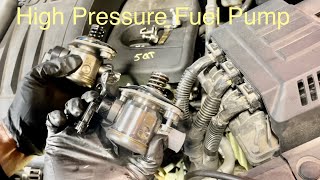
- High-Pressure Fuel Pump Leaking into Crankcase: On the 2.4L direct-injection engine, the seal on the high-pressure fuel pump (HPFP) can fail, causing gasoline to leak directly into the engine oil in the crankcase. This fuel-saturated oil releases vapors into the PCV system, which are then ingested by the engine, causing a significant rich condition. The primary symptom is engine oil that smells strongly of gasoline.
- Software Anomaly / Driving Style: TSB #PIP5534A indicates that for some 2018+ models, no fault may be present. Aggressive 'digital driving' (hard acceleration followed by coasting) or extended stop-and-go traffic can sometimes trigger the code. In some cases across the GM line, a PCM software update is the fix for miscalculating fuel composition, especially on flex-fuel models.
- Excessive Oil Consumption: The 2.4L Ecotec engines are known for issues with piston rings that can lead to excessive oil consumption. This oil can burn in the combustion chamber and contaminate (foul) the oxygen sensors and catalytic converter over time, leading to inaccurate readings and codes like P2097.
Diagnosis Steps
- Scan for any other accompanying trouble codes. Codes like P0172 (System Too Rich) or misfire codes can provide valuable clues.
- Check the engine oil dipstick for a strong smell of gasoline. This is a critical check on 2.4L engines and points directly to a leaking high-pressure fuel pump.
- Visually inspect the exhaust system from the engine manifold to the downstream O2 sensor for any cracks, rust, or black soot indicating a leak. Pay close attention to the exhaust manifold on 2.4L engines, as they are prone to cracking.
- Use a scan tool to monitor live data. Watch the short-term and long-term fuel trims. High negative numbers (e.g., -15% or more) confirm the computer is trying to correct a rich condition.
- Monitor the downstream O2 sensor voltage (Bank 1 Sensor 2). It should be relatively stable. If it's stuck high (above 0.8v) or fluctuating rapidly like the upstream sensor, it could be faulty, or it could be accurately reporting a problem upstream.
- Perform a fuel injector balance test as recommended by TSB #PIP4964F. This is a critical step before replacing sensors on the 2.4L and 3.6L engines.
- Test the EVAP purge solenoid to ensure it is not stuck open, especially on 2018+ models as per TSB PIP5534A.
- If all other tests pass, the issue may be the O2 sensor itself or a potential software issue that a dealer would need to address.
Parts You'll Likely Need
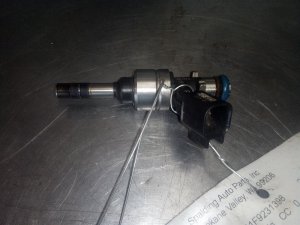
- Fuel Injector
(OEM #12638530 (ACDelco, for 2.4L/3.6L, verify fitment))— A primary cause identified in GM's own service bulletins for creating a rich condition that triggers P2097.
Trusted brands: ACDelco, Bosch, Standard Motor Products
Related Codes That Often Appear With This One
- P0172 — This code means "System Too Rich Bank 1" and is detected by the upstream O2 sensor. It often appears with P2097 because a significant root cause (like a leaking injector or HPFP) is creating a rich condition throughout the entire engine bank.
- P2099 — This is the equivalent P2097 code but for Bank 2 on a V6 engine ("Post Catalyst Fuel Trim System Too Rich Bank 2"). TSB #PIP4964F mentions them together as they share the same potential causes, like leaking injectors.
- P0420 — This code means "Catalyst System Efficiency Below Threshold". A long-term rich condition from P2097 can overheat and damage the catalytic converter, eventually leading to a P0420 code.
Technical Service Bulletins (TSBs) & Recalls
- PIP5534A: Communicates additional diagnostics for P2097, mentioning driving style, vacuum leaks, and injector testing as potential factors.
- PIP4964F: Recommends performing a fuel injector balance test when diagnosing P2097 or P2099.
Platform-Specific Known Issues
- TSB #PIP4964F points to leaking fuel injectors as a specific issue to investigate when P2097 or P2099 are present on the 2.4L and 3.6L engines.
- TSB #PIP5534A provides advanced diagnostics for 2018+ models with 2.0L/2.5L engines, suggesting a different diagnostic path starting with the EVAP system and considering non-component failures like driving style.
- The 2.4L Ecotec engine has a well-documented history of cracked exhaust manifolds, which is a very common cause of this code.
- The 2.4L direct injection engine's high-pressure fuel pump can fail and leak fuel into the crankcase, causing a rich condition and a distinct fuel smell in the oil.
Mechanic-Grade Diagnostic Values
- Long Term Fuel Trim (per TSB PIP5534A) — expected: -13% to +13%. Failure: A value that was high and then drops into the normal range after performing specific driving/idle tests may indicate a vacuum leak, skewed MAF, or injector issue.
- Downstream O2 Sensor (Bank 1 Sensor 2) Voltage — expected: Relatively stable reading between 0.6V and 0.8V on a warm engine at steady RPM.. Failure: Stuck high (above 0.8V) or fluctuating rapidly like an upstream sensor.
- Upstream O2 Sensor (Bank 1 Sensor 1) Voltage — expected: Rapidly fluctuating between 0.1V and 0.9V.. Failure: Steady high voltage (>0.8V) indicates a rich raw exhaust condition.
Scan Tool Commands That Help
- GM GDS2 / Professional Scan Tool: Injector Balance Test / Active Fuel Injector Test (AFIT) — As recommended by TSB #PIP4964F and #PIP5534A, this should be used early in the diagnosis to test for leaking or malfunctioning fuel injectors, which are a primary cause of P2097.
- GM GDS2 / Professional Scan Tool: Fuel Trim Reset — After replacing a component that affects the air/fuel mixture (like an O2 sensor, fuel injector, or MAF sensor), this function should be used to clear the old learned fuel trim values from the ECM.
- GM GDS2 / Professional Scan Tool: EVAP Purge/Seal — Per TSB #PIP5534A, the EVAP system should be tested first. This command allows the technician to manually open and close the purge valve to ensure it is not stuck open and causing a rich condition.
Wiring & Ground Locations
- Downstream Oxygen Sensor (Bank 1, Sensor 2) — On the 2.4L engine, it is located in the exhaust pipe just after the catalytic converter, accessed from underneath the vehicle.. This is the sensor that detects the rich condition and triggers the P2097 code. Physical damage to the sensor or its wiring harness from road debris can cause incorrect readings.
Real Owner Repair Stories
- Reddit user (2017 Chevrolet Equinox 2.4L) — P2097 code present.
❌ Tried (didn't work) Not specified, but the problem was misdiagnosed by a previous mechanic.
✅ What actually fixed it The high-pressure fuel pump (HPFP) was found to be loose due to improper installation during a previous repair. Tightening the HPFP to the correct torque specification resolved the code.
OEM Part Supersession History
12638530→12669384— This is a common fuel injector part number for GM vehicles including the Equinox. Part numbers are often superseded due to design improvements, supplier changes, or consolidation.
Model Year Variations Within This Range
- 2018: The 2018 model year introduced new engines (1.5L Turbo, 2.0L Turbo) and has a specific TSB, #PIP5534A. This bulletin outlines a different diagnostic path that prioritizes checking the EVAP system, monitoring fuel trims under specific driving conditions, and considers driving style as a potential non-fault cause, which is not emphasized for the earlier 2.4L/3.6L engines.
Helpful Videos

Used OEM Parts in Stock


New Aftermarket Parts Available

The information in this article is provided for general reference and educational purposes only. Vehicle specifications, procedures, and part compatibility can vary by production date, trim level, and region. Always consult your vehicle's factory service manual and verify part numbers before purchasing or performing repairs. Safety-critical components such as airbags, seat belts, and braking systems should be installed by a qualified professional.
- Chevrolet EQUINOX:
- 🎬 Helpful Videos
- 🛍️ Shop This Part
- What's Unique About the 2016-2018 Chevrolet EQUINOX
- Diagnostic Flowchart
- Symptoms You May Notice
- Most Likely Causes
- Rare But Worth Checking
- Diagnosis Steps
- Parts You'll Likely Need
- Related Codes That Often Appear With This One
- Technical Service Bulletins (TSBs) & Recalls
- Platform-Specific Known Issues
- Mechanic-Grade Diagnostic Values
- Scan Tool Commands That Help
- Wiring & Ground Locations
- Real Owner Repair Stories
- OEM Part Supersession History
- Model Year Variations Within This Range
- 🎟️ Get 5% Off