

P2097 on 2011-2019 Chevrolet Cruze 1.4L: Causes and Fixes for Rich Fuel Trim
On a 2011-2016 Cruze with the 1.4L engine, code P2097 is most often caused by an exhaust leak before the downstream O2 sensor, a failing downstream O2 sensor itself, or a failed PCV system within the valve cover. Check for exhaust gasket leaks (especially at the turbo and downpipe) and listen for vacuum leaks from the valve cover before replacing any sensors.
- P2097 on a 1.4L Cruze means the exhaust is too rich after the catalytic converter.
- The most common cause is NOT a major engine problem, but a simple exhaust leak before the second O2 sensor.
- Thoroughly inspect the exhaust for leaks, especially the downpipe gasket, before buying any parts.
- If no leaks are found, the next most likely culprit is a faulty downstream O2 sensor.
- Do not replace the catalytic converter for this code unless P0420 is also present and all other possibilities have been exhausted.
What's Unique About the 2011-2019 Chevrolet Cruze

The 1.4L LUJ/LUV turbo engine in the first-generation Cruze and its platform mates is susceptible to several issues that can lead to this code. While the code points to a rich condition, the root cause is frequently an unmetered air leak. Exhaust leaks near the turbocharger or at the downpipe flange can pull in outside air, fooling the downstream O2 sensor and causing incorrect readings that trigger P2097. Additionally, the complex PCV system integrated into the valve cover is a known weak point. A failed internal diaphragm creates a significant vacuum leak, leading to lean codes like P0171, but the downstream effects and oil contamination can also contribute to or cause P2097.
Generation note: The specified 2011-2019 range covers two distinct Cruze generations. This guide primarily focuses on the First Generation (2011-2016) which used the 1.4L LUJ/LUV turbo engine. The Second Generation (2016.5-2019) uses a different 1.4L LE2 engine with different common failure points. The LUJ/LUV engine is the platform for which this code and its common causes are most frequently documented across the Cruze, Sonic, and Encore.
Symptoms You May Notice
- Check Engine Light is on
- Decreased fuel economy
- Poor engine performance, such as hesitation or a general lack of power
- Rough or erratic idle
- Audible hissing or whistling noise from the engine bay (if PCV failed)
- Replacing the catalytic converter first. The P2097 code is a fuel trim code, not a catalyst efficiency code (like P0420). The cause is almost always a sensor, an air/exhaust leak, or a PCV issue, not the converter itself.
Most Likely Causes

- Exhaust Leak (before downstream O2 sensor) 🔴 High Probability Gaskets around the turbocharger and at the downpipe flange are common failure points. A leak allows oxygen to enter the exhaust, which skews the downstream O2 sensor's reading, making the system appear rich to the ECU. The flexible portion of the exhaust pipe is also a known spot for developing cracks or holes.
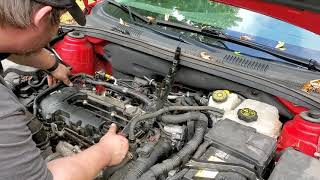
How to confirm: Visually inspect for black soot around exhaust flanges, particularly where the catalytic converter meets the downpipe. A smoke test of the exhaust system is the most definitive way to find leaks. 🎬 Watch: Two simple DIY methods to fix the P2097 code. You may also hear a ticking or hissing sound from the engine bay. Some owners have found loose bolts on the 3-bolt flange.
Typical fix: Replace the leaking gasket or repair the leaking section of pipe. The downpipe flange gasket is a very common culprit.
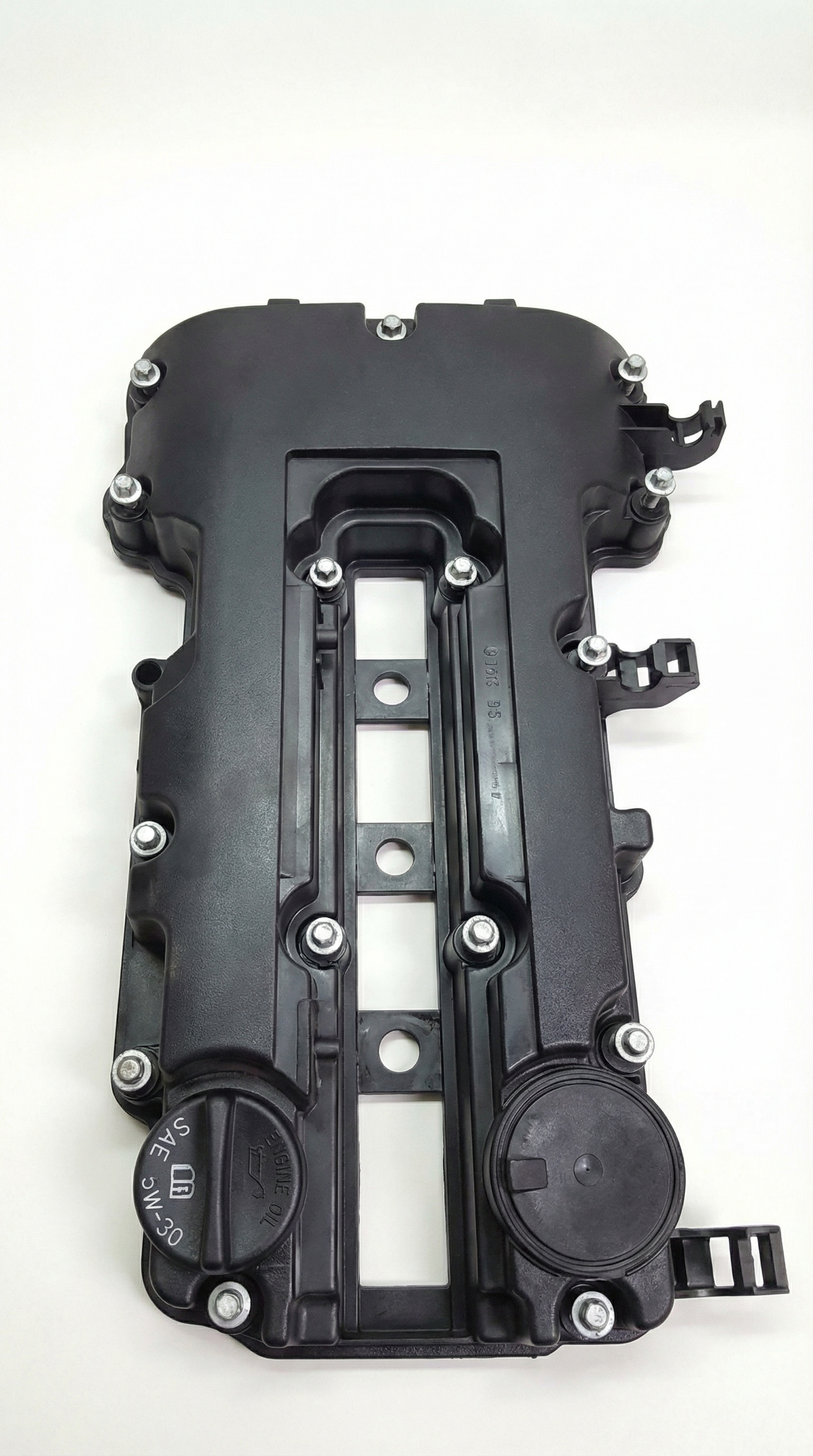
Est. part cost: $10-$30 - PCV System / Valve Cover Failure 🔴 High Probability The PCV system on the 1.4L turbo is integrated into the valve cover. An internal rubber diaphragm is known to tear, creating a massive unmetered vacuum leak. This typically sets a P0171 (System Too Lean) code, but can also cause oil to be sucked into the intake, fouling sensors and spark plugs, which can indirectly lead to a P2097 code. A failed non-return valve inside the intake manifold can also cause repeat PCV failures by allowing boost pressure into the crankcase.
How to confirm: With the engine running, a loud hissing or whistling sound will be heard from the valve cover area. If you try to remove the oil cap, there will be strong suction holding it down. Another definitive test is to locate the small hole on top of the circular PCV diaphragm housing on the valve cover; if it is sucking in air (you can place your finger over it to check), the diaphragm is ruptured.
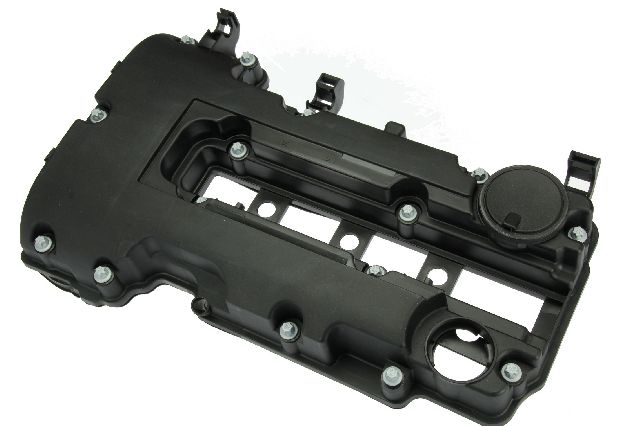
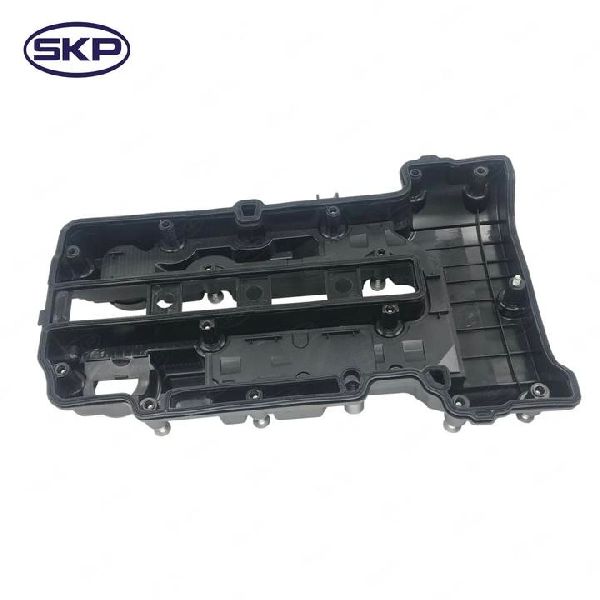
Typical fix: Replace the entire valve cover assembly. While diaphragm repair kits exist, the plastic can become brittle, and a full assembly replacement is more reliable. 🎬 Watch: Step-by-step guide to replacing the valve cover and PCV. It is critical to also inspect the check valve in the intake manifold to prevent repeat failure.
Est. part cost: $60-$150 for a full assembly - Failing Downstream Oxygen (O2) Sensor 🟡 Medium Probability The sensor can become biased, slow to respond, or contaminated with age, sending incorrect 'rich' signals to the ECM even when the fuel mixture is normal.
How to confirm: Use a scan tool to observe the live data for the Bank 1 Sensor 2 voltage. A healthy downstream sensor on a warm engine should show a relatively stable voltage (typically 0.6-0.8V). If it's stuck high or fluctuating wildly like the upstream sensor, it's likely faulty.
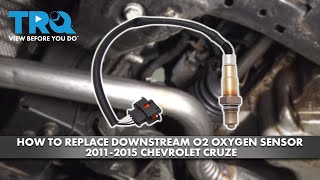
Typical fix: Replace the downstream (post-catalyst) oxygen sensor. 🎬 See this walkthrough on replacing the downstream O2 sensor.
Est. part cost: $40-$100 - Failing Upstream Oxygen (O2) Sensor ⚪ Low Probability The upstream sensor is the primary input for fuel control. If it provides faulty data causing the engine to actually run rich, the downstream sensor will correctly report the rich condition.
How to confirm: Check for other codes related to the upstream sensor or fuel trim (like P0172). Use a scan tool to monitor short-term and long-term fuel trims. Consistently negative fuel trims indicate the ECM is trying to remove fuel, suggesting an underlying rich condition detected by the upstream sensor.
Typical fix: Replace the upstream (pre-catalyst) oxygen sensor.
Est. part cost: $50-$120 - Leaking Fuel Injector(s) ⚪ Low Probability An injector can leak fuel into a cylinder, causing a genuinely rich condition that the O2 sensors will detect.
How to confirm: This is harder to diagnose. It may be accompanied by other codes like a cylinder-specific misfire. A fuel pressure leak-down test can point to a leaking injector. The ultimate confirmation is to remove the fuel rail and observe the injectors for drips.
Typical fix: Replace the faulty fuel injector(s) and their seals.
Est. part cost: $50-$150 per injector
Rare But Worth Checking
- Failing Catalytic Converter: A failing catalytic converter is a possible but uncommon cause. It's more likely to trigger code P0420 (Catalyst System Efficiency Below Threshold). Do not replace the converter for P2097 unless all other causes have been ruled out. Often, fixing the root cause of P2097 (like an exhaust leak) will also resolve a P0420 that appears with it.
- Engine Control Module (ECM) Software Issue: There are Technical Service Bulletins for some GM vehicles where a software glitch can falsely trigger P2097. For example, TSB 18-NA-047 was issued for the 2017 Volt for a false P2097. While not specific to the Cruze, it shows a precedent. It's always wise to check with a dealer for any available software updates for your vehicle's ECM.
Diagnosis Steps

- Read all fault codes using an OBD-II scanner. Note any other codes that are present, especially P0420, P0171, or P0172.
- With the engine running, listen for a distinct hissing or whistling noise from the top of the engine, indicating a PCV valve cover failure. Check for strong suction at the oil filler cap.
- Visually inspect the exhaust system from the engine to the downstream O2 sensor. Look for signs of leaks, such as black soot around gaskets and flanges, especially at the turbo outlet and downpipe connection. Pay close attention to the exhaust flex pipe.
- If an exhaust leak is suspected but not visible, perform a smoke test on the exhaust system to pinpoint its exact location.
- Use a scan tool with live data capability. Warm up the engine to operating temperature (closed loop).
- Observe the voltage for the downstream O2 sensor (Bank 1, Sensor 2). It should be relatively steady. If it is stuck high (above ~0.8V) or fluctuating rapidly like the upstream sensor, suspect a bad sensor or an exhaust leak.
- Observe the short-term and long-term fuel trims. If P0171 is also present and fuel trims are highly positive (e.g., +25% or more), this strongly suggests a vacuum leak, likely the PCV valve cover.
- If sensors are suspected, test their wiring for continuity and check for damage before replacing the sensor itself.
- If all else fails, investigate potential fuel system issues like fuel pressure and injector function.
Parts You'll Likely Need

- Valve Cover with Integrated PCV
(OEM #25198874)— A ruptured PCV diaphragm is a very high-frequency failure on this engine, causing vacuum leaks that lead to various fuel trim codes. The entire cover is replaced.
Trusted brands: ACDelco, Dorman
OEM price range: $100-$150
Aftermarket price range: $60-$100 - Downpipe Gasket
(OEM #55567759)— This gasket between the catalytic converter and the downpipe is a common failure point, creating an exhaust leak that fools the downstream O2 sensor. - Downstream Oxygen Sensor (Post-Catalyst) — The sensor itself can fail with age or contamination, sending incorrect rich signals to the ECM.
Trusted brands: ACDelco, Bosch, Denso
OEM price range: $60-$100
Aftermarket price range: $40-$80
Related Codes That Often Appear With This One
- P0420 — If an exhaust leak or sensor issue persists, it can cause the catalytic converter to operate inefficiently or become damaged, eventually leading to a P0420 code. These two codes frequently appear together.
- P0172 — P0172 (System Too Rich Bank 1) indicates the primary fuel control (upstream sensor) is detecting a rich condition. If both are present, it points towards a genuine rich condition like a leaking injector, rather than just a post-catalyst sensor issue.
- P0171 — P0171 (System Too Lean) often points directly to a failed PCV system/valve cover on the 1.4L engine. A massive vacuum leak from the PCV can cause the ECM to overcompensate with fuel, which can sometimes lead to a P2097 code downstream, even though the initial problem is a lean condition.
Technical Service Bulletins (TSBs) & Recalls
- GM Service Update #17058: While for a different vehicle (2017 Volt), this TSB acknowledges that a P2097 code can be falsely set due to a software issue requiring an ECM reprogram. It highlights the possibility of software-related causes for this code within GM vehicles.
Platform-Specific Known Issues
- A Reddit user with a 2013 Cruze reported that their P2097 code was ultimately caused by a hole in the exhaust flex pipe. After suspecting sensors, the physical leak was found and repairing it solved the problem permanently.
- On the forum CruzeTalk, multiple owners have confirmed that replacing the downstream O2 sensor (part #55572216) resolved their P2097 code, but only after they had first confirmed there were no exhaust leaks.
- A common owner experience involves chasing a P0171 code caused by the PCV valve cover, replacing it, and then having a P2097 code appear shortly after. This can be due to the new, correct air-fuel mixture revealing a separate, pre-existing issue with the downstream O2 sensor or a small exhaust leak that was previously masked.
Mechanic-Grade Diagnostic Values
- Long Term Fuel Trim (LTFT) — expected: -13% to +13%. Failure: Values consistently above +13% indicate a lean condition (vacuum leak), while values below -13% indicate a rich condition (leaking injector). A value stuck at +25% or higher strongly suggests a major vacuum leak, like the PCV diaphragm.
- Downstream O2 Sensor (HO2S2) Voltage — expected: Relatively stable voltage between 0.6V and 0.8V on a warm, healthy catalytic converter.. Failure: Voltage stuck high (above 0.8V) indicates a rich condition or faulty sensor. Voltage fluctuating rapidly similar to the upstream sensor can indicate a failing catalytic converter or an exhaust leak.
- Mass Airflow (MAF) Sensor Reading at Idle — expected: Approximately 1.5-2.5 g/s for the 1.4L engine at normal operating temperature.. Failure: A reading that does not increase smoothly with RPM or is significantly off from the expected idle value can indicate a faulty sensor or a large unmetered air leak.
- Low-Side Fuel Pressure — expected: 50 - 94 PSI (with engine off, pump primed by cycling the key).. Failure: Pressure below this range could indicate a weak fuel pump or clogged filter, potentially causing the ECM to command incorrect fuel trims.
- Oxygen Sensor Heater Circuit Resistance — expected: Approximately 5-7 Ω. Failure: A reading outside this range (very low or infinite/OL) indicates a failed heater circuit within the sensor, which can cause slow sensor response and trigger fuel trim codes.
Scan Tool Commands That Help
- GDS2 (GM Dealer Tool): Fuel Injector Balance Test (AFIT - Automated Fuel Injector Test) — This is a critical step if a true rich condition (negative fuel trims) is suspected. It can identify leaking or poorly flowing fuel injectors, which are a known cause of P2097 on GM vehicles.
Wiring & Ground Locations
- G103 / G105 — On the driver's side shock tower or nearby on the cowl in the engine compartment.. These are primary ground points for the Engine Control Module (ECM) and multiple engine sensors. A loose or corroded connection here can cause unstable sensor readings, including from the oxygen sensors, leading to false or intermittent fault codes like P2097.
- Main Engine Harness Ground — A small ground wire running from the engine wiring harness (often near the ignition coil pack) to a stud on the engine block.. This is a known weak point for becoming loose or corroded. An unstable ground for the engine's electronics can cause a wide range of seemingly unrelated codes and drivability issues, including sensor faults that could lead to P2097.
Real Owner Repair Stories
- Reddit user 'HueJaPenus' in r/cruze (2013 Chevy Cruze LT, ~188,000 Km) — P2097 code was present, but the car seemed to run fine with no noticeable difference in fuel economy, no stalling, and no rough idle.
❌ Tried (didn't work) The user initially suspected the MAF sensor or the downstream O2 sensor but was hesitant to replace parts without confirmation.
✅ What actually fixed it A hole in the exhaust flex pipe. The user had it replaced, and the code was resolved. - Cross-Manufacturer Reference (Malibu) — An owner reported in NHTSA ODI #11581909 that while driving 60 MPH, the car stuttered and lost all power, throwing codes P0131, P2097, and P0171. The issue was eventually traced to loose intake bolts.
- Cross-Manufacturer Reference (Malibu) — NHTSA ODI #11255637 describes a vehicle with only 500 miles that triggered P2097, resulting in decreased engine power upon acceleration, stalling on start, and a shimmy from the motor.
"I Checked Everything" — The Actual Cause
- The integrated PCV system can create a massive vacuum leak that is difficult to pinpoint with a smoke test alone. The root cause is often the failure of a small, non-return check valve inside the intake manifold, which is not easily visible or testable with smoke. This failure allows the crankcase to be exposed to intake manifold boost pressure, which then ruptures the PCV diaphragm in the valve cover. The definitive test is not a smoke test, but checking for strong suction at the oil filler cap or the PCV port on the valve cover with the engine running.
Documented NHTSA Reports
- NHTSA ODI #11414085 notes that an owner experienced a check engine light for P2097 accompanied by hesitation when accelerating.
- NHTSA ODI #11364226 reports a persistent P2097 code (Post Catalyst Fuel Trim System Too Rich Bank 1) that required extensive diagnostic work at a certified shop.
- NHTSA ODI #11221744 describes a complex electrical scenario where P2097 appeared alongside multiple other codes (P0036, P0037, P0138, P0141) and required replacement of the accelerator pedal and throttle harness.
OEM Part Supersession History
25198498→25198874— Standard part revision and update by GM.
Heads up: The parts are interchangeable; 25198874 is the current replacement for 25198498 for the valve cover assembly.
Model Year Variations Within This Range
- 2011-2016: The 1.4L turbo engine came in two primary RPO codes, LUJ and LUV. While very similar, the LUV is a slightly updated version. However, for the purposes of code P2097, both engines share the same vulnerable PCV system design (valve cover diaphragm and internal intake manifold check valve) and exhaust layout, making them susceptible to the same common failures.
Diagnostic Flowchart
Real Owner Stories
Aggregated from forums and TSBs cited above. Mileages and costs reflect what owners reported in those sources.
2013 Chevrolet Cruze 1.4L
Symptoms: Initially suspected a faulty MAF or O2 sensor causing a P2097 Fuel Trim Too Rich code.
What fixed it: Found a hole in the exhaust flex pipe. Repairing the physical leak solved the problem permanently.
Source hint: Reddit r/cruze - 'P2097 Fuel Trim Too Rich'
2014 Chevrolet Sonic LTZ 1.4L Turbo
Symptoms: Experienced both P0420 and P2097 codes simultaneously on the 1.4L turbo engine.
What fixed it: Wrapped an exhaust leak on the flexible pipe section, which resolved the codes for over 50,000 miles.
Cost: $10-$10
Source hint: Reddit r/ChevySonic - 'Sonic 2014 LTZ 1.4L Turbo codes P0420 & P2097 advice?'
Chevrolet Cruze 1.4L
Symptoms: Check engine light illuminated with P2097, P0420, and P0324 codes present.
What fixed it: Performed a smoke test which revealed an exhaust leak at the 3-bolt flange between the catalytic converter and the downpipe. Replaced the gasket.
Source hint: YouTube - 'CHEVY CRUZE CHECK ENGINE LIGHT P2097 P0420 & P0324 DIAGNOSIS' by ADVANCED LEVEL AUTO
Chevrolet Cruze 1.4L
Symptoms: P2097 code present, but confirmed there were no exhaust leaks in the system.
What fixed it: Replaced the downstream O2 sensor with part #55572216.
Source hint: CruzeTalk forum
Related OBD-II Codes
Frequently Asked Questions
Is the PCV valve cover a common cause for the P2097 code on the 1.4L Cruze?
I just replaced my valve cover for a P0171 code, and now I have a P2097. Why did this happen?
Where are the most common exhaust leaks located on the 1.4L LUJ/LUV engine?
What part number should I use if I need to replace the downstream O2 sensor?
Can a software issue cause a false P2097 code on GM vehicles?
How can I test if my Cruze's PCV diaphragm is ruptured?
Helpful Videos
![How to Fix P2097 Engine Code in 4 Minutes [2 DIY Methods / Only $9.84]](https://img.youtube.com/vi/rCwtzRmhMwY/mqdefault.jpg)
Used OEM Parts in Stock
New Aftermarket Parts Available

The information in this article is provided for general reference and educational purposes only. Vehicle specifications, procedures, and part compatibility can vary by production date, trim level, and region. Always consult your vehicle's factory service manual and verify part numbers before purchasing or performing repairs. Safety-critical components such as airbags, seat belts, and braking systems should be installed by a qualified professional.
- Chevrolet Cruze:
- 🎬 Helpful Videos
- 🛍️ Shop This Part
- What's Unique About the 2011-2019 Chevrolet Cruze
- Symptoms You May Notice
- Most Likely Causes
- Rare But Worth Checking
- Diagnosis Steps
- Parts You'll Likely Need
- Related Codes That Often Appear With This One
- Technical Service Bulletins (TSBs) & Recalls
- Platform-Specific Known Issues
- Mechanic-Grade Diagnostic Values
- Scan Tool Commands That Help
- Wiring & Ground Locations
- Real Owner Repair Stories
- "I Checked Everything" — The Actual Cause
- Documented NHTSA Reports
- OEM Part Supersession History
- Model Year Variations Within This Range
- Diagnostic Flowchart
- Real Owner Stories
- 2013 Chevrolet Cruze 1.4L
- 2014 Chevrolet Sonic LTZ 1.4L Turbo
- Chevrolet Cruze 1.4L
- Chevrolet Cruze 1.4L
- Related OBD-II Codes
- Frequently Asked Questions
- 🎟️ Get 5% Off