

P2097 on 2020-2024 Cadillac XT6: Causes and Fixes for Post-Catalyst Rich Fuel Trim on Bank 1 (Firewall Side)
On a 2020-2024 Cadillac XT6, code P2097 is most often caused by a leaking fuel injector on Bank 1. For the 3.6L V6, Bank 1 is the rear bank near the firewall. A GM Technical Service Bulletin (TSB) specifically advises technicians to perform a fuel injector balance test before replacing other parts. This issue is common across other GM vehicles with the same engine, like the Acadia and Traverse.
- P2097 on a 2020-2024 Cadillac XT6 means the engine is running too rich on Bank 1, as detected after the catalytic converter.
- A GM Technical Service Bulletin (PIP4964F) strongly suggests the most likely cause is a leaking fuel injector, a known issue on the 3.6L LGX engine family.
- For the 3.6L V6, Bank 1 is the rear bank against the firewall, making repairs more difficult.
- Do not immediately replace the oxygen sensor; a fuel injector balance test should be performed first to avoid common misdiagnosis.
- Do not replace the catalytic converter; it is almost certainly a symptom of the rich condition, not the cause.
What's Unique About the 2020-2024 Cadillac XT6
For this vehicle and its platform mates (Chevy Traverse, GMC Acadia, Cadillac XT5), General Motors has issued Technical Service Bulletin #PIP4964F that directly addresses code P2097. It instructs technicians to prioritize checking the fuel injectors with a balance test before proceeding with other diagnostics. This strongly suggests that leaking or malfunctioning fuel injectors are a known pattern failure on this platform, particularly with the direct-injected 3.6L V6 LGX engine.
Diagnostic Flowchart
Tap your situation to follow the diagnostic path that matches what you're seeing on this vehicle.
Symptoms You May Notice
- Check Engine Light is on
- Reduced fuel economy
- Rough or inconsistent idle
- Engine hesitation or sluggish acceleration
- Smell of gasoline from the engine area
- Black smoke from the exhaust in some cases
- Replacing the catalytic converter. The P2097 code is a symptom of a problem upstream; a new converter will be damaged by the same unresolved rich condition. 🎬 Watch: Understanding the common causes and fixes for P2097.
- Replacing the upstream (pre-catalyst) oxygen sensor. This code is set based on readings from the downstream sensor, which has a different function.
- Immediately replacing the downstream oxygen sensor without testing the fuel system first, as directed by GM TSBs.
Most Likely Causes
- Leaking Fuel Injector(s) on Bank 1 🔴 High Probability A manufacturer TSB (#PIP4964F) specifically directs technicians to investigate fuel injectors for this code, indicating a known pattern across multiple GM vehicles with the 3.6L LGX engine. Direct injection systems operate under very high pressure, which can make injectors more susceptible to leaks over time.
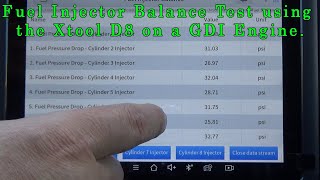
How to confirm: Perform a fuel injector balance test using a capable scan tool (e.g., GM MDI with GDS2 software) or a dedicated Active Fuel Injector Tester (AFIT). 🎬 See how to perform a fuel injector balance test. A mechanic can also remove the injectors for bench testing. A strong sign is also fuel contamination in the engine oil.
Typical fix: Replace the faulty fuel injector(s). It is often recommended to replace all injectors on the affected bank (Bank 1) at the same time. On the 3.6L V6, this is the rear bank against the firewall.
Est. part cost: $90-$180 per OEM injector. Part numbers 12669384 or 12692884 are commonly cited for the 3.6L LGX. - Faulty Post-Catalyst Oxygen Sensor (Bank 1, Sensor 2) 🟡 Medium Probability
How to confirm: Monitor the sensor's voltage reading with a scan tool. A healthy downstream sensor should show a relatively stable voltage. If it's stuck high or fluctuating wildly like an upstream sensor, it may be faulty. The sensor can also be tested directly. Be wary of cheap aftermarket sensors, as they can be faulty out of the box.
Typical fix: Replace the Bank 1 downstream oxygen sensor. OEM Part number for the 3.6L LGX is commonly cited as 12667438.
Est. part cost: $50-$150 for an aftermarket sensor, $100-$180 for OEM. - Exhaust Leak ⚪ Low Probability
How to confirm: Visually inspect the exhaust system from the engine to the post-catalyst O2 sensor for cracks, loose flanges, or rusted-out sections. A smoke test or low-pressure air with soapy water can pinpoint hard-to-see leaks, as recommended in TSBs.
Typical fix: Repair the leak by replacing the gasket, tightening bolts, or welding the damaged section.
Est. part cost: $10-$50 for gaskets or repair materials.
Rare But Worth Checking
- High Fuel Pressure: Caused by a faulty fuel pressure regulator, this can force too much fuel through the injectors. This should be checked if injectors and O2 sensors test good.
- Mass Airflow (MAF) Sensor Malfunction: An inaccurate MAF sensor reading can cause the ECM to miscalculate the required fuel, leading to a rich condition. This will usually be accompanied by other diagnostic codes.
- ECM Software Anomaly: In some cases, a software glitch can cause a false P2097 code. TSB #17058 / 18-NA-047 has been issued for other GM models for this issue, requiring an ECM reprogram by a dealer. It is worth checking for available software updates.
- Stressed/Cracked Exhaust Pipe: A specific TSB for the Chevy Traverse (#PIP5681C) notes that a broken exhaust bracket on the opposite bank can cause stress that cracks the Bank 1 exhaust pipe, creating a leak that triggers P2097. While specific to the Traverse, it's a possibility on a related chassis.
Diagnosis Steps
- Connect an OBD-II scanner and confirm P2097 is the primary code. Note any other codes present (e.g., P0172, P0301).
- Visually inspect the exhaust system for any obvious leaks, especially between the engine and the downstream O2 sensor. On the 3.6L V6, pay close attention to the rear bank near the firewall.
- Use the scanner to monitor live data. Watch the voltage from the Bank 1 downstream O2 sensor (Sensor 2). It should be relatively steady. Also, observe the long-term and short-term fuel trims.
- Following TSB #PIP4964F, perform a fuel injector balance test. This is the most critical step for this vehicle and its platform mates.
- If the injectors test good, test the Bank 1 downstream O2 sensor for proper operation. This can involve checking its response to induced rich/lean conditions.
- Check for fuel in the engine oil, which is a strong sign of a leaking injector.
- If other causes are ruled out, check the fuel pressure to ensure it is within the manufacturer's specifications.
- After the repair, clear the codes and perform a drive cycle to ensure the fix was successful.
Parts You'll Likely Need
- Fuel Injector
(OEM #12669384 or 12692884 (for 3.6L LGX))— A manufacturer TSB points directly to faulty injectors as a likely cause for this code on this vehicle and its platform mates.
Trusted brands: ACDelco, Bosch
OEM price range: $90-$180 per injector.
Aftermarket price range: $50-$120 per injector. - Downstream Oxygen Sensor (Bank 1 Sensor 2)
(OEM #12667438 (for 3.6L LGX))— If the fuel system is confirmed to be working correctly, the sensor itself may be faulty and sending incorrect 'rich' signals.
Trusted brands: ACDelco, Denso, Bosch, NTK
OEM price range: $100-$180.
Aftermarket price range: $50-$150.
Related Codes That Often Appear With This One
- P2099 — This is the identical code but for Bank 2. Seeing both P2097 and P2099 together points to a systemic issue affecting both banks, like high fuel pressure, a faulty MAF sensor, or an ECM software issue.
- P0172 — This code means "System Too Rich Bank 1" and is based on the upstream O2 sensor. Seeing it with P2097 confirms a significant rich condition is present throughout Bank 1, pointing strongly to a fuel delivery issue like a leaking injector.
- P0300-P0306 — These are misfire codes. A leaking fuel injector can foul the spark plug in a cylinder, causing a misfire code for that specific cylinder to appear alongside P2097.
Technical Service Bulletins (TSBs) & Recalls
- PIP4964F: Service Engine Soon Malfunction Indicator Lamp on. Technician will find Diagnostic Trouble Code P2097 or P2099. Technician will need to perform an injector balance or Active Fuel Injector Tester prior to going further. Also advises checking for small exhaust leaks.
- PIP5534A: Notes that for some GM turbo engines, specific driving habits can induce a P2097 code without a mechanical fault.
- 17058 / 18-NA-047: Indicates a potential software glitch can cause a false P2097, which may require an ECM reprogram by a dealer.
Platform-Specific Known Issues
- TSB #PIP4964F: This bulletin was issued for vehicles that show a Service Engine Soon light with DTC P2097 or P2099. It advises technicians to perform a fuel injector balance test before further diagnosis, indicating a known pattern of injector failure causing this code across many GM models with the 3.6L LGX engine.
- TSB #PIP5534A (2.0L LSY Engine): For the 2.0L Turbo engine, this TSB notes that certain driving styles, like heavy stop-and-go traffic or rapid on/off throttle application, can sometimes induce this code without an actual part failure.
Mechanic-Grade Diagnostic Values
- Downstream O2 Sensor (Sensor 2) Voltage — expected: Relatively steady signal around 0.45 volts in closed loop.. Failure: Voltage is stuck high (e.g., >0.8V) indicating a rich condition, or fluctuating rapidly like an upstream sensor, which suggests a failing catalytic converter.
- High-Pressure Fuel System (LGX/LSY Engines) — expected: Operating pressures can exceed 2,000 PSI.. Failure: While a specific idle PSI isn't provided, pressure that is significantly low or fails to build will trigger other codes (e.g., P228C, P228D). A leak is a primary concern for P2097.
- Injector Balance Test (Pressure Drop Variation) — expected: All injectors should have a pressure drop within a very tight tolerance of each other.. Failure: On older GM systems, a variation of more than 1.5 PSI between injectors indicates a fault. For GDI systems, any significant deviation from the average pressure change across all cylinders points to a faulty injector.
- Long Term Fuel Trim (LTFT) — expected: Should ideally be close to 0%, within a range of +/- 13%.. Failure: A strongly negative number (e.g., -15% or more) indicates the ECM is consistently removing fuel to compensate for a rich condition, supporting the P2097 code.
Scan Tool Commands That Help
- GDS2 (or equivalent professional scan tool): Automated Injector Balance Test — This is the primary diagnostic step recommended by GM TSB #PIP4964F for a P2097 code. It sequentially disables each fuel injector and measures the effect on fuel rail pressure to identify leaks or flow issues without removing the injectors.
- AFIT (Active Fuel Injector Tester) CH-47976: Injector Balance, Resistance, and Leak Down Tests — This is the GM-specific special tool for comprehensive injector diagnosis. It should be used by a professional when the scan tool balance test is inconclusive or to get a more precise analysis of injector performance, as directed by the TSB.
Wiring & Ground Locations
- O2 Sensor Pigtail/Harness — The wiring connected directly to any oxygen sensor.. GM explicitly warns NOT to repair the O2 sensor wiring, terminals, or connector. The sensor draws its clean air reference through the wire strands. Any solder or damage can block this reference, causing incorrect readings and codes like P2097. The entire sensor must be replaced if its pigtail is damaged.
- G103 (or similar) — Often located on the cowl in the engine compartment, near the brake booster.. This is a common location for the Engine Control Module (ECM) ground. A poor or corroded ECM ground can cause erratic calculations and phantom sensor readings, potentially leading to incorrect fuel trim adjustments and codes like P2097.
- G102 (or similar) — Typically found at the left rear of the engine block or cylinder head on the 3.6L V6.. While primarily a ground for ignition coils, a poor engine block ground can force other components to find alternative, less effective ground paths, leading to widespread electrical noise that can interfere with sensitive sensor signals.
Model Year Variations Within This Range
- 2020-2024: The standard engine varies by trim. Luxury trims typically use the 2.0L Turbo LSY, while Premium Luxury and Sport trims use the 3.6L V6 LGX. The causes and relevant TSBs differ. TSB #PIP4964F (injector check) is highly relevant for the LGX V6. TSB #PIP5534A (driving habits) is more applicable to the 2.0L LSY turbo engine.
Helpful Videos

We Have This Part in Stock


The information in this article is provided for general reference and educational purposes only. Vehicle specifications, procedures, and part compatibility can vary by production date, trim level, and region. Always consult your vehicle's factory service manual and verify part numbers before purchasing or performing repairs. Safety-critical components such as airbags, seat belts, and braking systems should be installed by a qualified professional.
- Cadillac XT6:
- 🎬 Helpful Videos
- 🛍️ Shop This Part
- What's Unique About the 2020-2024 Cadillac XT6
- Diagnostic Flowchart
- Symptoms You May Notice
- Most Likely Causes
- Rare But Worth Checking
- Diagnosis Steps
- Parts You'll Likely Need
- Related Codes That Often Appear With This One
- Technical Service Bulletins (TSBs) & Recalls
- Platform-Specific Known Issues
- Mechanic-Grade Diagnostic Values
- Scan Tool Commands That Help
- Wiring & Ground Locations
- Model Year Variations Within This Range
- 🎟️ Get 5% Off