

P2096 on 2003-2009 Toyota 4Runner 4.7L V8: Exhaust Leaks, O2 Sensor, and Fixes
On a 4th Gen 4Runner with the 4.7L V8, code P2096 is most often caused by a cracked exhaust manifold on the passenger side (Bank 1). This is a known issue with the 2UZ-FE engine. Before replacing any sensors, inspect the exhaust manifold for cracks and listen for a ticking noise when the engine is cold. Upgrading to aftermarket headers is a common, permanent fix.
- P2096 on the 4.7L V8 4Runner is most frequently caused by a cracked passenger-side exhaust manifold, a known issue for this engine.
- Always diagnose by checking for exhaust leaks before replacing the oxygen sensor. Listen for a 'tick' when the engine is cold.
- If you also have a P0171 code, the problem is more likely a vacuum leak or fuel delivery issue.
- The correct oxygen sensor to address this code is Bank 1, Sensor 2, which is located on the passenger side, after the catalytic converter.
- Driving for too long with this code can cause expensive damage to the catalytic converter.
What's Unique About the 2003-2009 Toyota 4Runner
The 2UZ-FE 4.7L V8 engine used in this generation of 4Runner is well-known for developing cracks in the stock exhaust manifolds. These factory manifolds are a thin, tubular steel design intended to heat the integrated catalytic converters quickly for emissions purposes, but this design makes them prone to cracking from thermal stress. These cracks create an exhaust leak that allows unmetered air to be sucked into the exhaust stream, which is then detected by the downstream oxygen sensor, causing a false lean reading and triggering the P2096 code. This manifold leak often produces an audible 'ticking' sound that is most prominent during a cold start and may quiet down or disappear as the engine warms up and the metal expands to close the crack.
Symptoms You May Notice
- Check Engine Light is on
- A distinct ticking or tapping noise from the engine bay, especially when cold, that may disappear as the engine warms up.
- Decreased fuel economy.
- Rough idle.
- Poor or hesitant acceleration.
- Exhaust fumes may be noticeable in the cabin.
- Replacing the oxygen sensor before checking for exhaust leaks. The manifold tick is a classic 2UZ-FE symptom, and an exhaust leak is the most probable cause. Replacing the sensor first often results in the code returning, as the underlying leak remains.
- Assuming the catalytic converter is bad. While a P2096 can eventually lead to converter damage, the code itself points to a lean condition measured after the converter, not necessarily a failure of the converter itself.
Most Likely Causes
- Cracked Exhaust Manifold or Leaking Gasket (Bank 1) 🔴 High Probability The factory exhaust manifolds on the 2UZ-FE V8 are a tubular design made of thin steel to comply with emissions standards, which makes them highly susceptible to cracking from heat cycles. This is considered an inevitability for this engine, not a possibility.
How to confirm: Listen for a ticking noise from the passenger side of the engine on a cold start. The noise will often go away as the engine warms and the metal expands. Visually inspect the manifold for cracks, often near the collector welds or where the tubes meet the flange. A mechanic can use a smoke machine or pressurize the exhaust with a shop vacuum (in blower mode) and spray soapy water on the manifold to see if bubbles form, indicating a leak.
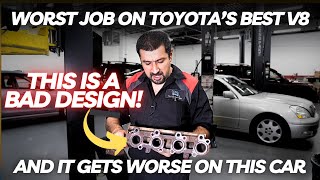
Typical fix: Replace the cracked exhaust manifold and its associated gaskets. This is a labor-intensive job. 🎬 Watch: See why this manifold repair is so difficult. Many owners opt for more durable aftermarket long-tube headers (e.g., Doug Thorley) as a permanent, more cost-effective solution than another OEM manifold that will also eventually crack. 🎬 Watch: Step-by-step guide to installing Doug Thorley headers.
Est. part cost: $250-$750 for an OEM-style manifold with integrated catalytic converter, $30-$50 for gaskets. Aftermarket headers can cost $1,200 or more. - Faulty Downstream Oxygen Sensor (Bank 1, Sensor 2) 🟡 Medium Probability Oxygen sensors are wear items and can fail with age and mileage, providing inaccurate readings to the ECU. However, this is often misdiagnosed as the primary cause when an exhaust leak is the true culprit.
How to confirm: After confirming there are absolutely no exhaust leaks, use a scan tool to graph the voltage of the Bank 1 Sensor 2. It should show a relatively steady voltage (typically above 0.5V) on a warm engine at steady RPM. If the voltage is stuck low (below 0.4V) or fluctuates wildly like the upstream sensor, it has likely failed.
Typical fix: Replace the Bank 1, Sensor 2 oxygen sensor. This is the sensor located on the passenger side, after the catalytic converter. Use of a special O2 sensor socket is highly recommended. 🎬 Watch: How to replace the downstream oxygen sensor.
Est. part cost: $60-$120 for a quality Denso or Walker sensor. - Exhaust Leak (Post-Manifold) ⚪ Low Probability Corrosion, especially in the rust belt, can cause leaks at flange gaskets between the catalytic converter and the rest of the exhaust system.
How to confirm: Visually inspect the exhaust flanges and pipes downstream from the manifold. Listen for hissing or puffing sounds. The soapy water method can also be used here.
Typical fix: Replace the leaking gasket or repair the damaged section of pipe.
Est. part cost: $10-$40 for a gasket.
Rare But Worth Checking
- Intake System Vacuum Leak: A significant vacuum leak from a cracked hose or bad intake manifold gasket can cause a true lean condition that is severe enough to be detected by the downstream O2 sensor. This would almost always be accompanied by a P0171 code. A smoke test is the best way to find such a leak.
- Low Fuel Pressure / Clogged Fuel Injector: A failing fuel pump or a clogged injector on Bank 1 can cause a true lean condition. This is less likely to be the sole cause of a P2096 without other codes, but it's possible. Checking fuel pressure at the fuel rail can help diagnose this.
Diagnosis Steps
- Scan for any other stored trouble codes. If P0171 is present, prioritize diagnosing a vacuum leak or fuel system issue.
- On a cold engine, start the vehicle and listen carefully for a ticking or tapping sound from the passenger side engine bay. If a tick is present and it fades as the engine warms, an exhaust manifold leak is highly likely.
- Perform a thorough visual inspection of the entire exhaust system on Bank 1 (passenger side) from the cylinder head to the rear O2 sensor. Look for black soot stains around flanges or visible cracks in the manifold, particularly where the tubes meet the head flange.
- To definitively find a small leak, use a shop vacuum's blower function to pressurize the exhaust system through the tailpipe. Spray a solution of soapy water on the exhaust manifold, gaskets, and flange connections. Look for bubbles forming, which will pinpoint the leak.
- If no exhaust leaks are found, inspect the wiring and connector for the Bank 1, Sensor 2 O2 sensor for any damage, corrosion, or loose connections.
- Using a graphing scan tool, observe the voltage of the Bank 1, Sensor 2. On a fully warmed engine at a steady 2000 RPM, the voltage should be relatively stable and high (above 0.5V). If it's stuck low or fluctuating rapidly like the upstream sensor, the sensor is likely faulty.
- If all else fails, check for a true lean condition by testing fuel pressure to ensure it's within specification and checking for intake vacuum leaks with a smoke machine.
Parts You'll Likely Need
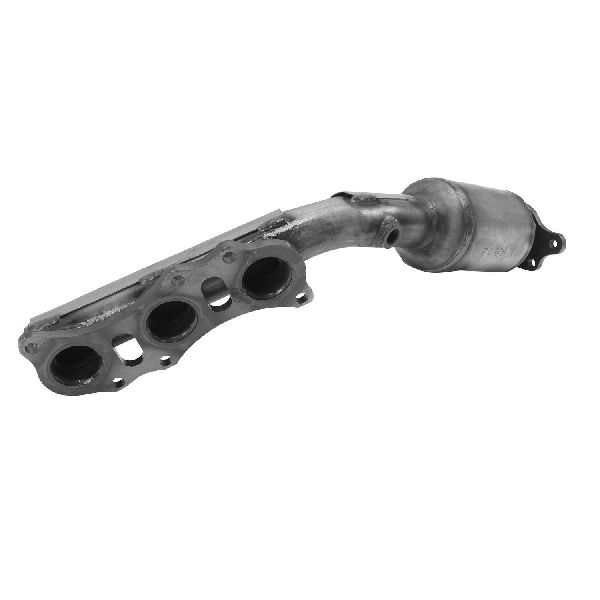
- Exhaust Manifold with Integrated Catalytic Converter (Bank 1 / Passenger Side)
(OEM #17140-50120)— This is the most common failure point on the 2UZ-FE engine leading to a P2096 code. The original manifolds are prone to cracking.
Trusted brands: Toyota (OEM), Walker, AP Exhaust
OEM price range: $650-$800
Aftermarket price range: $250-$450 - Aftermarket Long Tube Headers — A popular and more durable alternative to replacing with another crack-prone OEM manifold. Provides a permanent fix and can increase performance. Doug Thorley is a well-regarded brand for this application.
Trusted brands: Doug Thorley (e.g., THY-564Y-LS-C for 03-04, THY-563Y-LS-C for 05-09), Pacesetter, JBA
OEM price range: N/A
Aftermarket price range: $1200-$1400 - Exhaust Manifold Gasket
(OEM #17173-50021)— Must be replaced whenever the exhaust manifold is removed.
Trusted brands: Toyota (OEM), Fel-Pro, Mahle
OEM price range: $25-$40
Aftermarket price range: $10-$20 - Downstream Oxygen Sensor (Bank 1, Sensor 2)
(OEM #89465-35670)— If no exhaust leaks are found, a faulty sensor is the next most likely cause. This sensor provides the reading that triggers the code. Denso is the OEM supplier.
Trusted brands: Denso (OEM Supplier, Part #234-4261), Bosch, Walker Products
OEM price range: $130-$190
Aftermarket price range: $60-$120
Related Codes That Often Appear With This One
- P0171 — If you have both P2096 and P0171 (System Too Lean Bank 1), it strongly suggests a true engine lean condition, such as a major vacuum leak or a fuel delivery problem, rather than just an exhaust leak fooling the rear sensor.
- P0420 — A P0420 (Catalyst System Efficiency Below Threshold) can sometimes appear with P2096 if the lean condition has persisted long enough to affect or damage the catalytic converter, or if the converter itself is failing.
Technical Service Bulletins (TSBs) & Recalls
- While no specific TSB for P2096 was found, TSB EG003-06 addresses the exhaust manifold ticking noise on the 2UZ-FE engine, acknowledging the design issue that leads to the cracks causing this code.
Platform-Specific Known Issues
- The 4.7L 2UZ-FE V8 has a well-documented history of cracked exhaust manifolds, causing a ticking noise on startup that often leads to lean codes like P2096.
- The issue is so common that many owners consider it a matter of 'when, not if' the manifolds will fail.
Mechanic-Grade Diagnostic Values
- Fuel Pressure at Idle — expected: 265 - 304 kPa (38 - 44 psi). Failure: Pressure below this range indicates a potential fuel delivery issue (pump, filter, regulator). Pressure above indicates a faulty regulator.
- Downstream O2 Sensor (B1S2) Voltage, Warm Engine, Steady RPM — expected: Relatively stable voltage between 0.45V and 0.55V.. Failure: Voltage stuck low (below 0.3V) or fluctuating rapidly like an upstream sensor.
- Fuel Pressure Leak-Down — expected: Pressure should remain at or near the idle specification for at least 5 minutes after the engine is stopped.. Failure: A rapid drop in pressure indicates a leaking injector, fuel pump check valve, or fuel pressure regulator.
- Mass Airflow (MAF) Sensor Connector — expected: A stable connection with no loose pins or corrosion.. Failure: Bonkers Short-Term Fuel Trim (STFT) values that stabilize when wiggling the MAF sensor connector suggest a faulty connector or wiring, a known fragile point on some 2UZ-FE vehicles.
Scan Tool Commands That Help
- Toyota Techstream: Active Test - Control the Fuel Pump — To test the fuel pump operation independently of the engine running. This is useful for verifying pump function and performing fuel pressure tests without starting the engine.
- Toyota Techstream: Active Test - O2 Sensor Heater — Allows a technician to command the O2 sensor's internal heater on and off to verify the integrity of the heater circuit (wiring, relay, and the heater element itself) without physical testing. While not a direct cause of P2096, it's part of a complete O2 sensor diagnosis.
- Toyota Techstream: Utility - Reset Memory (Fuel Trim) — This should be performed after any repair (like fixing an exhaust leak or replacing a sensor) to clear the long-term fuel trim adaptations stored in the ECU. Failing to do so can cause the ECU to continue compensating for a problem that no longer exists, potentially masking other issues or causing rough running.
Wiring & Ground Locations
- EB — On the left front inner fender, in the engine compartment.. This is a primary engine bay ground point. While not directly tied to the O2 sensor in diagrams, a poor ground here can cause a host of unpredictable electrical issues in the engine management system.
- Engine Ground (Passenger Side) — A 10mm bolt grounding a harness wire to the rear of the passenger side cylinder head/block area, near the firewall.. This ground is part of the main engine harness. A loose or corroded connection here could potentially affect signals from sensors on that side of the engine, including the Bank 1 O2 sensors.
- Engine Ground (Driver Side) — A 10mm bolt grounding a harness wire to the rear of the driver side cylinder head/block area.. Similar to the passenger side ground, this ensures the engine block has a solid ground path. While P2096 is for Bank 1, ensuring all engine grounds are clean and tight is a crucial first step in any electrical diagnosis.
- ECM (Engine Control Module) — Located behind the right side of the dashboard.. This is the location of the computer that receives the signal from the O2 sensor. All sensor wiring terminates here, so any diagnosis of a persistent, hard-to-find issue may eventually lead to checking for good connections at the ECM itself.
Real Owner Repair Stories
- Forum user on IH8MUD.com (2006-2007 Lexus GX470 (same 2UZ-FE engine and platform)) — High long-term fuel trims, erratic short-term fuel trims, and a check engine light.
❌ Tried (didn't work) Initial diagnosis focused on fuel trims without a clear resolution.
✅ What actually fixed it The owner discovered that wiggling the Mass Airflow (MAF) sensor connector would cause the fuel trims to go 'bonkers'. Replacing the MAF sensor connector pigtail ultimately resolved the issue. The owner noted that these connectors seem to be fragile on the 2UZ-FE.
OEM Part Supersession History
17140-50120→17140-50121— Standard part revision by the manufacturer. Reasons are not publicly documented but typically involve minor improvements in materials, manufacturing process, or design.
Heads up: The new part number (17104-50121) is the correct replacement for the original. There are no known incompatibility issues when using the superseded part.89465-35670→None found
Heads up: This part number appears to be correct for 2004-2009 models. Always verify with VIN, as early 2003 models may use a different part.
Model Year Variations Within This Range
- 2005-2009: The 2UZ-FE engine was updated with Variable Valve Timing with intelligence (VVT-i). This change increased horsepower from 235 to 270 and torque from 320 to 330 ft-lbs. This update also included changes to the intake manifold (plastic instead of aluminum), a new air injection system, and different exhaust manifolds. As a result, parts like exhaust headers are specific to pre-VVT-i (03-04) and VVT-i (05-09) engines.
- 2003-2004: These models use the non-VVT-i version of the 2UZ-FE engine. They have a different ECU, wiring, and exhaust manifold design compared to the 2005+ models. Swapping a VVT-i engine into a non-VVT-i chassis is considered a massive hassle due to these differences.
Diagnostic Flowchart
Other Known Issues on This Vehicle
Issues unrelated to this code that are worth knowing about as an owner of this generation:
- Frame Rust / Corrosion 🔴 High — Extremely common, especially for vehicles in the 'rust belt'. Can lead to structural failure of control arm mounts or the frame itself, rendering the vehicle unsafe. (Ref: While other Toyota trucks of the era were recalled, the 4th Gen 4Runner was not, though it was added to a class-action lawsuit. A specific weak spot is the frame area where the A/C drain drips.)
- Secondary Air Injection (SAI) System Failure (2005+ models) 🔴 High — Very common on 2005-2009 models with the updated VVT-i engine. The air pump's foam filter disintegrates, sending debris into the switching valves, causing failure. This triggers a 'limp mode' with severely reduced power. (Ref: No recall for the 4Runner, though Tundras/Sequoias with the same system received warranty extensions. Repair is very expensive ($2000+), so most owners install an aftermarket electronic bypass kit.)
- Seized Front Brake Calipers 🟠 Medium — Common, particularly in areas with road salt. The caliper pistons can seize, causing uneven brake wear, pulling to one side during braking, and brake drag.
- Timing Belt Replacement (Interference Engine) 🟠 Medium — This is a required maintenance item, not a failure. The 2UZ-FE is an interference engine, meaning if the timing belt breaks, catastrophic engine damage will occur. It must be replaced every 90,000 miles.
Used vs. New Parts: Buying Guide for This Vehicle
When a used part is the smart pick: For this specific P2096 repair, sourcing used parts is generally not recommended for the primary culprits. However, if the cause is a less common component like a wiring harness or a specific bracket, a used part from a reputable auto recycler is a viable option.
Donor-vehicle mileage cap: roughly under 80000 miles for the part to have meaningful remaining life.
What to inspect on the donor part:
- For any used part, check for a vehicle history report on the donor car to avoid parts from flood or severely wrecked vehicles.
- If buying a wiring component, inspect carefully for any cuts, splices, or brittle insulation.
- Look for parts from vehicles in dry, southern/western climates to minimize rust and corrosion.
OEM-only on this vehicle (don't cheap out):
- Exhaust Manifold: DO NOT buy a used OEM exhaust manifold. The original design is fundamentally flawed and prone to cracking; a used one has likely already failed or will fail soon.
- Oxygen Sensor: Never buy a used oxygen sensor. They are wear items with a finite lifespan and are sensitive to contamination. The cost savings are not worth the risk of installing a faulty part.
Aftermarket brands forum-validated for this vehicle:
- Oxygen Sensors: Denso (is the OEM supplier), NTK, Bosch.
- Exhaust Headers (Permanent Fix): Doug Thorley, JBA, Pacesetter.
Brands owners have reported issues with on this vehicle:
- Avoid 'no-name' or unbranded exhaust manifolds and catalytic converters from online marketplaces. These often use inferior materials, have poor fitment, and may not meet emissions standards, causing the code to return.
Real Owner Stories
Aggregated from forums and TSBs cited above. Mileages and costs reflect what owners reported in those sources.
2003-2009 Toyota 4Runner 4.7L V8
Symptoms: Owner noted a ticking noise in the engine bay and used the repair as an opportunity to improve performance.
What fixed it: Installed Doug Thorley long-tube headers, which fixed the exhaust leak, improved torque, and eliminated the engine bay tick.
Source hint: Reddit r/4Runner
Toyota 4Runner 4.7L V8 — 84000 miles
Symptoms: Cracked right-side (Bank 1) exhaust manifold.
What fixed it: Replacement of the cracked right manifold.
Source hint: Expedition Portal
2003-2009 Toyota 4Runner 4.7L V8
Symptoms: Ticking noise from a cracked exhaust manifold; owner was warned it could eventually kill the catalytic converter.
What fixed it: Replacement of the cracked exhaust manifold.
Source hint: ih8mud.com
Related OBD-II Codes
Frequently Asked Questions
Is there a TSB for the ticking noise and lean codes on my 2003-2009 4Runner V8?
Should I replace my Bank 1 Sensor 2 oxygen sensor to fix P2096?
Why does the ticking noise from my 4.7L V8 go away after the engine warms up?
Are there more durable alternatives to the OEM Toyota exhaust manifolds?
Does the Lexus GX 470 suffer from the same P2096 issues as the 4Runner?
Which side of the engine should I inspect for P2096?
Helpful Videos
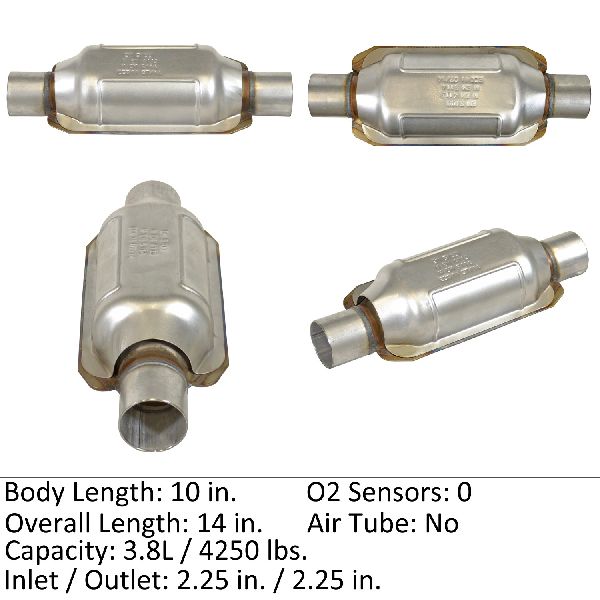
We Have This Part in Stock



The information in this article is provided for general reference and educational purposes only. Vehicle specifications, procedures, and part compatibility can vary by production date, trim level, and region. Always consult your vehicle's factory service manual and verify part numbers before purchasing or performing repairs. Safety-critical components such as airbags, seat belts, and braking systems should be installed by a qualified professional.
- Toyota 4Runner:
- 🎬 Helpful Videos
- 🛍️ Shop This Part
- What's Unique About the 2003-2009 Toyota 4Runner
- Symptoms You May Notice
- Most Likely Causes
- Rare But Worth Checking
- Diagnosis Steps
- Parts You'll Likely Need
- Related Codes That Often Appear With This One
- Technical Service Bulletins (TSBs) & Recalls
- Platform-Specific Known Issues
- Mechanic-Grade Diagnostic Values
- Scan Tool Commands That Help
- Wiring & Ground Locations
- Real Owner Repair Stories
- OEM Part Supersession History
- Model Year Variations Within This Range
- Diagnostic Flowchart
- Other Known Issues on This Vehicle
- Used vs. New Parts: Buying Guide for This Vehicle
- Real Owner Stories
- 2003-2009 Toyota 4Runner 4.7L V8
- Toyota 4Runner 4.7L V8 — 84000 miles
- 2003-2009 Toyota 4Runner 4.7L V8
- Related OBD-II Codes
- Frequently Asked Questions
- 🎟️ Get 5% Off