

P2096 on 2015-2022 Subaru Legacy: Post-Catalyst Lean Condition Causes and Fixes
On a 2015-2022 Subaru Legacy, code P2096 is most often caused by an exhaust leak before the rear oxygen sensor or a failing rear oxygen sensor itself. A thorough inspection for exhaust leaks, particularly at gaskets, is the critical first step before replacing any parts. In some cases, an ECM software update may be required.
- P2096 on your Legacy means the exhaust is too lean (too much oxygen) after the catalytic converter.
- The most likely cause is an exhaust leak. Always inspect for leaks before buying parts.
- If no leaks are found, the rear oxygen sensor is the next most probable cause.
- Ignoring this code can lead to reduced fuel efficiency and potential long-term damage to your catalytic converter.
- Check for other codes first. A P0171 code points to a different root cause, like a vacuum leak.
What's Unique About the 2015-2022 Subaru LEGACY
Subarus, including the Legacy and its platform-mate the Outback, are particularly known for developing exhaust system leaks from corrosion or failed gaskets, which is a primary trigger for the P2096 code. Common leak points include the gaskets between the manifold, catalytic converter, and mid-pipe. While the code can point to a faulty sensor, many owners and technicians find a small, hard-to-see crack or leak in the exhaust is the true culprit. The diagnostic procedure often involves a process of elimination, but due to the frequency of exhaust leaks on these vehicles, a thorough inspection of the pipes and gaskets is a critical first step.
Diagnostic Flowchart
Tap your situation to follow the diagnostic path that matches what you're seeing on this vehicle.
Generation note: This range covers the sixth generation (2015-2019) and the seventh generation (2020-2022) of the Subaru Legacy, which primarily use versions of the FB25 engine. The causes and diagnostic procedures for code P2096 are largely consistent across both generations as they share similar powertrain and emissions system designs. The 7th generation introduced a direct-injection version of the FB25.
Symptoms You May Notice
- Check Engine Light is on
- Flashing cruise control light and disabled traction control
- Reduced fuel economy
- Rough or unstable idle
- Poor acceleration or engine hesitation
- Audible exhaust leak (ticking or hissing sound)
- Immediately replacing the oxygen sensor without first checking for exhaust leaks. An exhaust leak will cause the new sensor to report the same lean condition, and the code will return.
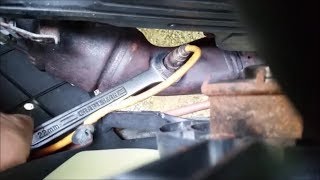
- Replacing the catalytic converter. A P2096 code is a fuel trim code, not a catalyst efficiency code 🎬 Watch: A mechanic explains the causes and fixes for code P2096. (like P0420). Replacing the converter is expensive and very unlikely to fix this specific issue.
Most Likely Causes
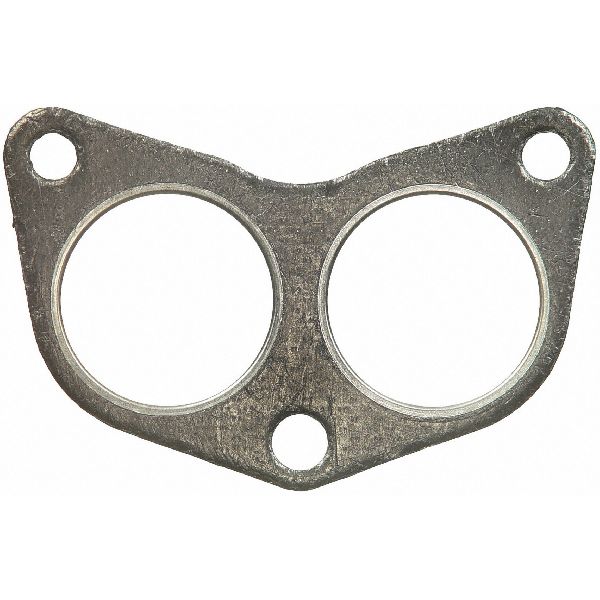
- Exhaust System Leak 🔴 High Probability Subaru exhaust systems are prone to rust and corrosion, leading to cracks or gasket failures. The donut gaskets at the flange connections are a very common failure point. 🎬 Watch: Easy step-by-step guide to replacing Subaru exhaust donut gaskets. Leaks introduce outside air, which the rear O2 sensor reads as a lean condition.
How to confirm: Visually inspect the entire exhaust system for cracks, holes, or black soot marks, especially around gaskets and welds. A professional can use a smoke machine to pressurize the exhaust and make leaks easy to spot. A DIY method involves using a shop vacuum on its blower setting to push air into the tailpipe and spraying soapy water on joints to look for bubbles.
Typical fix: Repairing the leak. This may involve replacing a flange gasket (donut gasket), or replacing the affected section of the exhaust pipe. For very small holes, high-temp exhaust putty can be a temporary fix.
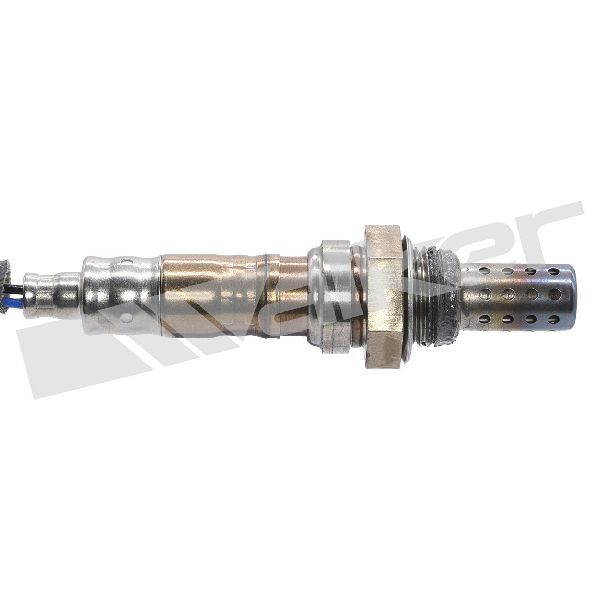
Est. part cost: $15-$300 - Faulty Rear Oxygen Sensor (Bank 1, Sensor 2) 🟡 Medium Probability Oxygen sensors are wear-and-tear items that degrade over time, leading to inaccurate readings. An exhaust leak can also foul a sensor, causing it to fail. Many forum users report that replacing the rear O2 sensor is the ultimate fix after confirming no leaks exist.
How to confirm: After confirming no exhaust leaks, a scan tool can be used to monitor the voltage of the rear O2 sensor. It should show a relatively steady voltage. If it's stuck low (below ~0.2V) or fluctuating wildly like the front sensor, it has likely failed.
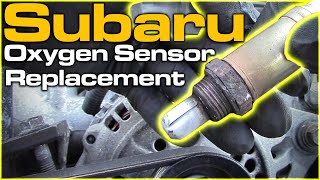
Typical fix: Replace the rear (downstream) oxygen sensor. Using an OEM or Denso-branded 🎬 See this quick walkthrough on how to replace a Subaru oxygen sensor. sensor is highly recommended.
Est. part cost: $60-$180 - Faulty Front Air/Fuel Ratio Sensor (Bank 1, Sensor 1) ⚪ Low Probability The front A/F sensor is the primary sensor for fuel control. If it provides incorrect (biased lean) readings to the ECM, it can create a lean condition that the rear sensor then correctly detects.
How to confirm: This is more difficult to diagnose without an advanced scan tool. If replacing the rear sensor and fixing leaks doesn't resolve the code, the front A/F sensor is the next likely suspect. A technician can observe its real-time data to check for proper response.
Typical fix: Replace the front (upstream) air/fuel ratio sensor. Denso is the OEM supplier.
Est. part cost: $100-$220 - Engine Vacuum Leak ⚪ Low Probability
How to confirm: Listen for a hissing or whistling sound around the engine bay at idle. A smoke test of the intake system is the most effective way to find a vacuum leak. This would likely be accompanied by other codes like P0171.
Typical fix: Replace the leaking vacuum hose or intake gasket.
Est. part cost: $5-$50
Rare But Worth Checking
- Clogged Fuel Injectors or Weak Fuel Pump: This would cause a true lean condition and likely affect performance more noticeably. Check fuel pressure to confirm. This is less common for a P2096 alone and would usually set a P0171 first.
- Dirty or Failing Mass Airflow (MAF) Sensor: A contaminated MAF sensor can under-report the amount of air entering the engine, causing the computer to inject too little fuel. Cleaning the sensor with a dedicated MAF cleaner can sometimes resolve the issue.
- Failing Catalytic Converter: While a failing converter more commonly sets a P0420 code, it can sometimes contribute to a P2096 code if it's not functioning correctly or has an internal leak.
- ECM Software Update Needed: Subaru has issued TSBs for other models and codes that involve an ECM software update to change the sensitivity and logic for setting emissions codes. It's worth checking with a dealer if an update is available for your vehicle's VIN.
Diagnosis Steps
- Scan for any other stored trouble codes. If other codes like P0171 or P0137 are present, their diagnostic path may lead to the root cause.
- Thoroughly inspect the exhaust system from the engine manifold to the rear oxygen sensor for any signs of leaks, such as cracks, rust holes, or black soot, paying close attention to flange gaskets.
- If no obvious leaks are found, perform a smoke test on the exhaust system to identify small, hidden leaks.
- If no exhaust leaks are present, use a scan tool to observe the live data for both the front A/F sensor and the rear O2 sensor. The rear sensor's voltage should be relatively stable and above ~0.5V. If it's stuck low, it's suspect.
- If the rear O2 sensor voltage is stuck low (lean) and no leaks are present, it is likely faulty and should be replaced.
- If both sensors read lean, investigate potential engine vacuum leaks or fuel delivery problems (check fuel pressure).
- Check with a Subaru dealer or use a professional scan tool to see if an ECM software update is available for your vehicle's VIN to address over-sensitive code setting logic.
- As a final step if all else fails, consider the catalytic converter or a potential ECM hardware issue, though these are very uncommon.
Parts You'll Likely Need
- Rear Oxygen Sensor (Bank 1, Sensor 2)
(OEM #22690AB010 (2015-2019 2.5L), 22690AB09A (2020-2022 2.4L Turbo), 22690AA960 (fits many 2.5L models))— This sensor is directly responsible for the reading that triggers the P2096 code. It is a common failure point after ruling out exhaust leaks.
Trusted brands: Denso (OEM Supplier), NGK/NTK
OEM price range: $120-$180
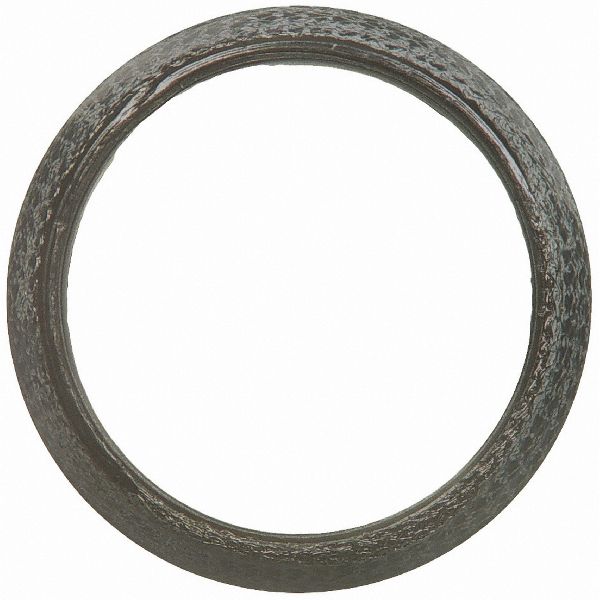
Aftermarket price range: $60-$120 - Exhaust Flange Gasket (Donut Gasket)
(OEM #44011AG000 (example, part varies by specific joint))— Exhaust flange gaskets are a very common source of leaks on Subaru vehicles that lead to a P2096 code. They crush and wear out over time.
Trusted brands: Subaru (OEM), Fel-Pro, Walker Exhaust
OEM price range: $15-$40
Aftermarket price range: $10-$25 - Front Air/Fuel Ratio Sensor (Bank 1, Sensor 1)
(OEM #22641AA68A (2015-2019 3.6L example), 22641AA79A (Turbo models))— If the front sensor is failing and causing the engine to run lean, replacing it is necessary to solve the root cause.
Trusted brands: Denso (OEM Supplier), Bosch
OEM price range: $150-$220
Aftermarket price range: $100-$160
Related Codes That Often Appear With This One
- P0171 — P0171 (System Too Lean Bank 1) indicates the front A/F sensor is also detecting a lean condition. If you see both, the problem is likely a vacuum leak or fuel delivery issue affecting the entire engine, not just an exhaust leak.
- P0420 — P0420 (Catalyst System Efficiency Below Threshold) points to a failing catalytic converter. It can sometimes appear with P2096 if the converter's failure is causing erratic oxygen readings.
- P0137 — P0137 (O2 Sensor Circuit Low Voltage Bank 1 Sensor 2) points directly to an issue with the rear oxygen sensor or its circuit, which can be the root cause of the P2096 reading.
Technical Service Bulletins (TSBs) & Recalls
- 11-174-17R: While not directly for P2096, this TSB is an example of Subaru issuing ECM reprogramming files to address other CEL codes (like P05A0) and drivability issues. It shows a precedent for software updates being a potential fix for CEL problems.
- The NHTSA TSB cited in Pass 1 (18-228-25R) appears to be a placeholder or incorrectly formatted number, as searches do not yield a valid Subaru bulletin with this designation.
Platform-Specific Known Issues
- Subaru "Christmas Tree" Dash Lights: When a check engine light is triggered on many Subarus, the ECU will also disable cruise control (causing the light to flash) and the Vehicle Dynamics Control (VDC)/traction control system as a safety precaution. This can be alarming but is standard behavior and all lights will typically clear once the P2096 fault is resolved.
- Exhaust Gasket Failures: The gaskets at the flanges connecting different parts of the exhaust (e.g., manifold to catalytic converter, converter to mid-pipe) are a well-documented weak point. They are crush-style gaskets that can fail from age and corrosion, creating the exact type of leak that causes a P2096 code.
Mechanic-Grade Diagnostic Values
- Rear Oxygen Sensor Heater Circuit Resistance — expected: 5 to 6 Ohms. Failure: A reading significantly outside this range indicates a faulty heater element in the sensor.
Wiring & Ground Locations
- Rear O2 Sensor Connector — In many FB25-equipped models, the connector is located in the engine bay, under the air intake snorkel/duct on the passenger side, making it accessible from above.. Corrosion or moisture in this connector can cause erratic sensor readings, mimicking a sensor failure. Its accessibility allows for easy inspection and testing of the sensor circuit.
- Rear O2 Sensor Harness Routing — The sensor's wiring harness typically runs up the side of the transmission from the exhaust pipe and connects to the main engine harness on top of the bellhousing.. This area is exposed to heat and vibration, making harness chafing or damage a possibility. Knowing the routing helps in visually inspecting the full length of the circuit.
- Main Engine Ground — A primary engine ground point is located on top of the engine, right behind the throttle body, often securing the main wiring loom to the intake manifold.. A poor ground connection at this point can affect all engine sensors, including the oxygen sensors, leading to incorrect readings and phantom codes. Cleaning this ground is a crucial and simple diagnostic step.
Real Owner Repair Stories
- Reddit user on r/subaru (2012 Subaru Outback (platform-mate)) — Check Engine Light with code P2096.
❌ Tried (didn't work) Replacing the front Air/Fuel Ratio sensor (Part 22641AA54A).
✅ What actually fixed it The final fix was not posted, but another technician commented that P2096 is a 'Shotgun Code' and that in their experience, it is the rear O2 sensor 80% of the time, not the front one that was replaced. This highlights a common misdiagnosis of replacing the wrong sensor. - LegacyGT.com forum user (2011 Subaru Legacy 2.5i Premium, 176,000 miles) — P2096 code appeared within a week after having rattling exhaust manifold heat shields professionally cut off.
❌ Tried (didn't work) Testing both O2 sensors with a multimeter (ohms showed they were good)., Clearing the code (it returned after 100-370 miles).
✅ What actually fixed it The final resolution was not posted, but the story strongly implies the root cause was a cracked exhaust manifold or a bad gasket that was exposed or worsened by the removal of the heat shields, leading to a small exhaust leak.
Model Year Variations Within This Range
- 2020-2022: The seventh-generation Legacy features a different infotainment system (Denso Gen 4) which has been the subject of multiple Firmware-Over-The-Air (FOTA) software update TSBs (e.g., 15-270-20R). While these specific TSBs do not address the ECM or P2096, they demonstrate that Subaru actively issues software patches for this generation, reinforcing the possibility that an ECM software update could be a valid fix for P2096 as noted in the diagnostic steps.
Helpful Videos

![How to Fix SUBARU P2096 Engine Code in 4 Minutes [2 DIY Methods / Only $9.53]](https://img.youtube.com/vi/iW2I89FXiL0/mqdefault.jpg)
We Have This Part in Stock


The information in this article is provided for general reference and educational purposes only. Vehicle specifications, procedures, and part compatibility can vary by production date, trim level, and region. Always consult your vehicle's factory service manual and verify part numbers before purchasing or performing repairs. Safety-critical components such as airbags, seat belts, and braking systems should be installed by a qualified professional.
- Subaru LEGACY:
- 🎬 Helpful Videos
- 🛍️ Shop This Part
- What's Unique About the 2015-2022 Subaru LEGACY
- Diagnostic Flowchart
- Symptoms You May Notice
- Most Likely Causes
- Rare But Worth Checking
- Diagnosis Steps
- Parts You'll Likely Need
- Related Codes That Often Appear With This One
- Technical Service Bulletins (TSBs) & Recalls
- Platform-Specific Known Issues
- Mechanic-Grade Diagnostic Values
- Wiring & Ground Locations
- Real Owner Repair Stories
- Model Year Variations Within This Range
- 🎟️ Get 5% Off