

P2096 on 2017-2024 Subaru Impreza: Causes and Fixes for Lean Fuel Trim
On a 2017-2024 Subaru Impreza, code P2096 is most often caused by an exhaust leak before the rear oxygen sensor or a failing rear oxygen sensor itself. A thorough inspection for exhaust leaks, especially at gaskets and manifold welds, is the first step before replacing any parts. In some cases, an ECM software update may be required.
- P2096 means the rear oxygen sensor is detecting a lean condition (too much air).
- The most common cause on a Subaru Impreza is an exhaust leak somewhere between the engine and the rear O2 sensor.
- Thoroughly inspect the exhaust for leaks (using a smoke test if necessary) before you consider replacing any parts.
- If no leaks are found, the next most likely culprit is a faulty rear (downstream) oxygen sensor.
- This code will cause an automatic failure on an emissions test.
What's Unique About the 2017-2024 Subaru IMPREZA
For the fifth-generation (2017+) Impreza and its platform-mate, the Crosstrek, the P2096 code is a common issue often pointing to simple mechanical failures rather than complex electronic ones. Owners and technicians frequently trace this code to small, hard-to-see cracks or gasket leaks in the exhaust system that allow outside air to be pulled in, fooling the rear O2 sensor. While a faulty sensor is possible, a thorough exhaust inspection is critical on these vehicles before replacing parts. Subaru has also issued software updates and revised diagnostic procedures for this specific code, acknowledging its prevalence.
Diagnostic Flowchart
Tap your situation to follow the diagnostic path that matches what you're seeing on this vehicle.
Symptoms You May Notice
- Check Engine Light is on
- Reduced fuel economy
- Rough or unstable idle
- Poor acceleration
- Failed emissions test
- Audible exhaust leak (hissing or ticking sound)
- Engine misfires in some cases
- Replacing the front A/F sensor when the problem is the rear O2 sensor or an exhaust leak.
- Replacing the catalytic converter. A P2096 code points to a lean condition, not necessarily a bad converter. A failing converter usually triggers a P0420 code.
- Replacing the rear O2 sensor repeatedly when an undiscovered, small exhaust leak is the actual root cause.
Most Likely Causes
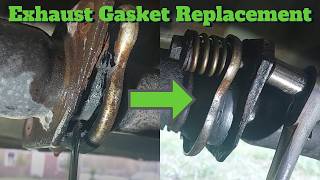
- Exhaust System Leak 🔴 High Probability Exhaust gaskets, particularly the donut gasket between the manifold and front pipe, can degrade. Pipes can also develop small cracks at welded seams, allowing unmetered air to enter the exhaust stream before the rear O2 sensor.
How to confirm: Visually inspect the entire exhaust system from the engine to the tailpipe for cracks, rust, or loose connections. A professional smoke test is the most effective way to pinpoint small leaks. You can also use a spray bottle of soapy water on a cold exhaust and look for bubbles when the engine is started.
Typical fix: Repair the leak. This may involve tightening bolts, replacing a gasket (e.g., Part No. 44011AG001), or using exhaust putty/wrap for small cracks. For larger leaks or cracked manifolds, the affected component must be replaced.
Est. part cost: $10-$150 - Faulty Rear (Downstream) Oxygen Sensor 🟡 Medium Probability The rear O2 sensor can become slow or biased with age and mileage, sending inaccurate lean readings to the ECM. Contamination from coolant or oil can also cause failure. It's a common replacement part for this code.
How to confirm: Use a scan tool to monitor the live voltage data from the rear O2 sensor. A healthy sensor should show a relatively stable voltage (typically above 0.5V). If the voltage is stuck low (e.g., below 0.2V) and doesn't respond correctly, the sensor is likely faulty.
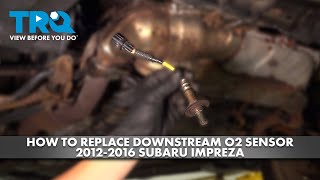
Typical fix: Replace the rear (post-catalyst) oxygen sensor. The OEM part number is typically 22690AA96A.
Est. part cost: $80-$180 - Outdated ECM Software ⚪ Low Probability Subaru has released software updates for the ECM to revise the diagnostic logic for P2096. The original programming can be overly sensitive, triggering the code when no significant mechanical fault exists.
How to confirm: A Subaru dealership or a well-equipped independent shop can check your vehicle's current software version against the latest available version from Subaru.
Typical fix: Update the ECM software. This must be done by a dealer or a shop with a subscription to Subaru's technical service information.
Est. part cost: $0-$200 - Faulty Front Air/Fuel Ratio (A/F) Sensor ⚪ Low Probability Less commonly, the front A/F sensor (upstream) can send incorrect data, causing the ECM to create a genuinely lean condition that is then detected by the rear sensor. This can happen if the front sensor has a rich bias, causing the computer to pull fuel and create a lean state.
How to confirm: Diagnosing this requires a scan tool to watch fuel trims. If short-term and long-term fuel trims are significantly negative while the front A/F sensor reads rich, but the engine is actually running lean (confirmed by other data), the front sensor may be at fault.
Typical fix: Replace the front (pre-catalyst) Air/Fuel Ratio sensor.
Est. part cost: $120-$220
Rare But Worth Checking
- Intake / Vacuum Leak: A vacuum leak allows unmetered air into the engine itself. This will typically also trigger a P0171 (System Too Lean Bank 1) code alongside the P2096. If you only have P2096, a vacuum leak is less likely but still possible.
- Low Fuel Pressure: Issues like a weak fuel pump or clogged filter can cause a lean condition. However, this usually affects the entire engine and would likely trigger other codes like P0171 first.
Diagnosis Steps
- Scan for any other trouble codes. If P0171 is present, investigate vacuum leaks and fuel delivery issues first.
- Check with a Subaru dealer for any available ECM software updates related to P2096.
- Visually inspect the entire exhaust system for obvious cracks, holes, or broken hangers from the engine back. Pay close attention to gaskets (especially the donut gasket) and welded seams.
- If a leak is suspected but not visible, perform a smoke test on the exhaust system to pinpoint the exact location of the leak.
- If no exhaust leaks are found, use a scan tool to monitor the live data from the rear (downstream) O2 sensor. The voltage should be relatively stable. If it is stuck low (e.g., below 0.2V), it indicates a lean reading.
- Compare the readings of the front A/F sensor and the rear O2 sensor. Their behavior should be different. If they mirror each other, it can point to a bad catalytic converter or an exhaust leak between the two sensors.
- If an exhaust leak has been ruled out and the sensor's behavior is abnormal, replace the rear oxygen sensor (OEM Part No. 22690AA96A).
- After any repair, clear the codes and perform a drive cycle to ensure the code does not return.
Parts You'll Likely Need
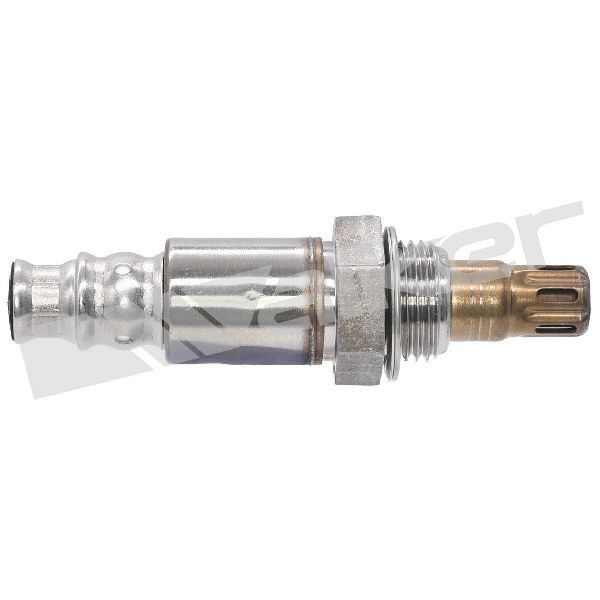
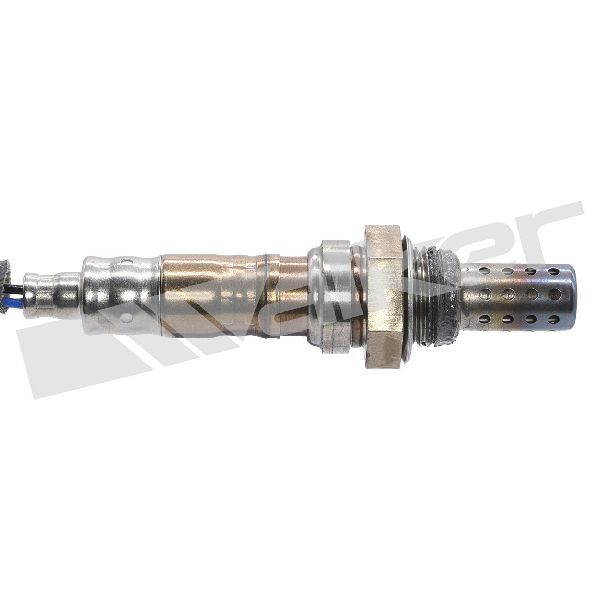
- Rear Oxygen Sensor (Post-Catalyst)
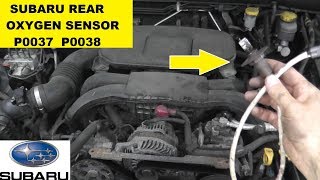
(OEM #22690AA96A)— This sensor is responsible for reporting the post-catalyst air/fuel mixture. It can fail or become inaccurate over time, directly causing the P2096 code.
Trusted brands: Denso (OEM supplier), Bosch, NGK/NTK
OEM price range: $150-$200
Aftermarket price range: $80-$130 - Exhaust Pipe Gasket
(OEM #44011AG001 (Donut Gasket))— Exhaust leaks are a very common cause of P2096. The donut gasket between the manifold and front pipe is a frequent point of failure.
Trusted brands: Fel-Pro, Walker, Bosal
OEM price range: $15-$40
Aftermarket price range: $10-$25
Related Codes That Often Appear With This One
- P0171 — If a vacuum leak or fuel delivery issue is the root cause, the front A/F sensor will detect the lean condition first and set a P0171 code. The P2096 then appears as a secondary effect.
Technical Service Bulletins (TSBs) & Recalls
- 11-183-18R: Announces revised diagnostic procedures for DTCs P2096 (Post Catalyst Fuel Trim System Too Lean Bank 1) and P2097. This TSB emphasizes a logical diagnostic flow, often starting with software checks and leak detection.
Platform-Specific Known Issues
- Subaru issued Technical Service Bulletin (TSB) #11-183-18R (which supersedes earlier versions like 18-228-25R), which provides updated diagnostic procedures for code P2096, indicating it's a recognized issue. The TSB often points technicians toward checking for software updates and performing a thorough exhaust leak check before replacing sensors.
Mechanic-Grade Diagnostic Values
- Rear O2 Sensor (B1S2) Voltage at Idle/Cruise — expected: A relatively stable voltage, typically between 0.5V and 0.8V after the catalytic converter is warmed up.. Failure: Voltage is stuck low, consistently reading below 0.2V, which indicates the lean condition of P2096.
- Rear O2 Sensor Heater Circuit Resistance — expected: 5 to 6 ohms when tested across the two heater circuit pins on the sensor connector.. Failure: A reading of infinite resistance (open circuit) or zero resistance (short circuit) indicates a failed heater, which can affect sensor performance.
- Long Term Fuel Trim (LTFT) — expected: Within +/- 10% at idle and cruise.. Failure: Consistently above +10% suggests the ECM is compensating for a vacuum leak or an exhaust leak upstream of the front A/F sensor.
Hidden / Shadow Codes Worth Checking
- P2096P: This is a 'Pending' code. It means the fault condition has been detected by the ECM on the current or last drive cycle, but has not yet met the full criteria (e.g., occurring on two consecutive trips) to illuminate the Check Engine Light and become an active code. (see via Most standard OBD-II scan tools can read pending codes in addition to active codes.)
Scan Tool Commands That Help
- Subaru Select Monitor (SSM) or equivalent professional scan tool: Clear Fuel Trims / Reset Fuel Learning — After replacing a component like an O2 sensor, A/F sensor, or fixing a significant leak, it is critical to clear the learned fuel trims. This forces the ECM to relearn the base fuel map with the new, correct inputs, preventing the old, skewed trim values from causing the code to return immediately.
Wiring & Ground Locations
- Rear O2 Sensor Harness Connector — The rear sensor's harness runs up the side of the transmission and plugs into the main vehicle harness on top of the bell housing.. This location makes the connector and wiring susceptible to damage or being disconnected/stressed during clutch, transmission, or engine removal/service. A poor connection here can mimic a failed sensor.
- Rear O2 Sensor Wiring (Chassis Side) — The wires on the vehicle harness side of the connector are typically Black, Yellow/Red, White/Blue, and Grey/Blue.. If the connector is damaged and a repair is attempted, knowing the wire colors is crucial. The two heater wires (often connecting to two white wires on the sensor) are not polarized, but the signal and ground wires are critical for correct operation.
Real Owner Repair Stories
- Ultimate Subaru Message Board user 'brus brother' (Subaru (model not specified, but common issue)) — Check Engine Light with P0420, then P2096.
❌ Tried (didn't work) Attempting to fix a P0420 (Catalyst Efficiency) code by installing a single anti-fouler (O2 sensor spacer) on the rear O2 sensor.
✅ What actually fixed it The user reported that installing the anti-fouler immediately caused the P2096 code to appear. This demonstrates that pulling the rear O2 sensor too far out of the exhaust stream will make it read excess oxygen (lean), directly triggering this code. The 'fix' for the P2096 was to address the sensor's position relative to the exhaust stream. - subaruimpreza.org forum user (2017 Subaru Impreza) — Check Engine Light with P2096.
❌ Tried (didn't work) Replacing the rear O2 sensor.
✅ What actually fixed it After the new sensor did not resolve the issue, a smoke test was performed. The smoke test revealed a crack in the exhaust manifold. Replacing the cracked exhaust manifold was the final repair that resolved the P2096 code.
OEM Part Supersession History
22690AA960→22690AA96A— Standard part revision/update by the manufacturer.44011AG000→44011AG001— Standard part revision/update for the exhaust donut gasket.
Heads up: This is a single-use crush gasket. The part notes explicitly state it 'cannot be reused/reinstalled'. Reusing the old gasket is a common cause of persistent exhaust leaks.
Model Year Variations Within This Range
- 2017-2022 (Potentially): While not specific to the Impreza, Subaru issued TSB 09-106-23 for other models (Ascent, Outback XT) for exhaust manifold weld cracks, with a design change implemented for 2023 models. This suggests that earlier models in the 2017-2024 range may be more susceptible to the cracked manifold issue that is a known cause of P2096, as the manufacturing process was later revised.
Helpful Videos
![How to Fix SUBARU P2096 Engine Code in 4 Minutes [2 DIY Methods / Only $9.53]](https://img.youtube.com/vi/iW2I89FXiL0/mqdefault.jpg)
We Have This Part in Stock

The information in this article is provided for general reference and educational purposes only. Vehicle specifications, procedures, and part compatibility can vary by production date, trim level, and region. Always consult your vehicle's factory service manual and verify part numbers before purchasing or performing repairs. Safety-critical components such as airbags, seat belts, and braking systems should be installed by a qualified professional.
- Subaru IMPREZA:
- 🎬 Helpful Videos
- 🛍️ Shop This Part
- What's Unique About the 2017-2024 Subaru IMPREZA
- Diagnostic Flowchart
- Symptoms You May Notice
- Most Likely Causes
- Rare But Worth Checking
- Diagnosis Steps
- Parts You'll Likely Need
- Related Codes That Often Appear With This One
- Technical Service Bulletins (TSBs) & Recalls
- Platform-Specific Known Issues
- Mechanic-Grade Diagnostic Values
- Hidden / Shadow Codes Worth Checking
- Scan Tool Commands That Help
- Wiring & Ground Locations
- Real Owner Repair Stories
- OEM Part Supersession History
- Model Year Variations Within This Range
- 🎟️ Get 5% Off