

P2096 on 2014 Ram 2500: Causes of Post Catalyst Lean Condition (Bank 1) and Fixes
On a 2014 Ram 2500 with a HEMI engine, code P2096 almost always points to an exhaust leak before the downstream O2 sensor, typically from broken exhaust manifold bolts. This is a very common failure known as the "Hemi tick". It can also be caused by a failing downstream oxygen sensor or require a PCM software update. Inspect for leaks before replacing parts.
- P2096 on a 2014 Ram 2500 means the downstream O2 sensor on the driver's side is detecting a lean condition.
- The most probable cause is an exhaust leak from a cracked manifold or broken manifold bolts, a very common issue on HEMI engines.
- Always inspect for exhaust leaks before spending money on a new oxygen sensor.
- A less common cause is a faulty downstream O2 sensor or the need for a PCM software update from a dealer.
- Driving with this code can eventually damage the catalytic converter, so it's best to address it promptly.
What's Unique About the 2014-2014 Ram 2500
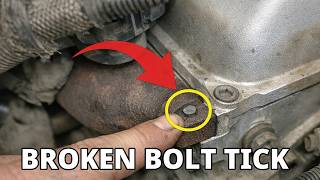
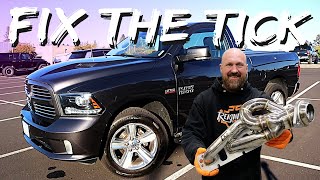
The 2014 Ram 2500, particularly models with the 5.7L or 6.4L HEMI engines, is well-known for a specific issue that directly causes this code: exhaust manifold leaks. The factory bolts that hold the exhaust manifold to the cylinder head are prone to breaking from repeated heat cycles, especially the rear-most bolts. This allows the manifold to warp, creating a leak that pulls in fresh air during the exhaust pulse, which fools the downstream oxygen sensor into reporting a false lean condition. This issue is so common it's often referred to as the "Hemi tick" due to the audible ticking noise it creates, which is most prominent on a cold start and often quiets down as the metal expands with heat.
🎬 Watch: Hear how the Hemi tick changes as it warms up.Diagnostic Flowchart
Tap your situation to follow the diagnostic path that matches what you're seeing on this vehicle.
Symptoms You May Notice
- Check Engine Light is on
- Audible ticking or hissing noise from the engine bay (passenger side), especially when cold, that may disappear as the engine warms up.
- Reduced fuel economy
- Possible rough idle
- Exhaust fumes smell inside the cab
- Replacing the oxygen sensor when the root cause is an exhaust leak. The new sensor will read the same false lean condition, and the code will return.
- Replacing the upstream (pre-catalyst) oxygen sensor instead of the downstream (post-catalyst) sensor that is responsible for this code.
- Replacing the catalytic converter when the issue is a simple exhaust leak or a faulty sensor.
- Assuming a cheap aftermarket O2 sensor will work. Many forum users report issues with non-OEM sensors causing codes to return.
Most Likely Causes
- Exhaust Leak (Cracked Manifold or Broken Bolts) 🔴 High Probability HEMI engines in this platform are notorious for exhaust manifold bolts breaking due to heat cycles, especially the two bolts nearest the firewall on the passenger side (Bank 1). This causes a gasket leak.
How to confirm: Visually inspect the Bank 1 (passenger side) exhaust manifold for broken bolt heads, which are often the rearmost ones. Listen for a distinct ticking noise on a cold start that may quiet down as the engine warms up. A smoke test is a definitive way to pinpoint the leak.
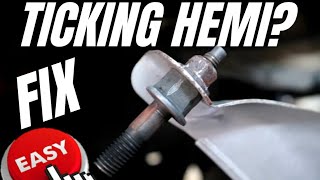
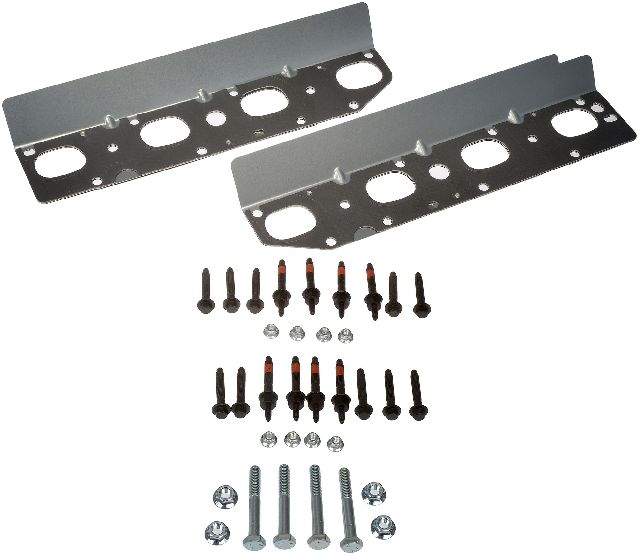
Typical fix: Replace the broken exhaust manifold bolts and the manifold gasket. If the manifold itself is cracked or warped (which is common), it must also be replaced. Many owners opt for aftermarket headers or heavy-duty manifolds like those from Dorman to prevent recurrence. 🎬 See how to fix the manifold bolt issue permanently.
Est. part cost: $40-$700 - Faulty Downstream Oxygen Sensor (Bank 1, Sensor 2) 🟡 Medium Probability
How to confirm: Use a scan tool to monitor the voltage of the Bank 1 Sensor 2. It should fluctuate slowly. If it's stuck at a low voltage (under 0.2V), it indicates a lean condition or a bad sensor. Swapping it with the Bank 2 sensor and seeing if the code changes to P2098 (the same code for Bank 2) is a good diagnostic step.
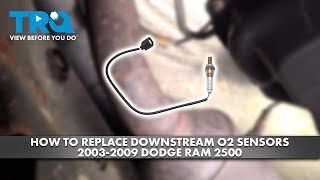
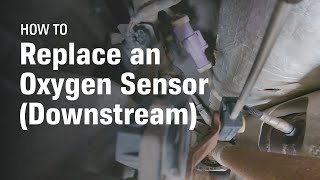
Typical fix: Replace the downstream oxygen sensor on the passenger side. 🎬 Watch this walkthrough on replacing a downstream oxygen sensor. Use of OEM (Mopar) or high-quality OE-style sensors (like NTK or Denso) is highly recommended, as some Ram trucks are sensitive to aftermarket sensor brands.
Est. part cost: $50-$150 - PCM Software Update Required ⚪ Low Probability TSBs were issued because the original PCM software was overly sensitive in setting this code, particularly on the 6.4L engine.
How to confirm: A Ram dealership can check your vehicle's VIN to see if TSB #18-096-16 or #18-042-15 apply and have not been performed. These TSBs specifically mention P2096 for DD/DP vehicles (Ram 2500/3500/Chassis Cab).
Typical fix: The dealer reprograms the Powertrain Control Module (PCM) with updated software that adjusts the sensitivity for setting this code. This procedure requires a proprietary wiTECH scan tool.
Est. part cost: $0-$200
Rare But Worth Checking
- Fuel Delivery Issue: A clogged fuel injector on Bank 1 or low system-wide fuel pressure can cause a true lean condition. This would usually set an upstream lean code (P0171) as well, but it's worth checking fuel pressure if other causes are ruled out.
- Failing Catalytic Converter: A damaged, clogged, or inefficient catalytic converter can cause incorrect oxygen readings downstream. This is less common and usually accompanied by a P0420 (Catalyst Efficiency) code. A glowing red hot converter after running is a sign of a clog.
- Wiring or Connector Issue: Damage to the O2 sensor's wiring harness (chafing, melting on exhaust) or a corroded connector can cause a bad signal, mimicking a sensor failure.
Diagnosis Steps
- Check for applicable TSBs. Contact a Ram dealer with your VIN to see if software updates from TSB #18-096-16 or #18-042-15 are needed, especially if you have the 6.4L engine.
- Perform a thorough visual and auditory inspection of the exhaust system on Bank 1 (passenger side). Listen for a cold-start tick and look for broken exhaust manifold bolts (especially near the firewall) or black soot marks indicating a leak.
- If a leak is suspected, confirm its location using a smoke machine or by carefully spraying soapy water on the cold exhaust manifold and looking for bubbles.
- If no leaks are found, use a scan tool to observe the live data from the Bank 1, Sensor 2 (downstream) oxygen sensor. Compare its reading to the sensor on Bank 2. A sensor stuck lean (low voltage) is suspect.
- Inspect the oxygen sensor's wiring and connector for damage, corrosion, or being melted against the exhaust.
- If no exhaust leaks or wiring issues are found, the oxygen sensor itself is the likely culprit. Replace it with a quality OEM or OE-equivalent part.
- If the code persists, investigate the fuel system by checking fuel pressure and injector function.
Parts You'll Likely Need
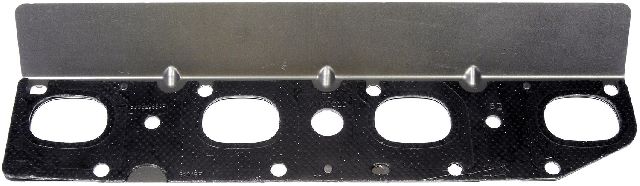
- Exhaust Manifold Bolt & Gasket Kit — This is the most frequent cause of the code on HEMI engines due to bolt failure causing a leak.
Trusted brands: Mopar, Dorman, Fel-Pro
OEM price range: $70-$120
Aftermarket price range: $40-$80 - Downstream Oxygen Sensor (Bank 1, Sensor 2)
(OEM #Mopar 68090640AB (replaces 68090640AA), 5149180AA)— If no exhaust leaks are present, the sensor itself is the next most likely component to have failed.
Trusted brands: Mopar, NTK, Denso, Bosch
OEM price range: $80-$150
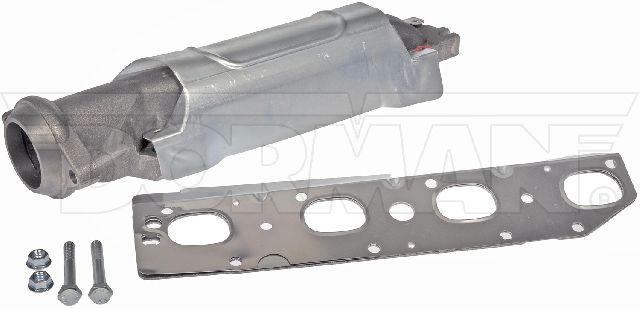
Aftermarket price range: $50-$100 - Exhaust Manifold — Often, when the manifold bolts break, the manifold itself warps or cracks from the uneven pressure and heat, requiring replacement.
Trusted brands: Mopar, Dorman (e.g., P/N 674-985 is a kit for some applications)
OEM price range: $300-$600
Aftermarket price range: $150-$400
Related Codes That Often Appear With This One
- P2098 — This is the same lean code but for Bank 2 (driver's side). If both appear together, it strongly suggests a systemic problem like low fuel pressure, a major vacuum leak, or exhaust leaks on both manifolds.
- P0171 — This code means 'System Too Lean (Bank 1)' as detected by the *upstream* sensor. If you have both P0171 and P2096, it points to a true lean condition (like a vacuum leak or fuel delivery problem) rather than just an exhaust leak after the catalyst.
- P0300 — A random misfire code. TSB #18-096-16 links P0300 with P2096, suggesting the PCM software update addresses both. An exhaust leak can sometimes be misconstrued by the PCM as a misfire.
Technical Service Bulletins (TSBs) & Recalls
- Bulletin #18-096-16: Involves a PCM software update for 2014 Ram trucks (DD/DP models) with the 6.4L engine to address several diagnostic trouble codes, including P2096. It also addresses other issues like cold idle misfires (P0300).
- Bulletin #18-042-15: An earlier version of the software update bulletin, also for 2014 Ram trucks, that addresses P2096 among other codes for DD/DP vehicles.
Platform-Specific Known Issues
- The 5.7L and 6.4L HEMI engines are widely known for breaking their exhaust manifold bolts, which causes a leak and triggers the P2096 code. This is the first thing to check on these trucks.
- A real-world repair story from a Ram forum user with a 2014 5.7L involved fighting P2098 (Bank 2, but same principle) and P0153. The owner had the passenger side manifold studs repaired and the PCM updated by the dealer, but the code returned, highlighting how persistent the issue can be if not diagnosed perfectly.
Mechanic-Grade Diagnostic Values
- Downstream O2 Sensor Voltage (Bank 1, Sensor 2) — expected: Steady voltage between 0.45V and 0.7V on a healthy, warm engine.. Failure: Voltage is stuck low, near 0.1V, indicating a persistent lean reading.
- Upstream O2 Sensor Voltage (for comparison) — expected: Should cycle rapidly between approximately 0.1V and 0.9V.. Failure: A flat line or slow response can indicate a problem with the upstream sensor, though this typically sets other codes.
- O2 Sensor Heater Element Resistance — expected: Approximately 5 to 6 ohms, but can vary by manufacturer.. Failure: No reading (open circuit) or a reading far outside the typical range indicates a failed heater element, which can affect sensor performance.
- System Fuel Pressure — expected: Typically 30-60 psi for many gasoline engines, but vehicle-specific specs should be confirmed.. Failure: Pressure below the specified range indicates a fuel delivery problem (pump, filter) that could cause a true lean condition.
Scan Tool Commands That Help
- wiTECH (or equivalent advanced scan tool): O2 Sensor Operation Test — To actively monitor the voltage and response time of the O2 sensors to determine if they are functioning correctly or are lazy/biased. This is a step in the factory diagnostic procedure.
- wiTECH: PCM Reprogramming/Flash — Used by a dealer to apply software updates as specified in TSBs #18-096-16 and #18-042-15, which can resolve false P2096 codes caused by overly sensitive diagnostic parameters.
Wiring & Ground Locations
- Bank 1 Downstream O2 Sensor Connector — On the passenger side of the vehicle, following the wiring up from the O2 sensor located after the catalytic converter. The harness is often clipped to the frame or body.. This connector is a common point for corrosion or damage. Verifying voltage and ground at this connector is a key step to differentiate a bad sensor from a wiring issue.
- O2 Sensor Connector Pinout (General 4-wire) — At the sensor's electrical connector.. For testing, the two same-colored wires (often white) are typically for the heater circuit. The other two (often black and grey) are the signal and ground. Testing for voltage and resistance across these pins is essential for diagnosis.
- Engine/Chassis Grounds — Multiple points exist, including near the battery negative terminal, on the alternator, and from the engine block to the frame. One user noted a ground point near the windshield wiper motor.. A poor ground connection for the PCM or the O2 sensor circuit can introduce electrical noise and cause incorrect sensor readings, potentially leading to a false P2096 code.
Real Owner Repair Stories
- Reddit user in r/AskMechanics (2014 Mazda 3 (demonstrates the cause is not unique to Ram)) — Persistent P2096 code.
❌ Tried (didn't work) Initial diagnosis was unclear.
✅ What actually fixed it The owner inspected the exhaust and found physical leaks near the start of the exhaust line and also near the catalytic converter. A muffler shop welding the pipes and fixing the leaks was the confirmed repair.
"I Checked Everything" — The Actual Cause
- While not a specific story, a possible scenario is a very small crack in the exhaust manifold that only opens and leaks air when cold. As the engine warms up and the metal expands, the crack seals itself. A smoke test performed on a warm engine might come back clean, leading a mechanic to miss the actual cause. This aligns with the common symptom of a 'cold start tick' that disappears when warm.
OEM Part Supersession History
68090640AA→68090640AB— Standard part revision by the manufacturer for improvements or supplier changes.
Heads up: The part is listed for both upstream and downstream positions on different engine/transmission combinations, so verifying the exact application with a VIN is critical.5149180AA→Not specified, but this is another valid part number for the Bank 1 Sensor 2 position on some 2014 Ram 5.7L configurations.— N/A
Heads up: A forum user noted that for a 2014 5.7L Hemi, the four O2 sensors all have different part numbers, highlighting the importance of ordering the correct part for the specific location (Bank 1 vs Bank 2, Upstream vs Downstream).
Helpful Videos
We Have This Part in Stock



The information in this article is provided for general reference and educational purposes only. Vehicle specifications, procedures, and part compatibility can vary by production date, trim level, and region. Always consult your vehicle's factory service manual and verify part numbers before purchasing or performing repairs. Safety-critical components such as airbags, seat belts, and braking systems should be installed by a qualified professional.
- Ram 2500:
- 🎬 Helpful Videos
- 🛍️ Shop This Part
- What's Unique About the 2014-2014 Ram 2500
- Diagnostic Flowchart
- Symptoms You May Notice
- Most Likely Causes
- Rare But Worth Checking
- Diagnosis Steps
- Parts You'll Likely Need
- Related Codes That Often Appear With This One
- Technical Service Bulletins (TSBs) & Recalls
- Platform-Specific Known Issues
- Mechanic-Grade Diagnostic Values
- Scan Tool Commands That Help
- Wiring & Ground Locations
- Real Owner Repair Stories
- "I Checked Everything" — The Actual Cause
- OEM Part Supersession History
- 🎟️ Get 5% Off