

P2096 on 2016-2019 Mazda CX-5: Causes for Post-Catalyst Lean Code and Fixes
On a 2016-2019 Mazda CX-5, code P2096 is frequently caused by a software issue requiring a dealer PCM update, as outlined in multiple Technical Service Bulletins (TSBs). Before replacing any parts, check for exhaust leaks between the O2 sensors, which is the next most common cause. For 2018+ models with cylinder deactivation, a cracked cylinder head is also a known, though more serious, potential cause of an exhaust leak.
- For a 2016-2019 Mazda CX-5, your first step for a P2096 code should always be to check for an applicable software update TSB.
- Do not replace the oxygen sensor before ruling out software issues and exhaust leaks, as these are more common causes on this vehicle.
- Exhaust leaks are the most likely physical cause. Listen for a ticking noise on a cold start and inspect the exhaust manifold area carefully.
- The problem is well-documented by Mazda, especially for 2016, 2018, and 2019 models, often requiring a dealer visit for a software fix.
What's Unique About the 2016-2019 Mazda CX-5

The 2016-2019 Mazda CX-5 is highly susceptible to this code due to overly sensitive PCM software logic. Mazda has released numerous Technical Service Bulletins (TSBs) instructing dealers to reprogram the PCM with an updated calibration that widens the acceptable threshold for the downstream O2 sensor readings. This is especially true for 2016 models, 2018 models with Mitsubishi-made PCMs, and 2018+ models with the cylinder deactivation engine, making a TSB check the most critical first step in diagnosis.
🎬 Watch: A detailed breakdown of the P2096 code on Mazda models.Diagnostic Flowchart

Tap your situation to follow the diagnostic path that matches what you're seeing on this vehicle.
Generation note: This range covers two generations of the CX-5: the first generation (KE, 2016 model year) and the second generation (KF, 2017-2019 model years). Both generations are affected, with specific TSBs applying to different years and engine configurations within this range. The KF generation (2018+) introduced cylinder deactivation, which has been linked to a higher incidence of cracked cylinder heads, a potential cause of this code.
Symptoms You May Notice
- Check Engine Light is on
- Reduced fuel economy
- Slightly rough idle
- Poor acceleration
- Smell of gasoline or burning oil in the cabin, especially with the heater or defroster on
- Replacing the downstream oxygen sensor without first checking for applicable TSBs for a PCM update or thoroughly inspecting for exhaust leaks. Many owners and even shops replace the sensor as a first step, only to have the code return because the root cause was software or a leak.
Most Likely Causes

- Outdated PCM Software 🔴 High Probability Mazda has issued multiple TSBs (e.g., #SA271, #01-011-19-3586a, #01-012-20-3738) confirming that improper PCM control logic with thresholds set too tightly can falsely trigger a P2096 code. This is the most common cause when no other codes are present. The software update widens the voltage threshold that the PCM uses to determine a lean condition from the downstream O2 sensor.
How to confirm: A Mazda dealer or a qualified shop with access to Mazda's service information can check if your vehicle's VIN falls under an applicable TSB. For example, TSB #01-006/16 applies to 2016 CX-5s with VINs lower than JM3KE**759448.
Typical fix: Reprogramming the Powertrain Control Module (PCM) with the latest software calibration. This must be done by a dealer or a shop with a J2534 pass-thru device and Mazda's software (IDS or MDARS). The repair is covered under the Federal Emissions Warranty (long term).
Est. part cost: $0 - Exhaust Leak 🟡 Medium Probability Leaks from cracked exhaust manifolds, failed gaskets, or even cracks in the cylinder head itself are a common cause. These leaks allow outside air into the exhaust stream between the upstream and downstream O2 sensors, which the downstream sensor reads as a lean condition. The 2018+ models with cylinder deactivation are known to develop cracks in the cylinder head near the exhaust manifold, which can manifest as an oil leak and a burning smell initially.
How to confirm: Perform a visual inspection for soot marks or cracks on the exhaust manifold and pipes. Listen for a ticking or puffing noise that is loudest on a cold start. For cylinder head cracks, look for oil leaking down the side of the engine block below the exhaust manifold. A smoke test is the most definitive way to find small leaks.
Typical fix: Replace the failed exhaust manifold gasket or repair/replace the cracked exhaust component. If the cylinder head is cracked, it requires replacement, which is a very expensive repair.
Est. part cost: $20-$80 for gaskets, $4000+ for cylinder head replacement. - Failing Downstream Oxygen Sensor ⚪ Low Probability While possible, this is less likely than a software or exhaust leak issue on this platform. Many owners replace the sensor only to have the code return. The sensor can become slow or biased over time, sending inaccurate lean readings to the PCM.
How to confirm: Use an OBD-II scanner to monitor the voltage of the downstream O2 sensor (O2S12 or B1S2). It should show a relatively stable voltage, typically between 0.5V and 0.8V. If the voltage is stuck low (below 0.2V) or fluctuates rapidly like the upstream sensor, it may be faulty.
Typical fix: Replace the downstream (post-catalyst) oxygen sensor. One owner reported a dealer charging $500-$600 for this repair.
Est. part cost: $50-$250
Rare But Worth Checking
- Vacuum Leak: A significant vacuum leak in the engine's intake system (e.g., from a poorly seated air filter box) can cause a genuinely lean condition that the downstream O2 sensor detects. This will usually be accompanied by other codes like P0171 (System Too Lean Bank 1).
- Fuel Delivery Issue: A weak fuel pump, clogged fuel filter, or dirty fuel injectors can cause a lean condition. This is less common and would likely affect overall engine performance noticeably and may be accompanied by other fuel-related codes.
- Cracked Cylinder Head: On 2018+ models with cylinder deactivation, a known defect can cause the cylinder head to crack, creating an exhaust leak. While this falls under 'Exhaust Leak', its severity, cost ($4,000-$7,000 repair), and prevalence on specific models warrant a separate mention. Symptoms often include a burning oil smell and visible oil leaks before the P2096 code appears.
Diagnosis Steps
- Check for Technical Service Bulletins (TSBs): This is the most critical first step. Contact a Mazda dealer with your VIN or search online for TSBs like #SA271, #01-006/16, and #01-011-19-3586a related to P2096 for your specific year and model.
- Perform PCM Update if Applicable: If a TSB for a software update applies to your vehicle, have this performed by a dealer or qualified shop. This resolves the majority of P2096 issues on these models when it's the only code present.
- Inspect for Exhaust Leaks: Thoroughly inspect the exhaust manifold, gaskets, and pipes between the engine and the downstream O2 sensor. Look for cracks, soot trails, or missing bolts. Listen for ticking noises on a cold start.
- Inspect for Cylinder Head Crack (2018+ CD models): Specifically look for signs of an oil leak on the exhaust side of the engine block. A burning oil smell is a key symptom. This is a known issue and a potential source of the exhaust leak.
- Perform a Smoke Test: If a visual inspection is inconclusive, introduce smoke into the exhaust system (when cold) to pinpoint any hard-to-see leaks. This is the most effective method for finding small cracks or gasket failures.
- Analyze O2 Sensor Data: Use a capable OBD-II scanner to view live data. The downstream O2 sensor (B1S2) voltage should be relatively steady above 0.5V. If it's stuck low (e.g., <0.2V) or fluctuating wildly like the upstream sensor, it may be faulty.
- Check for Vacuum Leaks: Inspect all vacuum hoses and the intake system, including the air filter housing, for cracks or leaks that could introduce unmetered air.
- Inspect Fuel System: If all else fails, check fuel pressure and consider having the fuel injectors tested for proper flow. This is an unlikely cause if P2096 is the only code present.
Parts You'll Likely Need
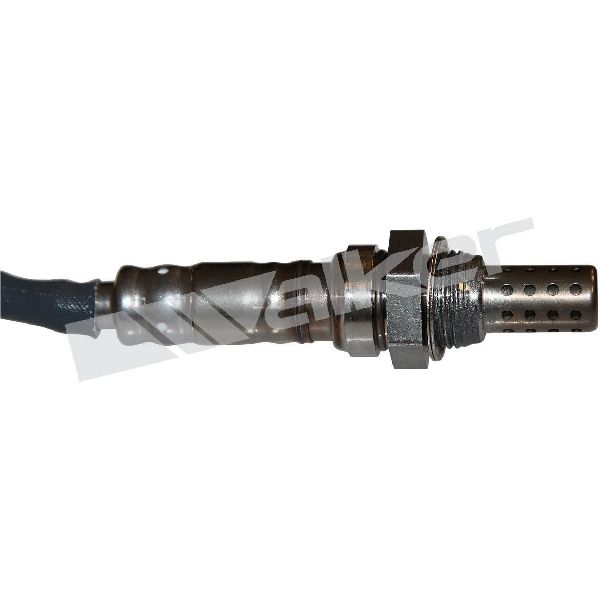
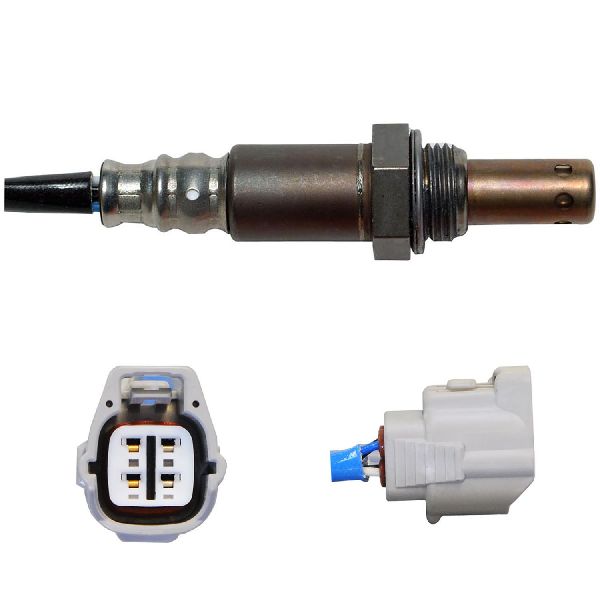
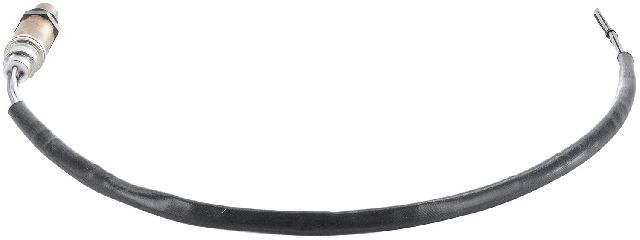
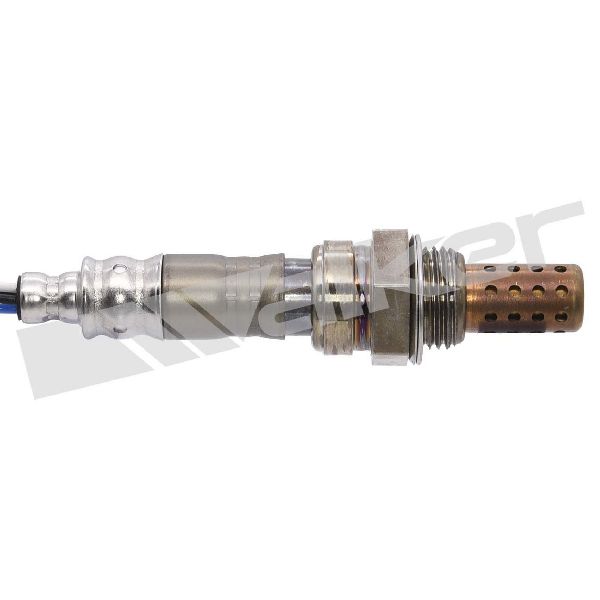
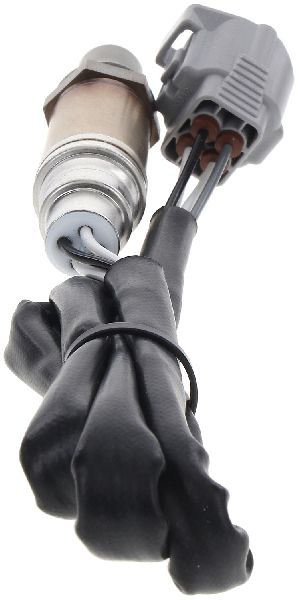
- Downstream Oxygen Sensor
(OEM #PYFB-18-86Z)— This is the part to replace if the sensor itself has failed after ruling out software issues and exhaust leaks.
Trusted brands: Denso, NGK, Bosch
OEM price range: $200-$370
Aftermarket price range: $50-$150 - Exhaust Manifold Gasket
(OEM #PEB4-13-460 (supersedes PE17-13-460, PE69-13-460))— This gasket is a common failure point that causes exhaust leaks, leading to a false P2096 code.
Trusted brands: Fel-Pro, Mahle, Beck/Arnley
OEM price range: $25-$50
Aftermarket price range: $15-$30
Related Codes That Often Appear With This One
- P2097 — TSB #01-012-20-3738 notes that P2097 (Post Catalyst Fuel Trim System Too Rich) can appear along with P2096 due to the same PCM software issue where codes cannot be cleared.
- P0524 — TSB #01-012-20-3738 also mentions P0524 (Engine Oil Pressure Too Low) can be stored with P2096 and may not clear until the PCM is updated.
- P250F — On some 2.5T models, a TSB for excessive oil consumption due to faulty valve stem seals can cause DTC P250F (Engine oil level low). While a different engine, it highlights Mazda's issues with oil-related codes and engine components in this era.
- P0421 — This code for "Warm Up Catalyst Efficiency Below Threshold" can appear with P2096, often pointing towards an exhaust leak or a failing catalytic converter.
Technical Service Bulletins (TSBs) & Recalls
- 01-012-20-3738: Check engine light on with DTCs P2096:00, P2097:00 and/or P0524:00 that cannot be cleared.
- SA271 / 01-006/16: Instructs to update the PCM calibration for 2016 models with P2096 produced before Dec 24, 2015.
- 01-011-19-3586a: Check engine light on with DTC P2096:00 on vehicles with PCMs manufactured by MITSUBISHI due to improper control logic.
- SA-009-19: Instructs to contact Hotline for 2018 CX-5 (cylinder deactivation) with DTC P2096.
- 01-015/16: Though for older Mazda3/Mazda5, confirms the pattern of fixing P2096 with a PCM software update due to improper control logic.
Platform-Specific Known Issues
- TSB #01-006/16 (and SA271): Specifically calls for a PCM calibration update for 2016 CX-5 models with P2096, applicable to VINs lower than JM3KE**759448 (produced before Dec 24, 2015).
- TSB #01-011-19-3586a: Affects 2018-2019 CX-5s with Mitsubishi-made PCMs, noting that improper PCM control logic causes a false 'Air fuel too lean' code.
- TSB #SA-009-19: Instructs dealers to contact the Mazda Hotline for 2018 CX-5 models with cylinder deactivation that show a P2096, indicating a known, complex issue that may be related to the cylinder head problem.
- TSB #01-012-20-3738: Notes that on some 2018-2019 CX-5s, P2096 may appear with other codes (P2097, P0524) and cannot be cleared until the PCM software is updated.
- Known Cylinder Head Cracks: 2018+ models with the 2.5L engine with cylinder deactivation have a known issue where the cylinder head can crack, causing an oil leak and an exhaust leak that can trigger P2096. This is a major repair not covered by a recall as of late 2024.
Mechanic-Grade Diagnostic Values
- High-Pressure Fuel System (Direct Injection) — expected: Up to 200 bar (2900 PSI). Failure: Significantly lower pressure under load may indicate a failing high-pressure fuel pump, though this would likely be accompanied by other performance issues.
- Downstream O2 Sensor (HO2S) Voltage at Idle — expected: Relatively stable voltage between 0.5V and 0.8V.. Failure: Voltage stuck consistently below 0.2V indicates a lean condition (real or false). Rapid fluctuation similar to the upstream sensor can indicate a failing catalytic converter.
- PCM Software Logic Threshold (Pre-Update) — expected: The PCM would log P2096 if the downstream O2 sensor voltage dropped below a tight threshold (e.g., a hypothetical 300 mV) for a specific duration.. Failure: This is not a failure but a design characteristic. The fix is a software update that lowers this threshold (e.g., to a hypothetical 150-200 mV), making it less sensitive.
Scan Tool Commands That Help
- Mazda IDS (Integrated Diagnostic System) or J2534 device: Module Reprogramming — This function is required to apply the TSB software update to the PCM, which is the most common fix for a solitary P2096 code.
- Mazda IDS (Integrated Diagnostic System): Power Supply Mode — Recommended during PCM reprogramming to ensure stable battery voltage. Unstable voltage can cause the reprogramming to fail and potentially damage the PCM.
- Mazda IDS or equivalent: Clear DTCs — After reprogramming the PCM, all DTCs must be cleared. The TSB also recommends disconnecting the negative battery cable for at least 30 seconds to reset fuel trim learning data.
Wiring & Ground Locations
- Downstream O2 Sensor (Post-Catalyst) — Located on the exhaust pipe after the catalytic converter, accessible from underneath the vehicle. On the CX-5, several plastic underbody panels and sometimes a heat shield must be removed to gain access.. This sensor provides the reading that triggers the P2096 code. Its wiring harness should be inspected for damage, and the sensor itself is a potential, though less common, point of failure.
- Upstream O2 Sensor (Pre-Catalyst) — Screwed into the exhaust manifold, visible from the top of the engine bay, just past the engine mount.. While not the direct cause, its readings are compared with the downstream sensor. A failing upstream sensor can affect fuel control and indirectly contribute to post-catalyst trim issues.
Real Owner Repair Stories
- Mazdas247 Forum User (Mazda CX-7 (similar SKYACTIV system and code behavior)) — Persistent P2096 code that would not clear, even after replacing parts.
❌ Tried (didn't work) Replacing the MAF sensor, Replacing O2 sensors
✅ What actually fixed it The owner discovered that the wrong size air filter (for a CX-9) had been installed. This caused the airbox to seal improperly, creating an unmetered air leak (vacuum leak) just after the MAF sensor. Replacing the air filter with the correct part for the CX-7 resolved the lean condition and the P2096 code. - Reddit user /u/Kcstew (2018 Mazda CX-5 with ~9,700 miles) — Check Engine Light with code P2096, no other drivability symptoms.
❌ Tried (didn't work) Initial diagnosis pointed to O2 sensor.
✅ What actually fixed it The issue was resolved by a recall/TSB related to the PCM software for the cylinder deactivation system. The dealer performed a software update that corrected the logic, and the code did not return. - Reddit user /u/W33DHead420 (2014 Mazda CX-5) — P2096 and P0421 codes.
❌ Tried (didn't work) Replacing spark plugs and ignition coils, Replacing both upstream and downstream O2 sensors
✅ What actually fixed it A responding user suggested the cause was likely an exhaust leak, specifically from a rusted exhaust pipe near one of the hangers that connect the exhaust to the vehicle's body. This small leak allows air to enter the system, triggering both the lean code (P2096) and the catalyst efficiency code (P0421).
"I Checked Everything" — The Actual Cause
- In one documented case, after replacing sensors, the root cause was discovered to be an improperly sized air filter creating a leak at the airbox, which would not be found with a typical engine or exhaust smoke test.
Model Year Variations Within This Range
- 2016: TSB #01-006/16 specifically addresses P2096 on 2016 CX-5 models with the 2.5L engine and automatic transmission with VINs lower than JM3KE**759448. The fix is a PCM software update.
- 2018+: Models from 2018 onward with the cylinder deactivation (CD) feature are susceptible to the P2096 code due to both software logic related to the CD system and a higher incidence of cracked cylinder heads causing an exhaust leak. A TSB for the rocker arm recall also involved a PCM update that could resolve the P2096 code.
Helpful Videos
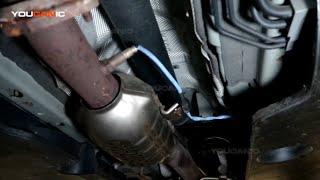

We Have This Part in Stock


The information in this article is provided for general reference and educational purposes only. Vehicle specifications, procedures, and part compatibility can vary by production date, trim level, and region. Always consult your vehicle's factory service manual and verify part numbers before purchasing or performing repairs. Safety-critical components such as airbags, seat belts, and braking systems should be installed by a qualified professional.
- Mazda CX-5:
- 🎬 Helpful Videos
- 🛍️ Shop This Part
- What's Unique About the 2016-2019 Mazda CX-5
- Diagnostic Flowchart
- Symptoms You May Notice
- Most Likely Causes
- Rare But Worth Checking
- Diagnosis Steps
- Parts You'll Likely Need
- Related Codes That Often Appear With This One
- Technical Service Bulletins (TSBs) & Recalls
- Platform-Specific Known Issues
- Mechanic-Grade Diagnostic Values
- Scan Tool Commands That Help
- Wiring & Ground Locations
- Real Owner Repair Stories
- "I Checked Everything" — The Actual Cause
- Model Year Variations Within This Range
- 🎟️ Get 5% Off