

P2096 on 2012-2017 Land Rover Range Rover Evoque: Causes and Fixes
On a 2012-2017 Range Rover Evoque, the P2096 code is frequently caused by a software glitch in the Powertrain Control Module (PCM). Before replacing any parts, check if your vehicle needs a software update from a Land Rover dealer, as specified in multiple Technical Service Bulletins. If software is not the issue, the next most common causes are exhaust leaks before the rear O2 sensor or a faulty sensor itself.
- First, check with a Land Rover dealer if your vehicle's VIN has an open TSB for a PCM software update related to code P2096. This is a very common fix for this specific vehicle.
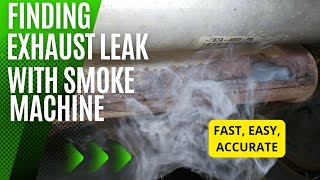
- If the software is up to date, the next step is to thoroughly inspect the exhaust system for leaks between the engine and the rear O2 sensor. A smoke test is the best method.
- Do not replace the oxygen sensor as a first step. Only replace it after confirming the software is correct and there are no exhaust or intake leaks.
- This code indicates a 'lean' condition (too much air), which can be caused by air getting *into* the exhaust (a leak) or by a faulty sensor *reporting* a lean condition.
What's Unique About the 2012-2017 Land Rover RANGE ROVER EVOQUE
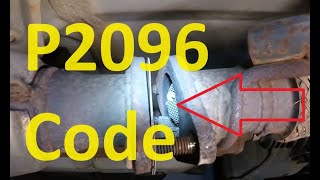
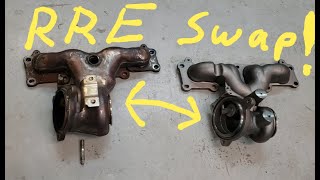
For this specific generation of the Range Rover Evoque, the P2096 code is very often a software issue rather than a hardware failure. Land Rover has issued multiple Technical Service Bulletins (TSBs) stating that the PCM's diagnostic software can be overly sensitive or have incorrect fuel adaptation logic, leading to a false P2096 code. This makes a dealership visit for a potential software update a critical first diagnostic step, which is different from many other vehicles where this code immediately points to an exhaust leak 🎬 Watch: What the P2096 code really means and how to fix it. or a bad sensor. TSB LTB00902NAS4 explicitly states the cause may be a "PCM software error" and that misfire codes (P0300-P0304) may also be stored *after* the P2096 is logged. A very common hardware failure specific to this platform is a cracked exhaust manifold, which is integrated with the turbocharger; 🎬 See this walkthrough on replacing the Evoque's turbo exhaust manifold. this allows air to be drawn in, fooling the O2 sensor.
Diagnostic Flowchart
Tap your situation to follow the diagnostic path that matches what you're seeing on this vehicle.
Symptoms You May Notice
- Check Engine Light is illuminated.
- Reduced fuel economy.
- Possible rough idle or engine misfires.
- Failure to pass an emissions test.
- Poor acceleration or sluggish engine performance.
- A ticking or hissing sound from the engine area, especially when cold, indicating an exhaust leak.
- Replacing the downstream O2 sensor without first checking for exhaust leaks or required PCM software updates. Given the numerous TSBs for this vehicle, a software check should be a primary step.
- Assuming the issue is a major component failure when it is a simple exhaust gasket leak at a flange connection.
- Replacing O2 sensors or other parts when the root cause is a hairline crack in the integrated exhaust manifold/turbocharger housing, a very common issue on this platform.
Most Likely Causes
- Powertrain Control Module (PCM) Software Issue 🔴 High Probability Land Rover issued multiple TSBs (e.g., NAS18.12.016, LTB00902NAS4, SSM72584) indicating that the original PCM software has concerns with its diagnostic or fuel adaptation logic, causing it to incorrectly set a P2096 code. TSB LTB00902NAS4 specifically identifies a "PCM software error" as the cause.
How to confirm: A Land Rover dealership or a qualified independent shop with access to Land Rover's TOPIx system or an approved diagnostic tool can check the vehicle's current software version against the latest available updates mentioned in the TSBs.
Typical fix: Update the PCM software to the latest version. This is a dealer or specialist-level repair that requires specific diagnostic equipment.
Est. part cost: $0 - Cracked Exhaust Manifold 🔴 High Probability The exhaust manifold on the 2.0L Si4 engine is integrated with the turbocharger and is made of welded stamped metal pieces that are known to develop stress cracks, particularly around the runners. This allows unmetered air to be sucked into the exhaust stream, causing the downstream O2 sensor to report a false lean condition. This is a well-documented failure pattern on these vehicles.
How to confirm: A visual inspection may reveal cracks, especially on the driver's side edge of the manifold. A professional smoke test is the most effective method; smoke forced into the exhaust will visibly escape from any cracks. Often accompanied by an audible ticking noise that may diminish as the engine warms up and the metal expands.
Typical fix: The official repair is to replace the entire turbocharger/exhaust manifold assembly. Some owners have had success with having the cracks professionally welded as a more cost-effective, but potentially temporary, solution.
Est. part cost: $1000-$4000 - Exhaust System Leak 🟡 Medium Probability Leaks from failed gaskets or rusted pipes are common on many vehicles. A leak anywhere between the engine and the downstream O2 sensor allows outside air to be drawn into the exhaust, which the sensor reads as a lean condition. TSB LTB00902NAS5 specifically instructs technicians to check for leaks around the exhaust three-bolt flange.
How to confirm: Perform a visual inspection of the exhaust system from the engine to the rear O2 sensor. A professional smoke test is the most effective method, where smoke is forced into the exhaust and any leaks become visible. You may also hear a ticking or hissing sound near the manifold.
Typical fix: Repair or replace the leaking component. This could involve replacing a gasket, tightening flange bolts, or welding a crack.
Est. part cost: $20-$300 - Faulty Downstream Oxygen (O2) Sensor 🟡 Medium Probability O2 sensors are wear items and can degrade over time, leading to slow or inaccurate readings. The sensor may send a false 'lean' signal to the PCM. Contaminants from fuel or oil can also cause premature failure.
How to confirm: Use a scan tool to monitor the live voltage data from the downstream O2 sensor. A healthy sensor should show a relatively stable voltage. If the voltage is stuck low (e.g., below 0.2V) or not responding, the sensor is likely faulty.
Typical fix: Replace the Bank 1 downstream (post-catalyst) oxygen sensor. The OEM part number is LR028931.
Est. part cost: $60-$220
Rare But Worth Checking
- Intake / Vacuum Leak: An unmetered air leak after the MAF sensor (e.g., from a cracked intake hose or bad gasket) can cause a true lean condition that might be flagged by the post-catalyst sensor. This would usually trigger other codes like P0171 first, but it's worth checking with a smoke test if other causes are ruled out.
- Low Fuel Pressure: A weak fuel pump, clogged fuel filter, or failing fuel pressure regulator can cause a lean condition. This is less common for a post-catalyst code but possible. Check fuel pressure to confirm it is within specification.
- Failing Catalytic Converter: While P2096 is a fuel trim code, not a catalyst efficiency code (like P0420), a degraded or inefficient converter can sometimes contribute to erratic readings from the downstream O2 sensor. A glowing red converter after running is a sign of a clog.
- Dirty or Faulty Mass Airflow (MAF) Sensor: A contaminated MAF sensor can under-report the amount of air entering the engine, causing the PCM to command less fuel and creating a lean condition. Cleaning the sensor with a dedicated MAF cleaner may resolve the issue.
Diagnosis Steps
- Check for Technical Service Bulletins (TSBs): Contact a Land Rover dealer with your VIN to see if TSBs like NAS18.12.016, LTB00902NAS4, or SSM72584 apply. If so, a PCM software update is the first recommended action.
- Inspect for Exhaust Leaks: Perform a smoke test on the exhaust system. Carefully inspect the entire exhaust system from the engine manifold to the post-catalyst O2 sensor. Pay special attention to the integrated turbo/exhaust manifold for hairline cracks, a known failure point.
- Analyze O2 Sensor Data: Use an OBD-II scanner with live data capability. Observe the voltage of the downstream (post-catalyst) O2 sensor. It should be relatively steady. If it's stuck low (e.g., below 0.2V) or fluctuating rapidly like the upstream sensor, it points towards a problem.
- Test for Vacuum Leaks: If an upstream lean code (P0171) is also present, perform a smoke test on the intake system to check for vacuum leaks from hoses, gaskets, or the intake manifold itself.
- Check Fuel Pressure: Rule out fuel delivery issues by testing the fuel pressure to ensure it meets the manufacturer's specifications. A failing pump or clogged filter could be the culprit.
- Replace the Downstream O2 Sensor: If all other possibilities have been eliminated, the downstream O2 sensor itself (part LR028931) may be faulty and require replacement.
Parts You'll Likely Need
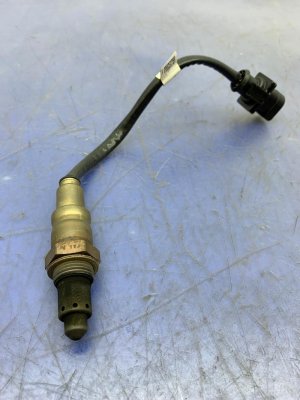
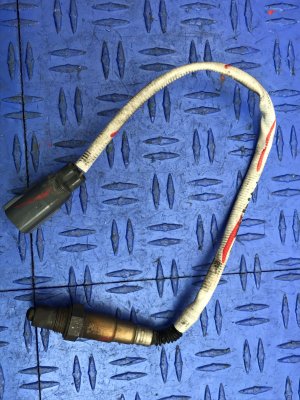
- Downstream Oxygen Sensor (Post-Catalyst, Bank 1)
(OEM #LR028931)— If software and exhaust leaks are ruled out, the sensor itself is the next most likely component to fail, providing inaccurate lean readings.
Trusted brands: Bosch, Denso, NTK, Walker Products
OEM price range: $150-$250
Aftermarket price range: $60-$150 - Exhaust Gasket(s) — If an exhaust leak is found at a flange connection, replacing the gasket is often the required fix. TSBs specifically mention checking flange leaks.
Trusted brands: Walker Exhaust, Fel-Pro
OEM price range: $30-$60
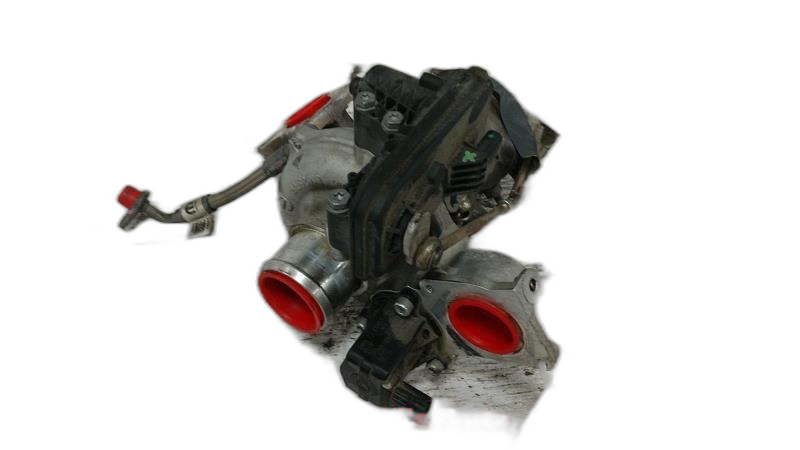
Aftermarket price range: $15-$40 - Turbocharger with Integrated Exhaust Manifold — The original stamped-metal exhaust manifold is prone to cracking, causing exhaust leaks that trigger P2096. Since it is integrated with the turbocharger, the entire assembly often needs replacement.
Trusted brands: BorgWarner (OEM), Land Rover (Genuine)
OEM price range: $2000-$4000
Aftermarket price range: $800-$1500
Related Codes That Often Appear With This One
- P2097 — This code is for 'Post Catalyst Fuel Trim System Too Rich Bank 1'. The same TSBs from Land Rover often mention both P2096 and P2097, indicating the software issue can cause the system to read either too lean or too rich.
- P0171 — This code means 'System Too Lean (Bank 1)' as detected by the *upstream* O2 sensor. If you have both P0171 and P2096, it strongly suggests a genuine lean condition caused by a vacuum leak or fuel delivery issue, rather than just an exhaust leak or sensor problem.
- P0300, P0301, P0302, P0303, P0304 — These are random or specific cylinder misfire codes. TSB LTB00902NAS4 notes that these misfire codes are likely to be stored *after* P2096 or P2097 appears, as a consequence of the fuel trim issue.
Technical Service Bulletins (TSBs) & Recalls
- NAS18.12.016: Notes that secondary catalyst fueling adaption may be incorrect, causing P2096/P2097.
- LTB00902NAS4: Mentions the Malfunction Indicator Lamp (MIL) may illuminate with P2096/P2097 due to a PCM software error.
- N272NAS1: Cites incorrect secondary catalyst fueling adaption as a cause for P2096/P2097.
- SSM72584: Identifies a concern in the PCM diagnostic software that can cause P2096/P2097 to be stored.
- LTB00902NAS5: Details a specific diagnostic procedure for technicians, focusing on smoke testing the exhaust system for leaks.
Platform-Specific Known Issues
- A known issue documented in Land Rover TSBs #NAS18.12.016, #LTB00902NAS4, #N272NAS1, and #SSM72584 is that the PCM software may incorrectly interpret sensor data, leading to a false P2096 or P2097 code. A software reflash is the specified fix.
- TSB LTB00902NAS5 provides a detailed diagnostic procedure for technicians, emphasizing the need to use a high-pressure smoke machine to test the exhaust system for leaks before considering other causes.
- The 2.0L Si4 engine features a turbocharger with an integrated exhaust manifold made of welded stamped metal, which is highly susceptible to developing stress cracks that cause exhaust leaks and trigger a P2096 code.
Mechanic-Grade Diagnostic Values
- Downstream O2 Sensor Voltage (at steady RPM) — expected: A relatively stable voltage, typically between 0.5V and 0.9V on a healthy, warm engine.. Failure: Voltage is stuck low (e.g., below 0.2V) or is fluctuating rapidly similar to the upstream sensor. A flatlined voltage (e.g., stuck at 0.5V) can also indicate a faulty sensor.
- Long Term and Short Term Fuel Trims (LTFT/STFT) — expected: As close to 0% as possible. A combined value (LTFT + STFT) consistently under +/- 10% is considered healthy.. Failure: Consistently positive fuel trims (e.g., > +10%) on Bank 1 indicate the PCM is adding fuel to compensate for a lean condition. If trims return to normal at higher RPMs (2500+), it strongly suggests a vacuum leak.
Scan Tool Commands That Help
- Land Rover SDD (Symptom Driven Diagnostics): ECU Flash / Software Update — This is the primary step for a P2096 code on this vehicle, as per multiple TSBs. It should be used to check if the PCM's current software version is outdated and requires an update to correct faulty diagnostic logic.
- Land Rover SDD (Symptom Driven Diagnostics): Reset Adaptations / Clear Fuel Adaptations — After performing a repair such as fixing an exhaust leak or replacing an O2 sensor, this function should be used to clear the old learned fuel trim values from the PCM. This forces the computer to relearn the fuel strategy with the new, correct inputs, preventing the code from returning due to old data.
Wiring & Ground Locations
- G1D130A — Located at the left front of the engine compartment.. This is a primary ground point for the Engine Control Module (ECM). A corroded or loose connection here can cause erratic ECM behavior and incorrect sensor readings, potentially leading to a false P2096 code.
- G1D132A — Located at the right front of the engine compartment.. This is another key ground point in the engine bay. Ensuring all engine grounds are clean and secure is a crucial step in diagnosing any electronic fault code, as poor grounding can mimic component failure.
- Engine to Chassis Ground Strap — There are multiple ground straps. One important one is typically located from the engine block or transmission to the chassis frame rail. A specific jump-starting ground point is identified on an engine mounting bolt behind the washer fluid filler cap.. A broken or corroded main engine ground strap can cause a host of electrical issues, including noisy sensor signals. The O2 sensor circuit is sensitive to electrical interference, and a bad ground can corrupt its readings sent to the PCM.
Real Owner Repair Stories
- babyRR.com - The Range Rover Evoque Forum (2012 Range Rover Evoque Pure, ~70,000 miles) — Exhaust leaking into the cabin, check engine light with P2096.
❌ Tried (didn't work) Initial diagnosis focused on other causes before identifying the manifold.
✅ What actually fixed it The integrated exhaust manifold/turbocharger was found to be cracked. The owner opted for a third-party repair where the manifold was removed and the crack was welded. This resolved the leak and the code. The total cost for diagnostics, labor, welding, and new gaskets/fluids was approximately $1000, significantly less than the dealership quote of $5300 for a full replacement.
"I Checked Everything" — The Actual Cause
- In some cases, a hairline crack in the exhaust manifold may not show up during a cold smoke test. The crack may only open up and leak significantly when the manifold heats up and the metal expands. If a smoke test is clean but an exhaust leak is still suspected (e.g., audible ticking noise when cold that disappears when warm), the manifold should be inspected more closely after a heat cycle.
OEM Part Supersession History
LR028931→LR028931 is the current OEM number for the downstream O2 sensor. However, it has multiple equivalent interchange part numbers from OEM suppliers and aftermarket brands.— N/A
Heads up: Common interchange part numbers include Bosch 0258010256, Denso 234-4582, and Walker 250-241055. Ensure any replacement has the correct 4-pin square connector and wire harness length (~394mm).
Model Year Variations Within This Range
- 2012-2015: Early models (pre-facelift) were available with a 6-speed automatic transmission. Post-2014 models received a new 9-speed ZF automatic transmission, which improved fuel economy and performance.
- 2015-2018: The 2015/2016 facelift introduced revised styling and, in some markets, the new Ingenium engine family. However, the 2.0L Si4 petrol engine (a Ford derivative) remained largely the same through 2017 for the models covered here. It's important to verify the specific engine, as the diesel models have completely different issues.
Helpful Videos
Used OEM Parts in Stock



New Aftermarket Parts Available



The information in this article is provided for general reference and educational purposes only. Vehicle specifications, procedures, and part compatibility can vary by production date, trim level, and region. Always consult your vehicle's factory service manual and verify part numbers before purchasing or performing repairs. Safety-critical components such as airbags, seat belts, and braking systems should be installed by a qualified professional.
- Land Rover RANGE ROVER EVOQUE:
- 🎬 Helpful Videos
- 🛍️ Shop This Part
- What's Unique About the 2012-2017 Land Rover RANGE ROVER EVOQUE
- Diagnostic Flowchart
- Symptoms You May Notice
- Most Likely Causes
- Rare But Worth Checking
- Diagnosis Steps
- Parts You'll Likely Need
- Related Codes That Often Appear With This One
- Technical Service Bulletins (TSBs) & Recalls
- Platform-Specific Known Issues
- Mechanic-Grade Diagnostic Values
- Scan Tool Commands That Help
- Wiring & Ground Locations
- Real Owner Repair Stories
- "I Checked Everything" — The Actual Cause
- OEM Part Supersession History
- Model Year Variations Within This Range
- 🎟️ Get 5% Off