

P2096 on 2010-2019 Ford Taurus 3.5L EcoBoost: Causes and Fixes for Lean Fuel Trim
P2096 on a Ford Taurus with the 3.5L EcoBoost engine most often points to an exhaust leak before the rear oxygen sensor or a failing sensor itself. Exhaust leaks at the manifold or turbo flanges are common. Expect to pay $60-$150 for a new Motorcraft sensor, and always perform a thorough exhaust inspection before replacing parts.
- P2096 means the exhaust is too lean (too much oxygen) on the firewall side of the engine, *after* the catalytic converter.
- The most likely causes are an exhaust leak or a bad rear oxygen sensor. Always check for leaks before buying parts.
- Bank 1 on a 3.5L Taurus is the cylinder bank against the firewall. The sensor in question (Sensor 2) is the one located after the catalytic converter on that side.
- In some cases, a software update from a Ford dealer may be required to fix the issue, as it's a known pattern on EcoBoost engines.
What's Unique About the 2010-2019 Ford Taurus
On Ford's 3.5L EcoBoost (GTDI) engines, this code can be sensitive to issues beyond a simple bad sensor. Ford has issued technical service bulletins (TSBs) for this engine family in other vehicles (like the F-150 and Transit) pointing to PCM calibration issues that could incorrectly trigger a P2096 code (TSB SSM 46159). Additionally, the turbocharged setup creates more joints and higher pressures in the exhaust system, increasing the likelihood of small leaks that can introduce air and cause this code. Warped exhaust manifolds are a known issue on this engine, often causing a distinct ticking noise on cold starts that disappears as the engine warms up.
Symptoms You May Notice
- Check Engine Light (MIL) is on
- Reduced fuel economy
- Rough or unstable idle
- Poor acceleration or engine hesitation
- Audible exhaust leak noise, often a ticking or hissing sound that may be louder on a cold start and quiet down as the engine warms.
- Whistling sound from the engine bay if caused by a vacuum leak.
- Replacing the catalytic converter before thoroughly checking for exhaust leaks and verifying O2 sensor function.
- Replacing the upstream (Bank 1, Sensor 1) oxygen sensor, when the code specifically points to a problem with the post-catalyst (Bank 1, Sensor 2) reading.
- Failing to perform a PCM reset (KOER self-test) after replacing the O2 sensor, causing the code to return immediately.
Most Likely Causes
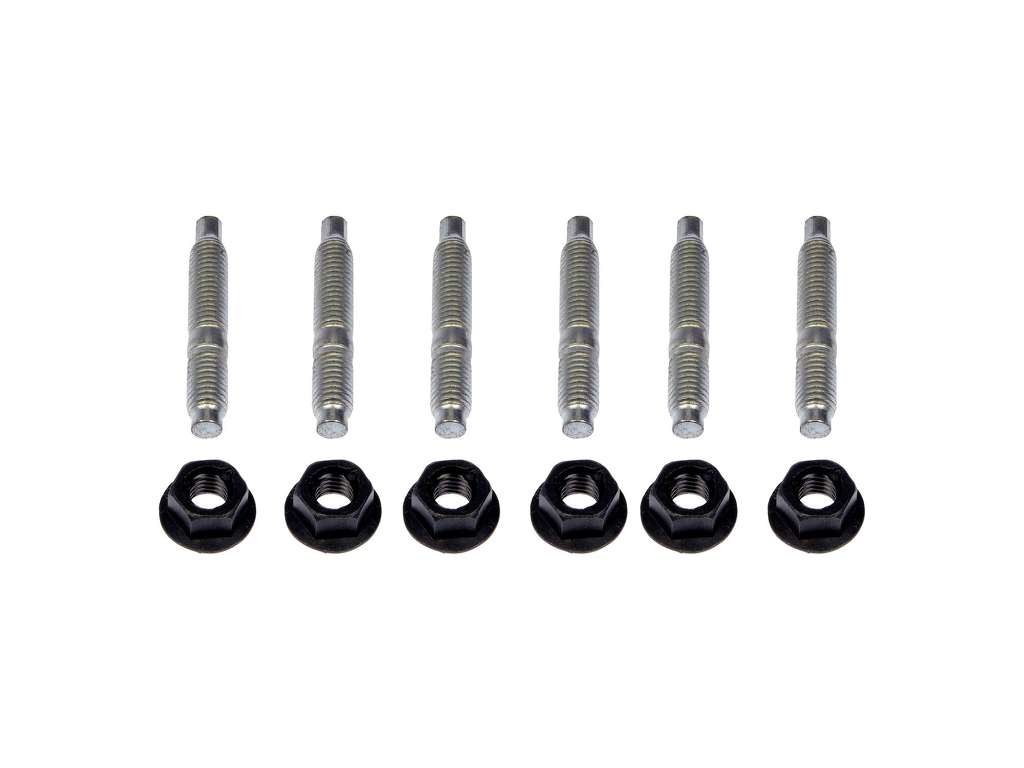
- Exhaust Leak (pre-sensor) 🔴 High Probability The 3.5L EcoBoost is known for exhaust manifold warping due to thermal stress. The factory manifolds have thin castings and don't use all available stud holes, leading to poor clamping force over time. Leaks at the manifold-to-head gasket or turbo flanges are common.
How to confirm: Visually inspect the exhaust system from the engine to the rear O2 sensor for black soot marks, which indicate a leak. A cold start may reveal an audible 'tick' that fades as the metal expands. A smoke test is the most definitive way to find small leaks.
Typical fix: Replace the leaking gasket and potentially the warped exhaust manifold. Upgraded, thicker-walled aftermarket manifolds are available. Tighten any loose flange connections.
Est. part cost: $20-$400 - Failing Downstream Oxygen Sensor (Bank 1, Sensor 2) 🔴 High Probability Oxygen sensors are wear items that degrade over time, leading to slow or inaccurate readings. The Bank 1 sensor is on the firewall side, where higher temperatures can accelerate wear. Access is difficult, often requiring removal of intake ducting.
How to confirm: Use a diagnostic scan tool to graph the voltage of the Bank 1 Sensor 2. It should show a relatively steady voltage (e.g., 0.6-0.8V). If it is stuck low (near 0V) or fluctuating rapidly like the upstream sensor, it is likely faulty.
Typical fix: Replace the Bank 1, Sensor 2 oxygen sensor. After replacement, a 'Key On, Engine Running' (KOER) self-test or PCM reset procedure may be required to clear adaptations and prevent the code from returning.
Est. part cost: $60-$150 - Intake / Vacuum Leak 🟡 Medium Probability Plastic and rubber vacuum lines, PCV hoses, and intake gaskets can become brittle and crack with age and heat cycles, allowing unmetered air to enter the engine.
How to confirm: Perform a smoke test on the intake system to identify the source of the leak. Listening for a whistling sound at idle can also sometimes pinpoint a leak.
Typical fix: Replace the cracked hose or faulty gasket.
Est. part cost: $10-$100 - PCM Calibration Issue ⚪ Low Probability As noted in TSB SSM 46159 for the 3.5L GTDI engine (including the Taurus), incorrect calibration values can cause this code to set improperly. This is a known pattern on Ford EcoBoost platforms, where a software update can sometimes resolve false lean codes.
How to confirm: A Ford dealership or a shop with a Ford-specific scan tool (like FDRS) can check if a PCM software update is available for your vehicle's specific VIN.
Typical fix: Reprogram the Powertrain Control Module (PCM) with the latest Ford software calibration.
Est. part cost: $0-$250
Rare But Worth Checking
- Failing Catalytic Converter: While possible, this is less common than sensor or leak issues. A clogged or inefficient converter might not process exhaust gases correctly, leading to lean readings downstream. This should be considered after all other causes are ruled out.
- Low Fuel Pressure or Clogged Injectors: A weak fuel pump or clogged injectors on Bank 1 can create a true lean condition that is detected by both upstream and downstream sensors. This would typically be accompanied by other codes like P0171 (System Too Lean Bank 1).
Diagnosis Steps
- Read the code with an OBD-II scanner and confirm P2096 is present. Note any other codes, especially P0171 or P2098.
- Visually inspect the entire exhaust system for signs of leaks (soot, cracks, loose flanges), paying close attention to the Bank 1 (firewall side) manifold and downpipe. Listen for a ticking noise on a cold start.
- Inspect the intake system for obvious cracks in hoses or loose connections. Check that the air filter housing is properly sealed.
- Use a scan tool to monitor the live data from the Bank 1 Sensor 2 (downstream) O2 sensor. A healthy sensor will have a relatively stable voltage (typically 0.6-0.8V). A faulty sensor may be stuck low (under 0.3V) or fluctuate erratically.
- If an exhaust leak is suspected but not visible, perform a smoke test on the exhaust system.
- If a vacuum leak is suspected, perform a smoke test on the intake manifold and vacuum lines.
- If leaks are ruled out and the sensor appears faulty, replace the Bank 1 Sensor 2 oxygen sensor. Note that access is tight and may require removing other components.
- After replacing the sensor, perform a Key On, Engine Running (KOER) self-test or use a scan tool to reset the PCM's adaptive memory to prevent the code from returning.
- If the problem persists, contact a Ford dealer to check for any available PCM updates as per TSBs on similar engines.
Parts You'll Likely Need
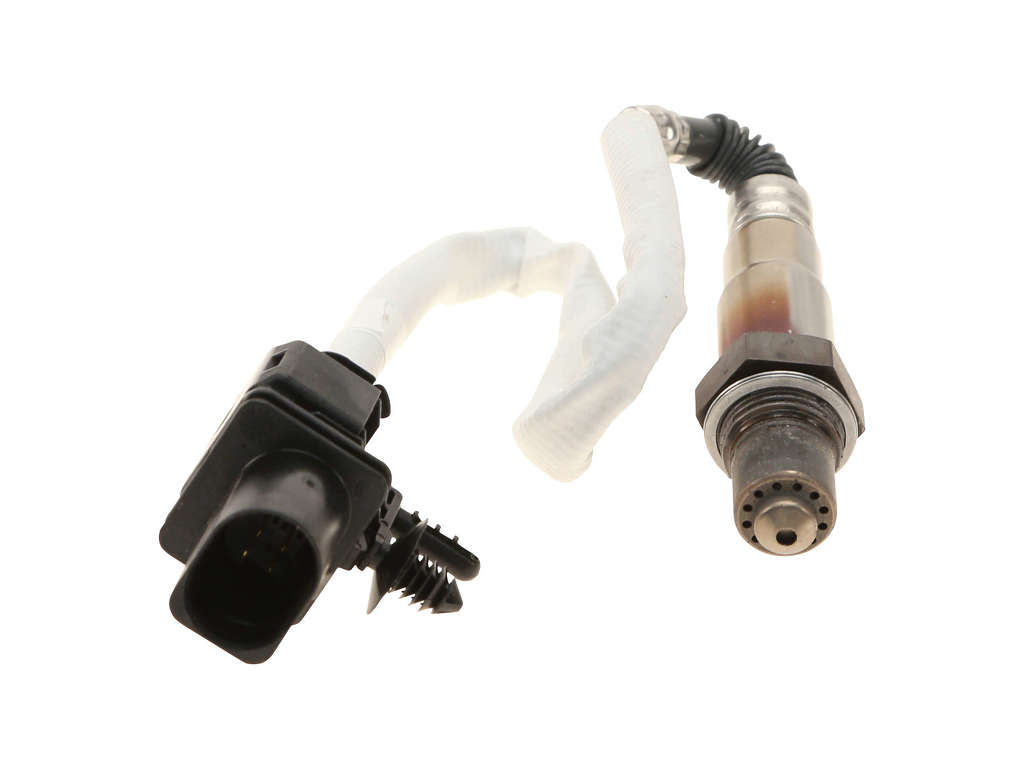
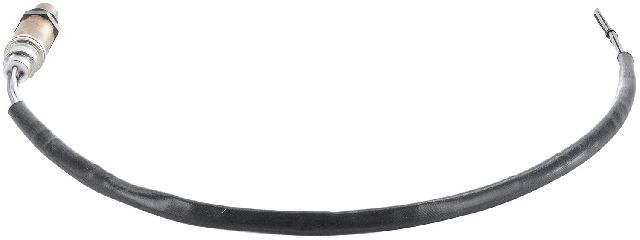
- Post-Catalyst Oxygen Sensor (Bank 1, Sensor 2)
(OEM #DY-1167)— This is the sensor that directly measures the condition reported by the P2096 code. It is a common failure point. This part is for the downstream (post-catalyst) position.
Trusted brands: Motorcraft, Bosch, Denso, NGK/NTK
OEM price range: $75-$120
Aftermarket price range: $50-$90 - Exhaust Manifold Gasket — If an exhaust leak is found at the manifold due to warping, this gasket will need to be replaced along with potentially resurfacing or replacing the manifold itself.
Trusted brands: Motorcraft, Fel-Pro, Mahle
OEM price range: $25-$50
Aftermarket price range: $15-$30
Related Codes That Often Appear With This One
- P0171 — Indicates a lean condition on Bank 1 detected by the *upstream* sensor. If a vacuum leak or fuel delivery issue is severe enough, it will affect both sensors and set both codes, pointing to a root cause before the exhaust.
- P2098 — This is the same 'Post Catalyst Fuel Trim Too Lean' code, but for Bank 2 (radiator side). If both P2096 and P2098 are present, it strongly suggests a common cause like a major vacuum leak, fuel delivery problem, or a PCM calibration issue affecting the whole engine.
- P0300, P0301-P0306 — Cylinder misfire codes can occur if the lean condition becomes severe enough to affect combustion stability.
Technical Service Bulletins (TSBs) & Recalls
- SSM 46159: Notes that some 2016 Taurus, Flex, MKS, and other vehicles with the 3.5L GTDI engine may exhibit P2096 due to incorrect calibration values, suggesting a potential software fix. It advises technicians to check O2 sensor wiring before other diagnostics.
- SSM 50230: Although for the 2.0L EcoBoost in the Edge/Nautilus, it shows a pattern of P2096 being caused by a faulty oxygen sensor seal, recommending an updated sensor part number to correct the issue.
- TSB 16-0031: While on a Focus, it documents a rare but possible cause where engine oil migrates into the wiring harness, affecting sensor readings.
Platform-Specific Known Issues
- A Technical Service Bulletin for the 3.5L GTDI engine (SSM 46159) in 2016 models including the Taurus indicates that incorrect PCM calibration values can cause P2096 to be set, suggesting a potential software fix from a dealer.
- While not for the Taurus specifically, TSB SSM 50230 for the 2.0L EcoBoost shows a pattern of P2096 being caused by a faulty oxygen sensor seal, leading to an updated sensor part number. This highlights Ford's acknowledgment of sensor design issues causing this code.
Scan Tool Commands That Help
- Ford IDS / FORScan / OBD-II Jumper: Key On, Engine Running (KOER) Self-Test — After a repair, such as replacing an O2 sensor, running the KOER test is a Ford-specific procedure to force the PCM to re-check all sensors and actuators in an active state. This helps confirm the fix and can be necessary to clear adaptive memory to prevent the code from immediately returning.
Wiring & Ground Locations
- BCM (Body Control Module) — The BCM serves as the in-dash fuse box and is located under the driver's side of the dashboard.. While not a primary cause, issues with power distribution or module communication can in rare cases trigger erroneous fault codes. Knowing the BCM location is a starting point for advanced electrical diagnosis.
Real Owner Repair Stories
- Ford F150 Forum (2013 F-150 3.5L EcoBoost) — Check Engine Light with code P2096.
❌ Tried (didn't work) Replacing the downstream (Bank 1, Sensor 2) oxygen sensor, which is the sensor explicitly indicated by the P2096 code definition.
✅ What actually fixed it Replacing the upstream (Bank 1, Sensor 1) oxygen sensor ultimately resolved the P2096 code. The owner noted that no research they found suggested the upstream sensor could cause this downstream-specific code.
When the Usual Fixes Don't Work
- While P2096 specifically refers to the post-catalyst (downstream) sensor, there is at least one documented case on a 3.5L EcoBoost where the code was only resolved by replacing the upstream oxygen sensor on the same bank after a new downstream sensor failed to fix the issue. This suggests that in rare instances, skewed data from a failing upstream sensor can lead the PCM to incorrectly flag the downstream circuit.
OEM Part Supersession History
Unknown (Cast Iron Manifold)→Unknown (Cast Stainless Steel Manifold)— The original cast iron exhaust manifolds on 3.5L EcoBoost engines were highly prone to warping and cracking. Ford later released updated parts made from cast stainless steel to better withstand thermal stress.
Model Year Variations Within This Range
- 2010-2012: Early 3.5L EcoBoost engines (similar to 2011-2012 F-150s) used smaller turbochargers and a Hitachi direct injection fuel system.
- 2013-2019: Following the 2013 model year facelift, the 3.5L EcoBoost was updated with larger turbos and a Bosch direct injection fuel system, which may affect diagnostics and parts compatibility compared to earlier models.
Diagnostic Flowchart
Other Known Issues on This Vehicle
Issues unrelated to this code that are worth knowing about as an owner of this generation:
- Internal Water Pump Failure 🔴 High — Can occur anywhere from 60,000 to 150,000+ miles. Failure is catastrophic as it leaks coolant directly into the oil pan, potentially causing severe engine damage if not caught immediately.
- Power Transfer Unit (PTU) Failure (AWD Models) 🔴 High — Commonly reported between 40,000 and 100,000 miles. The unit is located near the hot exhaust, causing the gear oil to break down and cook. Symptoms include a grinding/banging noise when turning or a strong propane/sulfur smell. (Ref: No recall, but it is a widely documented failure. Aftermarket solutions with drain plugs are available.)
- Intake Valve Carbon Buildup 🟠 Medium — A consequence of the Gen 1 direct-injection (GDI) design. Significant buildup can occur by 60,000-80,000 miles, causing rough idle, misfires, and reduced performance. (Ref: No TSB for cleaning, but Ford's addition of port injection to the Gen 2 EcoBoost was an acknowledgement of the issue.)
- Turbocharger Coolant/Oil Line Leaks 🟠 Medium — Leaks from the turbo coolant and oil supply line fittings are common, especially on pre-2017 models. Can lead to oil or coolant dripping onto hot exhaust components.
- Fuel Pump Electronic Module (PEM) Overheating 🔴 High — Affects 2013-2015 models with the 3.5L EcoBoost. A component in the module can overheat, cutting power to the fuel pump and causing the engine to stall. (Ref: Ford Safety Recall 16S31)
Used vs. New Parts: Buying Guide for This Vehicle
When a used part is the smart pick: A used exhaust manifold could be a cost-effective option ONLY if it is confirmed to be the updated cast stainless steel design from a low-mileage donor vehicle. Avoid the original cast iron designs, as they are likely to warp again.
Donor-vehicle mileage cap: roughly under 50000 miles for the part to have meaningful remaining life.
What to inspect on the donor part:
- For an exhaust manifold, check the mounting flange with a straight edge to ensure it is not warped.
- Look for any visible cracks, especially near the turbocharger flange.
- Verify it is the newer cast stainless steel version, not the older, more problematic cast iron.
OEM-only on this vehicle (don't cheap out):
- Catalytic Converter: Aftermarket converters for modern vehicles frequently fail to meet the PCM's strict efficiency monitoring, leading to recurring codes. Sticking with an OEM Ford converter is the safest, albeit most expensive, option.
Aftermarket brands forum-validated for this vehicle:
- Oxygen Sensors: Denso, NTK, and Bosch are widely regarded as OEM suppliers or high-quality equivalents for Ford applications.
- Exhaust Manifolds: Brands like BD Diesel are noted by the community for offering redesigned manifolds that utilize all available mounting holes, providing better clamping force to prevent future warping.
Brands owners have reported issues with on this vehicle:
- Generic, unbranded oxygen sensors or exhaust components from online marketplaces like eBay are often cited as being of questionable quality and can fail prematurely.
- One forum user specifically mentioned a poor experience with 'Ulta Power' brand oxygen sensors.
Real Owner Stories
Aggregated from forums and TSBs cited above. Mileages and costs reflect what owners reported in those sources.
2016 Ford Taurus 3.5L GTDI
Symptoms: Vehicle exhibited P2096 code; TSB notes potential for incorrect calibration values in the software.
What fixed it: Reprogramming the Powertrain Control Module (PCM) with the latest Ford software calibration as per SSM 46159.
Source hint: SSM 46159
2010-2019 Ford Taurus 3.5L EcoBoost — 147000 miles
Symptoms: Rough engine idle and poor acceleration.
What fixed it: Chemical cleaning of the intake valves to remove carbon buildup.
Source hint: SHO Forum thread 'Intake valve carbon check for 3.5 Ecoboost GTDI engine'
Related OBD-II Codes
Frequently Asked Questions
Does TSB SSM 46159 apply to my 2016 Ford Taurus with the 3.5L EcoBoost?
Why is my 3.5L EcoBoost prone to exhaust leaks that cause P2096?
I hear a ticking sound on cold starts; could this be related to my P2096 code?
Is there a specific procedure I should follow after replacing the Bank 1 Sensor 2 O2 sensor?
Could a whistling sound from my engine bay be causing this lean code?
Where is the Bank 1 Sensor 2 located on the Taurus 3.5L EcoBoost?
Helpful Videos

We Have This Part in Stock


The information in this article is provided for general reference and educational purposes only. Vehicle specifications, procedures, and part compatibility can vary by production date, trim level, and region. Always consult your vehicle's factory service manual and verify part numbers before purchasing or performing repairs. Safety-critical components such as airbags, seat belts, and braking systems should be installed by a qualified professional.
- Ford Taurus:
- 🎬 Helpful Videos
- 🛍️ Shop This Part
- What's Unique About the 2010-2019 Ford Taurus
- Symptoms You May Notice
- Most Likely Causes
- Rare But Worth Checking
- Diagnosis Steps
- Parts You'll Likely Need
- Related Codes That Often Appear With This One
- Technical Service Bulletins (TSBs) & Recalls
- Platform-Specific Known Issues
- Scan Tool Commands That Help
- Wiring & Ground Locations
- Real Owner Repair Stories
- When the Usual Fixes Don't Work
- OEM Part Supersession History
- Model Year Variations Within This Range
- Diagnostic Flowchart
- Other Known Issues on This Vehicle
- Used vs. New Parts: Buying Guide for This Vehicle
- Real Owner Stories
- 2016 Ford Taurus 3.5L GTDI
- 2010-2019 Ford Taurus 3.5L EcoBoost — 147000 miles
- Related OBD-II Codes
- Frequently Asked Questions
- 🎟️ Get 5% Off