

P2096 on 2015-2023 Ford Mustang EcoBoost: Causes for Lean Code and Fixes
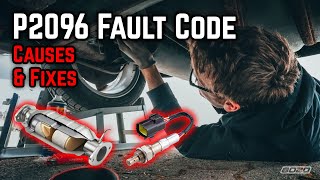
P2096 on a Mustang EcoBoost most often points to an exhaust leak before the rear O2 sensor or a failing rear (post-catalyst) oxygen sensor. A thorough inspection for exhaust leaks, especially at the downpipe-to-turbo connection, is the first step before replacing any parts.
- P2096 means the rear oxygen sensor is detecting a lean condition (too much oxygen).
- The most common cause on a Mustang EcoBoost is an exhaust leak between the turbo and the rear O2 sensor.
- Always perform a thorough exhaust inspection (preferably a smoke test) before replacing any parts.
- If no leaks are found, the rear O2 sensor itself is the next most likely part to have failed.
- Replacing the expensive catalytic converter should be a last resort after all other possibilities are exhausted.
What's Unique About the 2015-2023 Ford Mustang
The 2.3L EcoBoost engine in the S550 Mustang is a turbocharged, direct-injection engine, which can be sensitive to exhaust backpressure and sensor readings. While P2096 is a generic code, on Ford EcoBoost platforms, it's frequently traced back to exhaust leaks near the turbocharger, specifically the gasket between the turbo and downpipe, or the flex pipe section. Ford has also issued Technical Service Bulletins (TSBs) for other models with similar EcoBoost engines for this very code, often pointing to faulty oxygen sensor seals (SSM 50230) or PCM calibration issues (TSB 21-2366), indicating a pattern of sensitivity in these systems.
Generation note: This guide covers the entire S550 generation of the Ford Mustang (2015-2023). This includes the pre-facelift (2015-2017) and facelift (2018-2023) models. No significant differences related to the P2096 code have been documented between these versions.
Symptoms You May Notice
- Check Engine Light is on
- Decreased fuel economy
- Rough or unstable idle
- Hesitation during acceleration
- Possible engine misfire or stumbling
- Replacing the front (pre-catalyst) oxygen sensor. While a faulty front sensor can affect fuel trims, P2096 specifically relates to the reading from the rear (post-catalyst) sensor.
- Replacing the catalytic converter first. This is an expensive repair and should only be done after thoroughly diagnosing and ruling out exhaust leaks and faulty O2 sensors.
- Ignoring aftermarket parts. Owners of modified cars, especially those with an aftermarket downpipe or tune, may experience this code if O2 sensor spacers are incorrect or the tune needs adjustment.
Most Likely Causes
- Exhaust System Leak 🔴 High Probability Leaks can develop at gaskets or flex pipes, especially on turbocharged vehicles with higher exhaust temperatures and pressures. A common failure point is the gasket between the turbocharger and the downpipe. A leak allows unmetered oxygen into the exhaust, which the rear O2 sensor reads as a lean condition.
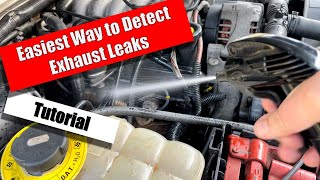
How to confirm: Perform a visual inspection of the exhaust system from the turbocharger back to the rear O2 sensor. Look for black soot marks, cracks, or loose connections, particularly around the downpipe flange. A smoke test is the most effective way to pinpoint small leaks. Some owners also use soapy water on a cold exhaust and look for bubbles upon startup.
Typical fix: Repair the leak by replacing the faulty gasket (e.g., at the turbo outlet), tightening clamps, or welding the cracked component.
Est. part cost: $20-$150 - Faulty Rear Oxygen Sensor (Post-Catalyst) 🟡 Medium Probability Oxygen sensors degrade over time and can send inaccurate readings. A TSB for another Ford model (SSM 50230) specifically calls out a faulty oxygen sensor seal, leading to a false lean reading and recommending an updated sensor. [NHTSA]
How to confirm: Use a scan tool to monitor the voltage of the Bank 1 Sensor 2 (B1S2). A healthy sensor should show a relatively stable voltage, typically above 0.5V-0.6V. If it's stuck low (e.g., under 0.4V), reads 0V, or fluctuates rapidly like the front sensor, it's likely faulty or there's a large exhaust leak upstream.
Typical fix: Replace the rear (downstream) oxygen sensor.
Est. part cost: $50-$150 - Inefficient Catalytic Converter ⚪ Low Probability While durable, a catalytic converter can fail due to age, contamination from misfires, or physical damage. If it's not efficiently processing exhaust gases, the rear O2 sensor will detect excess oxygen.
How to confirm: This is typically diagnosed after ruling out exhaust leaks and sensor issues. A temperature check using an infrared thermometer (outlet should be significantly hotter than inlet) or a backpressure test can help confirm a clogged converter. This is often seen with code P0420.
Typical fix: Replace the catalytic converter assembly, which on the EcoBoost Mustang is part of the downpipe.
Est. part cost: $800-$2000 - PCM Software Calibration ⚪ Low Probability Ford has issued TSBs for other models (TSB 21-2366 for Bronco, SSM 46159 for Transit) where the PCM software was too sensitive, causing false P2096 codes. An update may be required to widen the acceptable parameters. [NHTSA]
How to confirm: A Ford dealership or a qualified shop with access to Ford's diagnostic software (FDRS) can check if a newer calibration is available for your vehicle's VIN.
Typical fix: Update the Powertrain Control Module (PCM) software.
Est. part cost: $0-$200
Rare But Worth Checking
- Vacuum Leak: An intake-side vacuum leak (e.g., cracked hose, bad gasket) can cause a true lean condition that is detected by both front and rear O2 sensors. This would likely be accompanied by a P0171 code.
- Fuel Delivery Issue: A weak fuel pump, clogged injector, or failing low-pressure fuel sensor can cause a lean condition. This is less common for a P2096-only code but possible if the issue is borderline. The low-pressure fuel sensor is a known weak point on this platform.
Diagnosis Steps
- Read the codes: Use an OBD-II scanner to confirm P2096 is present and check for any other related codes like P0171 or P0420.
- Inspect for exhaust leaks: This is the most common cause. Carefully examine the entire exhaust system from the engine to the rear O2 sensor. Pay close attention to the manifold, turbo-to-downpipe V-band clamp/gasket, flex pipe, and sensor bungs. A smoke test is highly recommended to find hairline cracks or bad gaskets.
- Analyze O2 sensor data: Use a scan tool with live data capability. Observe the voltage for the upstream (B1S1) and downstream (B1S2) O2 sensors. B1S1 should fluctuate rapidly between ~0.1V and ~0.9V. B1S2 should be relatively steady and high (above 0.5V). If B1S2 is stuck low (under 0.4V) or mirrors B1S1's fluctuations, suspect a bad sensor or a significant exhaust leak.
- Test the rear O2 sensor: If no exhaust leak is found, the rear O2 sensor is the next most likely culprit. You can test its wiring for continuity and proper voltage. Often, replacement is the most straightforward diagnostic step if a leak isn't obvious.
- Check for TSBs and PCM updates: Contact a Ford dealer with your VIN to see if any service bulletins (like SSM 50230 or TSB 21-2366 from related models) or PCM software updates apply to your vehicle for this code. [NHTSA]
- Evaluate the catalytic converter: If all other causes are ruled out, the catalytic converter may be inefficient. This is the last and most expensive part to consider.
Parts You'll Likely Need
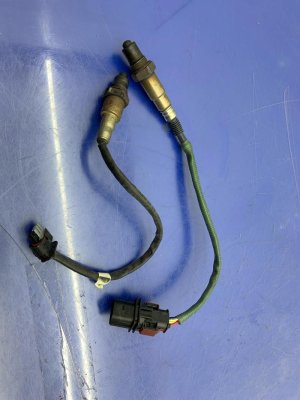
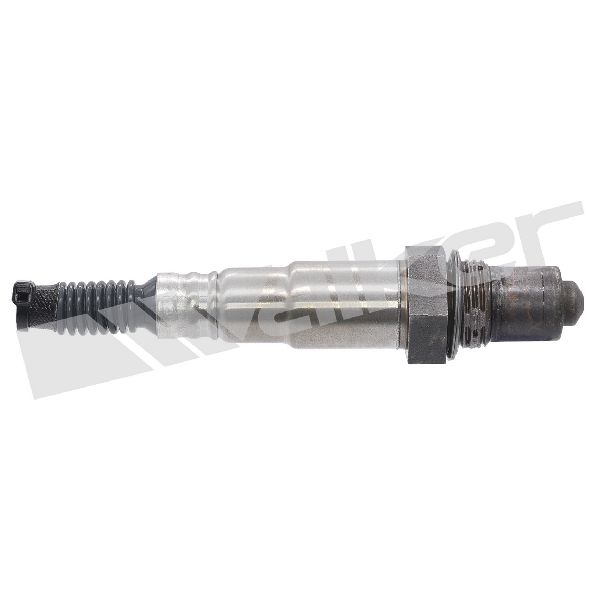
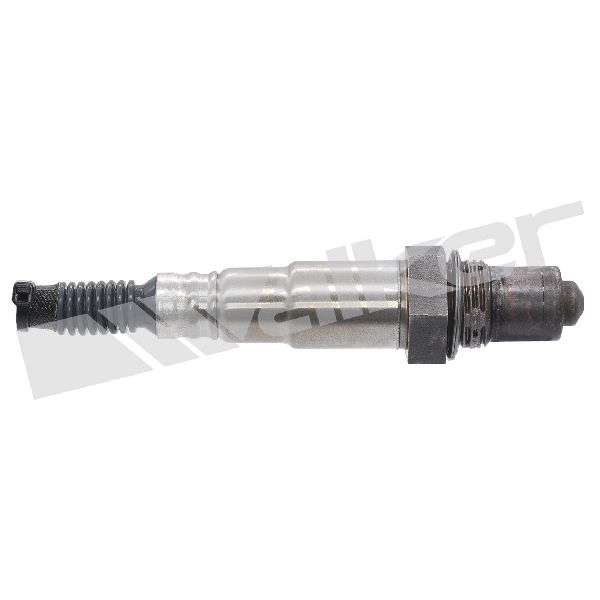
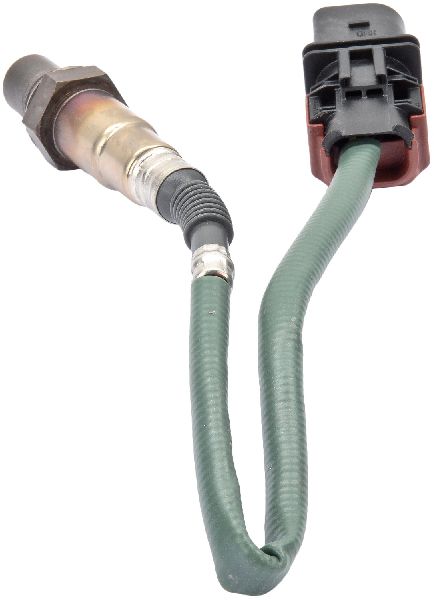
- Rear Oxygen Sensor (Post-Catalyst, Bank 1 Sensor 2)
(OEM #FR3Z-9G444-B (standard); K2GZ-9G444-D (updated part mentioned in TSB SSM 50230))— This sensor is responsible for triggering the code. It can fail due to age, contamination, or a faulty internal seal, sending inaccurate lean readings to the PCM.
Trusted brands: Motorcraft, Bosch, Denso, NTK
OEM price range: $80-$120
Aftermarket price range: $50-$90 - Downpipe to Turbo Gasket
(OEM #FR3Z-9450-A)— Exhaust leaks are a primary cause of P2096, and the gasket at the turbocharger outlet is a common failure point due to high heat and pressure.
Trusted brands: Ford, Fel-Pro, Walker Exhaust
OEM price range: $25-$50
Aftermarket price range: $15-$30
Related Codes That Often Appear With This One
- P0171 — Indicates 'System Too Lean (Bank 1)' from the upstream sensor. If a major vacuum leak or fuel delivery issue exists, both sensors may detect a lean condition.
- P0420 — Indicates 'Catalyst System Efficiency Below Threshold'. This code often appears with P2096 if the catalytic converter is failing and is the root cause of the lean reading at the rear O2 sensor.
- P2098 — Indicates 'Post Catalyst Fuel Trim System Too Rich Bank 2'. This is for V-engines, but on inline engines with aftermarket exhausts, issues with O2 sensor placement or spacers can sometimes trigger related post-cat codes incorrectly.
Technical Service Bulletins (TSBs) & Recalls
- TSB 21-2366: Notes P2096 on some 2.7L EcoBoost engines may be due to PCM software parameters. [NHTSA]
- SSM 50230: Points to a faulty oxygen sensor seal as a cause for P2096 on some Ford Edge models, recommending an updated sensor (K2GZ-9G444-D). [NHTSA]
- SSM 46159: Mentions incorrect calibration values can set P2096 on 3.5L GTDI engines. [NHTSA]
Platform-Specific Known Issues
- While no TSBs are specific to the 2015-2023 Mustang for P2096, Ford has issued them for other EcoBoost models. TSB SSM 50230 for the Ford Edge notes that an oxygen sensor seal can fail, and TSB 21-2366 for the Bronco points to PCM software parameters. These suggest a pattern of sensitivity in Ford's post-catalyst monitoring systems. [NHTSA]
- Forum discussions on Mustang6g.com frequently point to the downpipe-to-turbo connection as a primary source for exhaust leaks causing this code, especially after installing an aftermarket downpipe.
Mechanic-Grade Diagnostic Values
- Downstream O2 Sensor (B1S2) Voltage — expected: Relatively steady voltage, typically above 0.5V-0.6V on a healthy system with a warm, efficient catalytic converter.. Failure: A voltage that is consistently stuck low (e.g., under 0.4V) indicates a lean reading, which triggers the P2096 code.
- Upstream O2 Sensor (B1S1) Voltage — expected: Should fluctuate rapidly and constantly between approximately 0.1V and 0.9V (100mV to 900mV) as the PCM adjusts the air-fuel ratio.. Failure: A sensor that is slow to respond or stuck at a specific voltage indicates a problem with the upstream sensor, not the downstream one P2096 refers to.
- Long-Term Fuel Trim (LTFT) — expected: Should be close to 0%, ideally within +/- 10%.. Failure: A sustained positive LTFT value, such as >+10% or +15%, indicates the PCM is consistently adding fuel to compensate for a perceived lean condition. This supports the P2096 code's lean reading.
- O2 Sensor Lean Response Test — expected: When a vacuum leak is intentionally introduced (e.g., by detaching the PCV hose), the O2 sensor voltage should quickly drop to the 200mV-300mV range.. Failure: If the sensor voltage does not respond or responds very slowly, the sensor itself is likely faulty.
Scan Tool Commands That Help
- Ford IDS/FDRS or equivalent professional scanner: Live Data Monitoring (O2S12, O2S11, LONGFT) — This is the primary diagnostic function used to confirm the fault. It allows a technician to watch the rear O2 sensor's voltage in real-time to see if it's truly reading a lean condition, and to compare its behavior to the upstream sensor and fuel trims.
Wiring & Ground Locations
- Engine Harness Ground — The main engine wiring harness grounds are secured to one of the high-pressure fuel pump (HPFP) bolts.. A poor ground at this location can introduce electrical noise and voltage offsets to multiple sensors, including the oxygen sensors and their heater circuits, potentially causing incorrect readings and triggering false codes.
- Main Chassis/Engine Grounds — Primary grounds are located on the driver's side motor mount stud. One strap connects the engine to the chassis, and another from the main harness connects here. The passenger side ground connection typically goes to the starter.. The O2 sensor's signal is a very low voltage, making it highly susceptible to grounding issues. A corroded or loose main ground can cause the sensor's reference voltage to be unstable, leading to inaccurate readings.
- HEGO Ground — The ground for the Heated Exhaust Gas Oxygen (HEGO) sensor heater circuit is provided internally by the Powertrain Control Module (PCM).. While P2096 is a fuel trim code, not a heater circuit code, a fault in the heater can prevent the sensor from reaching its optimal operating temperature, causing it to provide slow or inaccurate readings that could contribute to a lean code.
OEM Part Supersession History
FR3Z-9G444-B→FR3Z-9G444-B (current)— This remains the standard OEM rear O2 sensor for the 2015-2023 Mustang EcoBoost.
Heads up: While a TSB for the Ford Edge (SSM 50230) recommends an updated sensor (K2GZ-9G444-D) to fix P2096, this is not a direct supersession for the Mustang part number. It does, however, suggest that Ford has produced improved O2 sensors to deal with this code on other platforms.
Model Year Variations Within This Range
- 2015-2023: No significant variations affecting the diagnosis of P2096 have been documented for the EcoBoost 2.3L model. While the 2018 facelift brought cosmetic changes and an optional Active Exhaust system, the core downpipe, catalytic converter, and sensor locations for the EcoBoost engine remained fundamentally the same.
Diagnostic Flowchart
Other Known Issues on This Vehicle
Issues unrelated to this code that are worth knowing about as an owner of this generation:
- EVAP Purge Valve Failure 🟠 Medium — Common failure item. Often presents after refueling with rough idle, stalling, or difficulty starting. Triggers codes like P1450 or P0496. (Ref: SSM 49984 (mentions testing returned valves that were functional, suggesting other system issues can mimic failure))
- Low-Pressure Fuel Sensor (LPFS) Failure 🔴 High — A well-documented issue in the community where the sensor fails, causing it to send incorrect low-pressure readings to the ECU. This can lead to lean conditions, stumbling under boost, and in worst-case scenarios, engine damage ('Ecoboom'). (Ref: Recall 14V774 (for early 2015 models due to potential fuel leaks from the sensor))
- Intake Valve Carbon Buildup 🟡 Low — As a direct-injection engine, fuel does not wash over the intake valves, allowing for potential oil and carbon deposits over high mileage (50k+ miles). While less severe on the 2.3L than other early GDI engines, it can eventually cause rough idle or misfires.
- Coolant Intrusion (2.0L/2.3L EcoBoost) 🔴 High — A known issue where the engine block design can allow coolant to leak into the cylinders, causing misfires and eventual engine failure. More documented on the 2.0L but the 2.3L shares a similar open-deck block design. (Ref: TSB 19-2346 (applies to 2.0L engines in Edge, Escape, etc., but highlights the potential issue in this engine family))
Used vs. New Parts: Buying Guide for This Vehicle
When a used part is the smart pick: For this code, buying used parts is generally not recommended. The primary culprits are sensors and gaskets, which should always be new. A used downpipe with an integrated catalytic converter from a very low-mileage vehicle could be considered, but it carries significant risk.
Donor-vehicle mileage cap: roughly under 30000 miles for the part to have meaningful remaining life.
What to inspect on the donor part:
- For a used downpipe/catalytic converter, inspect for any signs of physical impact, dents, or heavy corrosion.
- Check the honeycomb structure of the catalyst from the outlet side; it should be intact and not melted or broken.
- Ensure O2 sensor bungs have clean, undamaged threads.
- Avoid parts from vehicles with known engine damage or high oil consumption.
OEM-only on this vehicle (don't cheap out):
- Catalytic Converter: Aftermarket catalytic converters for EcoBoost engines are notorious for not meeting the PCM's efficiency standards, often leading to a P0420 code shortly after installation. An OEM (Motorcraft) part is strongly recommended if the converter is the cause.
- Oxygen Sensor: While some aftermarket brands are reliable, OEM Motorcraft sensors are guaranteed to have the correct calibration and response rate. Given the sensitivity of the system, using the OEM sensor is the safest choice.
Aftermarket brands forum-validated for this vehicle:
- NTK (for O2 Sensors)
- Denso (for O2 Sensors)
- Bosch (for O2 Sensors)
Brands owners have reported issues with on this vehicle:
- Unbranded, low-cost oxygen sensors sold on marketplaces like eBay or Amazon. These frequently have incorrect response curves, fail prematurely, or are dead on arrival.
Real Owner Stories
Aggregated from forums and TSBs cited above. Mileages and costs reflect what owners reported in those sources.
2020 Ford Mustang GT
Symptoms: Check Engine Light (P2096) appeared; members advised checking for exhaust leaks before replacing sensors.
What fixed it: The source recommends checking for exhaust leaks as the primary diagnostic step.
Source hint: mustang6g.com: Thread 'P2096 code help' (June 2024)
2016 Ford Mustang Supercharged
Symptoms: Code P2096 appeared after a Whipple installation.
What fixed it: Diagnosis pointed to air leaks as the most likely cause.
Source hint: mustang6g.com: Thread 'After Whipple Install code P2096' (Feb 2016)
2018 Ford Mustang EcoBoost
Symptoms: Owner with a catless downpipe experienced a persistent P2096 code.
What fixed it: The owner attempted to replace the O2 sensor and low-side fuel sensor without success, highlighting the difficulty of resolving the code on modified vehicles.
Source hint: themustangsource.com: Thread 'Getting a p2096 code on ecoboost mustang' (April 2018)
2015 Ford Mustang (Stock)
Symptoms: Check Engine Light - P2096.
What fixed it: The Ford Service Manual for this case pointed to exhaust leaks or sensor connection issues.
Source hint: themustangsource.com: Thread 'Check Engine Light - P2096' (July 2015)
Related OBD-II Codes
Frequently Asked Questions
Does TSB 21-2366 apply to my 2.3L EcoBoost Mustang?
Is there a specific part number recommended for a faulty rear oxygen sensor seal?
Where is the most common place for an exhaust leak to occur on the EcoBoost Mustang?
Can installing an aftermarket downpipe cause the P2096 code?
How can I tell if my P2096 code is caused by the catalytic converter or just a sensor?
Will a PCM software update fix my Check Engine Light?
Helpful Videos

Used OEM Parts in Stock

New Aftermarket Parts Available

The information in this article is provided for general reference and educational purposes only. Vehicle specifications, procedures, and part compatibility can vary by production date, trim level, and region. Always consult your vehicle's factory service manual and verify part numbers before purchasing or performing repairs. Safety-critical components such as airbags, seat belts, and braking systems should be installed by a qualified professional.
- Ford Mustang:
- 🎬 Helpful Videos
- 🛍️ Shop This Part
- What's Unique About the 2015-2023 Ford Mustang
- Symptoms You May Notice
- Most Likely Causes
- Rare But Worth Checking
- Diagnosis Steps
- Parts You'll Likely Need
- Related Codes That Often Appear With This One
- Technical Service Bulletins (TSBs) & Recalls
- Platform-Specific Known Issues
- Mechanic-Grade Diagnostic Values
- Scan Tool Commands That Help
- Wiring & Ground Locations
- OEM Part Supersession History
- Model Year Variations Within This Range
- Diagnostic Flowchart
- Other Known Issues on This Vehicle
- Used vs. New Parts: Buying Guide for This Vehicle
- Real Owner Stories
- 2020 Ford Mustang GT
- 2016 Ford Mustang Supercharged
- 2018 Ford Mustang EcoBoost
- 2015 Ford Mustang (Stock)
- Related OBD-II Codes
- Frequently Asked Questions
- 🎟️ Get 5% Off