

P2096 on 2013-2014 Ford Escape: Post-Catalyst Lean Causes and Fixes
On a 2013-2014 Ford Escape with the 2.0L engine, code P2096 is most often caused by oil leaking from the VVT solenoids into the wiring harness and contaminating the downstream oxygen sensor. The fix involves replacing the VVT solenoids and the affected oxygen sensor, and sometimes the engine harness itself. This is a well-documented issue covered by Ford's TSB 16-0031.
- For 2013-2014 Escapes with the 2.0L engine, your first step should be inspecting the VVT solenoid and O2 sensor connectors for oil, per TSB 16-0031.
- The most common causes are oil contamination (2.0L specific), exhaust leaks, or a faulty downstream O2 sensor.
- Simply replacing the O2 sensor without finding the root cause (like an oil or exhaust leak) will likely result in the code returning.
- While you can drive the vehicle, addressing the code promptly prevents poor fuel mileage and potential damage to the expensive catalytic converter.
What's Unique About the 2013-2014 Ford ESCAPE
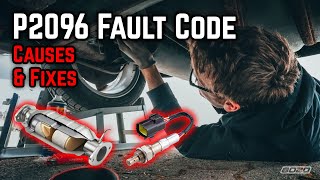
For the 2013-2014 Escape with the 2.0L GTDI engine, this code is uniquely tied to a specific factory issue. A Ford Technical Service Bulletin (TSB 16-0031) identifies that engine oil can leak from the Variable Valve Timing (VVT) solenoids, travel ('wick') through the engine's wiring harness, and contaminate the downstream oxygen sensor's electrical connector. This oil saturation creates a false electrical signal that the PCM interprets as a lean condition, making this problem more of an electrical/contamination issue 🎬 Watch: A deep dive into what the P2096 code means. than a typical exhaust or fuel system failure.
Diagnostic Flowchart
Tap your situation to follow the diagnostic path that matches what you're seeing on this vehicle.
Symptoms You May Notice
- Check Engine Light is on
- Reduced fuel economy
- Rough or uneven idle
- Hesitation during acceleration
- Reduced engine power, especially under load
- No noticeable symptoms other than the Check Engine Light
- Replacing only the oxygen sensor without checking for oil contamination from the VVT solenoids, leading to the new sensor failing or the code returning.
- Replacing the catalytic converter when the root cause is an exhaust leak or a faulty sensor.
- Assuming the O2 sensor is bad without first checking for exhaust leaks between the upstream and downstream sensors.
Most Likely Causes
- Oil Contamination of O2 Sensor via Wiring Harness (Per TSB 16-0031) 🔴 High Probability A known issue on 2.0L GTDI engines built between 9/1/2012 and 8/1/2013 where VVT solenoid seals fail, allowing oil to wick through the harness. This is a common failure point discussed extensively in owner forums.
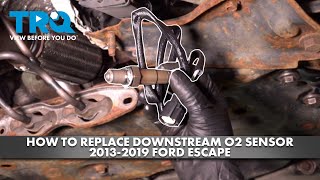
How to confirm: Disconnect the electrical connectors at both VVT solenoids (located on top of the valve cover) and the downstream oxygen sensor (Catalyst Monitor Sensor, post-catalytic converter). 🎬 See this walkthrough for replacing the downstream O2 sensor. Shine a light into the connector housings and look for a visible film or pooling of engine oil on the pins or inside the connector. The presence of any oil is a definitive sign of this issue.
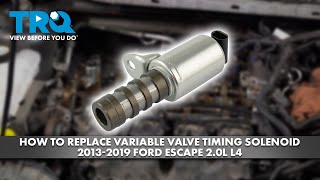
Typical fix: Replace both VVT oil control solenoids 🎬 Watch: How to replace the VVT solenoids on your Escape. and the downstream oxygen sensor. Clean the connectors thoroughly with electrical contact cleaner. If oil has heavily saturated the wiring harness, the engine wiring harness may also need to be replaced, though cleaning is often sufficient.
Est. part cost: $150-$400 - Exhaust Leak 🟡 Medium Probability Leaks can develop at gaskets, the flex pipe, or from cracks in the exhaust manifold, allowing outside air to be pulled into the exhaust stream. This extra oxygen fools the downstream O2 sensor into reporting a lean condition.
How to confirm: Perform a visual inspection of the exhaust system from the engine to the catalytic converter. Listen for hissing or ticking sounds, especially on a cold start. A smoke test is the most reliable method to pinpoint small leaks.
Typical fix: Replace the leaking gasket or repair/replace the cracked pipe or manifold. Exhaust putty can be a temporary fix for small leaks.
Est. part cost: $20-$500 - Faulty Downstream Oxygen (O2) Sensor 🟡 Medium Probability Sensors can fail due to age, contamination (from oil, coolant, or fuel additives), or internal faults, causing them to send inaccurate voltage signals to the PCM. This can happen even without the TSB-related oil leak.
How to confirm: Use a diagnostic scanner to monitor the live data for the downstream O2 sensor (Bank 1, Sensor 2). The voltage should be relatively stable. If the voltage is stuck low (e.g., below 0.2V), the sensor is likely faulty or is correctly reading a true lean condition caused by something else.
Typical fix: Replace the downstream (post-catalyst) Bank 1 oxygen sensor.
Est. part cost: $50-$150
Rare But Worth Checking
- Clogged or Failing Catalytic Converter: While less common, a failing converter can alter exhaust flow and chemistry, sometimes triggering a P2096 code before a P0420 (catalyst efficiency) code appears.
- Low Fuel Pressure: A weak fuel pump or clogged fuel filter can create a genuine lean condition that is severe enough to be detected by the downstream sensor.
- Intake or Vacuum Leaks: Unmetered air entering the engine through a cracked hose or bad gasket will typically set a P0171 code first, but a significant leak can also cause P2096.
Diagnosis Steps
- Check for Technical Service Bulletins (TSBs). For a 2013-2014 Escape with the 2.0L engine, immediately check for TSB 16-0031.
- Disconnect the VVT solenoid and downstream O2 sensor electrical connectors. Inspect for any presence of engine oil. If oil is found, follow the TSB repair procedure: replace both VVT solenoids and the downstream O2 sensor.
- If no oil is present, scan for any other DTCs to get more context (e.g., P0171, P0420).
- Thoroughly inspect the exhaust system for leaks between the engine and the downstream O2 sensor. Listen for noise and use a smoke machine for best results. Pay close attention to the exhaust manifold gasket and flex pipe.
- Use a scan tool to observe live data from the downstream O2 sensor (B1S2). A voltage stuck below 0.4V suggests a lean reading. Compare it to the upstream sensor (B1S1) to see if the lean condition exists before the converter.
- If exhaust leaks and sensor issues are ruled out, investigate the fuel system by checking fuel pressure and inspecting for clogged injectors.
- Check for intake system vacuum leaks using a smoke machine, listening for hissing sounds around intake hoses.
Parts You'll Likely Need
- Downstream Oxygen Sensor (Catalyst Monitor Sensor)
(OEM #Motorcraft DY1202)— This sensor is often the final failure point, either from oil contamination (per the TSB) or normal wear.
Trusted brands: Motorcraft, Bosch, Denso, NTK
OEM price range: $100-$180
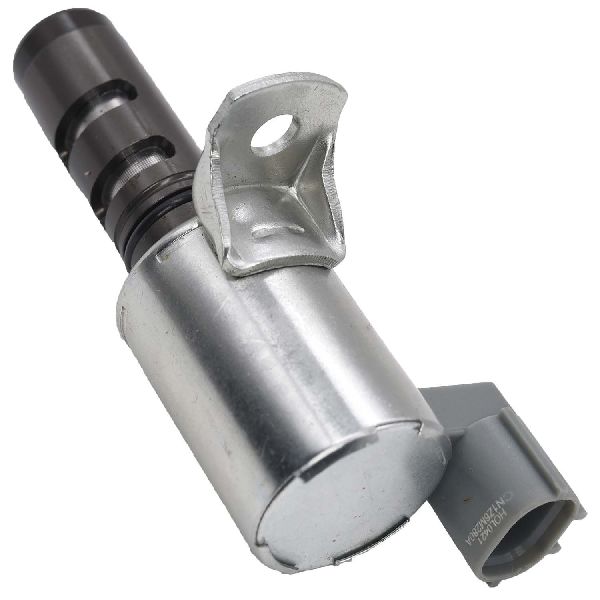
Aftermarket price range: $50-$120 - VVT Oil Control Solenoid
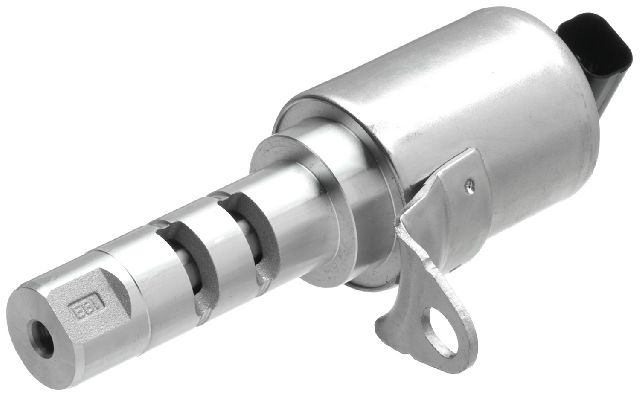
(OEM #Motorcraft CJ5Z-6M280-A)— This is the source of the oil leak described in TSB 16-0031 for the 2.0L engine. They should be replaced as a pair.
Trusted brands: Motorcraft, Dorman, Standard Motor Products (VVT122)
OEM price range: $50-$90 each
Aftermarket price range: $30-$60 each - Exhaust Manifold Gasket — A common source for exhaust leaks that cause a false lean condition.
Trusted brands: Fel-Pro, Mahle, Motorcraft
OEM price range: $30-$60
Aftermarket price range: $15-$40
Related Codes That Often Appear With This One
- P0171 — If a vacuum leak or fuel delivery issue is the root cause, the upstream sensor will also detect a lean condition, triggering P0171 (System Too Lean Bank 1).
- P0420 — If the P2096 code is caused by a failing catalytic converter, it is often accompanied or soon followed by P0420 (Catalyst System Efficiency Below Threshold).
Technical Service Bulletins (TSBs) & Recalls
- TSB 16-0031: 2.0L GTDI - Illuminated MIL with DTC P2096. Details the issue of oil migrating from VVT solenoids to the O2 sensor. This TSB is also referenced for other Ford models with the same engine, like the Fusion and MKC.
Platform-Specific Known Issues
- TSB 16-0031: Oil Migration from VVT Solenoids: TSB 16-0031 documents an issue on 2013-2014 models with the 2.0L GTDI engine (built 9/1/2012-8/1/2013) where engine oil migrates from the VVT solenoids through the wiring harness to the downstream O2 sensor, causing code P2096.
- Real-World Repair Story: An owner of a 2014 Escape 2.0L on fordforums.com with 98k miles reported a P2096 code. After finding oil in the O2 sensor connector, they replaced both VVT solenoids and the downstream O2 sensor themselves. They cleaned the harness connector with electrical cleaner and the code was successfully resolved, confirming the TSB procedure as the correct fix.
Mechanic-Grade Diagnostic Values
- Downstream O2 Sensor (B1S2) Voltage — expected: Relatively stable reading between 0.1 and 0.9 volts on a warm, running engine.. Failure: Voltage is stuck low (e.g., below 0.2V), indicating a lean reading or faulty sensor.
- Long Term Fuel Trim (LTFT) Bank 1 — expected: Close to 0%, ideally within +/- 5%.. Failure: Values consistently above +10% indicate the PCM is compensating for a persistent lean condition.
- Fuel Pressure (General) — expected: Typically 40-60 PSI for many port-injected vehicles, but vehicle-specific specs should be checked.. Failure: Pressure below the specified range indicates a weak fuel pump or clogged filter.
Scan Tool Commands That Help
- Ford IDS (or equivalent): Key On Engine Running (KOER) Self-Test — After replacing an oxygen sensor, running the KOER self-test is critical. It forces the system to reset adaptations for the new sensor. Simply clearing codes with the engine off may cause the P2096 code to return.
- Ford IDS (or equivalent): Reset All Adaptations / Clear/Reset KAM — After a repair that affects the air/fuel mixture (like fixing a vacuum leak or replacing VVT solenoids), resetting the Keep Alive Memory (KAM) forces the PCM to relearn fuel trims from a baseline, which can resolve persistent lean codes.
Real Owner Repair Stories
- Ford F150 Forum (2013 Ford F-150 3.5L EcoBoost) — Check Engine Light with code P2096.
❌ Tried (didn't work) Replaced the downstream (#2) oxygen sensor on Bank 1, as suggested by all research for P2096. The code returned quickly.
✅ What actually fixed it Replacing the upstream (#1) oxygen sensor on Bank 1 resolved the P2096 code, even though the code points to the post-catalyst sensor. - My Home Garage YouTube Channel (2017 Ford Escape 1.5L EcoBoost) — Check Engine Light with code P2096.
❌ Tried (didn't work) Replaced the downstream O2 sensor and cleared the code using a standard Key On Engine Off (KOEO) method. The code returned.
✅ What actually fixed it After replacing the sensor, the problem was only resolved after performing a Key On Engine Running (KOER) self-test with a scan tool, which properly reset the system adaptations for the new sensor.
Model Year Variations Within This Range
- 2013 vs 2014: In the 2013 model year, the top-tier Titanium trim came standard with the 2.0L EcoBoost engine. For the 2014 model year, Ford made the 1.6L EcoBoost the standard engine on the Titanium trim, with the 2.0L becoming a paid upgrade.
Helpful Videos

We Have This Part in Stock


The information in this article is provided for general reference and educational purposes only. Vehicle specifications, procedures, and part compatibility can vary by production date, trim level, and region. Always consult your vehicle's factory service manual and verify part numbers before purchasing or performing repairs. Safety-critical components such as airbags, seat belts, and braking systems should be installed by a qualified professional.
- Ford ESCAPE:
- 🎬 Helpful Videos
- 🛍️ Shop This Part
- What's Unique About the 2013-2014 Ford ESCAPE
- Diagnostic Flowchart
- Symptoms You May Notice
- Most Likely Causes
- Rare But Worth Checking
- Diagnosis Steps
- Parts You'll Likely Need
- Related Codes That Often Appear With This One
- Technical Service Bulletins (TSBs) & Recalls
- Platform-Specific Known Issues
- Mechanic-Grade Diagnostic Values
- Scan Tool Commands That Help
- Real Owner Repair Stories
- Model Year Variations Within This Range
- 🎟️ Get 5% Off