

P2096 on 2013-2015 Dodge Challenger: Lean Fuel Trim Causes and Fixes
P2096 on a Dodge Challenger typically points to an exhaust leak before the rear oxygen sensor or a failing sensor on Bank 1 (passenger side). For 2014 5.7L models with a manual transmission, a software update is a known fix per a manufacturer TSB. A DIY sensor replacement costs around $50-$100, while an exhaust leak or software flash can vary in cost. Owners often first suspect the O2 sensor, but exhaust leaks are a very common underlying cause.
- P2096 means the exhaust is too lean on the passenger side, after the catalytic converter.
- The most common causes are an exhaust leak or a bad downstream O2 sensor.
- For 2014-2015 Challengers with a 5.7L V8 and manual transmission, check for a required PCM software update before replacing parts.
- Diagnosis should start with a visual inspection of the exhaust system for leaks and checking O2 sensor data with a scan tool.
What's Unique About the 2013-2015 Dodge CHALLENGER
For the 2013-2015 Challenger, particularly 2014 models with the 5.7L V8 HEMI engine (sales code ESH) and a manual transmission (sales code DEC), this code is specifically called out in multiple Technical Service Bulletins (TSBs). These bulletins indicate that the cause may not be a physical part failure, but rather a need for a PCM software update to correct over-sensitive diagnostic parameters. This makes checking for available software updates a critical and unique first step for these specific vehicles, before replacing parts.
Diagnostic Flowchart
Tap your situation to follow the diagnostic path that matches what you're seeing on this vehicle.
Symptoms You May Notice
- Check Engine Light illuminated
- Decreased fuel economy
- Rough or unstable idle
- Engine hesitation or a 'bucking' feeling at low speeds.
- Poor acceleration
- A ticking or hissing sound from the engine bay or under the vehicle, indicating an exhaust leak.
- Replacing the upstream (Bank 1, Sensor 1) oxygen sensor. P2096 specifically relates to the post-catalyst sensor, so replacing the upstream sensor will not fix the issue.
- Replacing the catalytic converter. While a failing converter can be a cause, it is far less common than exhaust leaks or a bad sensor and should be diagnosed last.
- Assuming the O2 sensor is bad without checking for exhaust leaks first. Many owners replace the sensor only to have the code return because the root cause was an exhaust leak fooling the sensor.
Most Likely Causes
- Exhaust Leak 🔴 High Probability Gaskets and exhaust pipe flanges, particularly at the exhaust manifold, can degrade over time, allowing outside air to be drawn into the exhaust stream. This extra oxygen tricks the downstream O2 sensor into reporting a false lean condition. This is a very common issue on HEMI engines.
How to confirm: Visually inspect the exhaust system from the engine's exhaust manifold to the downstream O2 sensor on Bank 1 (passenger side). Look for cracks, rust, or black soot marks around gaskets and flanges. A common failure point is the manifold-to-head connection. A smoke test is the most effective way to pinpoint small leaks.
Typical fix: Replace the leaking gasket or repair the cracked pipe section. Sometimes simply tightening loose manifold bolts can resolve the issue.
Est. part cost: $20-$100 - Faulty Downstream Oxygen Sensor (Bank 1, Sensor 2) 🔴 High Probability Oxygen sensors have a finite lifespan and can become slow to respond or biased, sending inaccurate lean readings to the PCM. Owners often replace this sensor as a first step.
How to confirm: Use a scan tool to monitor the voltage of the Bank 1 Sensor 2. It should show a relatively stable voltage when the engine is warm and at a steady RPM (typically 0.6-0.8V). If the voltage is stuck low (below 0.45V) or fluctuates rapidly like the upstream sensor, it is likely faulty.
Typical fix: Replace the Bank 1, Sensor 2 oxygen sensor. Applying anti-seize lubricant to the new sensor's threads is recommended.
Est. part cost: $40-$120 - PCM Software Update Needed 🟡 Medium Probability As per TSBs #18-039-15 REV-A and #1809416, 2014 Challengers with the 5.7L HEMI (sales code ESH) and a manual transmission (sales code DEC) are specifically prone to this code due to software calibration. TSBs for 2015 models also list P2096 as being resolved by software updates for other drivability concerns.
How to confirm: A Dodge dealership or a qualified shop with access to OEM software (like wiTECH) can check your vehicle's VIN to see if the software updates from the TSBs have been applied.
Typical fix: The PCM must be reprogrammed (flashed) with the updated software. This is a dealer-only or specialist repair.
Est. part cost: $150-$350 - Engine Vacuum Leak ⚪ Low Probability Cracked vacuum hoses or leaking intake manifold gaskets introduce unmetered air into the engine. While this affects the entire engine, it can manifest as a P2096 code. A user on a Chrysler forum was advised by their mechanic that a vacuum leak was the cause after an O2 sensor replacement did not fix the issue.
How to confirm: Perform a smoke test on the intake system to find the source of the unmetered air. Spraying brake cleaner near suspected leak points and listening for a change in engine idle can also help locate a leak.
Typical fix: Replace the leaking hose or gasket.
Est. part cost: $10-$250
Rare But Worth Checking
- Failing Catalytic Converter: While less common, a converter that is no longer functioning efficiently can fail to properly process exhaust gases, leading to incorrect oxygen readings downstream and triggering a P2096 code. This should be considered after other causes are ruled out.
- Low Fuel Pressure: A weak fuel pump or clogged fuel filter can cause a genuine lean condition that the system detects. This would typically be accompanied by other codes and more severe drivability issues, such as stalling or difficulty starting.
- Wiring Issues: Damaged wires or a corroded connector for the downstream O2 sensor can cause an incorrect signal to be sent to the PCM. A short in the O2 sensor wiring harness is a possible culprit.
Diagnosis Steps
- Check for Technical Service Bulletins (TSBs) related to your vehicle's VIN, especially if you have a 2014 5.7L with a manual transmission, as a PCM flash may be the required fix.
- Use a scan tool to confirm P2096 is the only code, or note any other codes present. Codes like P2098 or misfire codes can help narrow the diagnosis.
- Thoroughly inspect the exhaust system on Bank 1 (passenger side) for any signs of leaks, especially between the catalytic converter and the downstream O2 sensor. Listen for ticking noises.
- With a scan tool, observe the live data for the Bank 1 Sensor 2 (downstream) oxygen sensor. The voltage should be relatively steady around 0.6-0.8V. If it is stuck low (under 0.4V) or switching erratically, the sensor is likely bad or there is a significant exhaust leak.
- If no exhaust leaks are found and the sensor appears faulty, test the sensor's wiring for continuity and proper voltage before replacing it. Check the connector for corrosion.
- If other causes are ruled out, perform a vacuum leak test using a smoke machine.
- As a final step, test fuel pressure to rule out a fuel delivery problem.
Parts You'll Likely Need
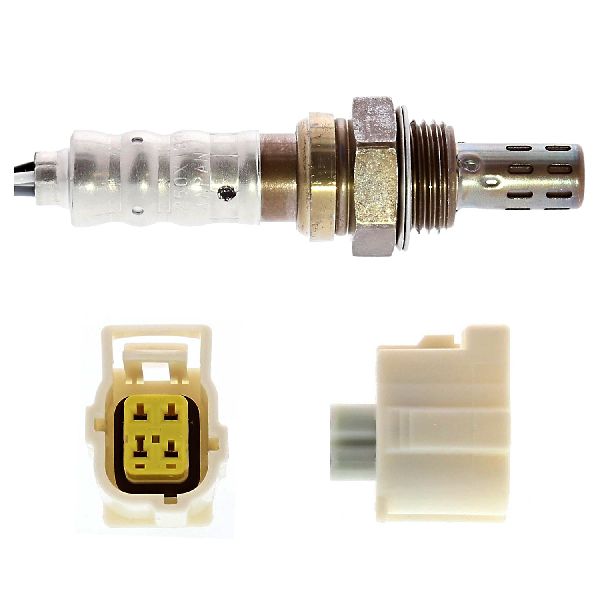
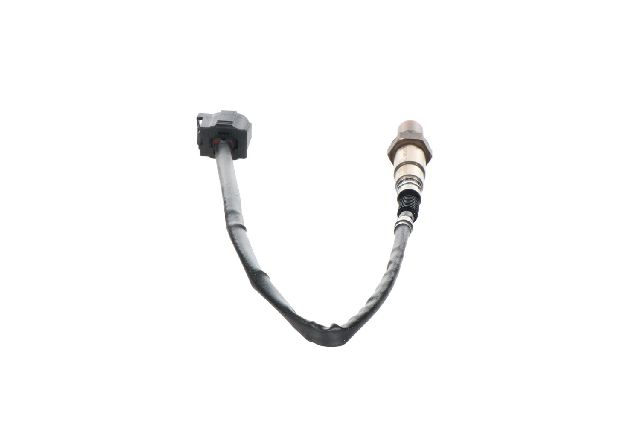
- Downstream Oxygen Sensor (Bank 1, Sensor 2)
(OEM #5149180AA)— This sensor is responsible for reporting the oxygen level that triggers the P2096 code. It is a common failure point and is often replaced, sometimes unnecessarily. This part number has been superseded by 5149180AB.
Trusted brands: Mopar, Denso, NGK/NTK, Bosch
OEM price range: $90-$150
Aftermarket price range: $40-$90 - Exhaust Manifold Gasket — If an exhaust leak is found at the manifold flange, the gasket will need to be replaced to ensure a proper seal. This is a common source of leaks on HEMI engines.
Trusted brands: Fel-Pro, Walker Exhaust, Mopar
OEM price range: $20-$40
Aftermarket price range: $10-$25
Related Codes That Often Appear With This One
- P2097 — This code is for a rich condition on the same bank. Seeing both can indicate an erratic sensor or a PCM software issue, as noted in TSBs #18-073-20 and #18-084-16.
- P219A / P219B — These codes indicate an air-fuel ratio imbalance between cylinders on Bank 1 or Bank 2. A problem causing P2096 could also lead to these imbalance codes, and they are mentioned together in TSB #18-073-20.
- P0300 / P0307 — Misfire codes (general or for a specific cylinder like #7) can occur alongside P2096 if the lean condition is severe enough to affect combustion. TSB #18-084-16 lists these codes together as being potentially resolved by a software update.
- P2098 — This is the equivalent lean code for Bank 2 (driver's side). Seeing both P2096 and P2098 simultaneously might point to a more systemic issue like low fuel pressure or a vacuum leak affecting both banks.
Technical Service Bulletins (TSBs) & Recalls
- 18-073-20: Notes P2096 along with other codes that can be addressed by software enhancements on 2015 models.
- 1809416: Cites P2096 on 2014 manual transmission 5.7L (ESH) vehicles, recommending a software update.
- 18-084-16: Lists P2096 with other fuel trim and misfire codes that may be fixed with a software update for 2015 models.
- 18-039-15 REV-A: Specifically calls out P2096 on 2014 manual transmission 5.7L (ESH) vehicles and points to a software fix.
- 18-046-15: Connects P2096 and other codes to an engine buck/delay symptom and available software updates for 2015 models.
Platform-Specific Known Issues
- TSB #18-039-15 REV-A and #1809416 note that 2014 models with the 5.7L engine and a manual transmission may set this code, requiring a PCM software update.
- TSB #18-073-20, #18-084-16, and #18-046-15 list P2096 as one of several codes that can be resolved with software enhancements on 2015 models, sometimes related to an engine buck or delay feeling.
- Owners on forums frequently report that exhaust manifold leaks are a primary cause for this code on HEMI engines, often after a dealership or mechanic has already replaced the oxygen sensor.
Mechanic-Grade Diagnostic Values
- Fuel Pressure at Fuel Rail — expected: 40-60 PSI for most vehicles; specific spec for the Challenger is approximately 58 PSI +/- 5 PSI.. Failure: Pressure significantly below the specified range indicates a weak fuel pump or clogged filter.
- Downstream O2 Sensor (Bank 1 Sensor 2) Voltage — expected: Relatively stable voltage, typically between 0.6V and 0.8V on a warm engine at steady RPM.. Failure: Voltage stuck low (e.g., < 0.45V) or fluctuating rapidly similar to the upstream sensor.
- O2 Sensor Heater Circuit Resistance — expected: Typically between 2 and 30 Ohms, depending on the specific sensor.. Failure: An 'OL' (Open Loop/infinite resistance) reading or a reading of 0 Ohms (short circuit) indicates a failed heater element.
Scan Tool Commands That Help
- wiTECH (or equivalent professional scanner): Fuel Trim Reset — After repairing a vacuum leak, exhaust leak, or fuel system issue, resetting the long-term fuel trim values forces the PCM to relearn the fuel strategy immediately, which can help confirm the fix and extinguish the check engine light faster.
- wiTECH (or equivalent professional scanner): O2 Sensor Heater Test — To actively command the O2 sensor's internal heater on and off to verify the integrity of the heater circuit and the PCM's control over it. This can help differentiate a sensor failure from a wiring or PCM issue.
Wiring & Ground Locations
- G903A / G905A (Example identifiers) — Main engine-to-chassis grounds are typically located on the engine block, often near the alternator bracket, and connect to the frame rail or firewall.. A poor engine ground can cause incorrect readings from various sensors, including the oxygen sensors, as they rely on a stable ground reference. While not a direct cause, checking the main ground strap for corrosion or looseness is a crucial step in diagnosing any electronic fault.
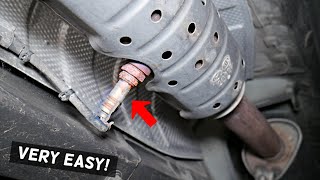
- O2 Sensor Connector (Bank 1, Sensor 2) — On the passenger side of the vehicle, along the exhaust pipe after the catalytic converter. The connector is typically attached to the transmission crossmember or the vehicle's underbody.. This connector is the primary interface for the sensor. Checking for corrosion, bent pins, or damaged wires here is essential. A typical 4-wire sensor will have two wires for the heater circuit (often black and/or gray), a signal wire (often black or white), and a ground wire.
Real Owner Repair Stories
- ChallengerTalk Forum (2010 Dodge Challenger R/T with aftermarket modifications (headers, intake, throttle body)) — Check Engine Light with code P2096 appearing, particularly in cool weather shortly after starting the drive.
❌ Tried (didn't work) Using canned tunes from a Diablo T2 tuner., Clearing the code, which would sometimes stay off for a short period before returning.
✅ What actually fixed it Getting a custom tune (from Greene Racing) specifically adjusted for the car's modifications. This indicates that the aftermarket headers changed the exhaust flow characteristics enough to require a recalibration of the PCM's fuel trim and O2 sensor parameters to prevent the code.
OEM Part Supersession History
5149180AA→5149180AB— Standard part revision, likely for improved durability, material change, or minor design update.
Heads up: The new part number 5149180AB is the correct service replacement for 5149180AA and is fully compatible.
Model Year Variations Within This Range
- 2015: The 2015 model year received a significant exterior refresh inspired by the 1971 Challenger. This included a new grille, hood, LED 'racetrack' taillights, and revised front/rear fascias. While the core powertrain and exhaust layout remained the same for the 5.7L and 6.4L engines, some exhaust components and hangers may have different part numbers due to the fascia changes. The TSBs also differentiate between 2014 and 2015 models for software updates.
Helpful Videos
We Have This Part in Stock


The information in this article is provided for general reference and educational purposes only. Vehicle specifications, procedures, and part compatibility can vary by production date, trim level, and region. Always consult your vehicle's factory service manual and verify part numbers before purchasing or performing repairs. Safety-critical components such as airbags, seat belts, and braking systems should be installed by a qualified professional.
- Dodge CHALLENGER:
- 🎬 Helpful Videos
- 🛍️ Shop This Part
- What's Unique About the 2013-2015 Dodge CHALLENGER
- Diagnostic Flowchart
- Symptoms You May Notice
- Most Likely Causes
- Rare But Worth Checking
- Diagnosis Steps
- Parts You'll Likely Need
- Related Codes That Often Appear With This One
- Technical Service Bulletins (TSBs) & Recalls
- Platform-Specific Known Issues
- Mechanic-Grade Diagnostic Values
- Scan Tool Commands That Help
- Wiring & Ground Locations
- Real Owner Repair Stories
- OEM Part Supersession History
- Model Year Variations Within This Range
- 🎟️ Get 5% Off