

OBD-II Code P2088: 'A' Camshaft Position Actuator Control Circuit Low (Bank 1)
The Ultimate Guide: What P2088 means, why it triggers, and how to fix it for good.
- Check your engine oil first; over 90% of P2088 codes stem from low fluid levels, heavy sludge, or using the wrong viscosity (like 5W-30 instead of 0W-20).
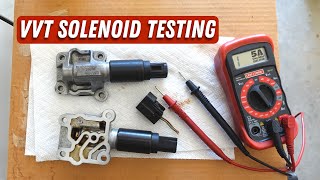
- Test the VVT solenoid's resistance with a multimeter; a healthy unit typically reads between 6.5 and 14 Ohms, while an 'OL' reading confirms internal failure.
- Inspect the solenoid's electrical connector for oil contamination, a common failure point that drops circuit voltage and triggers the code.
- Avoid driving long distances with an active P2088, as prolonged incorrect valve timing forces unburnt fuel into the exhaust, risking a $1,200+ catalytic converter replacement.
What Does P2088 Mean?

P2088 means the Powertrain Control Module (PCM) detected lower-than-expected voltage in the Bank 1 intake camshaft actuator circuit. This actuator (often called a VVT solenoid or Oil Control Valve) uses a Pulse Width Modulated (PWM) signal to direct oil pressure, altering camshaft timing for optimal performance. A 'low' signal indicates an open circuit, a short to ground, or a failed solenoid coil.
🎬 See how the solenoid works and how to replace it.Technical definition: The official SAE/OBD-II definition is: ''A' Camshaft Position Actuator Control Circuit Low (Bank 1)'. 'A' refers to the intake camshaft. Bank 1 is the side of the engine containing cylinder #1. On inline engines, there is only one bank.
Can I Drive With P2088?
Yes, But With Caution. You can drive, but avoid long distances. The engine operates with reduced power, poor fuel economy, and can stall unexpectedly. Continuing to drive accelerates wear on timing components and forces unburnt fuel into the exhaust, risking a $1,200-$2,500 catalytic converter replacement. Diagnose and repair this immediately.
Common Causes

- Low, Dirty, or Incorrect Viscosity Engine Oil (Very Common) — The VVT system relies entirely on clean oil at the correct pressure. Low levels, sludge, or incorrect viscosity (e.g., 10W-30 instead of 0W-20) prevent the solenoid from operating, triggering a circuit code.
- Faulty VVT Oil Control Solenoid (Actuator) (Very Common) — The solenoid's internal electromagnetic coil degrades over time, causing an open or shorted circuit that drops the voltage reading sent to the PCM.
- Damaged Wiring or Corroded Connector (Common) — Engine heat and vibration fray wires or short them to ground. Oil leaking into the electrical connector causes corrosion, dropping circuit voltage.
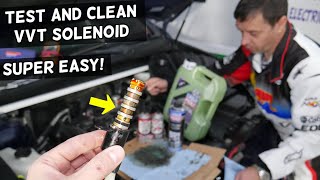
- Clogged Solenoid Filter Screen (Common) — Mesh filters protect the solenoid from debris. Sludge clogs this screen, restricting oil flow and causing the actuator to bind 🎬 Watch: How to test and clean your VVT solenoid., which the PCM flags as a fault.
- Failed Camshaft Phaser (Mechanical Failure) (Less Common) — A mechanically stuck camshaft phaser puts abnormal load on the solenoid, forcing the PCM to interpret the sluggish response as an electrical fault.
- Stretched Timing Chain or Worn Timing Belt (Rare) — Incorrect base mechanical timing prevents the PCM from adjusting cam timing successfully, sometimes manifesting as a control circuit code.
- Blown Fuse or Faulty Relay (Rare) — A blown fuse or failing relay cuts power to the solenoid entirely, resulting in an immediate 'low circuit' code.
- Failing Powertrain Control Module (PCM) (Very Rare) — The PCM's internal driver circuit fails, stopping the voltage signal to the solenoid. Consider this only after exhausting all other electrical tests.
Symptoms

- Check Engine Light is On — The primary indicator that the PCM stored a fault code.
- Rough or Unstable Idle — The engine shakes or has fluctuating RPMs at a stop because the camshaft is locked in an unoptimized position.
- Reduced Engine Power and Poor Acceleration — The car feels sluggish at lower RPMs because valve timing cannot advance to produce optimal power.
- Worse Fuel Economy — With valve timing stuck, the engine cannot operate efficiently, increasing fuel consumption.
- Rattling or Ticking Noise from Engine — A distinct clicking sound on startup indicates a failing VVT phaser or lack of oil pressure.
- Difficulty Starting or Stalling — Incorrect camshaft timing makes the engine hard to start or causes stalling at low speeds.
- Engine Misfires (also visible on scanner) — Incorrect valve timing leads to incomplete combustion, logging misfire codes (P0300, P0301) alongside P2088.
Diagnostic Flowchart
Tap your situation to follow the diagnostic path that matches what you're seeing on this code.
Common Fixes & Costs
- Change Engine Oil and Filter — Parts: $40-$80, Labor: $20-$40, ~0.5 hr book time (DIY)
- Replace 'A' Camshaft Position Actuator Solenoid (Bank 1) — Parts: $40-$150, Labor: $80-$150, ~1.2 hr book time (Intermediate)
- Clean or Replace VVT Solenoid Filter Screen — Parts: $5-$25, Labor: $50-$100, ~0.8 hr book time (Intermediate)
- Repair Damaged Wiring or Replace Connector Pigtail — Parts: $15-$40, Labor: $100-$250, ~1.5 hr book time (Intermediate)
- Replace Powertrain Control Module (PCM) — Parts: $600-$1200+, Labor: $150-$300, ~2 hr book time (Professional)
Used vs. New Parts: Buying Guide
When a used part is worth it: Buying a used VVT solenoid is not recommended. It is an electro-mechanical component prone to wear and clogging. Savings are minimal compared to the risk of premature failure.
Donor-vehicle mileage cap: roughly under 50000 miles for the part to have meaningful remaining life.
Donor quality checklist:
- Verify the exact OEM part number.
- Avoid parts from engines known for sludge issues.
- Ensure mesh filter screens are intact and the connector is free of oil.
Decision logic:
- If The cost of a new aftermarket or OEM solenoid is under $100 → Always buy new. The warranty outweighs the small savings of a used part.
- If The vehicle is over 15 years old and the budget is extremely tight → A used part from a low-mileage vehicle is a temporary solution, but expect a shorter lifespan.
- If The part is a known high-failure item for your specific model → Favor a new OEM part, as it likely features an updated design.
Warranty tradeoff: Salvage yards offer 30-90 day part-only warranties. New aftermarket parts include 1-year to lifetime warranties. New OEM parts carry a 1-year/12,000-mile warranty.
Worst-case if a used part fails: $200-$400 if a used solenoid fails, requiring a second part purchase and repeat labor.
What Happens If You Wait — Timeline
- 0-1 month: Check Engine Light illuminates. Engine has a slightly rough idle. No other major symptoms are perceived. (MPG impact: 3-8%% · Added cost: $0-$50 in wasted fuel)
- 1-4 months: Noticeable power loss and hesitation. Fuel economy drops. The engine stalls intermittently at low speeds. (MPG impact: 8-15%% · Added cost: $50-$200 in wasted fuel)
- 4-8 months: Incorrect timing causes incomplete combustion. Unburnt fuel overheats and degrades the catalytic converter. Catalyst efficiency codes (P0420) appear. (MPG impact: 15-25%% · Added cost: $1,200-$2,800 (Catalytic converter replacement required))
- 8+ months: Engine runs poorly at all times. The catalytic converter clogs, causing severe backpressure. Constant strain accelerates wear on the timing chain and cam phasers. (MPG impact: 25-40%% · Added cost: $1,500-$4,000+ (Timing chain and phaser failure))
Cost of Not Fixing It
- 0-1 month: Noticeable decrease in fuel economy (5-15% drop), rough idle, and poor acceleration. Risk of stalling in traffic. (Added cost: Negligible, other than increased fuel costs.)
- 1-6 months: Incorrect valve timing forces unburnt fuel into the exhaust, overheating and destroying the catalytic converter. (Added cost: $1200-$2800 (Catalytic converter replacement))
- 6+ months: Continued operation puts severe strain on the timing chain and phasers, leading to premature failure of critical engine components. (Added cost: $1500-$3000+ (Timing chain/phaser replacement))
Diagnosis Steps

- Check Engine Oil Level, Condition, and Viscosity
Pull the dipstick. Verify the oil level is correct, the oil is not sludgy, and you are using the manufacturer-specified viscosity. Over 90% of VVT issues stem from poor oil condition.
Tools: Rag or paper towel (Beginner) - Scan for Codes and Review Freeze Frame Data
Use an OBD-II scanner to confirm P2088 and check for related codes like P0011 (timing over-advanced) or misfires. Freeze frame data shows the exact engine conditions when the fault occurred.
Tools: OBD-II Scanner (Beginner) - Visually Inspect the Wiring and Connector
Unplug the 'A' camshaft actuator solenoid on Bank 1. Inspect both the harness and solenoid for green corrosion, bent pins, or oil contamination. Trace the wiring for breaks or melting.
Tools: Flashlight (Beginner) - Test the Solenoid's Resistance
With the solenoid unplugged, set a multimeter to Ohms (Ω). Measure resistance between the two solenoid pins. Most read between 6.5 and 14 Ohms. A reading of 'OL' (open) or near zero (short) confirms the solenoid failed.
Tools: Multimeter (Intermediate) - Check for Voltage and Ground at the Harness
Turn the ignition 'On' (engine off). Set the multimeter to DC Volts. Connect the red lead to the harness power pin and black to engine ground. You must see battery voltage (approx. 12.6V). Test the ground pin for continuity (under 1 Ohm).
Tools: Multimeter (Intermediate) - Perform a Bi-Directional Control Test
Using an advanced scan tool, command the solenoid 'On' while idling. The engine must immediately stumble or stall. If nothing happens, the solenoid is stuck or oil passages are blocked. If it stumbles, the hydraulics work, pointing to a wiring or PCM fault.
Tools: Advanced Bi-Directional Scan Tool (Advanced) - [PRO TIP] Analyze Live Data PIDs
Monitor 'Commanded Camshaft Position' and 'Actual Camshaft Position'. Rev the engine to 2,500 RPM. If 'Commanded' changes but 'Actual' does not, you have a mechanical/hydraulic failure. If 'Commanded' stays at 0, you have an electrical or PCM failure.
Tools: Advanced Bi-Directional Scan Tool (Advanced) - [PRO TIP] Check for a Short to Ground
Disconnect the harness from the PCM and solenoid. Check for continuity between the control wire pin and a known ground. The reading must be 'OL'. Low resistance confirms the control wire is shorted to ground in the harness.
Tools: Multimeter, Vehicle-specific wiring diagram (Advanced) - Check Oil Pressure
Connect a mechanical oil pressure gauge. Verify pressure meets manufacturer specs (typically 20+ PSI at idle, 45+ PSI at 2000 RPM). Low pressure prevents VVT operation and indicates a failing oil pump or worn bearings.
Tools: Mechanical Oil Pressure Gauge, Service Manual (Advanced) - [PRO TIP] Analyze the PCM Command Signal
Connect an oscilloscope to the solenoid's control wire. With the engine running, verify a square wave (PWM signal) that increases duty cycle with RPM. A flat line at 0V with good wiring confirms a failed PCM driver.
Tools: Oscilloscope (Professional)
When This Code Triggers (Freeze-Frame Conditions)
- Engine Coolant Temp: 180-210°F (82-99°C) (The fault is most often detected once the engine is fully warmed up and enters closed-loop fuel control.)
- RPM: 1500-3000 RPM (The PCM actively commands VVT adjustments during light acceleration or steady-state cruising.)
- Engine Load: 30-70% (This moderate load condition is when the VVT system is most active, balancing power and efficiency.)
- Vehicle Speed: 35-60 mph (Triggered during city or highway cruising when the engine is under moderate, steady load.)
Related Codes
- P2089 — The direct counterpart code, indicating a 'High' voltage condition. P2088 suggests a short to ground or open circuit, while P2089 suggests a short to a power source.
- P0011 — A mechanical timing code for 'Over-Advanced'. If seen with P2088, fix P2088 first. The electrical fault prevents the PCM from controlling the solenoid, causing the mechanical timing error.
- P0014 — Similar to P0011, meaning 'Over-Advanced' on Bank 1 Exhaust. Set alongside P2088 if timing deviation is severe. Always prioritize the circuit code.
- P0342 — Indicates a fault with the Camshaft Position Sensor. Do not confuse the actuator (moves the cam) with the sensor (reads the cam). They are different components.
Climate & Environmental Factors
- Cold Weather: Extremely cold temperatures thicken engine oil, especially if the incorrect viscosity is used. This strains the VVT system on startup, preventing the actuator from moving quickly and triggering P2088.
- High Humidity / Salty Climates: Moisture and salt drive electrical corrosion. In coastal regions, the VVT solenoid connector corrodes faster, increasing circuit resistance and dropping voltage.
- High Altitude: Reduced air density alters engine load. If the VVT system is compromised, altitude exacerbates symptoms like power loss.
How to Talk to a Mechanic About This Code
Say this: "I have a check engine light and my scanner shows code P2088, for the 'A' Camshaft Position Actuator Control Circuit Low on Bank 1. Please start by checking the oil level and condition, then testing the solenoid's resistance and the voltage at its connector before recommending a part replacement."
This directs the technician to perform a logical diagnosis rather than immediately replacing parts. It shows you understand the issue could be oil, wiring, or the solenoid.
Avoid saying:
- My check engine light is on, can you just fix it?
- I think I need a new VVT solenoid, can you give me a price?
- Just do whatever you think is necessary.
Questions to ask before authorizing the repair:
- What was the resistance reading on the old solenoid?
- Did you see proper battery voltage and a good ground at the harness connector?
- Is there any oil contamination inside the electrical connector?
- What is the warranty on the recommended part and your labor?
Where to Take It: Dealer vs Independent vs Chain
- Dealer:
Recommended for in-warranty cars or if initial diagnosis points to a complex PCM failure.
Best for: Vehicles under powertrain or emissions warranty., Complex, brand-specific electrical issues (e.g., Mercedes oil-in-harness problem)., When a known Technical Service Bulletin (TSB) exists for the code.
Downsides: Highest labor rates, typically 1.5-2x more than independent shops., Defaults to replacing expensive components when a simpler fix is possible. (Typical cost: +50% vs. baseline) - Independent Shop:
Best overall fit. A competent independent technician easily diagnoses and repairs common failures associated with this code.
Best for: Out-of-warranty vehicles where cost is a major factor., Diagnosing common causes of P2088 (bad solenoid, wiring issue, oil problem)., Vehicles from common brands like GM, Ford, Honda, and Toyota.
Downsides: Diagnostic skill varies widely; vet the shop based on ASE certifications., Lacks access to the latest manufacturer software updates. (Typical cost: +0% vs. baseline) - Chain Shop:
AVOID for P2088 diagnosis. High risk of misdiagnosis and paying for parts you don't need.
Best for: Simple oil changes if you suspect that is the root cause.
Downsides: Technicians lack in-depth electrical diagnostic training for circuit codes., High pressure to sell parts leads to unnecessary solenoid replacements., Lacks advanced, bi-directional scan tools needed for VVT testing. (Typical cost: -10% vs. baseline)
When to Walk Away From the Repair
If the total estimated repair cost exceeds 40-50% of your car's private-party market value, seriously consider alternatives.
- Car worth $5000, fix is $350: Fix it. This is a common and relatively inexpensive repair well below the threshold.
- Car worth $4000, fix is $2200: Walk away. The diagnosis points to a stretched timing chain. The repair cost is over 50% of the car's value.
- Car worth $8000, fix is $1200: Borderline - get a second opinion. The shop suspects a bad PCM. Confirm the diagnosis before authorizing.
What Scan Tool You Need for This Code
Minimum: A scanner that reads codes, shows freeze-frame data, and displays live data PIDs for 'Commanded' vs. 'Actual' camshaft position.
A basic $20 code reader only gives the code. Proper diagnosis requires viewing live data to see if the computer's commands are followed by the engine.
Budget: BlueDriver Pro Scan Tool / ANCEL BD310 (~$100) — Excellent for initial diagnosis. Reads the code, shows freeze-frame data, and graphs 'Commanded' vs. 'Actual' cam position PIDs to determine if the problem is electrical or mechanical.
Mid-range: Foxwell NT510 Elite / Autel MaxiCOM MK808S (~$200) — Includes bi-directional control. Allows you to command the VVT solenoid on and off directly to see if the engine stumbles, confirming if the solenoid and hydraulics work.
Professional: Autel MaxiSys Series / Snap-on Scan Tools (~$1200+) — Full OEM-level functionality, including advanced coding and built-in oscilloscopes for ultimate electrical diagnosis. Overkill for most DIY users.
How to Clear the Code After You Fix It
- Reconnect the negative battery terminal if disconnected.
- Use an OBD-II scan tool to erase the stored fault codes.
- Perform a complete drive cycle to allow readiness monitors to run.
Drive cycle (~30 minutes): A general drive cycle includes: a cold start, 2-3 minutes of idling, 10-15 minutes of mixed city driving (25-45 mph), 5-10 minutes of steady highway speed (55-60 mph), and coasting down to 20 mph without braking.
Readiness monitors affected: EGR/VVT System, Catalyst (CAT), Oxygen (O2) Sensor
Before emissions retest: drive at least 100 miles to fully set monitors.
Watch out for:
- Clearing the code without fixing the underlying problem guarantees it will return.
- After clearing codes, readiness monitors reset to 'Not Ready'. You must complete a drive cycle before passing an emissions test.
Will This Fail Emissions / State Inspection?
Yes — this code typically fails an OBD-II emissions inspection.
- California: An active P2088 code is an automatic failure. After repair, a full drive cycle must be completed to set readiness monitors before re-testing.
- New York: The NYS DMV inspection includes an OBD-II scan. A check engine light with P2088 results in an automatic failure.
- Texas: In emissions-testing counties, an illuminated check engine light from P2088 causes an automatic inspection failure.
Most Commonly Affected Vehicles
- Subaru Forester, Outback, Legacy, Impreza (2010-2018) — Extremely common on EJ25 and FB25 engines. Oil leaking past the solenoid's O-ring into the electrical connector is a classic failure sign.
- Kia / Hyundai Forte, Elantra, Sonata, Santa Fe (2011-2020) — Frequently caused by a faulty camshaft position actuator solenoid. Always check for oil contamination in the connector.
- Chevrolet / GM Equinox, Malibu, Traverse (2010-2019) — Very common on the 2.4L Ecotec engine. Replace both intake and exhaust solenoids together as a preventative measure.
- Ford F-150, Explorer, Mustang (2004-2016) — Common on 3-valve VCT systems (5.4L V8) and Ti-VCT engines. Issues are almost always tied to clogged VCT solenoids.
- Honda Accord, CR-V, Civic (2008-2017) — Appears on K-series and J-series engines. Check the VTC strainer screen for debris before replacing the solenoid.
- Nissan Altima, Maxima, Murano, Rogue (2007-2018) — Relates to the intake valve timing (IVT) control solenoid. Ensure oil is clean and at the correct level before condemning the part.
- Mazda CX-5, Mazda3, Mazda6 (2012-2019) — SkyActiv engines develop this code due to sticking solenoids from oil deposits. Mazda released updated parts for early models.
- Audi / Volkswagen A4, Q5, GTI, Jetta, Tiguan (2009-2017) — Common on the 2.0T TSI/TFSI engine. The issue is often the N205 valve. Check for a stretched timing chain on higher mileage vehicles.
Manufacturer-Specific Notes
- Subaru: On EJ25 and FB25 engines, oil control solenoids are a maintenance item. TSB 11-174-17R exists for a logic update on some models to prevent false codes.
- GM / Chevrolet: On 2.4L Ecotec engines, replace both intake and exhaust solenoids simultaneously. Ignoring one leads to a repeat repair job within months.
- Ford: On the 5.4L 3V Triton, P2088 is a symptom of larger oil pressure issues. Low pressure at idle prevents VCT solenoids from functioning.
- Mercedes-Benz: On M271/M272 engines, check for oil wicking from the camshaft adjuster magnet connector into the main wiring harness. This travels to the PCM and causes catastrophic damage. Install 'pigtail' harness extensions (A2761560790) to prevent this.
- BMW: Intake VANOS solenoids clog with oil sludge. Technicians swap intake and exhaust solenoids to see if the code follows the part, confirming failure.
Real Owner Stories
2010 Subaru WRX with recurring P2088
Owner kept getting P2088 despite replacing VVT solenoids and verifying wiring continuity.
What they tried:
- Replaced VVT solenoids
- Performed continuity check on wiring
- Replaced timing belt and components
Outcome: The cause was a broken clip on the main engine bulk harness connector, causing it to hang loose. Securing it resolved the code.
Lesson: Don't overlook mechanical connection issues. A perfect electrical circuit fails if main connectors aren't securely clipped. Check for broken plastic clips.
2013 Subaru Crosstrek with P2088 and other codes
Check engine light appeared with P0031 (O2 sensor). After replacing O2 sensors, P2088 appeared.
What they tried:
- Replaced both O2 sensors
- Changed engine oil and filter
- Replaced the VVT solenoid
Outcome: The code returned, indicating a persistent underlying issue in the wiring harness.
Lesson: When a circuit code persists after replacing the primary component, the fault is in the wiring or PCM. Stop swapping parts and perform advanced electrical diagnosis.
2017 Chevy Corvette with P2088 and P0011
Car surged slightly and triggered codes P2088 and P0011 (Camshaft Timing Over-Advanced).
What they tried:
- Cleared codes, but they returned consistently.
Outcome: Forum members advised verifying the engine oil was the factory-specified Mobil 1 ESP 0W-40. Incorrect oil viscosity caused the timing performance codes.
Lesson: If a timing performance code (P0011) appears with a circuit code (P2088), verify oil condition and type first. It is the cheapest fix before complex diagnostics.
How to Prevent This Code From Triggering
- Use high-quality synthetic oil matching the manufacturer's specified viscosity. (Every oil change) — Synthetic oils resist thermal breakdown and contain detergents that prevent sludge, the primary cause of clogged VVT solenoids.
- Adhere to the 'severe service' oil change interval. (Every 3,000-5,000 miles) — Short trips and stop-and-go traffic accelerate sludge formation. Frequent changes remove contaminants before they build up.
- Use a quality engine oil filter. (Every oil change) — The filter traps contaminants. A clogged or low-quality filter cannot protect the narrow passages of the VVT system.
- Perform a professional engine flush on high-mileage vehicles. (Once every 30,000-50,000 miles) — Chemical flushes dissolve existing sludge and varnish deposits, cleaning out VVT solenoids and oil passages.
Frequently Asked Questions
What is 'Bank 1' and where do I find it?
Bank 1 is the side of the engine containing the #1 cylinder. Inline 4-cylinder engines only have one bank. On V6 or V8 engines, consult a diagram, though it is typically the bank closest to the front of the vehicle.
Can low or dirty oil really cause an electrical code like P2088?
Yes. The actuator is electro-hydraulic. If low oil pressure or sludge prevents it from moving, the electrical feedback falls outside the expected range, prompting a circuit fault.
I replaced the solenoid, but the P2088 code came back. What's next?
The fault lies elsewhere. Verify the wiring for intermittent shorts, inspect connector pins for hidden corrosion, and confirm you are using the correct oil viscosity.
What is the most common misdiagnosis for P2088?
Replacing the Camshaft Position Sensor instead of the Actuator (solenoid). P2088 refers to the actuator that moves the cam, not the sensor that reads its position.
What's the difference between a camshaft position actuator and a sensor?
The actuator is an oil control valve that physically moves the camshaft to change timing. The sensor reads the camshaft's position and reports it back to the PCM.
Is P2088 an expensive problem to fix?
An oil change is the cheapest fix ($60-$120). Replacing the actuator solenoid typically costs $150-$300 at a shop. Costs escalate to $1,500+ if the root cause is a stretched timing chain.
Can I just clear the code and keep driving?
You can, but the code returns within one or two drive cycles. Ignoring it causes poor performance and risks severe engine or catalytic converter damage.
How is P2088 different from P2089?
Both point to the Bank 1 intake cam actuator but indicate opposite faults. P2088 ('Low') means an open wire or short to ground, while P2089 ('High') means a short to a voltage source.
Key Takeaways
- Check your engine oil first; over 90% of P2088 codes stem from low fluid levels, heavy sludge, or using the wrong viscosity (like 5W-30 instead of 0W-20).
- Test the VVT solenoid's resistance with a multimeter; a healthy unit typically reads between 6.5 and 14 Ohms, while an 'OL' reading confirms internal failure.
- Inspect the solenoid's electrical connector for oil contamination, a common failure point that drops circuit voltage and triggers the code.
- Avoid driving long distances with an active P2088, as prolonged incorrect valve timing forces unburnt fuel into the exhaust, risking a $1,200+ catalytic converter replacement.
Helpful Videos


The information in this article is provided for general reference and educational purposes only. Vehicle specifications, procedures, and part compatibility can vary by production date, trim level, and region. Always consult your vehicle's factory service manual and verify part numbers before purchasing or performing repairs. Safety-critical components such as airbags, seat belts, and braking systems should be installed by a qualified professional.
- 🎬 Helpful Videos
- What Does P2088 Mean?
- Can I Drive With P2088?
- Common Causes
- Symptoms
- Diagnostic Flowchart
- Common Fixes & Costs
- Used vs. New Parts: Buying Guide
- What Happens If You Wait — Timeline
- Cost of Not Fixing It
- Diagnosis Steps
- When This Code Triggers (Freeze-Frame Conditions)
- Related Codes
- Climate & Environmental Factors
- How to Talk to a Mechanic About This Code
- Where to Take It: Dealer vs Independent vs Chain
- When to Walk Away From the Repair
- What Scan Tool You Need for This Code
- How to Clear the Code After You Fix It
- Will This Fail Emissions / State Inspection?
- Most Commonly Affected Vehicles
- Manufacturer-Specific Notes
- Real Owner Stories
- 2010 Subaru WRX with recurring P2088
- 2013 Subaru Crosstrek with P2088 and other codes
- 2017 Chevy Corvette with P2088 and P0011
- How to Prevent This Code From Triggering
- Frequently Asked Questions
- What is 'Bank 1' and where do I find it?
- Can low or dirty oil really cause an electrical code like P2088?
- I replaced the solenoid, but the P2088 code came back. What's next?
- What is the most common misdiagnosis for P2088?
- What's the difference between a camshaft position actuator and a sensor?
- Is P2088 an expensive problem to fix?
- Can I just clear the code and keep driving?
- How is P2088 different from P2089?
- Key Takeaways
- 🎟️ Get 5% Off