

P2084 on 2014 Jeep Grand Cherokee 3.0L EcoDiesel: EGT Sensor Fixes
This code indicates a performance problem with the Exhaust Gas Temperature (EGT) Sensor Bank 1, Sensor 2. The most common fixes are replacing the faulty sensor or, crucially, having a Jeep dealer perform a Powertrain Control Module (PCM) software update as specified in multiple Technical Service Bulletins. For this specific vehicle, starting with the software update is highly recommended before replacing parts.
- For a 2014 Grand Cherokee EcoDiesel, your first step for code P2084 should always be to check with a dealer if your vehicle needs a PCM software update per TSB #18-023-15 REV.C or related bulletins.
- This code specifically points to the EGT sensor Bank 1, Sensor 2. Do not confuse it with other EGT sensors in the system.
- If a software update doesn't fix it, the sensor itself is the next most likely culprit, followed by its wiring.
- Ignoring this code can lead to inefficient DPF regeneration, potentially causing a clogged DPF and a much more expensive repair down the line.
What's Unique About the 2014-2014 Jeep GRAND CHEROKEE

For the 2014 Grand Cherokee with the 3.0L EcoDiesel, this code is frequently linked to a software logic issue within the Powertrain Control Module (PCM). Chrysler (now Stellantis) released several Technical Service Bulletins (TSBs) to address this and a host of other emission-related codes by reprogramming the PCM. Therefore, unlike many other vehicles where P2084 points directly to a failed sensor, on this specific Jeep, a software update is a primary and critical diagnostic step that should not be overlooked. Owner and technician experiences confirm that simply replacing the sensor without performing the flash often leads to the code returning.
🎬 Watch: Helpful tips for troubleshooting EcoDiesel DPF and sensor issues.Diagnostic Flowchart

Tap your situation to follow the diagnostic path that matches what you're seeing on this vehicle.
Symptoms You May Notice
- Check Engine Light (MIL) is on
- Issues with the DPF regeneration cycle (may not be noticeable to the driver)
- Reduced engine performance or power
- Increased fuel consumption
- Vehicle may enter a countdown mode before a no-start condition if other emissions faults are present.
- Replacing the EGT sensor without first checking if a PCM software update is available. The code may return if the underlying logic issue isn't fixed.
- Replacing the wrong EGT sensor. The 3.0L EcoDiesel has four EGT sensors. P2084 specifically refers to Bank 1, Sensor 2, which is located on the DPF housing. However, some technicians report that a code for one sensor can sometimes be caused by the failure of another, making diagnosis tricky.
Most Likely Causes

- Outdated Powertrain Control Module (PCM) Software 🔴 High Probability The manufacturer released multiple TSBs (e.g., 18-023-15 REV.C) specifically to correct the logic for monitoring this and other emission sensors, as the original parameters were often too sensitive.
How to confirm: A Jeep dealership or a properly equipped independent shop can check the current software calibration of the PCM against the latest version available from the manufacturer using a tool like wiTECH. This is the most reliable method.
Typical fix: Reprogramming (flashing) the PCM with the updated software. This is often the first and only step needed. This must be done by a dealer or a shop with access to FCA's software.
Est. part cost: $0 - Faulty Exhaust Gas Temperature (EGT) Sensor (Bank 1, Sensor 2) 🟡 Medium Probability Sensors located in the exhaust stream are subjected to extreme temperatures, vibrations, and soot, leading to eventual failure. On the EcoDiesel, there is a known issue where a fault for one EGT sensor can actually be caused by a different EGT sensor failing.
How to confirm: After confirming the PCM software is up to date, use a scan tool to monitor live data from all EGT sensors. At cold start, they should read close to ambient temperature. As the engine warms, their readings should rise plausibly. If the Bank 1 Sensor 2 reading is stuck, irrational, or doesn't change, the sensor is likely bad. It can also be tested with a multimeter for proper resistance (should be 200-240 ohms at room temperature per TSB 18-023-15 REV.C).
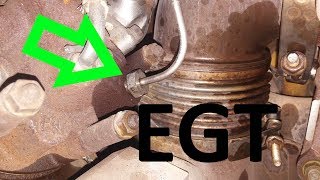
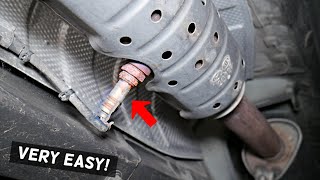
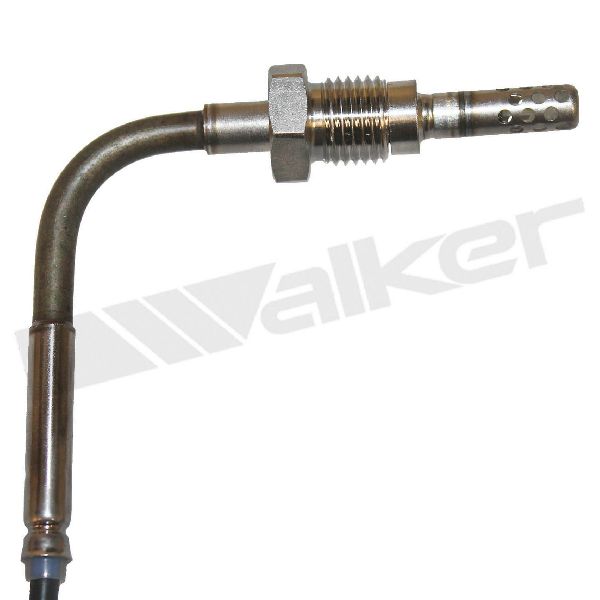
Typical fix: Replace the EGT Bank 1 Sensor 2. This sensor is located on the side of the Diesel Particulate Filter (DPF) assembly. It is strongly recommended to use a genuine Mopar replacement part to avoid compatibility issues.
Est. part cost: $120-$220 - Damaged Wiring or Connectors ⚪ Low Probability The wiring harness for the EGT sensors runs over the top of the transmission and can be susceptible to heat damage, chafing, or corrosion over time. Exhaust leaks near flanges can also melt connectors.
How to confirm: Visually inspect the wiring and connector for the EGT sensor for any signs of melting, chafing, corrosion, or loose pins. The connector plug is typically accessed from the passenger side of the transmission. Perform a continuity test from the sensor connector to the PCM connector.
Typical fix: Repair the damaged section of the harness or replace the connector pigtail.
Est. part cost: $20-$50
Rare But Worth Checking
- Exhaust Leaks: An exhaust leak upstream of the EGT sensor can introduce cooler, ambient air, causing the sensor to report a temperature that is lower than actual, which the PCM may interpret as a performance fault. Broken flange bolts near the DEF injector are a known issue on these engines.
- Faulty Powertrain Control Module (PCM): This is very rare. The PCM should only be considered as the cause after all other possibilities, including software updates, sensor replacement, and wiring checks, have been exhausted.
Diagnosis Steps
- Check for applicable Technical Service Bulletins (TSBs). For a 2014 Grand Cherokee EcoDiesel, TSBs like #18-023-15 REV.C are highly relevant and should be the first check.
- If a TSB exists for a PCM reflash, have this performed by a dealer or qualified shop with access to FCA software. This is the most critical first step for this vehicle.
- Clear the codes and perform a drive cycle. If the code does not return, the issue is resolved.
- If the code returns, perform a visual inspection of the EGT Bank 1 Sensor 2 and its wiring harness. The sensor is on the DPF assembly, and its wiring runs over the transmission. Look for any signs of damage, melting, or corrosion.
- Using a diagnostic scan tool, observe the live data for all EGT sensors (Exhaust Temp B1S1, B1S2, etc.). Compare their readings at cold start (they should be similar to ambient temperature) and as the engine warms up. A sensor that is stuck, reads erratically, or doesn't respond is suspect.
- If the sensor reading is irrational, test the sensor's internal resistance with a multimeter. Per TSB guidance, it should be between 200-240 ohms at room temperature.
- If the sensor tests bad, replace the EGT Bank 1 Sensor 2. It is often recommended to use an OEM Mopar part. Applying copper anti-seize to the threads of the new sensor is a good practice.
- If the sensor tests good, check for continuity and voltage at the sensor connector and at the PCM to rule out a wiring issue.
- As a final, unlikely step, consider a faulty PCM if all other components and wiring test perfectly.
Parts You'll Likely Need
- Exhaust Gas Temperature Sensor (Bank 1 Sensor 2)
(OEM #68211210AA)— This sensor is the most common hardware component to fail, causing the P2084 code after software issues have been ruled out. It is located on the side of the DPF housing.
Trusted brands: Mopar, Bosch, Duralast
OEM price range: $150-$350
Aftermarket price range: $110-$180
Related Codes That Often Appear With This One
- P2080 — This code is for EGT Sensor Circuit Performance for Bank 1, Sensor 1. They often appear together as they are part of the same system and are addressed by the same TSBs. [Bulletin #18-023-15 REV.C]
- P0426 — This code relates to the Catalyst Temperature Sensor. Its logic is also often updated in the same PCM flashes that address P2084. [Bulletin #18-023-15 REV.C]
- P2002 — This code indicates 'Diesel Particulate Filter Efficiency Below Threshold.' A faulty EGT sensor can cause this by providing incorrect data for DPF regeneration, leading to soot buildup.
- P0428 — This code is for 'Catalyst Temperature Sensor Circuit High'. A failing temperature sensor can send erratic high readings, triggering this code alongside performance codes like P2084.
Technical Service Bulletins (TSBs) & Recalls

- 18-023-15 REV.C: Flash: 3.0 L MIL Illumination Diagnostic and System Improvements. This TSB directly lists P2084 as a code addressed by a PCM software update and may involve cleaning or replacing the sensor if the code persists.
- 18-018-14 REV. C: Flash: 3.0L Powertrain Diagnostic And System Enhancements. Also lists P2084 as a code fixed by a PCM reflash.
- 18-012-16: Flash: 3.0L Powertrain Diagnostic and System Improvements. Another TSB involving a PCM flash that addresses EGT sensor performance.
Platform-Specific Known Issues
- Multiple Technical Service Bulletins, including #18-023-15 REV.C and #18-012-16, were issued by the manufacturer to update the PCM software. This update corrects the diagnostic logic for the EGT sensors and can resolve the P2084 code without any parts replacement.
- Technicians have noted that on the WK2 EcoDiesel, a fault code for one EGT sensor (like Bank 1, Sensor 1) can sometimes be caused by the failure of a different EGT sensor (like Bank 1, Sensor 2). This can complicate diagnosis and lead to replacing the wrong part.
Mechanic-Grade Diagnostic Values
- EGT Sensor Resistance — expected: 200 - 240 ohms at room temperature (65-75 °F / 18-25 °C). Failure: A reading outside this range indicates a faulty sensor.
Scan Tool Commands That Help
- wiTECH: PCM Reprogramming (Flash) — This is the primary first step for a 2014 Grand Cherokee EcoDiesel with code P2084, as multiple TSBs were released to fix software logic errors. This should be performed by a dealer or qualified shop before replacing parts.
- wiTECH: Clear Fault Codes — After performing a PCM flash or replacing a component, all DTCs should be cleared from all modules to ensure a clean slate for the subsequent drive cycle test.
Wiring & Ground Locations
- EGT Sensor Harness Connectors — The wiring for the EGT sensors runs across the top of the transmission. The electrical connector plugs are accessible from the passenger side of the transmission, tucked up high.. This location is difficult to access and is prone to heat exposure. Knowing where to find the connectors is crucial for testing the circuit without first removing the sensor or exhaust components.
- Transmission Wiring Harness Chafe Point — Behind the passenger-side front wheel well liner, the main transmission wiring harness can be mis-routed from the factory and may rub against the sharp edge of the EGR exhaust tube.. While not the EGT sensor harness itself, this main harness contains wiring for multiple systems. A short here can cause a variety of difficult-to-diagnose electrical issues. It is a known issue on the EcoDiesel platform and should be inspected as a preventative measure or when diagnosing any electrical fault.
Real Owner Repair Stories
- YouTube - GDL Automotive (Jeep Grand Cherokee WK2 3.0L Diesel (year not specified, but platform is correct)) — Common fault for EGT Bank 1 Sensor 1 (P2080), but the repair process and location details are relevant to Sensor 2 (P2084).
❌ Tried (didn't work) Attempting to change the sensor without removing the DPF/exhaust assembly is noted as being extremely difficult or impossible for the mechanic in the video.
✅ What actually fixed it The video details the successful fix by replacing the faulty EGT sensor. Key takeaways for the repair include: the DPF assembly must be removed for access, a 17mm crow's foot wrench is required for the sensor itself, and the electrical connectors are located over the transmission, accessible from the passenger side. - YouTube - dieseJL (Jeep EcoDiesel (platform-mate to Grand Cherokee)) — No active code; this was a preventative check based on forum reports.
✅ What actually fixed it The owner inspected the transmission wiring harness behind the passenger front wheel well and found it was rubbing against the EGR exhaust tube. The fix was to properly secure the harness away from the tube with zip ties to prevent future chafing and potential short circuits. This is a critical preventative check for any EcoDiesel owner.
OEM Part Supersession History
68211210AA→N/A— This is the currently active OEM part number for the EGT Sensor (Bank 1, Sensor 2).
Heads up: While aftermarket alternatives exist (e.g., Walker 273-10332), using the OEM Mopar part is often recommended to avoid compatibility issues, especially given the sensitivity of the emissions system.
Helpful Videos
We Have This Part in Stock


The information in this article is provided for general reference and educational purposes only. Vehicle specifications, procedures, and part compatibility can vary by production date, trim level, and region. Always consult your vehicle's factory service manual and verify part numbers before purchasing or performing repairs. Safety-critical components such as airbags, seat belts, and braking systems should be installed by a qualified professional.
- Jeep GRAND CHEROKEE:
- 🎬 Helpful Videos
- 🛍️ Shop This Part
- What's Unique About the 2014-2014 Jeep GRAND CHEROKEE
- Diagnostic Flowchart
- Symptoms You May Notice
- Most Likely Causes
- Rare But Worth Checking
- Diagnosis Steps
- Parts You'll Likely Need
- Related Codes That Often Appear With This One
- Technical Service Bulletins (TSBs) & Recalls
- Platform-Specific Known Issues
- Mechanic-Grade Diagnostic Values
- Scan Tool Commands That Help
- Wiring & Ground Locations
- Real Owner Repair Stories
- OEM Part Supersession History
- 🎟️ Get 5% Off