

P2080 on 2014 Ram 1500 EcoDiesel: EGT Sensor Circuit Causes and Fixes
P2080 on a 2014 Ram 1500 EcoDiesel indicates a performance problem with the Exhaust Gas Temperature (EGT) Sensor Circuit for Bank 1, Sensor 1. This sensor is located in the exhaust manifold, before the turbocharger. The most common fix is replacing the faulty EGT sensor itself, which can become 'lazy' from soot buildup or fail electrically. Before replacing, check for PCM software updates, as this is a common manufacturer-recommended fix. Expect to pay $80-$150 for the part.
- P2080 on your 2014 Ram 1500 EcoDiesel points to the EGT sensor #1 (pre-turbo/pre-DOC).
- The most likely cause is a failed or 'lazy' sensor, often due to soot buildup or simple age.
- Before replacing the sensor, check for damaged wiring and ask a dealer if your truck has the latest PCM software, as a simple update can sometimes be the fix.
- Diagnosis is best done with a scan tool that can graph live data to see the sensor's response time.
- Do not ignore this code, as it can prevent DPF regeneration and lead to a much more expensive DPF replacement.
What's Unique About the 2014-2014 Ram 1500

The 3.0L EcoDiesel engine in the 2014 Ram 1500 uses a sophisticated emissions system with multiple EGT sensors to manage DPF regeneration and SCR (Selective Catalytic Reduction) functions. P2080 specifically points to the first sensor in the chain (Bank 1, Sensor 1, sometimes referred to as EGT11), which is crucial for protecting the turbocharger. Ram has issued multiple Technical Service Bulletins (TSBs), such as 18-021-15, that group P2080 with other emissions codes. These TSBs often recommend a PCM software update as a primary step, indicating the logic for interpreting the sensor's signal was overly sensitive in the original software.
Diagnostic Flowchart
Tap your situation to follow the diagnostic path that matches what you're seeing on this vehicle.
Symptoms You May Notice
- Check Engine Light (Malfunction Indicator Lamp) is on
- Reduced engine performance or sluggish acceleration
- Vehicle may enter 'limp mode' with reduced power
- Problems with or prevention of Diesel Particulate Filter (DPF) regeneration
- Increased exhaust smoke or higher emissions
- Replacing the wrong EGT sensor. The 3.0L EcoDiesel has multiple EGT sensors. P2080 specifically refers to Bank 1, Sensor 1, which is the first sensor in the exhaust stream, located pre-turbo in the exhaust manifold.
- Replacing the sensor without checking for PCM software updates first. Many instances of P2080 are resolved with a PCM reflash, as recommended by Ram TSBs.
Most Likely Causes

- Faulty Exhaust Gas Temperature (EGT) Sensor (Bank 1, Sensor 1) 🔴 High Probability The sensor operates in a harsh, high-heat environment in the exhaust manifold. Over time, it can fail electrically or become coated with soot, which insulates the probe and slows its response time, triggering a 'performance' code. It is a very common failure point on this engine.
How to confirm: Use a diagnostic scan tool to monitor live data for EGT Bank 1 Sensor 1. The reading should rise steadily as the engine warms up. If the reading is stuck (e.g., at -40°F or a very high number), erratic, or responds very slowly to changes in engine RPM (a 'lazy' sensor), the sensor is likely bad. TSB 18-021-15 specifies testing the sensor's resistance at room temperature; it should be between 200 and 240 ohms.
Typical fix: Replace the EGT sensor. On the 3.0L EcoDiesel, this sensor is located in the passenger-side exhaust manifold, before the turbo. Access is difficult and may require specialized tools like a 17mm crow's foot socket. Applying penetrating oil before removal is highly recommended to avoid snapping the sensor in the manifold.
Est. part cost: $80-$150 - Outdated Powertrain Control Module (PCM) Software 🔴 High Probability Ram has released several TSBs (e.g., 18-021-15, 18-028-14) for the 2014 EcoDiesel that involve reprogramming the PCM to address various DTCs, including P2080. The original software may have calibrations that are too sensitive to minor fluctuations in the sensor's performance, falsely triggering the code. For this reason, checking for a software update is a primary diagnostic step.
How to confirm: A Ram dealership or a properly equipped independent shop using a tool like wiTECH can check your vehicle's current software calibration ID against the latest available version from the manufacturer.
Typical fix: Reprogram (flash) the PCM with the latest software update. This is often done in conjunction with other repairs mentioned in the TSBs and can take around 0.4 hours.
Est. part cost: $0-$200 - Damaged Wiring or Connectors 🟡 Medium Probability The wiring harness is routed near hot exhaust components and areas of engine vibration, making it susceptible to heat damage, melting, or chafing over time. A known issue on EcoDiesel platforms involves the harness rubbing against the EGR tube clamp on the passenger side of the engine.
How to confirm: Visually inspect the entire wiring harness for the EGT sensor, from the sensor itself to the PCM. Pay close attention to where the harness passes near the EGR tube and passenger side upper control arm mount. Look for any signs of melting, chafing, corrosion in the connectors, or loose pins. Use a multimeter to check for continuity and proper voltage at the connector.
Typical fix: Repair the damaged section of the wiring harness 🎬 See this quick fix if your EGT sensor plug is broken. or replace the connector pigtail. Secure the harness away from heat sources or sharp edges using zip ties and anti-abrasion tape.
Est. part cost: $20-$50
Rare But Worth Checking
- Failed EGR Cooler / Exhaust Leak: An exhaust leak upstream of the EGT sensor can introduce cooler outside air, causing inaccurate readings. More critically, a failing EGR cooler can leak coolant and create 'sticky sooty gunk' that clogs the DPF. 🎬 Watch: How to locate and clean your EcoDiesel's EGR diffuser and MAP sensor. In this case, P2080 is not a faulty sensor code, but a real performance code indicating a downstream restriction. One owner on a forum reported a dealer suspected this exact scenario.
- Faulty Powertrain Control Module (PCM): This is very rare. Before condemning the PCM, all other possibilities, including sensor, wiring, and software issues, must be exhaustively ruled out.
Diagnosis Steps
- Connect a diagnostic scan tool and confirm P2080 is the active code. Check for any other related codes.
- Check with a dealer or equipped shop if any PCM software updates related to TSBs 18-021-15 or 18-028-14 are available for your VIN. This is a critical first step.
- Using the scan tool's live data function, monitor the reading for 'EGT Bank 1 Sensor 1'.
- Start the engine and observe the sensor reading. It should rise steadily from ambient temperature.
- Perform a 'snap throttle' test by revving the engine to ~2500 RPM and releasing. The temperature reading should spike up and fall back down quickly. A slow, lazy response indicates a bad sensor.
- If the reading is stuck, nonsensical (e.g., -40°F), or does not change, the sensor or its circuit is faulty.
- Turn off the vehicle and visually inspect the sensor's wiring and connector for any signs of melting, corrosion, or physical damage, especially near the EGR tube clamp.
- If the wiring appears intact, disconnect the sensor and test its internal resistance with a multimeter. Per TSB 18-021-15, the reading should be between 200-240 ohms at room temperature.
- If the sensor tests bad, replace it. If the sensor and wiring test good, the issue is likely resolved by the PCM software update.
Parts You'll Likely Need

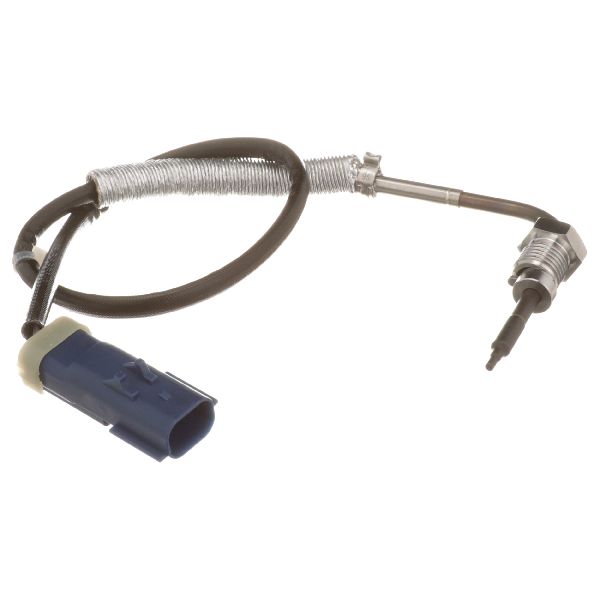
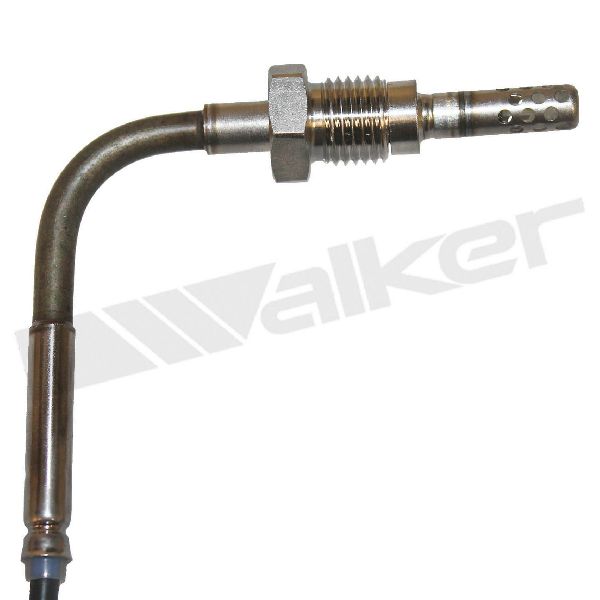
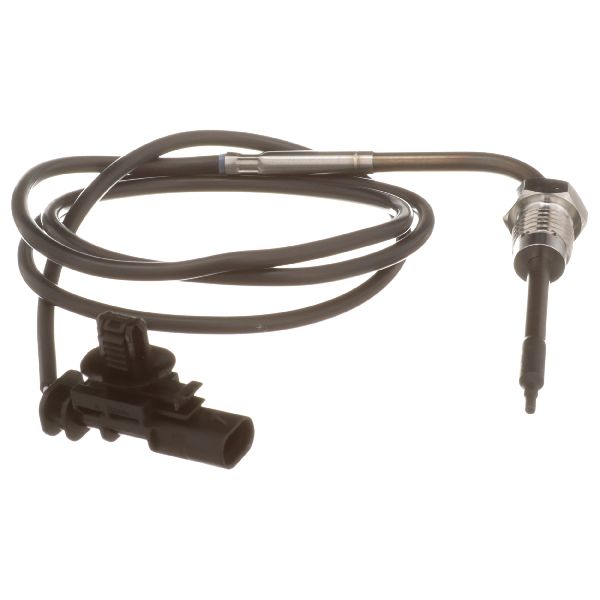
- Exhaust Gas Temperature (EGT) Sensor (Bank 1, Sensor 1)
(OEM #68383247AA (supersedes 68148173AA, 68193645AA, 68193645AB))— This is the most common hardware failure point for code P2080, as the sensor degrades over time from heat and soot exposure.
Trusted brands: Mopar, Bosch, NTK, Walker Products
OEM price range: $120-$296
Aftermarket price range: $80-$150
Related Codes That Often Appear With This One
- P2084 — This code is for EGT Sensor Circuit Performance Bank 1 Sensor 2. Seeing both codes together could point to a wiring harness issue common to both sensors or a broader exhaust system problem. Both codes are often listed together in the same TSBs.
- P2463 — This code indicates 'Diesel Particulate Filter Restriction - Soot Accumulation Excessive'. A faulty EGT sensor can disrupt the DPF regeneration process, leading to soot buildup.
- P20EE — This code for 'SCR NOx Catalyst Efficiency Below Threshold' is frequently grouped with P2080 in TSBs like 18-021-15, suggesting a related software logic or system-wide emissions issue that can be corrected with a PCM flash.
Technical Service Bulletins (TSBs) & Recalls

- 18-021-15 (and its revisions): Lists P2080-00 as one of several codes addressed by a PCM software update. Also provides specific diagnostic steps, including cleaning the sensor and testing for resistance between 200-240 ohms.
Platform-Specific Known Issues
- Mandatory TSB/Software Check: Multiple Technical Service Bulletins (TSBs), including 18-021-15 and 18-028-14, have been issued by Ram for the 2014 EcoDiesel that include P2080. These bulletins often recommend a PCM reflash as the primary fix, as the original software logic was too sensitive. Always check for software updates before replacing hardware.
- Sensor Cleaning Procedure: TSB 18-021-15 includes a procedure to remove the EGT sensor, inspect it for soot, and clean it with compressed air (max 80 psi) before testing resistance. While replacement is often necessary, cleaning a sooted-up sensor can sometimes restore its function.
- Wiring Harness Chafe Point: Owners on forums and in videos have identified a common chafe point where the engine wiring harness can rub against the EGR tube clamp on the passenger side, eventually causing shorts or open circuits for the EGT sensors. This should be inspected during diagnosis.
Mechanic-Grade Diagnostic Values
- EGT Sensor (Bank 1, Sensor 1) Resistance — expected: 200 - 240 Ohms at room temperature (65-75°F / 18-25°C). Failure: A reading outside this range, or an open/infinite reading, indicates a faulty sensor.
- EGT Sensor (Bank 1, Sensor 1) Live Data Voltage — expected: Approximately 0.9V at idle, rising to 4.5V at wide-open throttle.. Failure: Voltage that is stuck, erratic, or does not respond to changes in engine load and temperature.
- PCM Reference Voltage to Sensor — expected: 5V (±0.2V). Failure: A deviation greater than ±0.2V at the PCM pin can indicate an internal module fault.
Scan Tool Commands That Help
- wiTECH: PCM Reprogram/Flash — This is a primary diagnostic step. Use this to update the PCM to the latest software calibration, which may correct overly sensitive thresholds for P2080 as per multiple TSBs.
- wiTECH: Service Diesel Particulate Filter Regeneration — After replacing the sensor or performing other repairs, this command can be used to force a DPF regeneration to verify that the new EGT sensor is reading correctly and the aftertreatment system is functioning properly.
Wiring & Ground Locations

- EGT Sensor 1/1 Connector — On the passenger's side of the engine, routed near the transmission. The connector is often black with a yellow locking tab.. This is the main connector to inspect for corrosion or damage and to perform resistance and voltage tests on the sensor circuit.
- G909A — Left rear of the engine compartment (on related EcoDiesel platforms).. This is a primary engine ground. A poor ground connection at this point can cause erratic behavior and fault codes for various engine sensors, including the EGT sensor.
- Engine Block Ground Cable — Main ground cable from the battery to the engine block.. A customer satisfaction campaign (W14) was issued for a later generation of this engine for a loose ground bolt, highlighting the importance of a solid engine ground for overall electrical stability.
Real Owner Repair Stories
- EcoDieselRam.com forum user (2014 Ram 1500 EcoDiesel) — P2080 code returned 5 days after repair.
❌ Tried (didn't work) Replaced an exhaust gas temperature sensor.
✅ What actually fixed it The code returned because the wrong sensor was likely replaced. Another user clarified that P2080 refers specifically to EGT11, located between the turbo and the Diesel Oxidation Catalyst (DOC). Replacing this specific sensor resolved the issue for others. The original poster did not confirm the final fix but the story highlights a critical misdiagnosis. - EcoDieselRam.com forum user (2015 Ram 1500 EcoDiesel with 68,000 miles) — P2080 code, white hazy film on bumper, slight coolant loss.
❌ Tried (didn't work) Clearing the code (it would return).
✅ What actually fixed it The dealer suspected the P2080 code was related to a failing EGR cooler that was leaking coolant. While the user was waiting for the EGR cooler to be replaced under recall, the code disappeared on its own, but the underlying story suggests a mechanical failure (EGR cooler) can trigger this electrical code.
When the Usual Fixes Don't Work
- Simply replacing the EGT sensor may not fix the issue. In one documented case, a Ram 1500 owner replaced the sensor, but the P2080 code returned within days. Forum discussion revealed the importance of identifying the correct sensor, as P2080 points specifically to the pre-DOC sensor (EGT11). This emphasizes that a correct diagnosis to pinpoint the exact failed component (or software issue) is more critical than just replacing the most likely part.
OEM Part Supersession History
68148173AA, 68193645AA, 68193645AB→68383247AA— Standard part revision and improvement by the manufacturer.
Helpful Videos
We Have This Part in Stock


The information in this article is provided for general reference and educational purposes only. Vehicle specifications, procedures, and part compatibility can vary by production date, trim level, and region. Always consult your vehicle's factory service manual and verify part numbers before purchasing or performing repairs. Safety-critical components such as airbags, seat belts, and braking systems should be installed by a qualified professional.
- Ram 1500:
- 🎬 Helpful Videos
- 🛍️ Shop This Part
- What's Unique About the 2014-2014 Ram 1500
- Diagnostic Flowchart
- Symptoms You May Notice
- Most Likely Causes
- Rare But Worth Checking
- Diagnosis Steps
- Parts You'll Likely Need
- Related Codes That Often Appear With This One
- Technical Service Bulletins (TSBs) & Recalls
- Platform-Specific Known Issues
- Mechanic-Grade Diagnostic Values
- Scan Tool Commands That Help
- Wiring & Ground Locations
- Real Owner Repair Stories
- When the Usual Fixes Don't Work
- OEM Part Supersession History
- 🎟️ Get 5% Off