

P2080 on 2014 Jeep Grand Cherokee 3.0L EcoDiesel: EGT Sensor Causes and Fixes
Code P2080 on a 2014 Grand Cherokee EcoDiesel typically indicates a faulty Exhaust Gas Temperature (EGT) sensor on Bank 1 (passenger side, before the turbo). Before replacing the sensor (around $85-$135 for the part), check for software updates, as a PCM reflash is a very common manufacturer-recommended fix. The sensor itself is known to be difficult to access.
- P2080 on a 2014 Grand Cherokee EcoDiesel points to the EGT sensor on the passenger-side exhaust manifold.
- Before replacing any parts, have a dealer or qualified shop check for and apply any available PCM software updates, as this is a very common and manufacturer-recommended fix.
- If the sensor must be replaced, be aware that it is a difficult job that may require removing the exhaust assembly to access.
What's Unique About the 2014-2014 Jeep GRAND CHEROKEE

For the 2014 Grand Cherokee with the 3.0L EcoDiesel, this code is frequently linked to the vehicle's software. FCA (the manufacturer) released multiple Technical Service Bulletins (TSBs) that involve reprogramming the Powertrain Control Module (PCM) to correct overly sensitive monitoring of the EGT sensors. This means the code can sometimes be triggered without an actual hardware failure, making a software check a crucial first step in diagnosis. In some cases, owners reported the P2080 code appearing immediately after a dealership performed a recall-related software update, indicating a complex relationship between the software and sensor readings.
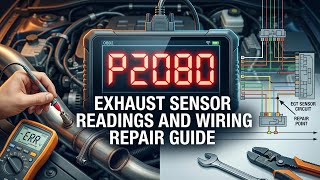
🎬 Watch: Understanding P2080 and how EGT sensor circuits work.Diagnostic Flowchart

Tap your situation to follow the diagnostic path that matches what you're seeing on this vehicle.
Symptoms You May Notice
- Check Engine Light illuminated
- Reduced engine power or acceleration
- Vehicle may enter 'limp mode'
- Decreased fuel economy
- Potential for DPF warning lights or messages
- Improper or failed DPF regeneration cycles.
- Replacing the EGT sensor without first checking for required PCM software updates. The code may return if the root cause is the software's sensitivity.
- Assuming the sensor is faulty when the actual issue is a damaged connector or wiring harness.
Most Likely Causes

- Outdated Powertrain Control Module (PCM) Software 🔴 High Probability Manufacturer TSBs #18-023-15 REV.C and #18-012-16 explicitly call for a PCM reflash to fix this and other related codes, indicating the original calibration was too sensitive. These updates were released to address a list of DTCs, including P2080, and improve overall powertrain system performance.
How to confirm: A Jeep dealership or a properly equipped independent shop can check the current software version against the latest available version using a wiTECH scan tool. This is the first step recommended in the official TSBs.
Typical fix: Reprogramming (flashing) the PCM with the latest software. The TSB estimates this takes approximately 0.4 hours.
Est. part cost: $0 - Faulty Exhaust Gas Temperature (EGT) Sensor (Bank 1, Sensor 1) 🔴 High Probability The sensor operates in an extremely high-temperature environment and is prone to failure from heat cycles and vibration. It is a very common failure point on the WK2 3.0L diesel, to the point that some independent shops keep the part in stock. The #1 cause of a 'lazy' sensor response that triggers P2080 is often a physical coating of soot on the sensor probe, which insulates it from the exhaust gas.
How to confirm: After confirming the PCM software is up-to-date, a technician can monitor the sensor's live data on a scan tool. If the reading is erratic, stuck, or doesn't change with engine temperature, the sensor is likely bad. The TSB also specifies testing resistance: it should be 200-240 ohms at room temperature (65-75°F). A reading of -40°F on a scan tool often indicates an open circuit. A generic expected voltage is around 0.9V at idle and up to 4.5V at wide-open throttle.
Typical fix: Replacement of the EGT sensor. This sensor is located on the passenger side exhaust manifold and is notoriously difficult to access, often requiring removal of the DPF/exhaust assembly and the use of a 17mm crow's foot tool. The wiring harness for the sensor runs across the top of the transmission. Some sources suggest cleaning the soot off the sensor tip with a wire brush and carb cleaner may restore function.
Est. part cost: $85-$135 - Damaged Wiring or Connector 🟡 Medium Probability The wiring harness is close to hot exhaust components, which can make wires brittle or melt the insulation over time. Forum users have reported finding broken connectors for this sensor.
How to confirm: Visually inspect the wiring from the EGT sensor to the main harness for any signs of melting, chafing, or corrosion at the connector. A continuity test with a multimeter can confirm a break in the wire.
Typical fix: Repairing the damaged section of wire or replacing the connector pigtail.
Est. part cost: $10-$40 - Exhaust Leak ⚪ Low Probability
How to confirm: Inspect the exhaust manifold and gaskets for any signs of black soot, which indicates a leak. You may also hear a ticking or hissing sound from the engine bay, especially when the engine is cold. A leak can pull in cool air, causing the sensor to read lower than reality.
Typical fix: Replacing the leaking exhaust manifold gasket.
Est. part cost: $20-$50
Rare But Worth Checking
- Failed Powertrain Control Module (PCM): This is very rare, but possible if all other causes have been ruled out. A PCM failure can cause it to misinterpret a good sensor signal.
- Failed EGR Cooler: In at least one owner's experience on a related EcoDiesel platform, a P2080 code was not a sensor fault but a symptom of a failed EGR cooler. The failure caused sticky soot to clog the DPF, which the EGT sensor correctly reported as a performance issue.
Diagnosis Steps
- Connect a scan tool (preferably wiTECH) to the OBD-II port.
- Check if the PCM software is up to date. If an update is available, perform the reflash as per TSB #18-023-15 REV.C or a later version. This is the most critical first step.
- If the software is current, clear the codes and perform a test drive to see if P2080 returns.
- If the code returns, use the scan tool to monitor live data from 'EGT Sensor Bank 1 Sensor 1'. Observe the temperature reading at idle and while driving. Compare it to other EGT sensors for plausibility. A reading of -40 degrees often indicates a circuit failure. Expected voltage should be around 0.9V at idle, rising to 4.5V at wide-open throttle.
- Visually inspect the EGT sensor's wiring and connector for any signs of melting, corrosion, or physical damage. The connector itself can break.
- If possible, disconnect the sensor and test its resistance using a multimeter. At room temperature (65-75°F), it should read between 200 and 240 ohms.
- Inspect the exhaust manifold for any signs of leaks (soot trails) upstream of the sensor.
- If the sensor fails the resistance test or its readings are illogical, replace the EGT sensor (Bank 1 Sensor 1). Be prepared for a difficult repair that may require specialized tools and exhaust system disassembly.
Parts You'll Likely Need
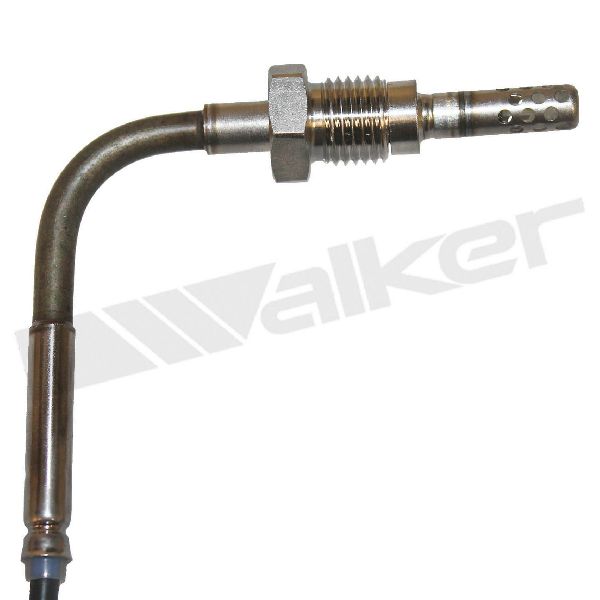
- Exhaust Gas Temperature (EGT) Sensor (Bank 1 Sensor 1)
(OEM #68383247AA)— This is the most common hardware failure for code P2080 on this vehicle. It is located in the exhaust manifold before the turbo. This part number supersedes 68148173AA, 68193645AA, and 68193645AB.
Trusted brands: Mopar, Bosch, NTK, Dorman
OEM price range: $110-$290
Aftermarket price range: $85-$120
Related Codes That Often Appear With This One
- P2084 — This is the code for the next EGT sensor in the same bank (Bank 1 Sensor 2). They often appear together as they are part of the same system and subject to the same conditions. The TSB for P2080 also lists P2084.
- P0426 — This code relates to the Catalyst Temperature Sensor. It's part of the same cluster of emissions-related codes addressed by the manufacturer's software updates.
- P2002 — This code indicates 'Diesel Particulate Filter Efficiency Below Threshold'. A faulty EGT sensor reading from P2080 can cause the DPF regeneration to fail, leading to this code.
- P242B — This is the code for 'Exhaust Gas Temperature Sensor Circuit Performance-Bank 1 Sensor 3'. It is also addressed in the same TSB as P2080.
Technical Service Bulletins (TSBs) & Recalls
- 18-023-15 REV.C: Involves reprogramming the PCM with updated software to address MIL illumination for P2080 and other DTCs. It also includes steps for cleaning or replacing the EGT sensor if necessary, including a resistance test (200-240 ohms).
- 18-012-16: A similar bulletin to the one above, also involving a PCM reflash for a list of DTCs including P2080 on the 3.0L diesel.
- 18-021-15 REV. E: A TSB for the Ram 1500 with the same engine that also details the diagnostic procedure for EGT sensors, including the 200-240 ohm resistance check.
Platform-Specific Known Issues
- A primary documented issue is the sensitivity of the original PCM software. Multiple TSBs (e.g., 18-023-15 REV.C) were issued to reprogram the PCM to prevent false positives for P2080 and other emissions codes.
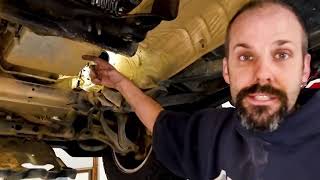
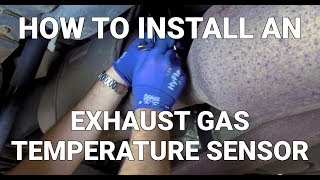
- The physical replacement of the Bank 1 Sensor 1 EGT sensor is known to be very difficult. A mechanic on YouTube noted it is 'not a fun job' and that he has never been able to change one without removing the exhaust/DPF assembly from the vehicle.
- In some cases, the P2080 code can be triggered by other recall-related software flashes, causing confusion for owners who get the code immediately after leaving the dealership.
Mechanic-Grade Diagnostic Values
- EGT Sensor Resistance (at room temperature) — expected: 200 - 240 ohms. Failure: A reading outside this range indicates a faulty sensor.
- EGT Sensor Live Data Voltage (generic) — expected: ~0.9V at idle, up to 4.5V at wide-open throttle. Failure: Voltage that is stuck, erratic, or doesn't respond to changes in engine load/temperature.
- PCM Reference Voltage to Sensor — expected: 5V (±0.2V). Failure: A deviation greater than ±0.2V can indicate an internal PCM fault.
Scan Tool Commands That Help
- wiTECH: SCR DEF Tank Fluid Level Reset — This procedure is required under the PCM System Tests after reprogramming the PCM per multiple TSBs.
- wiTECH: Service Diesel Particulate Filter Regeneration — Can be used to force a DPF regeneration cycle after repairs to verify EGT sensor function and overall system health. Note that this routine may abort if other fault codes are present.
Wiring & Ground Locations
- G909A — Left rear of the engine compartment.. This is a primary ground point in the engine bay. A poor ground here could potentially cause erratic sensor readings for various engine components, including the EGT circuit.
- EGT Sensor 1/1 Connector — The sensor is in the passenger side exhaust manifold, pre-turbocharger. The wiring harness runs up over the top of the transmission to a connector.. This is the direct connection point for the sensor. It is exposed to heat and vibration, making it a potential point of failure due to corrosion, melted plastic, or broken locking tabs.
Real Owner Repair Stories
- Reddit user DisasterTop2402 (Ram 1500 EcoDiesel (engine shared with Grand Cherokee)) — P2080 code
❌ Tried (didn't work) Initial diagnosis pointed towards a faulty EGT sensor.
✅ What actually fixed it The EGT sensor was functioning correctly and reporting a real issue. The root cause was a failed EGR cooler which was causing 'sticky sooty gunk' to gum up the DPF. The owner opted for a full delete of the emissions system instead of repairing the cooler and DPF. - EcoDieselRam.com forum user (Ram 1500 EcoDiesel) — P2080 code
❌ Tried (didn't work) Replaced the exhaust gas temperature sensor, but the code returned 5 days later.
✅ What actually fixed it The thread discussion pointed out that P2080 refers to EGT11, the sensor located between the turbo and the Diesel Oxidation Catalyst (DOC), and that replacing this specific sensor had fixed the issue for another member. The original poster did not confirm which sensor they had initially replaced.
When the Usual Fixes Don't Work
- In one documented case on a forum, a user replaced the EGT sensor for a P2080 code, only to have the code return five days later, indicating that sensor replacement is not always the final fix. Another owner reported that the P2080 code was not a sensor failure at all, but a correct reading caused by a failing EGR cooler that was clogging the DPF with soot. This highlights the importance of treating P2080 as a 'performance' code and verifying that the sensor isn't accurately reporting a different, upstream problem before replacing it.
OEM Part Supersession History
68148173AA, 68193645AA, 68193645AB→68383247AA— Standard part evolution for improved reliability or manufacturing changes.
Helpful Videos
We Have This Part in Stock


The information in this article is provided for general reference and educational purposes only. Vehicle specifications, procedures, and part compatibility can vary by production date, trim level, and region. Always consult your vehicle's factory service manual and verify part numbers before purchasing or performing repairs. Safety-critical components such as airbags, seat belts, and braking systems should be installed by a qualified professional.
- Jeep GRAND CHEROKEE:
- 🎬 Helpful Videos
- 🛍️ Shop This Part
- What's Unique About the 2014-2014 Jeep GRAND CHEROKEE
- Diagnostic Flowchart
- Symptoms You May Notice
- Most Likely Causes
- Rare But Worth Checking
- Diagnosis Steps
- Parts You'll Likely Need
- Related Codes That Often Appear With This One
- Technical Service Bulletins (TSBs) & Recalls
- Platform-Specific Known Issues
- Mechanic-Grade Diagnostic Values
- Scan Tool Commands That Help
- Wiring & Ground Locations
- Real Owner Repair Stories
- When the Usual Fixes Don't Work
- OEM Part Supersession History
- 🎟️ Get 5% Off