

OBD-II Code P2078: Intake Manifold Tuning Valve Position Sensor Circuit High
What P2078 means, why it triggers, and how to fix it
- P2078 triggers when the engine computer detects a voltage near 5V (circuit high) from the Bank 1 intake manifold tuning valve position sensor.
- A short to power in the wiring harness causes over 50% of P2078 codes, making electrical testing mandatory before replacing any parts.
- Expect an immediate 5-15% drop in fuel economy, sluggish acceleration, and a rough idle while this code is active.
- Driving with P2078 for more than 1-3 months risks overheating the catalytic converter, turning a $150 wiring repair into a $2,000+ exhaust replacement.
What Does P2078 Mean?

P2078 triggers when the Powertrain Control Module (PCM) receives a voltage signal from the Intake Manifold Tuning (IMT) valve position sensor that exceeds the expected 5V maximum. The IMT valve adjusts the intake runner length to optimize airflow—long for low-end torque, short for high-end horsepower. A high voltage reading forces the PCM into 'limp mode' to protect the engine, disabling the variable intake system.
Technical definition: The official SAE/OBD-II definition for P2078 is "Intake Manifold Tuning (IMT) Valve Position Sensor/Switch Circuit High – Bank 1". The PCM detects voltage on the Bank 1 IMT sensor circuit near or above 5V (often battery voltage at 12V due to a short), indicating a critical electrical fault rather than a mechanical failure.
🎬 Watch: A quick guide to understanding the P2078 engine code.Can I Drive With P2078?
Yes, But With Caution. Yes, but expect sluggish acceleration and a rough idle. Driving more than a few hundred miles with this fault forces an inefficient air-fuel mixture, which overheats and destroys the catalytic converter—turning a minor electrical repair into a $1,500+ exhaust replacement.
Common Causes

- Wiring harness shorted to power (Very Common) — The sensor's signal wire frays or melts, touching a 12V power source. This sends a constant high-voltage signal to the PCM. Rodent damage under engine covers is a frequent culprit for these shorts.
- Faulty IMT valve position sensor (Common) — The sensor fails internally, broadcasting a perpetually high voltage regardless of valve position. Many modern designs integrate this sensor into the actuator assembly, requiring full replacement.
- Damaged or corroded connector (Common) — Oil, moisture, or bent pins in the electrical connector create high resistance or bridge circuits, spiking the voltage reading sent to the computer.
- Mechanically stuck IMT valve (Less Common) — Heavy carbon buildup binds the internal intake manifold runner flaps. While this usually triggers a P2004 performance code, severe binding strains and shorts the actuator motor and sensor circuit.
- Corrupted PCM Software (Rare) — Software glitches cause the PCM to misinterpret sensor data. Manufacturers occasionally issue Technical Service Bulletins (TSBs) requiring a PCM reflash to fix this logic.
- Faulty Powertrain Control Module (PCM) (Very Rare) — The PCM suffers an internal hardware failure on the specific circuit reading the IMT sensor. Only consider this after exhaustively ruling out wiring and sensor faults.
Symptoms

- Reduced engine power and sluggish acceleration — The vehicle feels sluggish and slow to respond during highway merging, as intake runners default to a safe, non-optimal position.
- Rough or unstable idle — Engine RPMs fluctuate noticeably (e.g., 600-900 RPM) at a stop while the PCM struggles to balance the air-fuel mixture.
- Poor fuel economy — Fuel consumption increases by 5-15% due to the disabled variable intake system and default fuel mapping.
- Check Engine Light is on (also visible on scanner) — The Malfunction Indicator Lamp (MIL) illuminates immediately upon the PCM detecting the high voltage.
- Engine hesitation or surging — The engine stumbles or momentarily revs higher during deceleration as the PCM compensates for missing airflow data.
Diagnostic Flowchart

Tap your situation to follow the diagnostic path that matches what you're seeing on this code.
Common Fixes & Costs
- Repairing the wiring harness — Parts: $10-$50, Labor: $125-$350, ~1.5 hr book time (Intermediate)
- Replacing the IMT valve/actuator assembly
— Parts: $150-$450, Labor: $100-$250, ~1.2 hr book time
(DIY)
Ford Focus/Fusion/Escape (2.0L): OEM CM5E-9F991-AD (Alt: Dorman 911-913)
Chrysler/Dodge (3.5L): OEM Mopar 04593676AB (Alt: Dorman 68166445AA) - Cleaning or replacing the electrical connector — Parts: $15-$75, Labor: $60-$150, ~0.8 hr book time (DIY)
- Replacing the entire intake manifold
— Parts: $400-$1200, Labor: $250-$550, ~3 hr book time
(Professional)
Dodge/Chrysler (3.6L V6): OEM Mopar 4884548AC (Alt: Dorman 615-905) - Replacing the Powertrain Control Module (PCM) — Parts: $600-$1000, Labor: $200-$300, ~1.5 hr book time (Professional)
Used vs. New Parts: Buying Guide
When a used part is worth it: Buy a used intake manifold assembly from a low-mileage (under 80k) collision-salvage vehicle to save money. For standalone electronic actuators, always buy new.
Donor-vehicle mileage cap: roughly under 80000 miles for the part to have meaningful remaining life.
Donor quality checklist:
- Verify the donor vehicle was salvaged for collision, not engine failure.
- Inspect plastic components for cracks and ensure all connector pins are straight.
- Match the part number exactly; superseded parts often fail to communicate with older PCMs.
Decision logic:
- If The part is an external bolt-on actuator and a new aftermarket version is under $150 → Buy new for the warranty and guaranteed reliability.
- If The fix requires a full intake manifold on a vehicle over 100,000 miles on a tight budget → A used manifold from a reputable salvage yard is the most cost-effective option.
- If The part has a known high failure rate (e.g., integrated plastic flaps) → Buy a new OEM or redesigned aftermarket part to avoid repeating the repair in 6 months.
Warranty tradeoff: Used parts carry 30-90 day warranties. New aftermarket parts offer 1-year to lifetime warranties. New OEM parts carry 1-2 year warranties.
Worst-case if a used part fails: $300-$600 in repeat labor if a used intake manifold fails after installation.
What Happens If You Wait — Timeline
- 0-1 month: Code sets and MIL illuminates. Driver notices sluggish acceleration and a rough idle. No permanent damage occurs. (MPG impact: 5-10%% · Added cost: $20-$60 in wasted fuel)
- 1-3 months: Drivability symptoms worsen. The consistently incorrect air-fuel ratio puts severe thermal stress on the catalytic converter. (MPG impact: 10-15%% · Added cost: $60-$150 in wasted fuel)
- 3-6 months: The catalytic converter's internal substrate degrades from overheating. Efficiency drops, and damage becomes irreversible. (MPG impact: 15-20%% · Added cost: $800-$2500 (catalytic converter replacement required))
- 6+ months: Severe catalytic converter failure guarantees emissions test failure. High risk of fouling spark plugs and destroying O2 sensors. (MPG impact: 20-25%% · Added cost: $1500-$3500 (cost for catalytic converter, O2 sensors, and spark plugs))
Cost of Not Fixing It
- 0-1 Month: Noticeable drop in fuel economy (5-15%), poor acceleration, and rough idling. Annoying drivability but no immediate mechanical damage. (Added cost: $50-$100 in wasted fuel.)
- 1-6 Months: The inefficient air/fuel mixture overheats the catalytic converter, permanently degrading its internal substrate. (Added cost: $1200-$2800 for catalytic converter replacement.)
- 6+ Months: Severe catalytic converter damage is guaranteed. High risk of fouling spark plugs and destroying oxygen sensors. (Added cost: $1500-$3500+ to replace the catalytic converter and damaged emissions components.)
Diagnosis Steps
- Read the Code and Freeze Frame Data
Use an OBD-II scanner to confirm P2078. Analyze freeze-frame data for RPM and load conditions. Note related codes (e.g., P2004) that point to mechanical binding causing the electrical fault.
Tools: OBD-II Scanner (Beginner) - Visually Inspect the IMT Valve, Connector, and Wiring
Locate the Bank 1 IMT valve. Inspect the electrical connector for corrosion or pushed-out pins. Trace the wiring harness, looking for chafing, melting near hot components, or rodent chew marks.
Tools: Flashlight, Inspection Mirror (Beginner) - Test the Sensor Circuit for a Short to Power
Disconnect the IMT sensor. Turn ignition to 'Key On, Engine Off' (KOEO). Probe the signal wire pin on the harness side with a multimeter (red lead to pin, black to ground). A reading above 4.8V or 12V confirms a short to power in the wiring.
Tools: Multimeter (Intermediate) - Check Sensor Reference Voltage and Ground
With the connector unplugged and KOEO, check the remaining two wires. One must show a 5V reference from the PCM, and the other must have continuity to ground (under 0.1 ohms). Missing voltage or ground indicates a broader harness issue.
Tools: Multimeter (Intermediate) - Pro Tip: Perform a Sensor Sweep Test
Reconnect the sensor and back-probe the signal wire. Manually operate the IMT valve linkage. Voltage must sweep smoothly. If voltage jumps immediately to 5V or remains static, the sensor has failed internally.
Tools: Multimeter, T-pins for back-probing (Advanced) - Command Valve and Analyze Live Data
Use a bidirectional scanner to command the IMT valve open and closed. Monitor the 'IMT Position Sensor Voltage' PID. If the commanded position changes but voltage remains stuck at 5V, the sensor or wiring is faulty.
Tools: Advanced Bidirectional Scanner (Advanced) - Check Sensor Resistance
Disconnect the sensor. Measure resistance between the signal and ground pins on the sensor itself. Expect 1-2 kΩ. Infinite (OL) or zero resistance confirms internal sensor failure.
Tools: Multimeter (Advanced) - Test the Circuit at the PCM
Disconnect the battery, then the PCM connector. Find the IMT signal pin. Check for continuity to ground and power. Any continuity confirms a short in the harness between the PCM and sensor.
Tools: Multimeter, Vehicle-specific Wiring Diagrams (Professional) - Check for a Faulty PCM
If all wiring tests pass, connectors are clean, and a known-good sensor fails to resolve the code, the PCM requires professional testing and likely replacement.
Tools: Professional Diagnostic Equipment (Professional)
When This Code Triggers (Freeze-Frame Conditions)
- Engine Coolant Temp: 180-210°F (Logs when the engine is fully warmed up and operating in closed-loop mode.)
- RPM: 1500-3000 RPM (Occurs during steady-state cruising or light acceleration when the PCM expects a change in valve position.)
- Engine Load: 25-60% (Sets under moderate engine load as the system transitions between long and short runner profiles.)
- Vehicle Speed: 30-60 mph (Triggers during city or highway driving as engine speed and load vary.)
Related Codes
- P2077 — The direct opposite code indicating 'Circuit Low'. P2078 is a short to power, while P2077 is a short to ground, broken wire, or a sensor sending zero voltage.
- P2079 — Indicates the circuit is 'Intermittent'. Suggests a loose connection or frayed wire making sporadic contact, rather than the constant short of P2078.
- P2004 — A mechanical performance code for 'Stuck Open'. You will see both codes if a physically stuck valve causes the actuator motor to overheat and short out.
- P0661 — Refers to the actuator control circuit, not the position sensor feedback circuit. Having both points to a shared power or ground failure in the main harness.
Climate & Environmental Factors
- High Humidity: Prolonged exposure to humidity above 60% forces moisture into aging connectors, bridging pins and triggering false high-voltage readings.
- Extreme Heat: High engine bay temperatures bake wiring insulation until it cracks, exposing bare wire to metal brackets and causing direct shorts to power.
- Altitude: Altitude does not cause P2078. However, it alters MAP sensor readings, which can complicate drivability symptoms if multiple codes are present.
How to Talk to a Mechanic About This Code
Say this: "I have a P2078 code. I need you to test the IMT valve sensor circuit for a short to power before recommending any part replacements."
Signals that you understand P2078 is an electrical fault. It forces the shop to perform proper multimeter diagnostics rather than blindly throwing a $300 sensor at the problem.
Avoid saying:
- 'My check engine light is on, can you look at it?'
- 'Just fix whatever's wrong.'
- 'My car feels slow, I think it's the intake.'
Questions to ask before authorizing the repair:
- Did you test the signal wire for a short to power? What exact voltage did you measure?
- If the wiring is good, how did you verify the sensor itself failed internally?
- If you recommend an entire intake manifold, why can't the actuator be replaced separately on my specific vehicle?
- What is the warranty on this repair if the P2078 code returns tomorrow?
Where to Take It: Dealer vs Independent vs Chain
- Dealer:
Use only if the fix requires a manufacturer-specific PCM reflash or a complex manifold replacement covered by warranty.
Best for: Vehicles under warranty, Known TSBs requiring a PCM software reflash, Complex intake manifold replacements on Dodge/Chrysler V6 engines
Downsides: Highest labor rates, often 1.5-2x more than independent shops., Defaults to replacing whole assemblies rather than repairing wiring. (Typical cost: +50% vs. baseline) - Independent Shop:
The best choice. Experienced independent technicians diagnose electrical circuits efficiently and offer flexible, cost-effective repair options.
Best for: Out-of-warranty vehicles., Electrical diagnostics and tracing short circuits., Most common P2078 scenarios (wiring repair, accessible actuator replacement).
Downsides: Expertise varies; ensure the shop has ASE-certified technicians specializing in electrical diagnostics. (Typical cost: +0% vs. baseline) - Chain Shop:
AVOID. High risk of misdiagnosis. They will likely replace the sensor without testing the circuit, failing to fix the problem.
Best for: Simple, non-diagnostic maintenance (oil changes, tires).
Downsides: Technicians lack experience for complex electrical tracing., High pressure to sell parts leads to replacing sensors without diagnosing underlying wiring faults. (Typical cost: -10% vs. baseline)
When to Walk Away From the Repair
If the estimated repair cost exceeds 40-50% of the car's private-party value, seriously consider selling or trading in the vehicle.
- Car worth $3500, fix is $1800: Walk away. The repair cost is over 50% of the car's value. Sell as a 'mechanic's special' or trade it in.
- Car worth $10000, fix is $750: Fix it. This repair is well below the threshold and restores the vehicle's performance and value.
- Car worth $5000, fix is $2000: Borderline. Get a second opinion on the diagnosis. Explore used intake manifold options before proceeding.
What Scan Tool You Need for This Code
Minimum: A scanner that reads and graphs Live Data, specifically the voltage PID for the IMT position sensor.
A basic $20 code reader only displays 'P2078'. You must see live voltage data to confirm if the sensor is stuck at 5V, which dictates the entire diagnostic path.
Budget: BlueDriver Pro Scan Tool (~$120) — Connects to your smartphone to provide live data graphing for the IMT sensor voltage and freeze frame data, enabling confident DIY diagnosis.
Mid-range: Innova 5610 or XTOOL D7 (~$300-400) — Adds bidirectional control. Allows you to command the IMT valve open and closed while watching live voltage data, definitively testing the actuator and sensor.
Professional: Autel MaxiCOM MK808S (~$400-500) — Provides full bidirectional control, OEM-level diagnostics, and special functions. Essential for professional-level actuator commanding and system verification.
Rent vs buy: For a one-time fix, use a free loaner tool from AutoZone. If you perform regular DIY repairs, buying the BlueDriver is a mandatory investment.
How to Clear the Code After You Fix It
- Reconnect the battery if disconnected during repair.
- Use an OBD-II scan tool to clear the P2078 code from the PCM's memory.
- Perform a complete OBD-II drive cycle to reset readiness monitors.
Drive cycle (~20 minutes): Start cold and idle for 3 minutes. Drive in mixed city/highway conditions for 15-20 minutes, maintaining 55 mph for at least 5 minutes. Allow the vehicle to cool completely. Keep fuel between 1/4 and 3/4 full.
Readiness monitors affected: Catalyst (CAT) monitor, Oxygen (O2) Sensor monitor, Evaporative System (EVAP) monitor
Before emissions retest: drive at least 50 miles to fully set monitors.
Watch out for:
- Disconnecting the battery resets monitors to 'Not Ready' but fails to clear hard codes on modern vehicles.
- P2078 returns instantly upon startup if the electrical short remains unfixed.
- Testing before monitors complete their cycles guarantees an emissions failure.
Will This Fail Emissions / State Inspection?
Yes — this code typically fails an OBD-II emissions inspection.
- California: An active P2078 is an automatic failure. After repair, all OBD readiness monitors must complete their self-checks (usually 50-100 miles of driving) before re-testing.
- New York: Any illuminated Check Engine Light triggers an automatic failure during the NYS emissions inspection.
- Texas: In emissions-testing counties (Harris, Dallas), P2078 causes an automatic failure. Safety-only counties ignore it.
Most Commonly Affected Vehicles
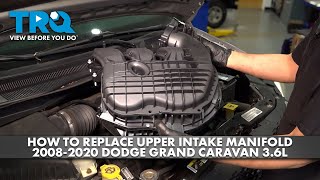
- Dodge Journey, Avenger, Grand Caravan, Charger (2008-2017) — Extremely common on 3.5L and 3.6L V6 engines. Requires replacing the entire upper intake plenum because internal runner components fail and cannot be serviced separately.
- Chrysler 300, Town & Country, 200 (2007-2017) — Shares powertrains with Dodge. The 3.5L V6 in the 2007-2010 Chrysler 300 frequently requires full Manifold Tune Valve Assembly replacement.
- Ford Focus, Fusion, Escape, Mustang (2012-2018) — Ford's 'Intake Manifold Runner Control' (IMRC) fails due to faulty actuator motors or binding plastic flaps.
- Hyundai Elantra, Sonata, Tucson (2011-2019) — Hyundai's Variable Intake System (VIS) triggers P2078 alongside MAP sensor codes when the intake system malfunctions.
- Volkswagen/Audi A4, GTI, Jetta, Tiguan (2008-2016) — Direct-injection engines suffer severe carbon buildup, binding the runner flaps and shorting out the actuator motor.
- Chevrolet Sonic, Cruze, Equinox, Traverse (2009-2018) — Wiring harnesses become brittle from engine heat, developing shorts near the connector.
- Mazda 3, 6, CX-5 (2010-2018) — Mazda's Variable Tumble Control System (VTCS) triggers circuit high codes due to stuck shutter valves or faulty actuators.
- Honda Civic, Accord, CR-V (2002-2012) — The 2006-2011 Civic Si is particularly known for IMRC actuator failures and carbon-stuck valves.
Manufacturer-Specific Notes
- Dodge/Chrysler: On 3.5L and 3.6L V6 engines, the runner control valve and sensor are integrated into the upper intake manifold plenum. Individual component replacement is impossible; you must replace the entire plenum.
- General Motors (Chevrolet): Wiring harnesses routed near the engine block are a frequent failure point. The plastic conduit becomes brittle, allowing wires to chafe and short out against the block.
- Ford: The 2.0L Duratec IMRC system is notorious for plastic swirl flaps breaking off. A P2078 code is often an early warning sign of a deteriorating manifold before catastrophic engine damage occurs.
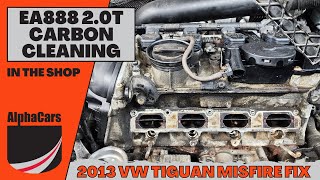
- Volkswagen/Audi: For TFSI/TSI engines, P2078 is a secondary code caused by severe carbon buildup. Professional carbon cleaning (walnut blasting) is mandatory before replacing the actuator.
Real Owner Stories
2010 Dodge Journey 3.5L with P2078 & P1005
Check Engine Light illuminated. A dealership quoted $480+ to replace the entire intake manifold.
What they tried:
- The owner researched online to see if the sensor could be replaced individually.
- A second dealership confirmed the runner is permanently sealed inside the upper intake plenum.
Outcome: The owner replaced the entire upper intake plenum assembly, which resolved both codes.
Lesson: On Dodge/Chrysler V6 engines, the IMT valve and sensor are integrated into the intake plenum. Do not waste time searching for individual sensors; replacing the entire assembly is the only fix.
2008 Dodge Avenger with 37k miles
P2078 triggered despite low mileage. The owner wanted to attempt a DIY repair.
What they tried:
- Removed the valve for visual inspection to check for carbon binding.
Outcome: No carbon was found. The electronic sensor had failed internally. Replacing the valve assembly fixed the issue.
Lesson: Electronic sensors fail internally regardless of mileage. If visual inspection shows no mechanical binding, the sensor itself is the failure point.
General P2078 Misdiagnosis Case
Car exhibited poor performance. A mechanic replaced the IMT valve assembly, but P2078 returned immediately.
What they tried:
- Replaced the IMT valve/sensor assembly without testing the wiring.
Outcome: The actual fault was a short to power in the wiring harness. The new part failed to fix the problem because the damaged wire continued sending 12V to the PCM.
Lesson: P2078 is a 'Circuit High' code. Always test the signal wire for a short to power with a multimeter before buying parts.
How to Prevent This Code From Triggering
- Perform periodic intake system cleaning (Every 30,000 miles) — Aerosol cleaners dissolve carbon and oil deposits, preventing the IMT valve flaps from binding and shorting the actuator.
- Use high-quality fuel and fuel additives (Every fill-up / Every 5,000 miles) — Top-tier fuels ensure complete combustion, reducing the soot that builds up in the intake system via PCV and EGR systems.
- Inspect and protect wiring harnesses (During any under-hood maintenance) — Wrapping brittle plastic conduit with high-temperature tape prevents wires from chafing against the engine block and shorting out.
- Install an oil catch can (direct-injection engines) (Once) — Intercepts oil vapor from the PCV system before it bakes onto intake valves, eliminating the primary source of carbon buildup.
- Avoid frequent short trips (Daily habit) — Short trips prevent the engine from reaching operating temperature, accelerating moisture and carbon deposit formation in the intake.
Frequently Asked Questions
I replaced the IMT sensor/valve, but the P2078 code came back immediately. What now?
This confirms the problem is a wiring short, not the sensor itself. P2078 is a 'Circuit High' code, meaning the signal wire is touching a power source. You must trace the wiring harness between the sensor and the PCM to locate and repair the short.
Can I fix P2078 myself?
A DIYer with moderate experience can replace an accessible IMT valve actuator. However, diagnosing the underlying wiring short or replacing a full intake manifold requires advanced electrical skills and tools. If a multimeter test intimidates you, take it to a shop.
How long can I drive with code P2078?
You can drive for a few days, but expect poor acceleration and a 5-15% drop in fuel economy. Ignoring it for months forces an incorrect air-fuel mixture that overheats the catalytic converter. This turns a minor electrical fix into a $1,500+ exhaust repair.
Will clearing the code fix the problem?
No. Clearing the code only temporarily turns off the Check Engine Light. Because P2078 is a hard electrical fault, the PCM will detect the high voltage during its next self-test and immediately trigger the light again.
What does 'Bank 1' mean in the P2078 code definition?
Bank 1 identifies the side of the engine containing cylinder #1. Inline engines only have one bank, so the location is obvious. On V6 or V8 engines, locating Bank 1 is critical to ensure you are testing the correct IMT valve.
Is P2078 an expensive fix?
Costs range from $150 for a simple wiring repair to $700 for a new actuator assembly. If you drive a V6 Dodge or Chrysler requiring a full intake manifold replacement, expect dealership bills between $1,200 and $2,000.
Can a vacuum leak cause a P2078 code?
No, P2078 is strictly an electrical circuit fault indicating high voltage. A vacuum leak affecting the IMT valve triggers mechanical performance codes like P2004 (Stuck Open). Focus your diagnosis entirely on the sensor, connector, and wiring harness.
Key Takeaways
- P2078 triggers when the engine computer detects a voltage near 5V (circuit high) from the Bank 1 intake manifold tuning valve position sensor.
- A short to power in the wiring harness causes over 50% of P2078 codes, making electrical testing mandatory before replacing any parts.
- Expect an immediate 5-15% drop in fuel economy, sluggish acceleration, and a rough idle while this code is active.
- Driving with P2078 for more than 1-3 months risks overheating the catalytic converter, turning a $150 wiring repair into a $2,000+ exhaust replacement.
Helpful Videos
![What is P2078 Engine Code [Quick Guide]](https://img.youtube.com/vi/rE9pDqCALuc/mqdefault.jpg)


The information in this article is provided for general reference and educational purposes only. Vehicle specifications, procedures, and part compatibility can vary by production date, trim level, and region. Always consult your vehicle's factory service manual and verify part numbers before purchasing or performing repairs. Safety-critical components such as airbags, seat belts, and braking systems should be installed by a qualified professional.
- 🎬 Helpful Videos
- What Does P2078 Mean?
- Can I Drive With P2078?
- Common Causes
- Symptoms
- Diagnostic Flowchart
- Common Fixes & Costs
- Used vs. New Parts: Buying Guide
- What Happens If You Wait — Timeline
- Cost of Not Fixing It
- Diagnosis Steps
- When This Code Triggers (Freeze-Frame Conditions)
- Related Codes
- Climate & Environmental Factors
- How to Talk to a Mechanic About This Code
- Where to Take It: Dealer vs Independent vs Chain
- When to Walk Away From the Repair
- What Scan Tool You Need for This Code
- How to Clear the Code After You Fix It
- Will This Fail Emissions / State Inspection?
- Most Commonly Affected Vehicles
- Manufacturer-Specific Notes
- Real Owner Stories
- 2010 Dodge Journey 3.5L with P2078 & P1005
- 2008 Dodge Avenger with 37k miles
- General P2078 Misdiagnosis Case
- How to Prevent This Code From Triggering
- Frequently Asked Questions
- I replaced the IMT sensor/valve, but the P2078 code came back immediately. What now?
- Can I fix P2078 myself?
- How long can I drive with code P2078?
- Will clearing the code fix the problem?
- What does 'Bank 1' mean in the P2078 code definition?
- Is P2078 an expensive fix?
- Can a vacuum leak cause a P2078 code?
- Key Takeaways
- 🎟️ Get 5% Off