

P2074 on 2016-2019 Ford F-450 SD: Air Filter, MAP Sensor, and Software Fixes
On a 6.7L Power Stroke, P2074 is most often caused by a dirty air filter or a required PCM software update. Always check the air filter first, as it's a simple and common fix mentioned in Ford's service bulletins. If the filter is clean, a dealer software update is the next likely solution, followed by cleaning the soot-clogged MAP sensor port.
- Always check and replace the engine air filter first when you see code P2074. It is the easiest, cheapest, and a very common solution per Ford TSB SSM 47597.
- If the air filter is clean, the next most likely cause is outdated PCM software, which requires a trip to a dealer or qualified shop for an update.
- A soot-clogged MAP sensor port is another common, low-cost fix. Inspect and clean it before replacing any sensors.
- Do not immediately replace the MAF sensor or PCM, as Ford explicitly warns against this as a first step.
- If P2074 appears with codes P0170, P0401, or P0402, it is almost certainly a software issue that needs a PCM reflash.
What's Unique About the 2016-2019 Ford F-450 SD
On the 6.7L Power Stroke engine, this code is frequently not a sign of a failed, expensive part. Ford has issued multiple Technical Service Bulletins (TSBs) indicating that the most common causes are either a simple maintenance item, like a dirty engine air filter, or overly sensitive software in the PCM. This is a sharp contrast to other vehicles where this type of correlation code might immediately point to a faulty sensor or a significant air leak. The EGR system on this engine is also prone to clogging the MAP sensor port with soot, which is a very platform-specific and common cause that doesn't involve a failed part.
Diagnostic Flowchart
Tap your situation to follow the diagnostic path that matches what you're seeing on this vehicle.
Generation note: The 2016 model year is the final year of the P473 generation, while 2017-2019 models are part of the P558 generation. However, the 6.7L Power Stroke engine is used in both, and the provided Technical Service Bulletins apply across these generations, indicating the issue is engine-specific rather than chassis-generation specific.
Symptoms You May Notice
- Check Engine Light (Malfunction Indicator Lamp) is on
- Reduced engine power or 'limp mode'
- Slower or weaker throttle response
- Engine may not run smoothly, hesitate, or stall
- Audible 'whoosh' or hissing sound under acceleration, 🎬 Watch: Diagnosing low boost and check engine lights on the 6.7L. indicating a boost leak
- Black smoke from the exhaust under load
- Mass Air Flow (MAF) Sensor
- Powertrain Control Module (PCM)
Most Likely Causes
- Dirty or Clogged Engine Air Filter 🔴 High Probability Ford TSB SSM 47597 directly identifies this as a primary cause. A restricted filter prevents the required amount of air from entering the engine, directly causing the correlation error between expected and measured airflow.
How to confirm: Visually inspect the engine air filter. If it is dark, full of debris, or has not been changed in over 15,000 miles, it is likely restricted. One owner found a clogged pre-filter was the culprit.
Typical fix: Replace the engine air filter with a new OEM-quality filter (Motorcraft FA-1883). This is the first, easiest, and often successful step in diagnosis.
Est. part cost: $25-$75 - Outdated Powertrain Control Module (PCM) Software 🔴 High Probability Ford has released multiple TSBs (TSB 19-2343, TSB 19-2029) stating that the original PCM software logic is too sensitive and can set P2074 incorrectly, often alongside other codes like P0170, P0401, and P0402. This applies to vehicles built on or before January 9, 2019.
How to confirm: A Ford dealer or a qualified shop with a Ford-specific scan tool (like IDS) can check the current software calibration against the latest available version referenced in the TSBs.
Typical fix: Reprogramming the PCM with the latest updated software and performing a MAF parameter reset. This must be done by a dealer or a shop with the proper equipment. Note: TSB 19-2343 states this update will increase Diesel Exhaust Fluid (DEF) consumption.
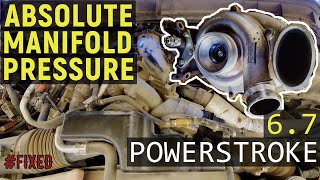
Est. part cost: $0-$200 (Labor for reflash, may be covered by emissions warranty) - Soot-Clogged Manifold Absolute Pressure (MAP) Sensor and Port 🟡 Medium Probability The 6.7L Power Stroke's EGR system can recirculate soot into the intake manifold. This soot builds up and completely clogs the small port for the MAP sensor, causing it to read pressure incorrectly or not at all. This is a very common issue documented in many owner forums and videos. 🎬 Watch: How to clean a soot-clogged MAP sensor and port.
How to confirm: Remove the MAP sensor (located on top of the plastic intake manifold, held by one 7mm or 8mm bolt) and inspect both the sensor tip and its port in the manifold for heavy, caked-on soot buildup. The port may be almost completely blocked.
Typical fix: Carefully clean the sensor tip with MAF sensor cleaner. Gently and meticulously clean the port in the manifold with a pick, small screwdriver, or a drill bit twisted by hand to break up the carbon. Vacuum out any loose debris to prevent it from falling into the intake manifold. Many owners have fixed the code with just this cleaning.
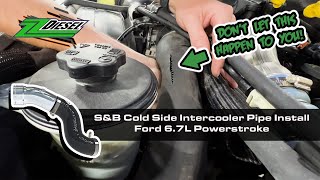
Est. part cost: $5-$15 (Cleaner) - Intake Air Leak (Boost Leak) ⚪ Low Probability The plastic cold-side charge air cooler (CAC) pipe is a known weak point on 6.7L Power Stroke engines and can develop cracks, causing a loss of boost pressure that can trigger this code. This is a common failure point discussed in owner forums.
How to confirm: Visually inspect all intake piping between the turbo and the engine, especially the plastic cold-side pipe near the throttle body, for cracks, oil residue, loose clamps, or separated connections. A smoke test can also pinpoint leaks that are not visually apparent.
Typical fix: Replace the cracked or damaged section of the intake piping. Many owners opt for more durable aftermarket metal or silicone pipes to prevent recurrence. The OEM part number for the cold-side pipe is HC3Z-6F073-B.
Est. part cost: $100-$300
Rare But Worth Checking
- Faulty Mass Air Flow (MAF) Sensor: While often misdiagnosed, a truly faulty MAF sensor can cause this code. TSB SSM 47597 specifically warns against replacing it without first checking the air filter. A diagnostic procedure often involves resetting the MAF adaptation values with a scan tool like FORScan after replacement.
- Faulty Exhaust Gas Temperature (EGT) Sensor: In a specific case on the Ford Truck Enthusiasts forum, a persistent P2074 was only resolved after a failed EGT sensor was replaced. The failed EGT sensor prevented the dealer from properly clearing the hard code until it was fixed.
Diagnosis Steps
- Check for other Diagnostic Trouble Codes (DTCs). The presence of codes like P0170, P0401, or P0402 strongly suggests a PCM software update is needed per TSB 19-2343.
- Inspect the engine air filter. If it is dirty, clogged, or an aftermarket oiled filter that is over-oiled, replace it with a quality paper filter like Motorcraft FA-1883. This is the primary step recommended by TSB SSM 47597.
- Clear the codes and perform a test drive under heavy load to see if the code returns.
- If the code returns, remove and inspect the MAP sensor and its port on the intake manifold for soot buildup. The sensor is held by a single 7mm or 8mm bolt. Clean both thoroughly if any contamination is found, using a pick and vacuum to clear the port.
- Check for applicable TSBs (19-2343, 19-2029, SSM 47597). If the symptoms and vehicle build date (on or before Jan 9, 2019) match, a PCM reflash at a dealership is the likely required fix.
- Inspect the entire air intake system, especially the plastic cold-side charge air cooler pipe, for cracks, loose clamps, or damage that could cause a boost leak. Listen for a 'whoosh' sound during acceleration.
- If a scan tool is available (like FORScan), monitor live data for MAP, MAF, and throttle position to look for inconsistencies under load. A MAF parameter reset may also be required.
- If all else fails, test the MAF and MAP sensor circuits and consider replacing the sensors, but only after all other more common causes have been ruled out.
Parts You'll Likely Need
- Engine Air Filter
(OEM #FA-1883)— A restricted air filter is a primary cause of this code, as stated directly in Ford's service bulletin SSM 47597. It's the first, cheapest, and easiest part to replace.
Trusted brands: Motorcraft, Baldwin, Fleetguard, Wix
OEM price range: $40-$60
Aftermarket price range: $25-$50 - Manifold Absolute Pressure (MAP) Sensor
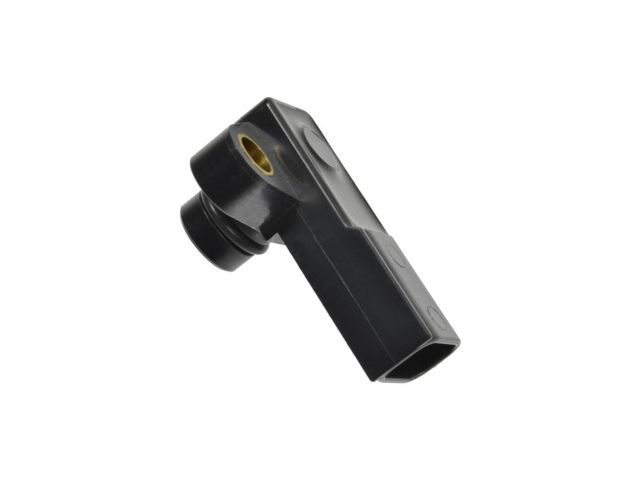
(OEM #BC3Z-9F479-B)— While the sensor itself may not have failed, its port is famous for clogging with soot. If cleaning doesn't resolve the issue or the sensor is damaged during cleaning, replacement is the next step. This part number fits 2011-2019 models.
Trusted brands: Motorcraft, Alliant Power
OEM price range: $110-$160
Aftermarket price range: $70-$120
Related Codes That Often Appear With This One
- P0170 — TSB 19-2343 and TSB 19-2029 explicitly link P2074 and P0170 as being caused by the same PCM software issue.
- P0401 — TSB 19-2343 notes that insufficient EGR flow can be flagged along with P2074 due to PCM software strategies that require an update.
- P0402 — Similar to P0401, TSB 19-2343 lists this code for excessive EGR flow as another potential companion code caused by a software issue.
- P0299 — This code for 'Turbo/Supercharger Underboost' can appear with P2074 if the cause is a significant intake air (boost) leak from a cracked charge air cooler pipe.
Technical Service Bulletins (TSBs) & Recalls
- TSB 19-2343: Addresses P2074, P0401, P0402, P0170 due to PCM software on 2017-2019 models.
- TSB 19-2029: Addresses P2074 and P0170 due to PCM software on 2017-2019 models.
- SSM 47597: Addresses P2074 caused by a dirty air filter on 2013-2019 models.
Platform-Specific Known Issues
- TSB 19-2343 & TSB 19-2029: For 6.7L engines built on or before January 9, 2019, these bulletins state that P2074 (often with P0170, P0401, and/or P0402) can be caused by overly sensitive PCM software. The official fix is a dealer-installed software update and a MAF parameter reset.
Mechanic-Grade Diagnostic Values
- Mass Air Flow (MAF) Sensor PID at idle — expected: 14-16 grams/second (g/s) on a healthy, fully warmed-up engine.. Failure: A reading significantly lower, such as 2-3 g/s at idle, points to a potential sensor or wiring issue.
- Mass Air Flow (MAF) Sensor Frequency — expected: The digital MAF sensor on this engine operates between 1.5K Hz (approx. 1.83 g/s) and 12K Hz (approx. 514 g/s).. Failure: A biased sensor might show an incorrect frequency for a given airflow, such as reading 6.8-6.9 kHz when it should be lower, which can be diagnosed with a Ford IDS pinpoint test.
- Manifold Absolute Pressure (MAP) Sensor Voltage (KOEO) — expected: With Key On, Engine Off, the MAP sensor should read approximately 1.40-1.50V, corresponding to atmospheric pressure (around 14.7 PSI at sea level). The PCM supplies a 5V reference to the sensor.. Failure: A reading of 0 volts on the signal wire indicates a circuit low failure, as seen in a case with a P0107 code.
Scan Tool Commands That Help
- Ford IDS / FORScan: Reset/Clear MAF Sensor (or MAF Parameter Reset) — This service function is required by Ford's TSBs after reprogramming the PCM for a P2074 concern. It is also recommended after replacing the MAF sensor to clear the old learned adaptation values.
- FORScan: IPC Module Configuration — While not a direct fix for P2074, advanced users use FORScan to modify vehicle modules. For example, enabling the 'Exhaust Filter % Full' screen provides more transparency into DPF status, which can be affected by the rich-running condition P2074 can cause.
- FORScan: Operator Commanded Regeneration (OCR) — If the P2074 code has caused excessive soot buildup and a high DPF load reading, an OCR can be initiated to manually clean the filter after the root cause of P2074 has been repaired.
Wiring & Ground Locations
- G105 — Top right side of the engine compartment bulkhead, near the Powertrain Control Module (PCM).. The PCM, which processes the signals from the MAP and MAF sensors to trigger P2074, relies on this ground connection. A poor ground here could cause erratic module behavior and false codes.
- MAP Sensor Connector — On top of the plastic upper intake manifold.. The MAP sensor is a 3-wire sensor. According to a wiring diagram, it receives a 5V reference, has a ground, and sends a signal voltage back to the PCM. Testing at this connector is key to diagnosing a faulty sensor versus a wiring problem.
Real Owner Repair Stories
- PowerStrokeArmy forum user 'jwanck11' (2015 Ford 6.7L Power Stroke with full delete, No Limit Stage 2 CAI, and IDP tunes.) — Persistent P2074 Check Engine Light that would appear after a couple of days of driving, either under heavy acceleration or steady highway cruise.
❌ Tried (didn't work) Replaced MAP sensor, Replaced MAF sensor, Checked for vacuum leaks, Flashed back to stock tune and then back to a performance tune
✅ What actually fixed it The issue was resolved by switching to a different tuner's custom tune (from Innovative Diesel Performance to PIP tunes). This indicates the logic within the aftermarket tune itself was causing the correlation error, not a mechanical fault. - YouTube channel 'PistonShack' (2011-2019 Ford F-Series with 6.7L Power Stroke) — P2074 code, possibly with other turbocharger boost related codes.
❌ Tried (didn't work) The video focuses on the first and most common fix, not a list of failed attempts.
✅ What actually fixed it The MAP sensor port in the intake manifold was almost completely plugged with soot. The fix was to remove the MAP sensor (7mm bolt), thoroughly clean the caked-on soot out of the port, and install a new MAP sensor. The creator noted that after half a year, the code had not returned.
OEM Part Supersession History
BC3Z-9F479-A→BC3Z-9F479-B— Standard part revision by the manufacturer for improvements in reliability or manufacturing.
Heads up: The parts are interchangeable. BC3Z-9F479-B replaces the -A version directly.
Model Year Variations Within This Range
- 2015-2016: These years received a significant engine update, replacing the problematic twin-compressor GT32 turbo with a larger, more reliable single variable geometry GT37 turbo. This also involved a new lower intake manifold and revised injectors, making it a more robust design than the 2011-2014 models.
- 2017-2019: The engine is largely a carryover from the 2015-2016 update, but it's paired with the new P558 chassis. The intake manifold design is a composite two-piece unit. While mechanically similar to the prior years regarding this fault, the TSBs for software updates specifically call out 2017-2019 models, indicating software strategies are a key factor in this specific year range.
Helpful Videos
We Have This Part in Stock

The information in this article is provided for general reference and educational purposes only. Vehicle specifications, procedures, and part compatibility can vary by production date, trim level, and region. Always consult your vehicle's factory service manual and verify part numbers before purchasing or performing repairs. Safety-critical components such as airbags, seat belts, and braking systems should be installed by a qualified professional.
- Ford F-450 SD:
- 🎬 Helpful Videos
- 🛍️ Shop This Part
- What's Unique About the 2016-2019 Ford F-450 SD
- Diagnostic Flowchart
- Symptoms You May Notice
- Most Likely Causes
- Rare But Worth Checking
- Diagnosis Steps
- Parts You'll Likely Need
- Related Codes That Often Appear With This One
- Technical Service Bulletins (TSBs) & Recalls
- Platform-Specific Known Issues
- Mechanic-Grade Diagnostic Values
- Scan Tool Commands That Help
- Wiring & Ground Locations
- Real Owner Repair Stories
- OEM Part Supersession History
- Model Year Variations Within This Range
- 🎟️ Get 5% Off