

P2074 on 2016-2019 Ford F-350 SD 6.7L: MAF/MAP Correlation Causes and Fixes
On a 2016-2019 F-350 with the 6.7L Power Stroke, code P2074 is most often caused by a dirty engine air filter or outdated PCM software. Before replacing any sensors, check the air filter (use Motorcraft FA-1883) and see if a dealer software update (TSB 19-2343) is needed. An air filter costs $30-$60, while a dealer reflash may cost $90-$400. Also, inspect and clean the MAP sensor port for soot buildup, a common issue on these engines.
- Always check the simple things first: inspect the engine air filter before attempting any other repairs.
- This code is often caused by a software glitch. A PCM update from a Ford dealer is a very common fix. [TSB 19-2343]
- Do not immediately replace the MAF or MAP sensors. Ford has specifically warned against this as it is rarely the solution. [SSM 47597, SSM 47541]
- If P2074 appears with other codes like P0170, P0401, or P0402, it is highly likely to be the software issue described in TSB 19-2343.
- Cleaning the MAP sensor and its port in the intake manifold of soot is a valid and low-cost diagnostic step.
What's Unique About the 2016-2019 Ford F-350 SD

For this specific generation of the 6.7L Power Stroke, Ford has acknowledged that P2074 is frequently a software or simple maintenance issue, not a failed part. The manufacturer issued multiple Technical Service Bulletins (TSBs) advising technicians to first check for a dirty air filter or perform a PCM software update before replacing expensive components. [SSM 47597, TSB 19-2343] This is a critical distinction, as many owners or shops might otherwise jump to replacing the MAF or MAP sensor, which is often unnecessary for this particular truck and code. 🎬 See why you shouldn't replace the MAF sensor first TSB 19-2343 explicitly states the fix is to reprogram the PCM and perform a MAF parameter reset.
Diagnostic Flowchart

Tap your situation to follow the diagnostic path that matches what you're seeing on this vehicle.
Generation note: Yes, this range spans two generations. The 2016 model is the end of the 3rd generation (P473), while the 2017-2019 models are the beginning of the 4th generation (P558). However, the 6.7L Power Stroke engine is used in both, and the provided TSBs apply across these model years, indicating the causes and fixes are similar for this code.
Symptoms You May Notice
- Check Engine Light (Malfunction Indicator Lamp) is on
- Reduced engine power or acceleration
- Slower or weaker throttle response
- Rough running or engine hesitation
- Engine may stall in some cases
- Noticeable decrease in fuel economy
- Replacing the Mass Air Flow (MAF) sensor without first checking the air filter or for PCM updates. [SSM 47541, SSM 47597, 5]
- Replacing the Manifold Absolute Pressure (MAP) sensor when the port is simply clogged with soot.
- Replacing the Powertrain Control Module (PCM) when only a software reflash is needed. [SSM 47541, SSM 47597]
Most Likely Causes

- Outdated Powertrain Control Module (PCM) Software 🔴 High Probability Ford explicitly identified PCM software strategies as a primary cause for this code in TSB 19-2343 and TSB 19-2029, especially when seen with codes P0401, P0402, or P0170. This is a widely reported fix in owner forums.
How to confirm: A Ford dealer or a shop with a Ford diagnostic scan tool (IDS) can check the current PCM calibration against the latest available version referenced in the TSBs.
Typical fix: Reprogram the PCM to the latest software version and perform a MAF parameter reset. TSB 19-2343 notes that this calibration will increase Diesel Exhaust Fluid (DEF) consumption during high-load operation.
Est. part cost: $0 - Dirty or Clogged Engine Air Filter 🔴 High Probability A restricted air filter directly causes a mismatch between expected and actual airflow, triggering this code. Ford Service Message SSM 47597 specifically calls out a dirty air filter as a likely cause if P2074 appears by itself. Owners on forums have confirmed fixing the code by replacing a clogged filter, especially non-Motorcraft brands or overly dirty pre-filters.
How to confirm: Visually inspect the engine air filter. If it is dark, full of debris, or has not been changed in over 15,000 miles, it should be replaced. Some owners recommend sticking to Motorcraft filters as some aftermarket ones can cause this code even when new.
Typical fix: Replace the engine air filter with a quality part, preferably Motorcraft FA-1883.
Est. part cost: $30-$60 - Clogged Manifold Absolute Pressure (MAP) Sensor Port 🟡 Medium Probability The 6.7L Power Stroke's EGR and PCV systems can cause significant soot and oil vapor buildup in the intake manifold. This buildup commonly clogs the small port where the MAP sensor reads pressure, leading to inaccurate readings that trigger P2074.
How to confirm: Remove the MAP sensor from the intake manifold (located on top, near the firewall) and inspect both the sensor's tip and the port in the manifold for heavy soot or carbon buildup. The port may be almost completely blocked.
Typical fix: Carefully clean the soot from the MAP sensor port using picks, small brushes, or a shop vacuum. Clean the sensor itself with a dedicated MAF/sensor cleaner spray. Do not poke anything deep into the sensor's orifice. Some companies sell MAP sensor spacer kits that relocate the sensor out of the direct path of soot to prevent recurrence.
Est. part cost: $5-$15 for cleaning supplies - Air Intake Leak (Cracked Cold Side Intercooler Pipe) ⚪ Low Probability The factory cold side charge air cooler (CAC) pipe, which connects the intercooler to the throttle body, is made of plastic and rubber components that are known to crack, split, or have their seals fail under boost pressure and heat cycles. This allows unmetered air to enter the engine, causing a MAF/MAP correlation error.
How to confirm: Visually inspect all intake tubing, especially the cold side pipe on the driver's side of the engine, for cracks, oil residue (indicating a boost leak), or loose connections. A smoke test is the most effective way to pinpoint hard-to-see leaks.
Typical fix: Replace the cracked or leaking CAC pipe. Many owners opt for more durable aftermarket metal pipes to prevent future failures.
Est. part cost: $150-$400 for an upgraded aftermarket pipe
Rare But Worth Checking
- Faulty Mass Air Flow (MAF) Sensor: While possible, Ford specifically warns against replacing this part for an isolated P2074 code in TSBs SSM 47597 and SSM 47541. It should only be considered after all other causes, especially software updates and air filter checks, have been exhausted. One owner on a forum replaced it only to have the code return.
- Faulty Manifold Absolute Pressure (MAP) Sensor: A true sensor failure is less common than a clogged port or a software issue. In one forum thread, a user replaced the MAP sensor but the code persisted, pointing to other root causes. Test the sensor's output with a scan tool before replacing it. If replacement is needed, the OEM part number is BC3Z-9F479-B.
- Cracked or Leaking Cold Side Intercooler Pipe: The factory plastic/rubber cold side intercooler pipe is a known failure point on the 6.7L Powerstroke. It can crack or split, creating a large boost leak that triggers P2074. Aftermarket metal pipes are a common and recommended upgrade.
Diagnosis Steps

- Scan for other DTCs. If P0170, P0401, or P0402 are present with P2074, a PCM update per TSB 19-2343 is highly likely to be the fix. Proceed to step 4.
- If P2074 is the only code, start by inspecting the engine air filter. Replace if dirty, paying mind to use a quality Motorcraft filter.
- Clear codes and test drive. If the code returns, remove the MAP sensor (located on top of the intake manifold near the firewall). Inspect the sensor tip and the manifold port for soot buildup. Clean the port thoroughly with picks/brushes and the sensor with dedicated electronics cleaner.
- If the code persists, contact a Ford dealer or qualified shop to check for available PCM software updates as specified in TSB 19-2343.
- After the PCM update, ensure a MAF parameter reset is performed. This can be done with the Ford IDS tool or with aftermarket tools like FORScan (found under Service Functions > MAF Sensor Reset).
- If software is up-to-date and the MAP port is clean, perform a thorough inspection of the air intake system for leaks. Pay close attention to the cold side CAC pipe (driver's side) for cracks or oil residue. A smoke test is recommended.
- Only after all the above steps have been exhausted should you consider testing and potentially replacing the MAF or MAP sensors. Swapping sensors with a known good vehicle is one way to test if you lack advanced diagnostic tools.
Parts You'll Likely Need
- Engine Air Filter
(OEM #FA-1883)— A restricted air filter is a primary and simple cause for the airflow correlation error, as noted in Ford's service message SSM 47597 and confirmed by numerous owner experiences.
Trusted brands: Motorcraft
OEM price range: $20-$40
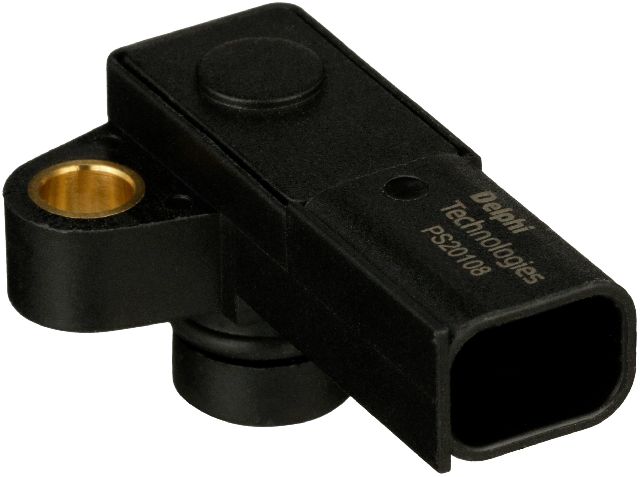
Aftermarket price range: $15-$30 - Manifold Absolute Pressure (MAP) Sensor
(OEM #BC3Z-9F479-B)
Related Codes That Often Appear With This One
- P0170 — Fuel Trim Malfunction. TSB 19-2343 and TSB 19-2029 list this code as appearing with P2074 due to the same PCM software issue.
- P0401 — EGR Flow Insufficient. TSB 19-2343 lists this as a related code caused by the PCM software glitch.
- P0402 — EGR Flow Excessive. Also listed in TSB 19-2343 as a related code caused by the PCM software glitch.
Technical Service Bulletins (TSBs) & Recalls
- TSB 19-2343: 6.7L - Illuminated MIL With DTCs P2074, P0401, P0402 And/Or P0170
- TSB 19-2029: 6.7L - Illuminated MIL With DTCs P2074 and/or P0170
- SSM 47597: 6.7L - Illuminated MIL With Only DTC P2074
- SSM 47541: 6.7L - Illuminated MIL With Only DTC P2074
Platform-Specific Known Issues
- TSB 19-2343: PCM Reprogram for P2074 & Other Codes: For 2017-2019 models built before 09-Jan-2019, this bulletin addresses P2074 appearing with P0401, P0402, and/or P0170. The fix is a PCM reprogram and a MAF parameter reset. The TSB notes this update increases DEF usage in high-load situations. A dealer charged one owner $90 for this service.
- SSM 47597: Check Air Filter First for Isolated P2074: For 2013-2019 models, this service message advises that if P2074 is the only code present, the cause may be a dirty air filter and explicitly warns against replacing the PCM or MAF sensor for this condition alone.
- SSM 47541: Perform MAF Reset for Isolated P2074: For 2017-2019 models with an isolated P2074, this bulletin instructs technicians not to replace the PCM or MAF sensor, but to perform a MAF parameter reset instead. This can be done with FORScan by advanced users.
- MAP Sensor Port Clogging: Due to the EGR system, the port for the MAP sensor is highly prone to clogging with soot. This is a very common cause of P2074 that does not involve faulty parts, only cleaning. There are numerous videos and forum posts showing how to perform this 5-minute cleaning procedure.
Mechanic-Grade Diagnostic Values
- MAP Sensor Voltage (Key On, Engine Off) — expected: Approximately 14.7 PSI at sea level (Atmospheric pressure). The voltage should not be zero.. Failure: A reading of 0 volts on the signal wire, or a pressure reading that does not match atmospheric pressure, indicates a sensor or circuit fault.
- MAP Sensor Circuit Resistance — expected: Less than 5.0 Ohms on the ground and reference circuits.. Failure: Resistance greater than 5.0 Ohms points to an open or high-resistance fault in the wiring harness or connectors.
- MAP Sensor Connector Voltages (Plugged In, KOEO) — expected: Pin 1 (Ground): ~0V. Pin 2 (Signal): Varies with pressure. Pin 3 (Reference): ~5.0V.. Failure: Missing 5V reference or ground indicates a wiring or PCM issue, not a sensor failure. A signal wire stuck at 0V or 5V suggests a faulty sensor or shorted circuit.
- PCM Adaptive Value Threshold — expected: The final 'AMA' (Air Mass Adaption) stored value should be within a calibrated range.. Failure: For a 6.7L Super Duty, a fault is set if the adaptive value is >20% or <-20% under load, triggering P2074.
Scan Tool Commands That Help
- Ford IDS: Toolbox > Powertrain > Service Functions > Reset/Clear Specified Function > Reset/Clear Functions > MAF Sensor — This MAF Parameter Reset is required by Ford's TSBs (like TSB 19-2343) after reprogramming the PCM to correct the P2074 fault. It clears the learned adaptive values for the MAF sensor.
- FORScan: Service Functions > MAF Sensor Reset — This is the equivalent of the Ford IDS command, used by DIYers and independent shops to reset the MAF sensor's learned values after a PCM update or sensor replacement.
- FORScan: Diesel Particulate Filter (DPF) Static Regeneration — If the P2074 code has been active for a long time, the DPF may become overloaded with soot due to incorrect fueling calculations. This command allows a technician to manually initiate a DPF cleaning cycle while the vehicle is parked.
Wiring & Ground Locations
- MAP Sensor Connector (C1598) — On top of the upper intake manifold, near the firewall.. This is the direct connection point for the MAP sensor. Probing here is essential for verifying power, ground, and signal. Pin 1 is Ground, Pin 2 is Signal, and Pin 3 is the 5V Reference from the PCM.
- PCM Connectors — Located on the driver's side firewall in the engine bay.. The Powertrain Control Module (PCM) is the source of the 5V reference and ground for the MAP sensor and receives the signal voltage. Verifying continuity and checking for voltage at the PCM connector pins can rule out a wiring harness break.
- PCM Grounds — Bolted to the chassis near the PCM on the driver's side firewall.. A poor PCM ground can cause a host of intermittent electrical issues and sensor correlation codes, including P2074. Verifying these grounds are clean and tight is a critical step in diagnosing elusive electrical faults.
Real Owner Repair Stories
- Ford Truck Enthusiasts Forum (2011 Ford F-250, 104,xxx miles, 100% stock) — Recurring P2074 Check Engine Light.
❌ Tried (didn't work) Dealer replaced the MAF sensor connector., Owner replaced the MAF sensor with a new Motorcraft part., Owner replaced the Air Filter., Owner replaced the MAP sensor with a new Motorcraft part.
✅ What actually fixed it The user's post ended without a final resolution, highlighting a scenario where all common fixes (air filter, MAF, MAP, and even wiring pigtail) failed to solve the persistent P2074 code, suggesting a deeper, less common issue like a wiring harness problem or a PCM fault. - Ford Truck Enthusiasts Forum (Ford F-Series with 6.7L Power Stroke) — P2074 code stored.
❌ Tried (didn't work) Dealer replaced the MAF sensor, but the code came back immediately as a hard code.
✅ What actually fixed it While waiting for further instruction from Ford, a separate issue caused an Exhaust Gas Temperature (EGT) sensor to fail. After the dealer replaced the failed EGT sensor and cleared all codes, the P2074 code did not return for over 30,000 miles. This suggests a strange interaction where the failing EGT sensor may have prevented the PCM from properly clearing or resetting the P2074 fault. - PowerStrokeArmy Forum (2013 F-250 Platinum 4x4, completely stock) — P2074 code appears during highway driving on rolling hills.
❌ Tried (didn't work) Clearing the code (it would return under load).
✅ What actually fixed it The owner replaced the engine air filter, which was not a Motorcraft brand. After installing a new filter and clearing the code, the issue was resolved. This supports Ford's TSB and highlights that even a new-looking aftermarket filter can cause enough airflow discrepancy to trigger P2074.
OEM Part Supersession History
BC3Z-9F479-A→BC3Z-9F479-B— Standard part revision by the manufacturer.
Helpful Videos
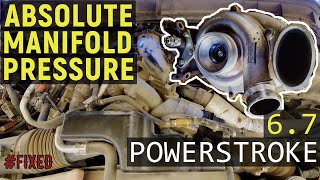
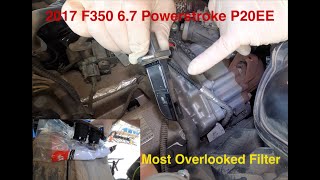
We Have This Part in Stock
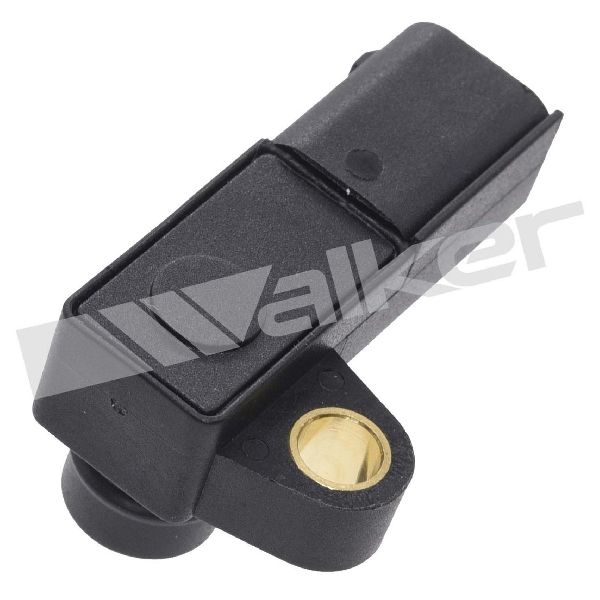



The information in this article is provided for general reference and educational purposes only. Vehicle specifications, procedures, and part compatibility can vary by production date, trim level, and region. Always consult your vehicle's factory service manual and verify part numbers before purchasing or performing repairs. Safety-critical components such as airbags, seat belts, and braking systems should be installed by a qualified professional.
- Ford F-350 SD:
- 🎬 Helpful Videos
- 🛍️ Shop This Part
- What's Unique About the 2016-2019 Ford F-350 SD
- Diagnostic Flowchart
- Symptoms You May Notice
- Most Likely Causes
- Rare But Worth Checking
- Diagnosis Steps
- Parts You'll Likely Need
- Related Codes That Often Appear With This One
- Technical Service Bulletins (TSBs) & Recalls
- Platform-Specific Known Issues
- Mechanic-Grade Diagnostic Values
- Scan Tool Commands That Help
- Wiring & Ground Locations
- Real Owner Repair Stories
- OEM Part Supersession History
- 🎟️ Get 5% Off