

P2074 on 2011-2015 Ford F-350 SD 6.7L: Causes and Fixes for MAP/MAF Correlation
On a 2011-2015 F-350 with the 6.7L Power Stroke, code P2074 is most often caused by a soot-clogged Manifold Absolute Pressure (MAP) sensor, a required software update from Ford, or a cracked cold-side intercooler pipe. Cleaning or replacing the MAP sensor and its port is a common fix, but always check for applicable Technical Service Bulletins (TSBs) first, as a PCM reflash is a very common and required repair.
- Always check for applicable TSBs first; a simple software update from Ford may be all that's needed.
- The most common physical cause is a soot-clogged MAP sensor. Remove and inspect it before buying a new one.
- Thoroughly inspect the plastic cold-side intercooler pipe for cracks, as this is a very common failure point causing a boost leak.
- Do not drive extensively with this code active, as it can lead to costly damage to the DPF.
- This code is often seen with P2073, as they relate to the same sensor correlation fault under different engine load conditions.
What's Unique About the 2011-2015 Ford F-350 SD

For the 6.7L Power Stroke engine, this code is notoriously common and points to a few specific weaknesses. The primary issues are not always a failed sensor, but rather a sensor that is physically clogged with soot from the EGR and crankcase ventilation systems, or a glitch in the PCM software itself. Ford has issued multiple Technical Service Bulletins (TSBs) acknowledging that a simple software reflash can resolve this code, which is not a common fix on other diesel platforms. Specifically, TSB 23B63 and Customer Satisfaction Program 22N14 were released for 2011-2012 models because the code could become a permanent DTC in the PCM's memory, causing state inspection failures even after a repair.
Diagnostic Flowchart

Tap your situation to follow the diagnostic path that matches what you're seeing on this vehicle.
Symptoms You May Notice
- Check Engine Light (Malfunction Indicator Lamp) is on.
- Reduced engine power or "limp mode".
- Poor or hesitant acceleration.
- Increased fuel consumption.
- Black smoke from the exhaust under load.
- Audible hissing or rushing sound from the engine bay during acceleration, indicating a boost leak.
- Replacing the MAP sensor without cleaning the port. A new sensor will give the same false reading if the port in the intake manifold is full of soot.
- Replacing sensors without checking for PCM software updates first. The TSBs indicate that a reflash is a very common and required fix, especially on 2011-2012 models.
- Immediately blaming the MAF sensor. While possible, the MAP sensor and boost leaks are more frequent culprits for this specific code on the 6.7L Power Stroke.
Most Likely Causes

- Powertrain Control Module (PCM) Software Issue 🔴 High Probability Ford has released multiple TSBs for this exact issue on this platform, indicating the original PCM logic was too sensitive or had flaws that prevented the code from clearing properly. TSB 22-2115 specifically addresses this for 2011-2012 models, and was followed by Customer Satisfaction Programs 22N14 and 23B63 to handle permanent DTCs causing inspection failures.
How to confirm: Check with a Ford dealer or a qualified shop with access to Ford's OASIS system to see if TSB #22-2115, or Customer Satisfaction Programs #22N14 S1 or #23B63 apply to your vehicle's VIN. This is a required first step for 2011-2012 models.
Typical fix: Reprogramming the PCM with the latest updated software using the Ford Integrated Diagnostic System (IDS). This must be done by a dealer or a shop with a Ford-specific diagnostic scan tool. Under program 22N14, this repair is free of charge for eligible vehicles that have failed a state I/M test due to this code.
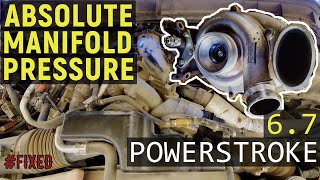
Est. part cost: $0 - Clogged Manifold Absolute Pressure (MAP) Sensor 🔴 High Probability The 6.7L Power Stroke's EGR and PCV systems vent soot and oil residue directly into the intake manifold, which builds up and clogs the small port of the MAP sensor, leading to false pressure readings.
How to confirm: Remove the MAP sensor from the upper intake manifold (near the cowl). Visually inspect the sensor's tip and the port it sits in for heavy, black soot buildup. A completely clogged port is a very common cause of this code.
Typical fix: Carefully clean the MAP sensor tip and, more importantly, the port in the intake manifold. Use a dedicated electrical contact cleaner or MAF sensor cleaner and a small pick or pipe cleaner to gently remove the soot. Do not use harsh chemicals like brake cleaner. If the sensor is heavily contaminated or damaged, replace it. Many owners report cleaning is sufficient if the sensor itself hasn't failed.
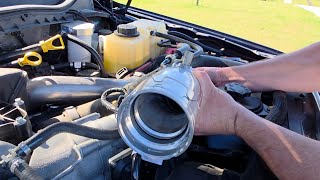
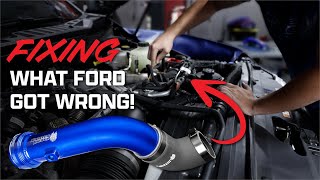
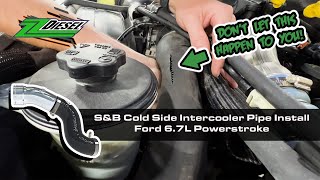
Est. part cost: $40-$100 - Cracked or Loose Cold Side Intercooler Pipe 🟡 Medium Probability The factory plastic cold side pipe that connects the intercooler to the throttle body is a known failure point. It becomes brittle from heat cycles and exposure to oil vapor, often developing cracks or splits that cause a major boost leak.
How to confirm: Visually inspect the entire air intake path from the turbo to the engine, paying close attention to the plastic pipe leading to the throttle body. Squeeze the pipe to check for soft spots or hidden cracks. A loud hissing sound under acceleration is a strong indicator of a leak. A scan tool may also show P0299 (Underboost) along with P2074.
Typical fix: Replace the cracked or damaged intercooler pipe. Many owners opt for upgraded metal pipes from brands like Mishimoto or Sinister Diesel to prevent future failures.
Est. part cost: $150-$400 - Dirty or Faulty Mass Air Flow (MAF) Sensor ⚪ Low Probability
How to confirm: Remove the MAF sensor from the airbox and inspect the hot wires for contamination. Use a scan tool to monitor MAF readings; they should increase smoothly with engine RPM. While often blamed, it's less frequently the root cause on this platform compared to the MAP sensor or software.
Typical fix: Clean the sensor with dedicated MAF sensor cleaner. Do not touch the delicate wires. If cleaning doesn't resolve the issue, replace the sensor. One owner on the Ford Truck Enthusiasts forum replaced the MAF sensor multiple times to no avail, only to find other underlying issues.
Est. part cost: $70-$150
Rare But Worth Checking
- Faulty or Sticking Throttle Body: The throttle body on the 6.7L is used for EGR flow control and rapid shutdown. If the valve sticks due to carbon buildup or the position sensor fails, it can create a correlation issue with airflow sensors. A user on Reddit suggested checking the throttle body for gunk if a MAF cleaning doesn't work.
- Clogged Air Filter: A severely restricted engine air filter can starve the engine of air, causing the MAF sensor to read lower than expected for a given throttle position, triggering the code under high load. One owner on a forum found their K&N pre-filter was completely clogged, and cleaning it resolved the P2074 code.
- Faulty EGT Sensor: In a strange case reported on the Ford Truck Enthusiasts forum, a user's persistent P2074 code was only resolved after a failed Exhaust Gas Temperature (EGT) sensor was replaced, which then allowed the dealer to properly reset the hard code. A faulty EGT sensor can be identified if its reading is drastically different from the other EGT sensors after a long cold soak.
Diagnosis Steps
- Check for Technical Service Bulletins (TSBs). This is the most critical first step. Contact a Ford dealer with your VIN to see if TSBs #22-2115, or Customer Satisfaction Programs #22N14 S1 or #23B63 are open for your vehicle. If so, a PCM reflash is the first and required step.
- Visually inspect the air intake system. Carefully check the cold side intercooler pipe (the plastic one connecting to the throttle body) for cracks, oil residue, or looseness. Squeeze the pipe to feel for soft spots or hidden splits. Check all other connections between the air filter and the engine.
- Inspect and clean the MAP sensor and port. Remove the MAP sensor located on the upper intake manifold near the firewall. Inspect it and its port for soot buildup. Clean both carefully with electrical contact cleaner and a soft brush or pick, then use a vacuum to prevent debris from falling into the intake.
- Inspect the air filter. A clogged air filter or pre-filter can cause this code. Replace if dirty.
- Inspect and clean the MAF sensor. Located near the air filter housing, remove and inspect the MAF sensor. Clean with dedicated MAF sensor cleaner if it appears dirty.
- Use a scan tool to monitor live data. Observe the values for MAP, MAF, and Throttle Position while an assistant revs the engine (or while driving under load). If MAF increases but MAP stays flat or drops, you likely have a physical air leak (boost leak).
Parts You'll Likely Need
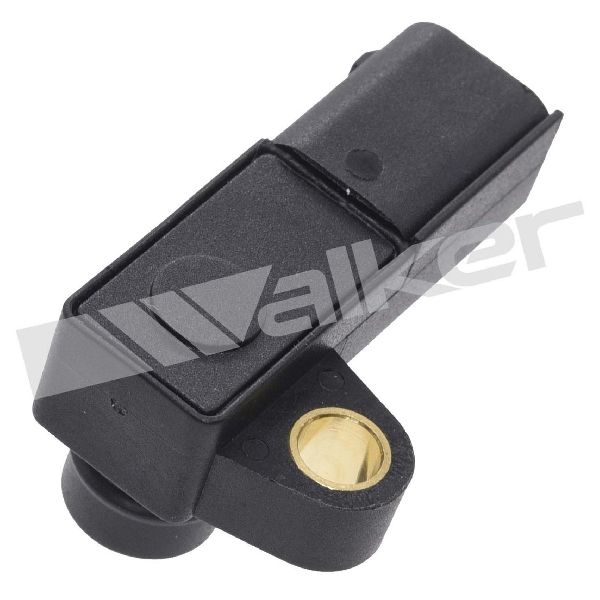
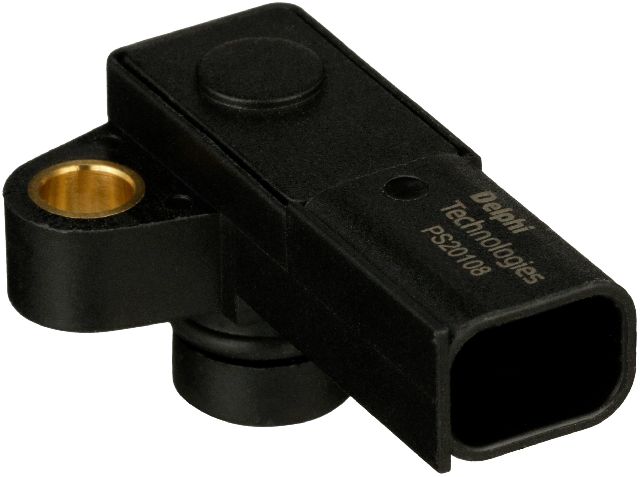
- Manifold Absolute Pressure (MAP) Sensor
(OEM #BC3Z-9F479-A)— This sensor is highly prone to clogging with soot on the 6.7L Power Stroke, leading to incorrect pressure readings. Often, only a cleaning is needed, but replacement is common.
Trusted brands: Motorcraft, Bosch, Standard Motor Products
OEM price range: $60-$100
Aftermarket price range: $40-$80 - Cold Side Intercooler Pipe
(OEM #BC3Z-6F073-A)— The factory plastic pipe is a known failure point, frequently cracking and causing a large boost leak that triggers this code.
Trusted brands: Motorcraft (OEM Plastic), Mishimoto (Upgraded Metal), Sinister Diesel (Upgraded Metal), H&S Motorsports (Upgraded Metal)
OEM price range: $150-$200
Aftermarket price range: $180-$400 - MAF Sensor Cleaner — Required for safely cleaning the MAF sensor and can also be used on the MAP sensor. A cheap first step before replacing parts.
Trusted brands: CRC, WD-40 Specialist
OEM price range: $10-$15
Aftermarket price range: $10-$15
Related Codes That Often Appear With This One
- P2073 — This code for 'Manifold Absolute Pressure/Mass Air Flow - Throttle Position Correlation at Idle' is the counterpart to P2074. They are frequently seen together and are mentioned in the same TSBs, pointing to the same root causes like software issues or a clogged MAP sensor.
- P0299 — This code for 'Turbocharger/Supercharger Underboost' often accompanies P2074 when the cause is a significant air leak from a cracked intercooler pipe.
- P0069 — This code indicates a 'Manifold Absolute Pressure - Barometric Pressure Correlation' fault. It can be triggered along with P2074 if the MAP sensor is failing or giving erratic readings due to being clogged.
Technical Service Bulletins (TSBs) & Recalls

- TSB 22-2115: Addresses MIL illumination with P2073/P2074 on 2011-2012 models due to PCM software.
- Customer Satisfaction Program 23B63: Supersedes 22N14 S1. Provides a free, one-time PCM reprogram for 2011-2012 models where P2073/P2074 becomes a permanent DTC, causing I/M test failures.
- TSB 19-2160: Addresses P2074 and other codes on 2017-2019 models due to PCM software strategies.
Platform-Specific Known Issues
- A PCM software update is a very common requirement to fix this code, as acknowledged by Ford in TSB #22-2115 and customer satisfaction program #23B63. The original software may be too sensitive or have a flaw that prevents the DTC from self-healing after a repair.
- The code is frequently caused by soot buildup in the MAP sensor port, not a failure of the sensor itself. Cleaning the port is a critical step that is often missed.
- The plastic cold side intercooler pipe is a well-documented weak point that fails from heat and oil exposure, making it a prime suspect for a boost leak causing this code.
Mechanic-Grade Diagnostic Values
- Final Air Mass Adaption (AMA) stored value at higher load — expected: -20% to +20%. Failure: The value is greater than +20% or less than -20%.
- MAP Sensor Voltage (Key On, Engine Off) — expected: Should correspond to atmospheric pressure (approx. 14.7 PSI at sea level).. Failure: A reading that is significantly different from atmospheric pressure indicates a biased or faulty sensor.
- MAP/MAF Sensor Circuit Wiring Resistance — expected: Less than 5.0 Ohms. Failure: Resistance greater than 5.0 Ohms indicates an open or high-resistance in the circuit.
- MAP Sensor Pins — expected: The 3-wire connector contains a 5-volt reference, a ground, and a signal wire.. Failure: Missing 5V reference or ground indicates a wiring or PCM issue, not a sensor failure.
Hidden / Shadow Codes Worth Checking
- Permanent DTC (P-DTC): On 2011-2012 models, before a specific software update, codes P2073 and P2074 could become 'permanent' in the PCM's memory. They would not clear with a standard scan tool or battery disconnect even after the root cause was fixed, causing automatic state inspection failures. (see via The code will remain present after a 'Clear Codes' command is sent. Resolving it requires a specific PCM reflash by a Ford dealer per Customer Satisfaction Program 22N14.)
Scan Tool Commands That Help
- Ford IDS / FORScan: Reset MAF Sensor Adaptation — This function should be performed after cleaning/replacing the MAP or MAF sensor, or after repairing any air intake leaks. It resets the learned airflow values in the PCM. TSBs for later model years list this as a required step along with a PCM reflash.
- Ford IDS: PCM Reprogramming — This is the required fix for the 'Permanent DTC' issue on 2011-2012 models and is also the fix for software-related triggers on later models. It updates the PCM logic to be less sensitive or to correct flaws.
Wiring & Ground Locations
- G404 — Center of the right frame rail (on wide frame models).. This is a major chassis ground point for various components. A corroded or loose ground here can cause erratic sensor readings and intermittent electrical faults throughout the powertrain management system.
- G403 — On the frame wiring harness, near the breakout to the ground point (on narrow frame models).. Similar to G404, this serves as a critical grounding point. Poor grounding can lead to voltage discrepancies that affect sensor rationality checks.
- MAP Sensor Connector — On the upper intake manifold, near the cowl/firewall.. The MAP sensor uses a 3-wire connector (5V reference, signal, ground). The wiring and connector pins right at the sensor are a potential point of failure due to engine vibration and heat, leading to intermittent signal loss.
Real Owner Repair Stories
- YouTube channel 'PISTONSHACK' (2011-2019 Ford F-Series with 6.7L Power Stroke) — P2074 code present, possibly with other turbo-related secondary codes.
❌ Tried (didn't work) The video advises against immediately starting complex circuit testing before performing a simple visual check.
✅ What actually fixed it The port in the intake manifold where the MAP sensor sits was almost completely blocked with soot. The fix was to remove the sensor and thoroughly clean out the soot from the port and the sensor tip. The repair was confirmed to have lasted for over six months without the code returning. - Ford Truck Enthusiasts Forum (2013 F-250/350 with 175k miles) — P2074, P0107, and other codes. Truck runs well but CEL is on.
❌ Tried (didn't work) The MAP sensor had already been replaced 7,000 miles prior, which only seemed to be a temporary band-aid.
✅ What actually fixed it A responding user advised that the official Ford troubleshooting procedure for P2074 eventually leads to a required scan tool function: 'reset the MAF adaptation value.' This can be done with the aftermarket FORScan software, potentially resolving the code without replacing more parts.
Model Year Variations Within This Range
- 2011-2014: These models used a single-sequential turbocharger (SST), sometimes referred to as the Garrett GT32 SST. These early turbos were more prone to failure compared to the 2015+ units.
- 2015: The 2015 model year received a significant update. The engine power was increased to 440 hp and 860 lb-ft of torque. This was achieved with a more conventional and reliable Garrett GT37 variable geometry turbocharger, an upgraded high-pressure fuel pump, and revised fuel injector nozzles. These changes mean some engine and fuel system parts are not interchangeable with earlier models.
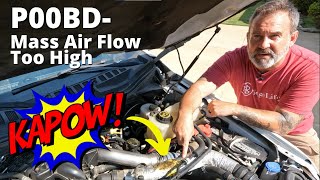
Helpful Videos

We Have This Part in Stock


The information in this article is provided for general reference and educational purposes only. Vehicle specifications, procedures, and part compatibility can vary by production date, trim level, and region. Always consult your vehicle's factory service manual and verify part numbers before purchasing or performing repairs. Safety-critical components such as airbags, seat belts, and braking systems should be installed by a qualified professional.
- Ford F-350 SD:
- 🎬 Helpful Videos
- 🛍️ Shop This Part
- What's Unique About the 2011-2015 Ford F-350 SD
- Diagnostic Flowchart
- Symptoms You May Notice
- Most Likely Causes
- Rare But Worth Checking
- Diagnosis Steps
- Parts You'll Likely Need
- Related Codes That Often Appear With This One
- Technical Service Bulletins (TSBs) & Recalls
- Platform-Specific Known Issues
- Mechanic-Grade Diagnostic Values
- Hidden / Shadow Codes Worth Checking
- Scan Tool Commands That Help
- Wiring & Ground Locations
- Real Owner Repair Stories
- Model Year Variations Within This Range
- 🎟️ Get 5% Off