

P2073 on 2011-2012 Ford F-450 SD 6.7L: Software Glitches, Causes, and Fixes
On a 2011-2012 F-450 with the 6.7L Power Stroke, code P2073 is most often caused by a powertrain control module (PCM) software glitch that prevents the code from clearing after a repair. Ford has issued multiple Technical Service Bulletins (TSBs) and a customer satisfaction program for this issue, and the fix is a dealer-performed software update. Before replacing any parts, check if your truck is covered by these programs. If not a software issue, the next most likely cause is a carbon-fouled t
- For a 2011-2012 F-450 6.7L, P2073 is very likely a software bug. Contact a Ford dealer about TSB 22-2115 and program 22N14 before buying any parts.
- If software is not the issue, the next most likely cause is a throttle body sticking due to heavy carbon buildup. Cleaning it is a common fix.
- The code is often accompanied by P2074; they point to the same set of issues.
- Do not replace the MAP or MAF sensors unless you have ruled out the software glitch and a dirty throttle body first.
What's Unique About the 2011-2012 Ford F-450 SD
For the 2011-2012 6.7L Power Stroke engine, Ford has officially acknowledged a software bug that causes the P2073 code (often with P2074) to be set incorrectly and become permanently stored in the PCM. This is a critical piece of information, as many owners might needlessly replace expensive sensors when the actual problem lies within the vehicle's software. A 'permanent' DTC means it cannot be cleared by standard scan tools or by disconnecting the battery, and will cause an immediate failure of an emissions inspection. The only fix is a PCM reprogram, which must be done at a dealership. This software issue is so prevalent that multiple TSBs and customer satisfaction programs were created to address it.
Diagnostic Flowchart
Tap your situation to follow the diagnostic path that matches what you're seeing on this vehicle.
Symptoms You May Notice
- Check Engine Light (Malfunction Indicator Lamp) is on
- Failure to pass state Inspection/Maintenance (I/M) tests due to a permanent DTC.
- Weak acceleration or poor engine performance (less common).
- Rough or unstable idle (less common)
- Reduced fuel economy (less common).
- Replacing MAP or MAF sensors without first checking for applicable TSBs or cleaning the throttle body.
- Assuming the code can be cleared with a standard scan tool on these specific model years, leading to frustration after repairs are made but the light remains.
Most Likely Causes
- Powertrain Control Module (PCM) Software Error 🔴 High Probability Ford has issued multiple TSBs (e.g., TSB 22-2115) and Customer Satisfaction Programs (22N14, 23B63) specifically for this software issue on 2011-2012 models, which causes the code to set and remain permanently in memory, even after the underlying cause is fixed.
How to confirm: Contact a Ford dealership with your vehicle's VIN to see if Customer Satisfaction Program 22N14 or 23B63 applies. Program 23B63 is active through January 15, 2027, with no mileage limit. Program 22N14 requires proof of a failed I/M test in specific states (like CA and DE) due to the permanent code.
Typical fix: Reprogramming the PCM to the latest software version. This must be done by a dealer using their Integrated Diagnostic Software (IDS), version 129.09 or higher. This service is performed free of charge under the customer satisfaction programs.
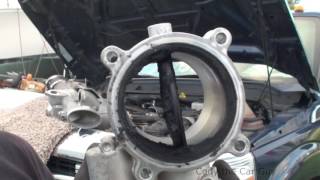
Est. part cost: $0 under program, $150-$250 for dealer reprogram otherwise. - Carbon Buildup on Throttle Body 🟡 Medium Probability The 6.7L Power Stroke uses a throttle body to help with the Exhaust Gas Recirculation (EGR) system. Over time, soot and carbon can build up, causing the throttle plate to stick or move slowly, creating a mismatch with the expected airflow and triggering the code.
How to confirm: Remove the cold side intercooler pipe from the intake manifold and visually inspect the throttle body plate 🎬 Watch: See how much soot builds up in these intakes. for heavy, black carbon deposits that restrict movement.
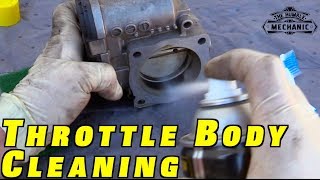
Typical fix: Remove the throttle body assembly and thoroughly clean it with a dedicated throttle body cleaner and a soft brush until all surfaces are bare metal. 🎬 See this walkthrough on cleaning a throttle body correctly. Replace the throttle body if it is damaged or fails to operate smoothly after cleaning.
Est. part cost: $5-$20 for cleaner, $200-$400 for a new throttle body - Faulty or Clogged MAP Sensor ⚪ Low Probability While less common than the software or throttle body issue, sensors can fail. The MAP sensor, in particular, is positioned on the intake manifold where it can get clogged with soot from the EGR system, preventing it from reading pressure accurately.
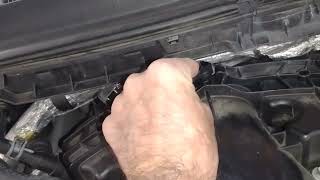
How to confirm: After ruling out the software issue, remove the MAP sensor from the top of the intake manifold (near the cowl) and visually inspect its tip for carbon buildup. 🎬 Watch: How to locate and inspect the MAP sensor. A scan tool can monitor live data to see if readings are erratic or out of specification at idle.
Typical fix: Carefully clean the sensor tip with a dedicated MAF/sensor cleaner. Do not poke anything inside the sensor opening. If cleaning doesn't resolve the issue, replace the sensor.
Est. part cost: $50-$150
Rare But Worth Checking
- Sticking EGR Valve: A slightly stuck EGR valve can disrupt the expected airflow calculations at idle, leading the PCM to flag a correlation error between the MAP/MAF and throttle position.
- Vacuum or Intake Air Leak: A leak in the air intake system between the MAF sensor and the throttle body can introduce unmetered air, causing the sensor readings to mismatch. This can include a cracked cold side intercooler pipe or an improperly seated air filter box.
Diagnosis Steps
- Check with a Ford dealer using your VIN to see if TSB 22-2115 or Customer Satisfaction Program 22N14/23B63 applies to your truck. If it does, the dealer should reprogram the PCM, which is the most likely fix.
- If no TSBs apply or the reprogram does not resolve the issue, your next step is to inspect the throttle body. Remove the cold side intercooler pipe and check for heavy carbon buildup that could cause the throttle plate to stick.
- Clean the throttle body thoroughly if it is dirty. Reassemble and clear the codes to see if the issue is resolved. Note that on these models, the code may remain as a 'permanent' DTC until a dealer reflash, even if the physical problem is fixed.
- If the code returns, inspect the MAP sensor on top of the intake manifold for carbon buildup. Clean it carefully with a dedicated sensor cleaner.
- Inspect the entire air intake tract from the air filter to the engine for any cracks, loose connections, or leaks. Pay close attention to the plastic and rubber intercooler piping and ensure the air filter housing is fully seated and latched.
- If all physical components appear clean and intact, use a scan tool to monitor live data from the MAF, MAP, and throttle position sensors to identify any sensor that is providing incorrect or erratic data.
- As a final step, inspect wiring and connectors for the MAP, MAF, and throttle body for any signs of damage or corrosion.
Parts You'll Likely Need
- PCM Reprogramming Service — This is the official Ford-recommended fix for the common software glitch on 2011-2012 models that causes this code to become permanent.
Trusted brands: Ford Dealer Service
OEM price range: $0 (under program), $150-$250
Aftermarket price range: N/A - Throttle Body Assembly
(OEM #BC3Z-9E926-E)— If cleaning a carbon-fouled throttle body doesn't restore proper function, the entire assembly may need to be replaced.
Trusted brands: Motorcraft
OEM price range: $300-$400
Aftermarket price range: $200-$300 - Manifold Absolute Pressure (MAP) Sensor
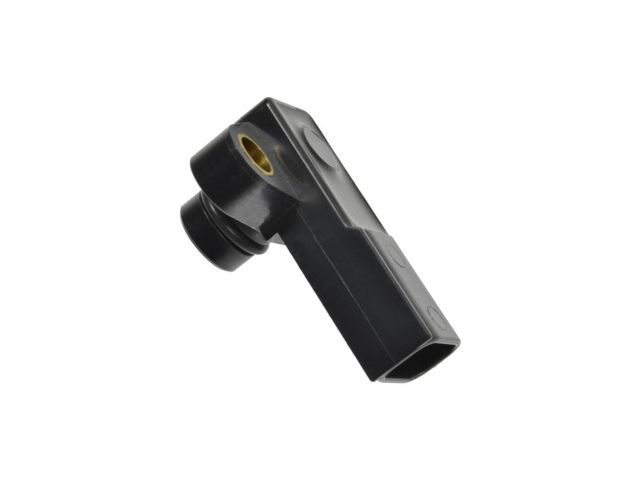
(OEM #BC3Z-9F479-A (superseded by BC3Z-9F479-B))— This sensor can become clogged with soot or fail electronically, providing incorrect data to the PCM. It's a common replacement after ruling out software and throttle body issues. The original part BC3Z-9F479-A has been replaced by BC3Z-9F479-B.
Trusted brands: Motorcraft, Bosch, Standard Motor Products
OEM price range: $70-$100
Aftermarket price range: $40-$80
Related Codes That Often Appear With This One
- P2074 — This code is for 'Manifold Absolute Pressure/Mass Air Flow – Throttle Position Correlation at Higher Load.' Ford's TSBs and customer satisfaction programs explicitly mention that P2073 and P2074 appear together for the same software-related reason.
Technical Service Bulletins (TSBs) & Recalls
- TSB 22-2115: States that an illuminated MIL with DTCs P2073/P2074 may be due to PCM software and the fix is to reprogram the PCM using the Ford IDS scan tool.
- 22N14 / 22N14 S1: A Customer Satisfaction Program for vehicles that fail an I/M test due to permanent P2073/P2074 codes. It provides a one-time, free PCM reprogram for the life of the vehicle, but requires proof of the failed test.
- 23B63: A broader Customer Satisfaction Program that supersedes 22N14 for many owners. It offers a free PCM reprogram to fix the permanent DTC issue for vehicles registered in certain states (initially CA and DE) and is available until January 15, 2027, without mileage limits.
Platform-Specific Known Issues
- A widespread software issue in the PCM causes P2073 and P2074 to set and become 'permanent' DTCs, which cannot be cleared by a standard scan tool and will cause an emissions test failure. Ford addressed this with TSB 22-2115 and Customer Satisfaction Programs 22N14 and 23B63.
Mechanic-Grade Diagnostic Values
- PCM Adaptive Mass Airflow (AMA) Learned Value — expected: -20% to +20%. Failure: If the final learned AMA value stored in the idle cell is greater than 20% or less than -20%, the P2073 fault is detected.
- MAP Sensor Voltage at Idle (Turbocharged Engine) — expected: 2.0 to 2.5 volts. Failure: Voltage significantly outside this range may indicate a clogged sensor or vacuum leak.
- Sensor Wiring Harness Continuity — expected: < 1 Ω. Failure: Resistance higher than 1 ohm indicates a problem in the wiring harness that needs to be repaired.
Hidden / Shadow Codes Worth Checking
- Permanent DTC (pDTC): For this specific issue, the P2073/P2074 codes are stored as 'Permanent DTCs' due to a PCM software flaw. This means they cannot be erased by standard scan tools or by disconnecting the battery, even after the root cause is fixed. The check engine light will remain on and cause an I/M test failure. (see via A standard OBD-II scanner will show the code but will fail to clear it. A Ford IDS scan tool is needed to confirm the permanent status and perform the corrective reflash.)
Scan Tool Commands That Help
- Ford IDS (Integrated Diagnostic Software): PCM Reprogram — This is the primary fix for the software glitch causing permanent P2073/P2074 codes. TSB 22N14 specifies using IDS release 127.02 or higher. The function flashes the PCM with updated calibration files from Ford.
- Ford IDS (Integrated Diagnostic Software): Self-Test (KOEO/KOER) — Used to run on-demand and continuous memory checks of the PCM and related circuits. This can help differentiate between a current, hard fault and an intermittent or historical one.
- Ford IDS (or other advanced scan tools): MAF Parameter Reset — Ford Service Manuals sometimes call for a MAF parameter reset after replacing a dirty air filter or cleaning the MAF sensor to clear the old learned adaptive values.
- Manual Procedure: Idle Relearn Procedure — After cleaning the throttle body or clearing Keep Alive Memory (KAM), a manual relearn can help the PCM re-establish a stable idle. This typically involves letting the engine idle for a set time with and without accessories (like A/C) on.
Wiring & Ground Locations
- G104 — Located on the left front of the engine compartment.. This is a primary engine harness ground point. A poor connection here can cause erratic voltage and signal readings for multiple engine sensors, including the MAP, MAF, and throttle body, leading to correlation codes.
- G105 — Located on the right side of the engine, connected to the right battery ground cable.. Serves as another critical engine ground. Verifying this ground is clean and tight is a key step when diagnosing any electrical or sensor-related DTC.
Real Owner Repair Stories
- Ford Truck Enthusiasts Forum (2012 Ford 6.7L, 135k miles) — P2073 code appeared.
❌ Tried (didn't work) Cleaning the MAF sensor, Cleaning the MAP sensor
✅ What actually fixed it The owner removed the throttle body and cleaned it thoroughly, stating it was heavily coked with soot. After cleaning and reinstalling, the code was gone after a 30-mile drive. - YouTube channel 'newtoyou' (2017 Ford F450 6.7L (demonstrates same principle)) — Code P2073 was present.
❌ Tried (didn't work) Checked all Charge Air Cooler (CAC) piping, Checked CCV box and air intake system
✅ What actually fixed it The MAP sensor was removed and found to be completely jammed up with soot. Replacing the clogged MAP sensor resolved the code and restored proper pressure readings. - Ford Truck Enthusiasts Forum (2011 F-250, 104k miles) — Persistent P2074 code (often appears with P2073).
❌ Tried (didn't work) Dealer replaced MAF sensor connector, Owner replaced MAF sensor with a new Motorcraft part, Owner replaced MAP sensor with a new Motorcraft part
✅ What actually fixed it The thread did not have a final confirmed fix from the original poster, highlighting the difficulty of this code and the prevalence of the underlying software issue that prevents clearing the code even after parts are replaced.
"I Checked Everything" — The Actual Cause
- A standard smoke test, which checks for vacuum leaks, will often come back clean for this code. The more common air leak issue on the 6.7L Powerstroke is a cracked cold-side intercooler pipe (CAC pipe). This plastic pipe becomes brittle from heat and pressure cycles and can crack or burst, creating a boost leak under load rather than a vacuum leak at idle. This leak introduces unmetered air after the MAF sensor, causing the PCM to see a mismatch between expected and actual manifold pressure, triggering P2073 and more commonly P2074. The OEM pipe is known to fail, and many owners upgrade to a metal aftermarket version.
OEM Part Supersession History
BC3Z-9F479-A→BC3Z-9F479-B— Standard part revision by the manufacturer. The new part is a direct replacement.BC3Z-6F073-D (OEM Plastic Cold Side Intercooler Pipe)→Aftermarket metal pipes (e.g., Sinister Diesel, H&S Motorsports)— The original plastic pipe is prone to cracking and bursting under normal operating conditions, causing a significant boost leak.
Heads up: While not an official supersession, replacing the failure-prone OEM plastic pipe with a more durable metal aftermarket version is a very common and highly recommended repair to prevent recurring boost leaks that can trigger P2073/P2074.
Model Year Variations Within This Range
- 2011-2012: The Powertrain Control Modules (PCMs) in these specific years are susceptible to a software glitch that causes P2073/P2074 to become permanent DTCs. This issue is the subject of multiple Ford TSBs and Customer Satisfaction Programs. While various PCM hardware part numbers exist (e.g., BC3A-12A650-DVD, BC3A-12A650-ERA), the core issue is the software calibration, not the hardware itself.
Helpful Videos
We Have This Part in Stock

The information in this article is provided for general reference and educational purposes only. Vehicle specifications, procedures, and part compatibility can vary by production date, trim level, and region. Always consult your vehicle's factory service manual and verify part numbers before purchasing or performing repairs. Safety-critical components such as airbags, seat belts, and braking systems should be installed by a qualified professional.
- Ford F-450 SD:
- 🎬 Helpful Videos
- 🛍️ Shop This Part
- What's Unique About the 2011-2012 Ford F-450 SD
- Diagnostic Flowchart
- Symptoms You May Notice
- Most Likely Causes
- Rare But Worth Checking
- Diagnosis Steps
- Parts You'll Likely Need
- Related Codes That Often Appear With This One
- Technical Service Bulletins (TSBs) & Recalls
- Platform-Specific Known Issues
- Mechanic-Grade Diagnostic Values
- Hidden / Shadow Codes Worth Checking
- Scan Tool Commands That Help
- Wiring & Ground Locations
- Real Owner Repair Stories
- "I Checked Everything" — The Actual Cause
- OEM Part Supersession History
- Model Year Variations Within This Range
- 🎟️ Get 5% Off