

P2073 on 2011-2012 Ford F-350 SD 6.7L: MAP/MAF Correlation Causes and Fixes
On a 2011-2012 F-350 with the 6.7L Power Stroke, code P2073 is most often caused by a PCM software glitch that requires a dealer update. Other common causes include a MAP sensor clogged with soot or a dirty throttle body. The software update is often covered by a Ford Customer Satisfaction Program, specifically 22N14 or 23B63, which were created to address emissions test failures caused by this code becoming permanent in the PCM's memory.
- For a 2011-2012 F-350 with P2073, the first step should be to check with a Ford dealer about the free PCM software update covered under TSB 22-2115 and Customer Satisfaction Program 22N14/23B63.
- If the software is up to date, the next most likely cause is a MAP sensor clogged with soot. It is located on top of the intake manifold and can often be cleaned rather than replaced.
- A dirty throttle body, also caused by EGR soot, is another common culprit that can be resolved with a thorough cleaning.
- This code is frequently seen with P2074, as they represent the same correlation fault under different engine load conditions.
What's Unique About the 2011-2012 Ford F-350 SD

The 2011-2012 6.7L Power Stroke is uniquely prone to this code due to a well-documented software issue in the Powertrain Control Module (PCM). Ford has issued multiple Technical Service Bulletins (TSBs) and a Customer Satisfaction Program to address this specific problem. The glitch can cause the P2073 code to become permanent in the module's memory, meaning it cannot 'self-heal' or be cleared with a standard scan tool, leading to automatic state emissions test failures even if the underlying mechanical or sensor issue is fixed.
Diagnostic Flowchart

Tap your situation to follow the diagnostic path that matches what you're seeing on this vehicle.
Symptoms You May Notice
- Check Engine Light (Malfunction Indicator Lamp) is on
- Failing a state emissions inspection/maintenance (I/M) test due to a permanent DTC.
- Reduced engine power or weak acceleration, sometimes described as 'low power mode'.
- Poor fuel economy.
- Engine surging, especially while towing.
- Replacing the MAP or MAF sensor without first checking for software updates or cleaning the throttle body. Many owners replace sensors only to have the code return due to the underlying software or carbon issue.
Most Likely Causes

- Powertrain Control Module (PCM) Software Glitch 🔴 High Probability A known software issue affects 2011-2012 models, preventing the code from clearing properly and causing I/M test failures. Ford states the DTC is 'unable to self-heal'.
How to confirm: Check with a Ford dealer to see if TSB 22-2115 or Customer Satisfaction Programs 22N14 or 23B63 apply to your vehicle's VIN. This is especially likely if the code will not clear after cleaning/replacing sensors.
Typical fix: Reprogramming the PCM with the latest software version using the Ford Integrated Diagnostic System (IDS). This is a dealer-level repair, often performed for free under the customer satisfaction programs.
Est. part cost: $0 - MAP Sensor Clogged with Soot 🟡 Medium Probability The EGR (Exhaust Gas Recirculation) system on diesel engines can cause soot and carbon to build up in the intake manifold, clogging the small port on the MAP sensor. Owners describe the buildup as a thick 'sludge' or looking like 'coal'.
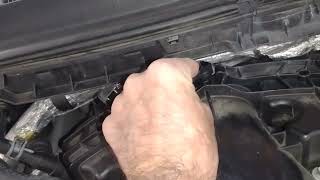
How to confirm: Remove the MAP sensor, which is located on top of the plastic intake manifold near the cowl, held by a single screw (often a T20 Torx or 7mm socket). Visually inspect its tip for heavy, caked-on carbon buildup completely blocking the sensing port.
Typical fix: Carefully clean the sensor using a dedicated MAF/MAP sensor cleaner. Do not insert objects into the sensor port. If heavily caked, replacement is recommended. Some owners clean it preventatively at every oil change.
Est. part cost: $50-$150 - Dirty or Sticking Throttle Body 🟡 Medium Probability Similar to the MAP sensor, the throttle body can accumulate soot and gunk from the EGR system, causing it to stick or not close properly, which disrupts the expected airflow correlation at idle.
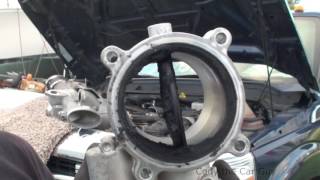
How to confirm: Remove the cold side intercooler pipe from the intake and inspect the throttle body plate and bore for heavy carbon buildup that could impede movement.
Typical fix: Remove the throttle body (typically held by four bolts) and clean it thoroughly with throttle body cleaner and a soft brush or rag.
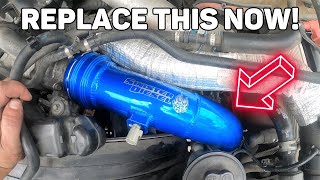
Est. part cost: $10-$20 - Air Intake Leak ⚪ Low Probability The plastic cold-side intercooler pipe is a known weak point and can crack, or the clamps can loosen, allowing unmetered air to enter the engine and disrupt the MAF/MAP correlation. A poorly seated air filter box after a filter change is another common cause.
How to confirm: Visually inspect all air intake tubing from the air filter to the intake manifold. Pay close attention to the plastic cold-side pipe for cracks and oil residue (a sign of a leak). Ensure the air filter housing is properly sealed.
Typical fix: Replace the damaged pipe. Many owners upgrade to a more durable metal or silicone aftermarket pipe. 🎬 Watch: How to replace a cracked plastic intercooler pipe. Correctly seat the air filter and housing.
Est. part cost: $100-$300
Rare But Worth Checking
- Faulty MAP or MAF Sensor: While cleaning often resolves the issue, the sensor itself can fail electronically. If cleaning doesn't work and a software update isn't the fix, the sensor may be bad. Some owners report that cleaning with harsh chemicals can damage the sensor, necessitating replacement.
- Leaking EGR Valve: A faulty EGR valve that is stuck slightly open can disrupt manifold pressure and flow, triggering the P2073 code without setting a specific EGR code.
- Extremely Dirty Air Filter: A severely restricted air filter can starve the engine of air, causing the MAF sensor readings to be out of line with what the PCM expects at idle, triggering the correlation code.
Diagnosis Steps

- Check for TSBs & Customer Satisfaction Programs: This is the most critical first step. Contact a Ford dealer with your VIN to see if Customer Satisfaction Programs 22N14 or 23B63, or TSB 22-2115, are open for your truck. This is the most likely fix and is often free.
- Inspect and Clean the MAP Sensor: Locate the MAP sensor on the top of the upper intake manifold, near the firewall. It is held by one T20 Torx or 7mm screw. Remove it and inspect the tip. If it is caked with soot, spray it liberally with a dedicated MAP/MAF sensor cleaner until the port is clear. 🎬 Watch: How to clean a soot-clogged MAP sensor properly. Do not poke anything inside the sensor. Reinstall and see if the code clears.
- Inspect and Clean the Throttle Body: Disconnect the cold-side intercooler pipe from the throttle body. Inspect the throttle plate and bore for thick, tar-like soot. If dirty, remove the throttle body and clean it thoroughly with throttle body cleaner and a soft cloth.
- Check for Air Leaks: Carefully inspect the entire air intake path. Check the plastic cold-side intercooler pipe for cracks, especially on the underside. Ensure the air filter box is fully sealed and all clamps on the intake boots are tight.
- Inspect Wiring: Check the wiring and connectors for the MAP and MAF sensors for any signs of damage, corrosion, or looseness.
- PCM Reprogram: If all hardware checks out and the code persists (or is permanent), the vehicle must go to a dealer for the PCM reprogram as specified in TSB 22-2115.
Parts You'll Likely Need
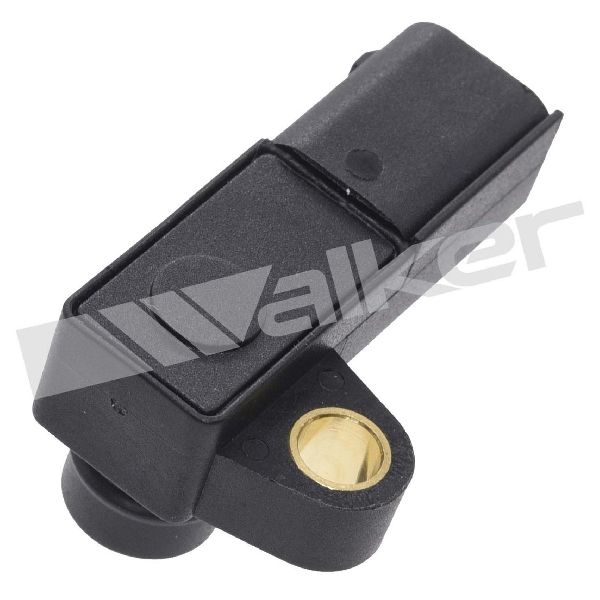
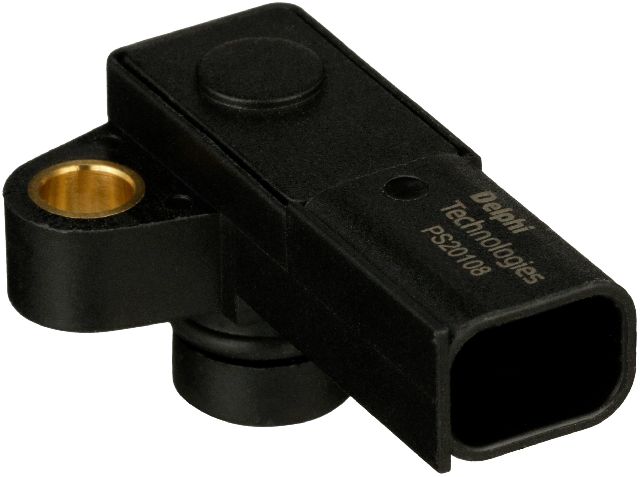
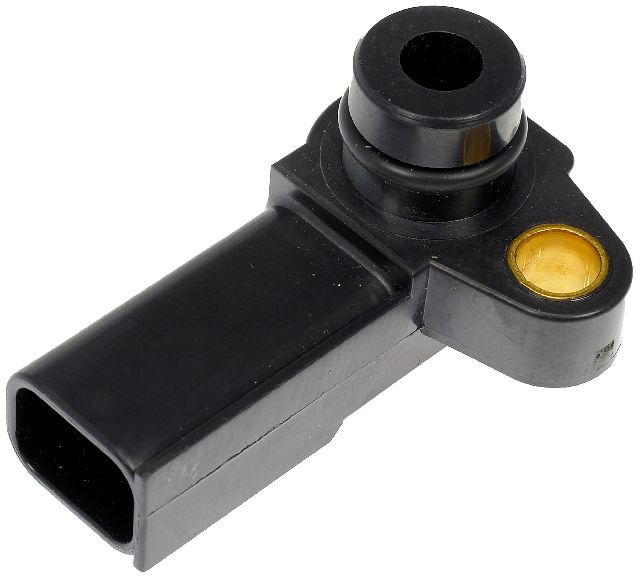
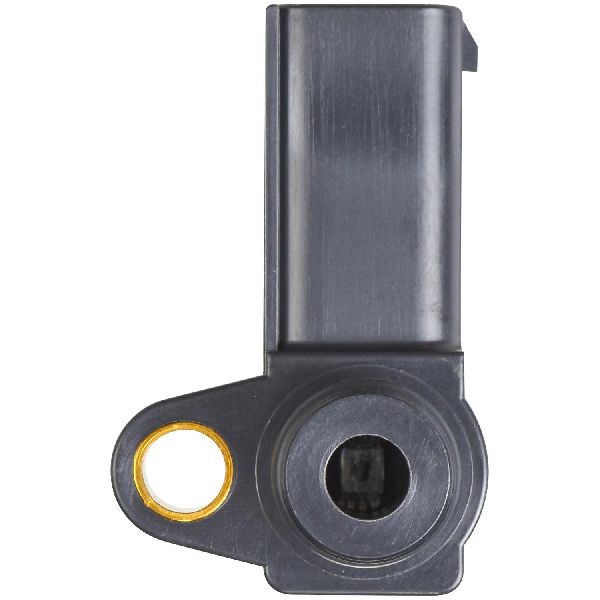
- Manifold Absolute Pressure (MAP) Sensor
(OEM #BC3Z-9F479-A (superseded by BC3Z-9F479-B))— This sensor is prone to getting clogged with soot from the EGR system, leading to incorrect pressure readings. Cleaning often works, but replacement may be necessary if it's heavily caked or electronically failed.
Trusted brands: Motorcraft, Bosch, Alliant Power
OEM price range: $95-$155
Aftermarket price range: $50-$90 - MAP Sensor Cleaner — Often, the MAP sensor is just dirty, not broken. A specific cleaner that is safe for electronic components and plastics is required for cleaning.
Trusted brands: CRC
OEM price range: $10-$15
Aftermarket price range: $10-$15
Related Codes That Often Appear With This One
- P2074 — This code is for 'Manifold Absolute Pressure/Mass Air Flow - Throttle Position Correlation at Higher Load'. It's the same fault logic as P2073 but under different engine conditions. Ford's TSBs and Customer Satisfaction Programs address both codes together.
Technical Service Bulletins (TSBs) & Recalls
- TSB 22-2115: States that an illuminated MIL with DTCs P2073/P2074 may be due to PCM software and the fix is to reprogram the PCM with the Ford IDS tool.
- Customer Satisfaction Program 22N14: A one-time, no-charge PCM reprogram for vehicles that fail an I/M test due to a permanent P2073 or P2074.
Platform-Specific Known Issues
- Permanent DTC Software Glitch: A PCM software glitch on 2011-2012 models can cause DTCs P2073 and/or P2074 to become permanent, failing state emissions tests even after repairs. Ford issued Customer Satisfaction Program 22N14 and TSB 22-2115 to address this with a PCM reprogram. Program 22N14 offers a one-time repair with no time or mileage limit.
- Extreme Soot Buildup: Due to the EGR system design, these engines are prone to heavy carbon and soot buildup in the entire intake tract. One owner on Ford Truck Enthusiasts forums described having to remove and clean the upper and lower intake manifolds, which looked 'like coal' inside, in addition to the throttle body, to resolve the code.
Mechanic-Grade Diagnostic Values
- Mass Air Flow (MAF) Sensor Reading (Live Data) — expected: Approximately 30 g/s at idle with EGR closed. Should drop to ~10 g/s when EGR is commanded fully open with a scan tool.. Failure: A reading at idle significantly different from 30 g/s (e.g., 19 g/s) may indicate a restriction or dirty sensor. If the reading only drops to 15-17 g/s with the EGR commanded open, it indicates a partially clogged EGR cooler or valve.
- Manifold Absolute Pressure (MAP) Sensor Voltage (Key On, Engine Off) — expected: Should read atmospheric pressure, which is approximately 14.7 PSI at sea level. The sensor receives a 5-volt reference from the PCM.. Failure: A reading that is significantly different from the Barometric Pressure (BARO) PID on a scan tool indicates a biased or faulty sensor.
- MAP Sensor Bias Test (WSM Specification) — expected: The MAP_A PID should be within 5 kPa (0.73 PSI) of the BARO PID.. Failure: A value outside this range indicates a fault. However, a sensor can be within this specification and still cause codes if its port is physically clogged.
Hidden / Shadow Codes Worth Checking
- Permanent DTC (P-DTC): On 2011-2012 models, a software glitch can cause P2073/P2074 to be stored as a 'Permanent DTC'. This means the code cannot be erased by a standard scan tool or by disconnecting the battery, even after the underlying mechanical fault is repaired. (see via The code will reappear immediately after a 'Clear Codes' command is sent from a scan tool. Resolving it requires a specific PCM reflash by a Ford dealer under programs like 22N14.)
Scan Tool Commands That Help
- Ford IDS (or advanced tools like FORScan): Reset MAF Sensor Adaptation — After cleaning or replacing the MAF sensor, or after fixing an air leak, to clear the old learned values and force the PCM to recalibrate to the new, correct airflow readings.
- Ford IDS: EGR Valve Command (0-100%) — To diagnose EGR system flow without relying on EGR-specific codes. Command the EGR valve fully open while monitoring the MAF (g/s) PID. A small drop in airflow indicates a restriction in the EGR system, which can be a root cause of the P2073/P2074 correlation codes.
Wiring & Ground Locations
- G135 — Left side of the frame, near the front of the vehicle.. A poor frame ground can cause electrical noise and voltage drops affecting various systems, including sensor readings.
- G201 / G202 — G201 is at the center of the dash; G202 is on the left side of the dash.. These are major interior ground points. A fault here could affect the PCM or Body Control Module, which process sensor data.
- C175B — This is a primary connector for the Powertrain Control Module (PCM).. All sensor data for MAP, MAF, and Throttle Position passes through the PCM connectors. Checking for corrosion or pushed pins here is a critical step in diagnosing persistent electronic faults.
Real Owner Repair Stories
- Ford Truck Enthusiasts Forum user (2011 F-250, 130k miles) — P2073 and P2074 codes, low power mode.
❌ Tried (didn't work) Replacing the MAP sensor three times., Checking the air filter and MAF sensor.
✅ What actually fixed it The user removed the upper and lower intake manifolds and the throttle body. The intake tract was described as looking 'like coal' inside due to EGR buildup. A thorough cleaning of the manifolds and throttle body resolved the issue.
"I Checked Everything" — The Actual Cause
- A common misdiagnosis pattern occurs when a technician relies only on electronic tests for the MAP sensor. A Ford technician noted that the MAP sensor can pass the PCM's voltage bias test (comparing its reading to the BARO sensor) but still be the root cause of correlation codes. This happens when the sensor's port is physically clogged with soot, slowing its response time and causing inaccurate readings under dynamic conditions, even though its static, key-on-engine-off reading is within spec. A physical inspection is required to find this fault.
OEM Part Supersession History
BC3Z-9F479-A→BC3Z-9F479-B— Standard part revision by the manufacturer. The updated part is used on models up to 2019.
Heads up: None noted. The parts are interchangeable. Aftermarket cross-references include Motorcraft CX2432 and Alliant Power AP63543.
Model Year Variations Within This Range
- 2011-2012: The primary difference for this code is the PCM software. These model years contain a glitch that can cause P2073/P2074 to become a Permanent DTC that cannot be cleared without a dealer reflash, as addressed by Customer Satisfaction Program 22N14.
- 2011-2014 vs 2015+: The 2011-2014 engines used a Garrett GT32 SST dual-compressor turbocharger prone to overspeed failures. In 2015, Ford switched to a more robust, conventional single-compressor Garrett GT37 turbo. While not a direct cause of P2073, this highlights that the 2011-2012 models are 'first generation' 6.7L engines with several components that were revised in later years for better durability.
Helpful Videos
We Have This Part in Stock


The information in this article is provided for general reference and educational purposes only. Vehicle specifications, procedures, and part compatibility can vary by production date, trim level, and region. Always consult your vehicle's factory service manual and verify part numbers before purchasing or performing repairs. Safety-critical components such as airbags, seat belts, and braking systems should be installed by a qualified professional.
- Ford F-350 SD:
- 🎬 Helpful Videos
- 🛍️ Shop This Part
- What's Unique About the 2011-2012 Ford F-350 SD
- Diagnostic Flowchart
- Symptoms You May Notice
- Most Likely Causes
- Rare But Worth Checking
- Diagnosis Steps
- Parts You'll Likely Need
- Related Codes That Often Appear With This One
- Technical Service Bulletins (TSBs) & Recalls
- Platform-Specific Known Issues
- Mechanic-Grade Diagnostic Values
- Hidden / Shadow Codes Worth Checking
- Scan Tool Commands That Help
- Wiring & Ground Locations
- Real Owner Repair Stories
- "I Checked Everything" — The Actual Cause
- OEM Part Supersession History
- Model Year Variations Within This Range
- 🎟️ Get 5% Off