

P2073 on 2011-2012 Ford F-250 SD 6.7L: Causes and Fixes for MAP/MAF Correlation
On a 2011-2012 F-250 with the 6.7L diesel, code P2073 is most often caused by a powertrain control module (PCM) software glitch. Ford issued a customer satisfaction program (22N14) to reprogram the PCM for free to fix this issue, which commonly causes state emissions test failures because the code becomes 'permanent' and cannot be cleared with a scan tool.
- For a 2011-2012 F-250 6.7L, P2073 is most likely a software issue.
- Contact a Ford dealer with your VIN to see if Customer Satisfaction Program 22N14 (a free PCM update) applies and has been done.
- If the software fix doesn't work or is already done, the next step is to inspect and clean the MAP sensor and throttle body for carbon buildup.
- Do not replace any sensors until you have confirmed the PCM software is up-to-date, as you may be wasting money on an unnecessary part.
What's Unique About the 2011-2012 Ford F-250 SD

For this specific generation of F-250 with the 6.7L Power Stroke, the P2073 code is exceptionally well-documented as a software problem. Ford acknowledged that once set, the code could become a 'permanent DTC' that wouldn't clear even after a repair, leading to automatic emissions test failures. A permanent DTC can only be cleared by the vehicle's own monitoring system after it confirms the fault is gone over several drive cycles; it cannot be erased by a scan tool or by disconnecting the battery. This unique and frustrating situation prompted multiple Technical Service Bulletins and a Customer Satisfaction Program (22N14) to provide a one-time, free PCM software update to correct the logic that allows the code to become permanent. While physical parts can still fail, the software issue is the most prominent and unique cause for these trucks.
Diagnostic Flowchart
Tap your situation to follow the diagnostic path that matches what you're seeing on this vehicle.
Symptoms You May Notice
- Check Engine Light (Malfunction Indicator Lamp) is on
- Failure of state emissions (I/M) testing due to a permanent DTC.
- Reduced engine power or weak acceleration
- Engine goes into low power or 'limp' mode
- Rough idle
- Stalling at stops
- Replacing the MAP or MAF sensor without first checking for PCM software updates. Many owners and shops replace hardware only to have the code return because the root cause was the software's inability to clear a permanent DTC.
- Clearing the code with a scan tool and assuming the problem is fixed. The 'permanent' nature of this DTC on un-updated trucks means it will remain in memory and cause an emissions test failure even if the light is temporarily off.
Most Likely Causes

- Outdated Powertrain Control Module (PCM) Software 🔴 High Probability Ford issued multiple bulletins (TSB 22-2115, CSP 22N14, CSP 23B63) specifically for this issue on 2011-2012 models, indicating a widespread software logic flaw that allows the DTC to become permanent and unable to 'self-heal'.
How to confirm: A Ford dealer can check your VIN in the OASIS system to see if program 22N14 or 23B63 is open or has been completed. This is the most reliable method.
Typical fix: Reprogramming the PCM to the latest software version. This is covered for free under Customer Satisfaction Program 22N14/23B63, which is a one-time repair with no mileage or time limit.
Est. part cost: $0 - Carbon Buildup on MAP Sensor or in Throttle Body 🟡 Medium Probability The Exhaust Gas Recirculation (EGR) system on the 6.7L Power Stroke can cause significant soot and oily carbon ('coke') to accumulate in the intake system over time. This buildup can physically block the MAP sensor's port or cause the throttle body plate to stick.
How to confirm: Remove the cold side intercooler pipe to inspect the throttle body for heavy gunk. The MAP sensor is on top of the intake manifold; remove it and visually inspect its tip for carbon deposits. One owner noted the intake manifold from the throttle body to the turbo looked 'like coal'.
Typical fix: Remove and thoroughly clean the throttle body with dedicated throttle body cleaner and a cloth. Carefully clean the MAP sensor tip. A new throttle body gasket (Part No. BC3Z-9E936-B) is recommended. One owner on Ford-Trucks.com confirmed this exact fix resolved his code after cleaning the MAF/MAP had no effect.
Est. part cost: $10-$30 (for cleaner and gasket) - Faulty Manifold Absolute Pressure (MAP) Sensor ⚪ Low Probability While not as common as the software issue, sensors can fail electronically. A carbon-fouled sensor may also be permanently damaged if cleaning is ineffective. Some owners have replaced the sensor multiple times, suggesting it can be a recurring issue if the root cause (like EGR soot) isn't addressed.
How to confirm: After verifying the software is up-to-date and all components are clean, if the code returns, the sensor itself is the likely culprit. A technician can monitor its live data on a scan tool to check for erratic readings.
Typical fix: Replace the MAP sensor. The original part number was BC3Z-9F479-A, which has been superseded by BC3Z-9F479-B.
Est. part cost: $50-$150
Rare But Worth Checking
- Leaking or Stuck EGR Valve: A slightly open or malfunctioning EGR valve at idle can introduce exhaust gas when none is expected, throwing off the MAF/MAP correlation. This can be a root cause for the heavy carbon buildup seen in the intake.
- Faulty Mass Air Flow (MAF) Sensor: Less common than MAP sensor issues for this code, but a dirty or failed MAF sensor can provide incorrect airflow data to the PCM. Cleaning is often attempted first, but replacement may be necessary. The OEM part number is BC3Z-12B579-A.
- Vacuum or Intake Air Leak: A leak in the air intake system between the MAF sensor and the engine will allow unmetered air to enter. Check for a poorly seated air filter box, cracked plastic intake tubing, or loose intercooler boot clamps.
Diagnosis Steps
- Check for Active Ford Programs (VIN Required): Before any other step, contact a Ford dealer with your VIN or use Ford's owner website to check if Customer Satisfaction Programs 22N14 or 23B63 are open for your truck. This is the most critical first step.
- Reprogram PCM (If Applicable): If an active program exists, have the dealer perform the free PCM reprogram. Per the TSB, any underlying hardware faults (like a bad sensor) must be fixed *before* the reprogram is performed.
- Inspect for Carbon Buildup: If the PCM is updated or the code returns, the next step is a physical inspection. Remove the cold-side intercooler pipe from the throttle body. Look inside with a flashlight for thick, black, oily soot.
- Clean Throttle Body and MAP Sensor: If buildup is found, remove the throttle body (typically four bolts) and the MAP sensor. Clean the throttle body plate and bore thoroughly with throttle body cleaner and a rag—do not spray harsh chemicals into the electronics. Clean the tip of the MAP sensor carefully. It is recommended to replace the throttle body gasket (BC3Z-9E936-B) upon reinstallation.
- Check for Air Leaks: Inspect all intake tubing from the air filter box to the engine for cracks, loose clamps, or a dislodged air filter housing. An unmetered air leak is a common cause for this correlation code.
- Reset Adaptations (Advanced DIY): If you have access to a tool like FORScan, some users suggest performing a 'MAF Sensor Adaptation' reset after cleaning or replacing components.
- Test and Replace Sensors: If the code persists after cleaning and software updates, the MAP or MAF sensor may have an internal electronic fault. Use a scan tool to monitor live data to confirm erratic readings before replacing. The MAP sensor (BC3Z-9F479-B) is more commonly the issue than the MAF sensor (BC3Z-12B579-A) for this code.
Parts You'll Likely Need

- Powertrain Control Module Reprogram — This is the official Ford-recommended fix to correct the software logic that incorrectly allows P2073/P2074 to become a permanent DTC, causing emissions test failures.
Trusted brands: Ford (Dealer Service)
OEM price range: $0 (under program 22N14/23B63)
Aftermarket price range: N/A - Manifold Absolute Pressure (MAP) Sensor
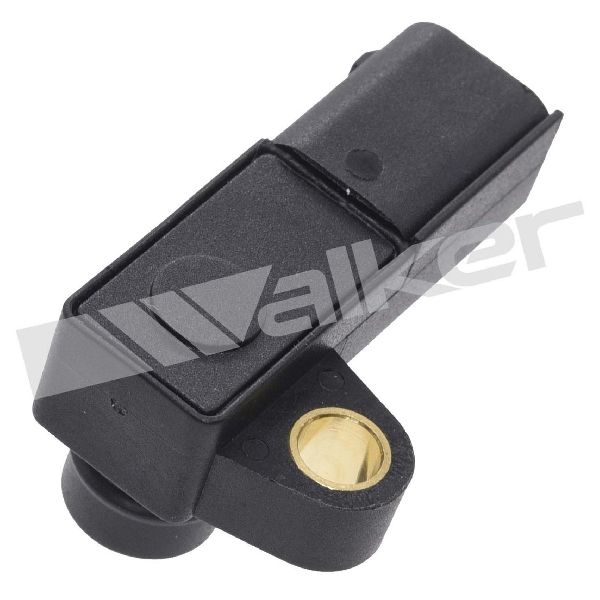
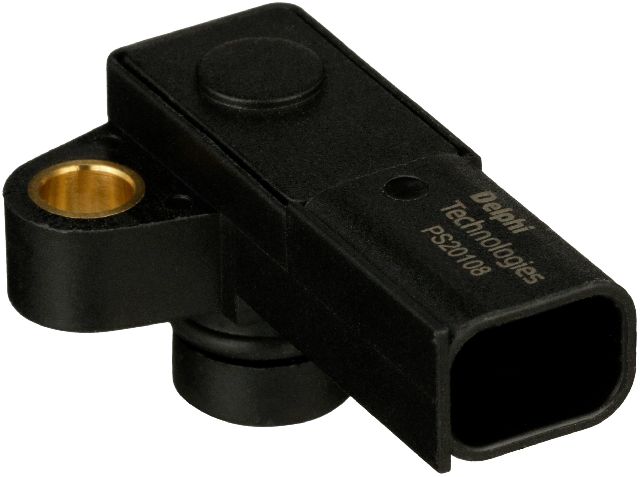
(OEM #BC3Z-9F479-B (supersedes BC3Z-9F479-A))— If the software update and cleaning do not resolve the issue, the sensor itself may have failed or been damaged by carbon buildup.
Trusted brands: Motorcraft, Bosch, Standard Motor Products
OEM price range: $70-$120
Aftermarket price range: $40-$80 - Throttle Body Gasket
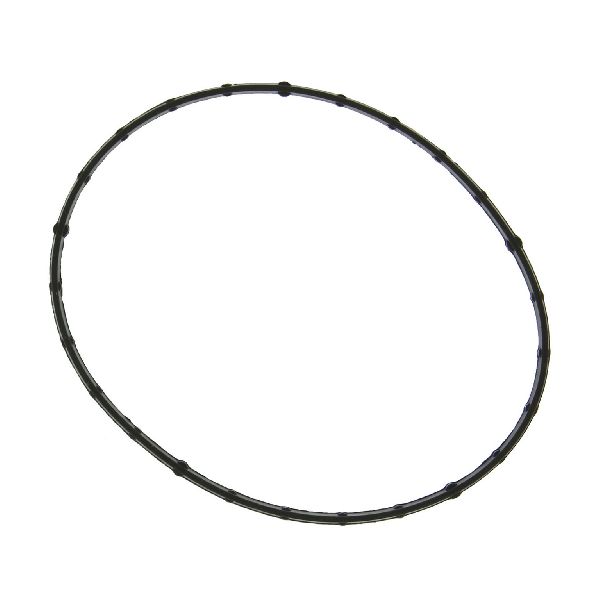
(OEM #BC3Z-9E936-B)— Required if removing the throttle body for cleaning to ensure a proper seal and prevent intake leaks upon reassembly.
Trusted brands: Motorcraft, Mahle
OEM price range: $15-$25
Aftermarket price range: $5-$15
Related Codes That Often Appear With This One
- P2074 — P2074 is for 'Manifold Absolute Pressure/Mass Air Flow – Throttle Position Correlation at Higher Load'. Both codes are caused by the same software flaw and are explicitly mentioned together in Ford's TSB 22-2115 and customer satisfaction programs 22N14/23B63.
- P132B — This code relates to Turbocharger/Supercharger Boost Control Performance. A technician on a diesel forum noted seeing P2073 and P132B together, suggesting a potential link through the overall air management system.
Technical Service Bulletins (TSBs) & Recalls

- 22N14 S1: State Inspection and Maintenance Test Failure Due to DTCs P2073 and/or P2074.
- 23B63: State Inspection and Maintenance Testing Failure Due to DTCs P2073 and/or P2074.
- TSB 22-2115: Illuminated MIL with DTCs P2073 and/or P2074, advises PCM software update.
Platform-Specific Known Issues
- Customer Satisfaction Program 22N14: Ford initiated this program to provide a one-time, free PCM reprogram for 2011-2012 Super Duty trucks with the 6.7L engine. The reason is that DTCs P2073 and/or P2074 can become 'permanent' in the module's memory and cannot self-heal, causing automatic failure of state emissions tests even if the underlying issue is resolved. This program has unlimited time and mileage.
- Customer Satisfaction Program 23B63: A related program specifically targeting vehicles registered in California and Delaware, which have I/M testing that flags permanent DTCs. It provides a free PCM reprogram through January 15, 2027. If this is performed, it also closes out the 22N14 action for that vehicle.
- TSB 22-2115: This Technical Service Bulletin is the precursor to the customer programs. It directly states that an illuminated MIL with DTC P2073/P2074 may be due to the software in the PCM and instructs dealers to reprogram it. It notes the labor time as 0.7 hours.
Mechanic-Grade Diagnostic Values
- MAP Sensor Reference Voltage — expected: 5 Volts. Failure: Voltage significantly lower than 5V indicates a wiring or PCM issue.
- MAP Sensor Signal Voltage (KOEO - Key On, Engine Off) — expected: Approximately 1.4V at sea level, corresponding to atmospheric pressure.. Failure: A voltage reading that does not correlate with atmospheric pressure (approx. 14.7 PSI) can indicate a faulty sensor.
- MAP vs. BARO Pressure (KOEO) — expected: MAP and BARO (Barometric Pressure) sensor readings should be within 0.73 PSI of each other.. Failure: A difference greater than 0.73 PSI suggests a bias in one of the sensors.
Hidden / Shadow Codes Worth Checking
- Permanent DTC (P-DTC): On 2011-2012 models with original software, P2073 can become a 'Permanent DTC'. This means even after the fault is repaired, the code cannot be erased from memory by a standard scan tool or battery disconnect. It will persist and cause an emissions test failure. (see via The code will reappear immediately or remain after a 'Clear All DTCs' command is sent from a scan tool. The only way to clear it is for the vehicle's own on-board diagnostics to run and pass multiple consecutive times, or to have the PCM reflashed by a dealer under program 22N14.)
Scan Tool Commands That Help
- FORScan / Ford IDS: Reset MAF Sensor Adaptation — This service function should be performed after cleaning or replacing the MAP/MAF sensors or after repairing an intake air leak. It clears the PCM's learned airflow values, forcing it to relearn, which can be critical to resolving the correlation fault.
- Ford IDS: PCM Reprogramming — This is the official fix for the 'Permanent DTC' issue described in TSB 22-2115 and Customer Satisfaction Program 22N14. It updates the PCM software to correct the logic flaw that prevents the code from being cleared normally.
Real Owner Repair Stories
- Ford Truck Enthusiasts Forum user 'DeeDubz' (2011 Ford F-250, 130k miles) — Persistent P2073 and P2074 codes, truck went into low power mode. Boost gauge needle went to the middle at low RPM.
❌ Tried (didn't work) Replacing the MAP sensor three times., Clearing the codes., Checking the air filter and MAF sensor (both looked fine).
✅ What actually fixed it The user pulled the upper and lower intake manifolds and the throttle body. The throttle body was 'pretty dirty' and the intake tract from the throttle body to the turbo 'looked like coal'. A thorough cleaning of the throttle body and intake manifolds resolved the issue. - Reddit user 'linuxape' (2017 F-250 6.7L (Note: while outside the 2011-2012 range, the cause is directly applicable)) — P2073 code, CEL would return a day after clearing. No power when towing a heavy trailer, requiring downshifts on slight hills.
❌ Tried (didn't work) Clearing the code with a scan tool.
✅ What actually fixed it The user removed the MAP sensor from the top of the upper intake manifold and found it was 'fairly fouled up' with carbon. After cleaning the sensor and clearing the codes, the check engine light did not return.
OEM Part Supersession History
BC3Z-9F479-A→BC3Z-9F479-B— Standard part revision by the manufacturer. The -B version is the current replacement.
Model Year Variations Within This Range
- 2011: Early 2011 models (built before 03/2011) had exhaust valves that were prone to cracking, a serious issue that could lead to engine replacement. Engines built after this date used revised valves. Additionally, a PCM reflash was offered to early 2011 owners to increase HP from 390 to 400 and torque from 735 to 800 lb-ft.
- 2012: The 2012 model year introduced a stamped steel oil pan, replacing the 2011's plastic pan. It also featured revised oil cooler hardware and added a DPF differential pressure sensor.
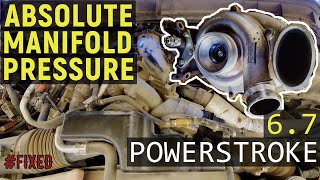
Helpful Videos
We Have This Part in Stock


The information in this article is provided for general reference and educational purposes only. Vehicle specifications, procedures, and part compatibility can vary by production date, trim level, and region. Always consult your vehicle's factory service manual and verify part numbers before purchasing or performing repairs. Safety-critical components such as airbags, seat belts, and braking systems should be installed by a qualified professional.
- Ford F-250 SD:
- 🎬 Helpful Videos
- 🛍️ Shop This Part
- What's Unique About the 2011-2012 Ford F-250 SD
- Diagnostic Flowchart
- Symptoms You May Notice
- Most Likely Causes
- Rare But Worth Checking
- Diagnosis Steps
- Parts You'll Likely Need
- Related Codes That Often Appear With This One
- Technical Service Bulletins (TSBs) & Recalls
- Platform-Specific Known Issues
- Mechanic-Grade Diagnostic Values
- Hidden / Shadow Codes Worth Checking
- Scan Tool Commands That Help
- Real Owner Repair Stories
- OEM Part Supersession History
- Model Year Variations Within This Range
- 🎟️ Get 5% Off