

OBD-II Code P2073: Intake Air Pressure & Flow Mismatch at Idle
What P2073 means, why it triggers, and how to fix it for good
- P2073 triggers when the engine computer detects a mismatch between the MAP and MAF sensor airflow readings and the closed throttle position at idle.
- On 2011-2012 Ford 6.7L diesel trucks, a known software glitch causes a permanent P2073 code, requiring a dealer PCM reflash (often free under TSB 22-2115).
- For most vehicles, vacuum leaks or carbon buildup on the MAP sensor and throttle body cause this code, making cleaning the first and cheapest repair step.
- Never replace expensive sensors without checking live data; long-term fuel trims above +10% confirm an unmetered vacuum leak, not a bad sensor.
What Does P2073 Mean?

Code P2073 means your car's Powertrain Control Module (PCM) detected a disagreement between its air intake sensors during engine idle. The computer runs a rationality check, comparing the Manifold Absolute Pressure (MAP) sensor and Mass Air Flow (MAF) sensor values against the throttle's position. When those readings conflict at idle (e.g., airflow is higher than expected for a closed throttle), the computer triggers the Check Engine Light and stores this code.
Technical definition: The official SAE/OBD-II definition for P2073 is "Manifold Absolute Pressure/Mass Air Flow - Throttle Position Correlation at Idle." The PCM detected that actual sensor values for air pressure and flow do not match the programmed expectations for a closed-throttle idle.
Can I Drive With P2073?
Yes, But With Caution. You can drive your vehicle, but address the issue within a week. Symptoms include a rough idle, stalling at stops, weak acceleration, and poor fuel economy. Stalling in traffic is a severe safety hazard. Prolonged driving forces an imbalanced air-fuel ratio, which destroys the catalytic converter—a repair costing $800-$2500.
Common Causes

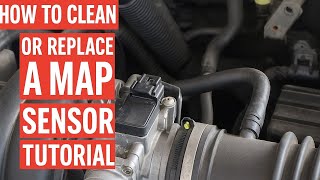
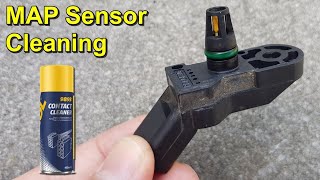
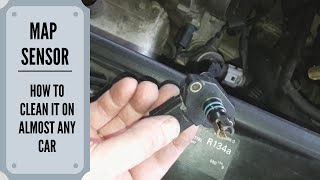
- Dirty or Clogged Manifold Absolute Pressure (MAP) Sensor (Very Common) — On many engines, especially diesels with an Exhaust Gas Recirculation (EGR) system, soot and carbon clog the small opening of the MAP sensor. 🎬 Watch: How to clean your MAP sensor at home. This prevents it from accurately reading intake pressure, causing it to send a signal out of sync with other sensors.
- Dirty or Sticking Throttle Body (Very Common) — Carbon and oil grime build up inside the throttle body, causing the throttle plate to stick or fail to close properly. This disrupts airflow at idle and confuses the computer's calculations, as actual airflow doesn't match the expected airflow for a closed throttle.
- Vacuum or Intake Air Leaks (Common) — A leak in the air intake system from a cracked hose, stuck-open PCV valve, leaking intake manifold gasket, or damaged intercooler pipe allows unmeasured air into the engine. This causes the MAF sensor reading to drop while the MAP sensor reads higher pressure, triggering the correlation fault.
- Powertrain Control Module (PCM) Software Glitch (Common) — On 2011-2012 Ford Super Duty trucks with the 6.7L Power Stroke engine, a known software bug is the primary cause. This makes the code 'permanent' and impossible to clear without a dealer software update.
- Leaking or Stuck-Open EGR Valve (Common) — A faulty Exhaust Gas Recirculation (EGR) valve stuck slightly open at idle allows exhaust gases to enter the intake manifold. This unmetered flow disrupts expected pressure and airflow, triggering the correlation fault without setting a specific EGR code.
- Faulty MAP or Mass Air Flow (MAF) Sensor (Less Common) — While cleaning sensors often solves the problem, the sensors themselves fail electronically and send incorrect data to the PCM. A sensor passes a simple voltage test but still fails under specific conditions or suffers from a slow response time.
- Internal PCM/ECU Fault (Rare) — In rare cases, the Powertrain Control Module (PCM) itself fails. Internal hardware failure, such as cracked solder joints or corrupted memory tables, causes the PCM to misinterpret perfectly good sensor data.
Symptoms

- Check Engine Light On — The Malfunction Indicator Lamp (MIL) illuminates on your dashboard. This is often the first and only symptom a driver notices.
- Rough or Unstable Idle — The engine idles erratically, with RPMs fluttering up and down by 200-400 RPM. You feel vibrations through the steering wheel or the entire car.
- Engine Stalling at Stops — The engine shuts off completely when you come to a stop at a traffic light or in stop-and-go traffic. This is a significant safety concern.
- Reduced Engine Power and Weak Acceleration — Acceleration is weak or sluggish, and the vehicle enters a 'limp' mode. This is dangerous when trying to merge into traffic.
- Poor Fuel Economy — The engine runs inefficiently due to the incorrect air-fuel mixture, causing a noticeable decrease in your average miles per gallon (MPG).
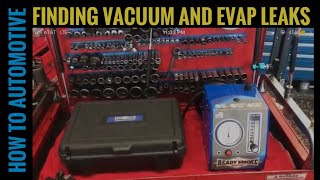
- Hissing or Whistling Noise from Engine Bay — A vacuum leak large enough to cause this code produces an audible hissing or whistling sound from a cracked hose 🎬 See this simple trick to find engine vacuum leaks. or leaking gasket while the engine runs.
Diagnostic Flowchart
Tap your situation to follow the diagnostic path that matches what you're seeing on this code.
Common Fixes & Costs
- Clean the Throttle Body
— Parts: $10-$20, Labor: $100-$150, ~0.8 hr book time
(DIY)
Ford F-250/F-350 (2011-2019, 6.7L): OEM BC3Z-9E926-C (Alt: {"brand": "A-Premium", "part_number": "APTHB254"}, {"brand": "Cardone", "part_number": "67-6019"}) - Repair Vacuum Leak (e.g., replace hose or PCV valve)
— Parts: $15-$100, Labor: $75-$200, ~0.6 hr book time
(DIY)
Dodge Ram 1500 (2011-2018, 5.7L): OEM 53032940AB (Alt: {"brand": "Standard Motor Products", "part_number": "V470"}, {"brand": "Crown Automotive", "part_number": "53032940AB"}) - Reprogram the Powertrain Control Module (PCM) — Parts: $0, Labor: $0-$200, ~1 hr book time (Professional)
- Replace the MAP Sensor
— Parts: $50-$175, Labor: $50-$100, ~0.5 hr book time
(DIY)
Ford F-250/F-350 (2011-2012, 6.7L): OEM BC3Z-9F479-B (Alt: {"brand": "Bosch", "part_number": "0261230235"}, {"brand": "Standard Motor Products", "part_number": "AS456"})
Chevy Silverado 1500 (2007-2013): OEM 12644228 (Alt: {"brand": "Delphi", "part_number": "PS10156"}, {"brand": "Bosch", "part_number": "0261230122"}) - Replace the Mass Air Flow (MAF) Sensor
— Parts: $150-$350, Labor: $50-$100, ~0.5 hr book time
(DIY)
Chevy Silverado 1500 (2007-2013, 5.3L): OEM AF10147 (Alt: {"brand": "Delphi", "part_number": "AF10043"}, {"brand": "Denso", "part_number": "197-6040"})
Used vs. New Parts: Buying Guide
When a used part is worth it: For electronic parts like MAP sensors, MAF sensors, and throttle bodies, a used OEM part from a low-mileage salvage yard is a cost-effective alternative to a new aftermarket part, which often suffers from quality control issues. This is especially true if a new OEM part is discontinued or prohibitively expensive.
Donor-vehicle mileage cap: roughly under 75000 miles for the part to have meaningful remaining life.
Donor quality checklist:
- Verify the donor vehicle's mileage and ensure it wasn't scrapped for a related engine failure.
- For throttle bodies, inspect for excessive carbon buildup or a worn throttle plate shaft.
- Match the part number exactly. Superseded or different numbers are not compatible with your vehicle's software.
Decision logic:
- If The part is a simple sensor (MAP/MAF) and a new OEM or high-quality aftermarket part (e.g., Bosch, Denso) is under $150 → buy new for the warranty and reliability.
- If The part is an expensive electronic throttle body assembly (> $400 new) → a used OEM part from a low-mileage vehicle is a reasonable choice to save money.
- If The vehicle is over 10 years old and the budget is very tight → a used part with a 90-day warranty is an acceptable risk.
Warranty tradeoff: Used parts from reputable sellers typically come with a 30-90 day part-only warranty. New aftermarket parts offer a 1-year to limited lifetime warranty. A standard used part warranty does not cover the labor cost for a second installation if the part is faulty.
Worst-case if a used part fails: $200-$500 if a used electronic part fails after the warranty period, requiring repeat labor costs plus the price of another replacement part.
What Happens If You Wait — Timeline
- 0-1 month: Check Engine Light illuminates. The vehicle exhibits a slightly rough or fluctuating idle, especially on cold starts. No other major symptoms are perceived. (MPG impact: 0-5%% · Added cost: $0-$30 in wasted fuel.)
- 1-3 months: Rough idle becomes consistent and engine occasionally stalls when coming to a stop. A noticeable drop in fuel economy occurs, and acceleration feels sluggish. (MPG impact: 5-10%% · Added cost: $50-$150 in wasted fuel and potential spark plug fouling.)
- 3-6 months: Engine runs consistently rich or lean, causing spark plugs to foul and damaging oxygen sensors. The catalytic converter begins to overheat due to the imbalanced air/fuel mixture. (MPG impact: 10-15%% · Added cost: $200-$500 for new spark plugs, O2 sensors, and diagnostics.)
- 6+ months: Sustained overheating from the incorrect air/fuel ratio causes the internal ceramic substrate of the catalytic converter to melt or break apart, leading to a complete failure and exhaust blockage. (MPG impact: 15-25%% · Added cost: $1200-$2800+ for catalytic converter replacement.)
Cost of Not Fixing It
- 0-1 month: Noticeable drop in fuel economy (5-15%), rough idle, and stalling at stops. (Added cost: $20-$60 per month in extra fuel costs.)
- 1-6 months: The lean or rich air-fuel mixture causes spark plug fouling and begins to overheat the catalytic converter, reducing its efficiency. (Added cost: $100-$300 for new spark plugs and diagnostic time.)
- 6+ months: Sustained high exhaust temperatures from an imbalanced air-fuel ratio destroy the catalytic converter. Long-term lean conditions cause internal engine damage like burnt valves or pistons. (Added cost: $1200-$2800 for catalytic converter replacement, potentially more for engine repairs.)
Diagnosis Steps

- Check for Technical Service Bulletins (TSBs)
Before any other steps, check for TSBs or manufacturer recalls related to P2073. For Ford 6.7L diesels, a simple software update at the dealership is the required fix and is often free.
Tools: Phone, VIN (Beginner) - Analyze Live Sensor Data & Fuel Trims
Using an OBD-II scanner with live data, observe the MAP, MAF, and TPS readings at idle. At idle, TPS should be stable and low (~0.5-1.2V), MAP should show strong vacuum (~20–40 kPa), and MAF should be low and steady (2-7 g/s). Check Long Term Fuel Trim (LTFT). A high positive value (+10% or more) confirms an unmetered air/vacuum leak.
Tools: OBD-II scanner with live data (Intermediate) - Inspect and Clean the MAP Sensor
Locate and remove the MAP sensor. Inspect its tip for soot or carbon buildup. If dirty, spray it thoroughly with a dedicated MAP/MAF sensor cleaner until clean. Do not poke anything into the sensor opening.
Tools: Basic hand tools (screwdriver/ratchet), MAP/MAF sensor cleaner (Beginner) - Inspect and Clean the Throttle Body
Remove the intake boot from the throttle body and inspect the throttle plate and bore for thick, black grime. Clean it using throttle body cleaner and a soft cloth or brush. Manually move the plate to ensure it does not stick.
Tools: Basic hand tools, throttle body cleaner, soft brush/cloth (Intermediate) - Perform an Intake System Smoke Test
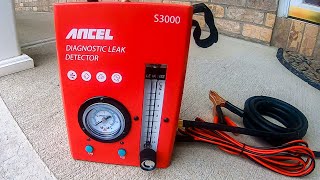
Connect a smoke machine to the intake system before the throttle body. Seal the air filter box opening. Introduce smoke at low pressure and look for smoke escaping from cracked hoses, intake manifold gaskets, the PCV system, or intercooler connections.
Tools: Smoke machine, intake adapter/plugs (Intermediate) - Verify MAF Sensor Plausibility
A rule of thumb for MAF sensors at idle (no-load, sea level) is that the reading in grams/second (g/s) equals the engine's displacement in liters (e.g., a 3.5L engine reads ~3.5 g/s). A significantly lower reading confirms a vacuum leak after the MAF sensor.
Tools: OBD-II scanner with live data (Advanced) - Test MAP Sensor with a Multimeter
Backprobe the MAP sensor's signal wire. With the key on, engine off (KOEO), the voltage corresponds to atmospheric pressure (approx. 4.5-5.0V at sea level). Start the engine; at idle, the voltage drops significantly due to vacuum (to 1.0-1.5V). If the voltage doesn't change, the sensor is faulty.
Tools: Digital multimeter, wiring diagram (Advanced) - Inspect Sensor Wiring and Connectors
Check the electrical connectors and wiring for the MAP, MAF, and Throttle Position (TPS) sensors. Look for damage, corrosion, loose pins, or frayed wires causing an intermittent signal. Perform a continuity test on signal and ground wires.
Tools: Flashlight, multimeter (Intermediate) - Analyze MAF Sensor with an Oscilloscope
Connect to the MAF signal wire. At idle, you should see a stable digital frequency or analog voltage. A 'snap throttle' test (quickly revving the engine) produces a clean, sharp spike in the signal. A noisy or erratic waveform indicates a failing sensor.
Tools: Oscilloscope, wiring diagram (Advanced)
When This Code Triggers (Freeze-Frame Conditions)
- Engine State: Idle (The code sets specifically when the engine is at idle RPM with a closed throttle.)
- Engine RPM: 600-900 RPM (Stable idle speed, though the fault causes it to fluctuate.)
- Engine Coolant Temp: 170-210°F (The engine is at full operating temperature when the check is performed.)
- Throttle Position: 0-5% (Closed) (The PCM compares sensor data against the expectation for a closed throttle plate.)
Related Codes
- P2074 — This is the direct sister code to P2073. It indicates the same MAP/MAF to Throttle Position correlation error, but it occurs when the engine is under load (off-idle). P2073 is for idle conditions only. They often appear together.
- P0106 — This code means 'MAP/Barometric Pressure Circuit Range/Performance.' P0106 points to a general failure of the MAP sensor or its circuit. P2073 is a correlation fault. With P0106, the MAP sensor reading is fixed; with P2073, the reading is illogical compared to the MAF and TPS.
- P0171 — This code means 'System Too Lean (Bank 1).' A vacuum leak is a primary cause for both P0171 and P2073. If you have both codes, it strongly points towards an unmetered air leak.
- P0507 — This code means 'Idle Air Control System RPM Higher Than Expected.' A vacuum leak or a sticking throttle body causes both P0507 and P2073. P0507 triggers because idle speed is too high, and P2073 triggers because the airflow causing that high idle does not correlate with sensor expectations.
Climate & Environmental Factors
- Cold Weather: Low temperatures cause rubber and plastic components, such as vacuum hoses and intake gaskets, to become brittle and contract. This causes existing small cracks to open up, leading to vacuum leaks that trigger a P2073 code.
- High Altitude: At higher altitudes, baseline atmospheric pressure is lower. The PCM uses the MAP sensor's reading at KOEO (Key On, Engine Off) to determine this baseline. A dirty sensor produces a signal that falls outside the PCM's expected correlation range when compared to the MAF sensor, making P2073 more likely.
How to Talk to a Mechanic About This Code
Say this: "I have a P2073 code and I'd like to schedule a diagnostic. I'd like you to check for TSBs, analyze live data for MAP/MAF correlation and fuel trims, and perform a smoke test to check for vacuum leaks before recommending any part replacements."
This signals you've done your research and directs the mechanic to a logical diagnostic process. It prevents them from swapping expensive sensors and focuses on common, testable failures like leaks, dirty components, or software issues.
Avoid saying:
- 'My check engine light is on, can you just fix it?' (This is too vague and invites upselling).
- 'I think I need a new MAP sensor.' (Don't diagnose for the mechanic; you pay for a part you don't need).
- 'Just do whatever you think is best.'
Questions to ask before authorizing the repair:
- Did you find a vacuum leak with the smoke machine?
- What were the long-term fuel trim readings at idle?
- Can you show me the dirty component (throttle body, MAP sensor) before you replace or clean it?
- If a part needs replacement, what tests did you perform to confirm it failed?
- Is there a Technical Service Bulletin (TSB) for this issue on my vehicle?
- What is the warranty on this repair, including both parts and labor?
Where to Take It: Dealer vs Independent vs Chain
- Dealer:
Required for specific software-glitch models (Ford 6.7L). For other vehicles, a good independent shop is more cost-effective.
Best for: Vehicles under warranty., 2011-2012 Ford Super Duty trucks that require a specific PCM software update for P2073., Complex electrical or software-related issues on newer, high-end vehicles (e.g., German brands).
Downsides: Highest labor rates and part costs., Defaults to replacing an entire assembly when a smaller component or cleaning suffices. (Typical cost: +50% vs. baseline) - Independent Shop:
Best overall fit. An experienced independent technician efficiently diagnoses the common causes of P2073 (leaks, dirty sensors) without the dealership price tag.
Best for: Out-of-warranty vehicles where cost is a factor., Diagnosing common issues like vacuum leaks (with a smoke machine) and cleaning dirty components (throttle body, MAP sensor)., Building a long-term relationship with a trusted mechanic.
Downsides: Quality and diagnostic equipment vary widely; check reviews and certifications (like ASE)., Lacks access to manufacturer-specific software updates. (Typical cost: +0% vs. baseline) - Chain Shop:
AVOID for diagnosing P2073. The risk of misdiagnosis and unnecessary part replacement is high. Do not use them for the initial diagnostic process.
Best for: Simple, routine maintenance like oil changes or tires.
Downsides: Technician skill and diagnostic capability vary dramatically., High pressure to upsell services leads to misdiagnosis of a correlation code like P2073., Lacks advanced diagnostic tools or experience for anything beyond simple part replacement. (Typical cost: -10% vs. baseline)
When to Walk Away From the Repair
If the estimated repair cost exceeds 40% of the car's private-party value (check Kelley Blue Book or Edmunds), seriously consider selling or trading in the vehicle.
- Car worth $4000, fix is $2000: Borderline. Get a second opinion before authorizing, as the repair is 50% of the car's value.
- Car worth $12000, fix is $1800: Fix it. The repair cost is well below the threshold and is a reasonable investment to keep a more valuable car running.
- Car worth $2500, fix is $1500: Walk away. The repair cost is 60% of the car's value; it's not a sound financial decision.
What Scan Tool You Need for This Code
Minimum: A scanner that reads and graphs live data streams, specifically for MAP, MAF, Throttle Position, and Long/Short Term Fuel Trims.
A basic $20 code reader only shows the 'P2073' code but won't provide the live sensor data needed to see the *why*. You need to see conflicting data and fuel trims to know if it's a leak, a dirty sensor, or a failing part. Without live data, you're guessing.
Budget: BlueDriver Pro or Foxwell NT301 (~$100) — Connects to your smartphone (BlueDriver) or operates as a handheld (Foxwell) to display and graph the essential live data (MAP, MAF, TPS, fuel trims) needed to diagnose a vacuum leak or a lazy sensor.
Mid-range: XTOOL D7 or Innova 5610 (~$350) — Offers bidirectional controls and special functions. For P2073, this is crucial for performing a 'throttle relearn' procedure, which is required after cleaning or replacing the throttle body.
Professional: Autel MaxiCOM MK808S (~$500) — Provides full bidirectional control, all system diagnostics, and access to manufacturer-specific codes and data. Essential for diagnosing complex issues on European makes or performing software-related adaptations necessary to resolve a stubborn P2073 code.
How to Clear the Code After You Fix It
- Use an OBD-II scan tool to clear the code.
- Perform a complete drive cycle to allow readiness monitors to run.
- For vehicles with electronic throttles, perform a throttle body idle relearn procedure.
Drive cycle (~30 minutes): A general OBD-II drive cycle includes a cold start (after sitting 8+ hours), 2-3 minutes of idling, 10-15 minutes of mixed city/highway driving (including steady speeds around 55 mph), and a period of coasting deceleration. This process allows the onboard computer to re-run its self-tests.
Readiness monitors affected: Catalyst Monitor, Evaporative System Monitor, O2 Sensor Monitor, EGR System Monitor
Before emissions retest: drive at least 50 miles to fully set monitors.
Watch out for:
- On 2011-2012 Ford Super Duty trucks, the code is often a 'Permanent DTC' (pDTC) that cannot be cleared with a standard scanner; it requires a dealer reflash.
- Clearing the code without performing a drive cycle leaves readiness monitors 'Not Ready,' resulting in an automatic emissions test failure.
- The code returns immediately if the underlying issue (like a vacuum leak or dirty sensor) is not completely fixed.
Will This Fail Emissions / State Inspection?
Yes — this code typically fails an OBD-II emissions inspection.
- California: An illuminated Check Engine Light results in an automatic failure. If the code is stored as a Permanent DTC (PDTC), the vehicle fails the smog check even if the light is off, until the car's computer verifies the fix by completing a specific drive cycle.
- New York: A vehicle with an illuminated Check Engine Light automatically fails the emissions portion of the NYS inspection. After a repair, the vehicle must be driven through a complete drive cycle before re-inspection.
- Texas: In the 17 Texas counties that require emissions testing, an illuminated Check Engine Light due to P2073 causes the vehicle to fail the OBD-II portion of the annual inspection.
Most Commonly Affected Vehicles
- Ford F-250/F-350/F-450 Super Duty (2011-2012) — These models with the 6.7L Power Stroke diesel are highly prone to a PCM software glitch that causes a 'permanent' P2073 code. Ford issued TSB 22-2115 and Customer Satisfaction Programs (22N14, 23B63) for a free software update.
- Ford F-250 Super Duty (2016-2019) — On later 6.7L models, the cause is a carbon-clogged MAP sensor or a gunked-up throttle body due to the EGR system, rather than the software glitch of the earlier models.
- Chevrolet Silverado 1500/2500 (2007-2013) — Triggered by a dirty throttle body or a failing MAP sensor. A MAP sensor replacement costs approximately $163-$225, while a MAF sensor replacement runs $205-$376.
- Dodge Ram 1500/2500 (2009-2018) — Caused by faulty MAP sensors or vacuum leaks in the intake manifold. A MAF sensor replacement on a Ram 2500 costs between $341 and $589.
- Honda Civic, CR-V, HR-V (2016-2022) — The code is defined as 'MAP Sensor Signal Higher Than Expected' and is triggered by vacuum leaks from a faulty PCV valve or brake booster hose, as well as MAP sensor failure.
- Volkswagen/Audi Various with TSI/TFSI engines (2008-Present) — These direct-injection turbocharged engines are highly susceptible to heavy carbon buildup on intake valves and sensors. This buildup restricts airflow and causes P2073. A throttle body adaptation procedure is required after cleaning.
- BMW Various with N-series engines (2004-Present) — On engines with Valvetronic, the throttle body creates vacuum for systems like the PCV. P2073 is triggered by vacuum leaks in the complex crankcase ventilation system (e.g., cracked valve cover or hoses).
- Nissan Titan, Altima, various (2005-Present) — Triggered by a faulty MAP/MAF sensor or by vacuum leaks. On the Titan, issues with the intake manifold runner control (IMRC) valve cause similar correlation codes.
Manufacturer-Specific Notes

- Ford: On 2011-2012 models with the 6.7L Power Stroke diesel, a software glitch causes P2073 to become a 'Permanent Diagnostic Trouble Code' (pDTC). This means the code cannot be erased with a standard scan tool or by disconnecting the battery. The only fix is a PCM reflash performed by a Ford dealer under TSB 22-2115.
- Volkswagen/Audi: Due to the design of TSI/TFSI direct injection engines, carbon buildup on the intake valves is a certainty. This buildup severely restricts airflow, causing a P2073 code as the MAP sensor readings deviate from what is expected for the given MAF reading. A manual intake valve cleaning (walnut blasting) resolves this.
- BMW: On engines equipped with Valvetronic, the primary method of controlling engine speed is by varying valve lift, not the throttle plate. A failure in the complex PCV system (like a cracked valve cover or torn hose) is a common cause of vacuum leaks that trigger a P2073.
- Honda: For many modern Honda vehicles, the P2073 code definition is more specific: 'MAP Sensor Signal Higher Than Expected.' This points diagnosis directly toward a faulty MAP sensor or a significant vacuum leak, commonly a failed PCV valve.
Real Owner Stories
2017 Ford F-250 6.7L with poor towing performance
Check Engine Light came on but had no noticeable performance issues with normal driving. When towing a heavy camper, the truck had no power and downshifted frequently on slight hills.
What they tried:
- Cleared the code, but it returned after a day.
Outcome: The owner removed and inspected the MAP sensor, finding it fouled with carbon. After cleaning the MAP sensor and clearing the codes, the Check Engine Light did not return.
Lesson: On a 6.7L Power Stroke, a dirty MAP sensor is a primary suspect. Cleaning the sensor is a simple, effective first step before seeking professional repair, especially if performance loss is most noticeable under load.
2011 Ford F-250 6.7L at 130k miles with persistent codes
Truck went into low power mode with P2073 and P2074 codes active.
What they tried:
- Replacing the MAP sensor three separate times.
- Checking the air filter and MAF sensor, which looked fine.
Outcome: The actual fix was a thorough manual cleaning. The owner removed the upper and lower intake manifolds and the throttle body, describing the intake tract as looking 'like coal' inside. After cleaning all the heavy carbon buildup, the issue was resolved.
Lesson: Don't repeatedly replace sensors if the code persists. On high-mileage EGR-equipped diesels, extreme carbon buildup in the entire intake path is the root cause, not just the sensor tip. A visual inspection of the throttle body and intake is critical.
2021 F-250 6.7L with Check Engine Light but no symptoms
The Check Engine Light for P2073 came on, but the truck ran fine with no power loss.
What they tried:
- Cleaned both the MAF and MAP sensors. The MAP sensor had significant carbon buildup.
- Found and replaced a separate ripped rubber hose that was leaking air.
Outcome: Even after cleaning the sensors and fixing an obvious air leak, the Check Engine Light remained on. The owner required further diagnosis, highlighting that obvious fixes do not always resolve the code.
Lesson: Sometimes the fix isn't straightforward. After performing common DIY steps, if the code remains, it requires a dealer-level scan tool to perform a MAF adaptation reset or diagnose a complex issue like a sticking EGR valve.
2002 Honda CR-V with severe rough idle
Vehicle had a very rough, unstable idle and stalling issues.
What they tried:
- Found and repaired a large crack in the air intake hose.
- Cleaned a very dirty throttle body.
- Replaced spark plugs, the purge control solenoid valve, and the MAP sensor.
Outcome: Despite fixing a major vacuum leak and replacing multiple components, the rough idle problem was not solved. The issue was deeper than the common causes, pointing towards a complex diagnostic challenge.
Lesson: While P2073 points to air/fuel correlation, a severe rough idle persisting after addressing common culprits indicates the problem is in another system, requiring a systematic diagnostic approach.
How to Prevent This Code From Triggering
- Clean the Throttle Body periodically. (Every 30,000-50,000 miles, or if a rough idle develops.) — PCV systems route oil vapor into the intake, which combines with dust to form carbon grime. This buildup prevents the throttle plate from closing properly, disrupting airflow at idle and causing the sensor correlation mismatch.
- Clean the MAP Sensor during other maintenance. (Every 30,000 miles or with every air filter change, especially on diesel engines.) — On diesel engines, the EGR system deposits soot directly into the intake manifold. This soot clogs the small port on the MAP sensor, preventing it from accurately reading pressure.
- Inspect intake and vacuum hoses. (During every oil change.) — Engine heat and age cause rubber and plastic hoses to become brittle and crack, creating vacuum leaks. A quick visual inspection catches potential leaks before they set a code.
- Use a high-quality engine air filter and ensure it is sealed correctly. (Per manufacturer's schedule.) — A quality air filter prevents fine dust from entering the intake tract where it contaminates the MAF sensor and sticks to oily surfaces in the throttle body.
Frequently Asked Questions
What is the most common cause of P2073?
For most cars, it is a vacuum leak from a cracked hose or bad gasket. For diesel trucks like the Ford 6.7L, it is frequently a carbon-clogged MAP sensor or a dirty throttle body.
Why won't my P2073 code clear with my scanner?
On 2011-2012 Ford Super Duty trucks, a software glitch sets the code as 'permanent.' A permanent DTC cannot be erased by a scan tool and requires a PCM update by a Ford dealer.
Can a bad PCV valve cause a P2073 code?
Yes. A PCV valve stuck open creates a constant, unmetered vacuum leak. This introduces extra air into the intake manifold that the MAF sensor misses, causing a discrepancy between the MAP and MAF readings at idle.
What is the difference between P2073 and P2074?
Both indicate a mismatch between airflow sensors and throttle position. P2073 triggers specifically at idle, while P2074 triggers when the engine is under load.
How do you perform a smoke test to find a leak for P2073?
Connect a smoke machine to the engine's air intake system and seal the air filter box. The machine fills the intake and vacuum system with low-pressure smoke. Any leaks from cracked hoses or bad gaskets reveal themselves via a visible smoke stream.
What are the most common misdiagnosis mistakes for P2073?
The biggest mistake is immediately replacing the MAP or MAF sensor without proper diagnosis. Technicians often find the root cause is a simple vacuum leak, a dirty throttle body, or a required software update. Performing a smoke test and analyzing fuel trims saves hundreds of dollars.
Should I clean my MAP and MAF sensors or just replace them?
Cleaning is always the first and most cost-effective step. Carbon and oil buildup are common causes, and a dedicated sensor cleaner often solves the problem. Only replace the sensor if cleaning fails or diagnostic testing proves electronic failure.
Key Takeaways
- P2073 triggers when the engine computer detects a mismatch between the MAP and MAF sensor airflow readings and the closed throttle position at idle.
- On 2011-2012 Ford 6.7L diesel trucks, a known software glitch causes a permanent P2073 code, requiring a dealer PCM reflash (often free under TSB 22-2115).
- For most vehicles, vacuum leaks or carbon buildup on the MAP sensor and throttle body cause this code, making cleaning the first and cheapest repair step.
- Never replace expensive sensors without checking live data; long-term fuel trims above +10% confirm an unmetered vacuum leak, not a bad sensor.
Helpful Videos

The information in this article is provided for general reference and educational purposes only. Vehicle specifications, procedures, and part compatibility can vary by production date, trim level, and region. Always consult your vehicle's factory service manual and verify part numbers before purchasing or performing repairs. Safety-critical components such as airbags, seat belts, and braking systems should be installed by a qualified professional.
- 🎬 Helpful Videos
- What Does P2073 Mean?
- Can I Drive With P2073?
- Common Causes
- Symptoms
- Diagnostic Flowchart
- Common Fixes & Costs
- Used vs. New Parts: Buying Guide
- What Happens If You Wait — Timeline
- Cost of Not Fixing It
- Diagnosis Steps
- When This Code Triggers (Freeze-Frame Conditions)
- Related Codes
- Climate & Environmental Factors
- How to Talk to a Mechanic About This Code
- Where to Take It: Dealer vs Independent vs Chain
- When to Walk Away From the Repair
- What Scan Tool You Need for This Code
- How to Clear the Code After You Fix It
- Will This Fail Emissions / State Inspection?
- Most Commonly Affected Vehicles
- Manufacturer-Specific Notes
- Real Owner Stories
- 2017 Ford F-250 6.7L with poor towing performance
- 2011 Ford F-250 6.7L at 130k miles with persistent codes
- 2021 F-250 6.7L with Check Engine Light but no symptoms
- 2002 Honda CR-V with severe rough idle
- How to Prevent This Code From Triggering
- Frequently Asked Questions
- What is the most common cause of P2073?
- Why won't my P2073 code clear with my scanner?
- Can a bad PCV valve cause a P2073 code?
- What is the difference between P2073 and P2074?
- How do you perform a smoke test to find a leak for P2073?
- What are the most common misdiagnosis mistakes for P2073?
- Should I clean my MAP and MAF sensors or just replace them?
- Key Takeaways
- 🎟️ Get 5% Off