

OBD-II Code P2048: Reductant Injector Circuit Low
What P2048 means, why it triggers, and how to fix it
- P2048 triggers a severe 'limp mode' within 5 to 10 drive cycles, restricting vehicle speed to a maximum of 5 mph.
- A failed DEF injector causes up to 60% of P2048 codes, followed by damaged wiring harnesses and outdated ECM software.
- Driving with an active P2048 code starves the SCR catalyst of DEF, causing irreversible damage that costs $1,500 to $2,800 to replace.
- Test the DEF injector's resistance before buying parts; a healthy injector measures 11 to 13 Ohms, while 0 Ohms confirms an internal short.
What Does P2048 Mean?

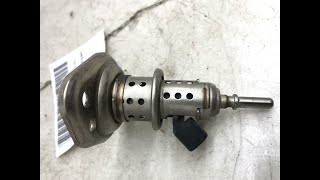
P2048 indicates the Engine Control Module (ECM) detects a low voltage signal in the reductant injector circuit. This injector sprays Diesel Exhaust Fluid (DEF) into the exhaust to reduce emissions. This code applies exclusively to diesel vehicles equipped with a Selective Catalytic Reduction (SCR) system.
Technical definition: The SAE/OBD-II definition is "Reductant Injection Valve Circuit Low Bank 1 Unit 1". The ECM detects the voltage signal from the reductant injector circuit is below the expected range (typically under 0.5V when inactive). This results from a short to ground, high circuit resistance, or an internally failed injector.
Can I Drive With P2048?
Yes, But With Caution. You can drive short distances to a repair shop. The vehicle enters a severe 'limp mode' after a few drive cycles, restricting speed to 5 mph. Continuing to drive causes irreversible damage to the Selective Catalytic Reduction (SCR) catalyst, a repair costing $1,500 to $2,800.
Common Causes

- Faulty Reductant (DEF) Injector (Very Common) — The DEF injector causes up to 60% of P2048 codes. It fails electrically inside, develops an internal short circuit, or clogs with crystallized DEF, forcing a low voltage reading.
- Damaged Wiring or Connectors (Common) — The DEF injector wiring harness sits near hot exhaust parts and road debris. Wires melt, fray, or corrode, and connectors fill with moisture, causing a direct short to ground.
- Blown Fuse or Faulty Relay (Common) — A blown fuse or a bad relay for the DEF injector circuit cuts power and triggers the code immediately. This is a highly common, easily fixed cause.
- Outdated Engine Control Module (ECM) Software (Common) — On specific vehicles like the Nissan Titan XD and Ford Super Duty, overly sensitive ECM software falsely triggers P2048. A software update via a Technical Service Bulletin (TSB) fixes this without parts replacement.
- Contaminated or Old Diesel Exhaust Fluid (DEF) (Less Common) — Poor-quality or expired DEF crystallizes and clogs the injector. This blockage stresses the injector mechanically, leading to the electrical fault that triggers P2048.
- Failed DEF Pump or Heater Assembly (Less Common) — A failing DEF pump drops system pressure, and a broken tank heater allows fluid to freeze. Both conditions cause blockages that place secondary electrical stress on the injector circuit.
- Exhaust System Leaks or Aftermarket Modifications (Rare) — Upstream exhaust leaks or aftermarket exhaust systems alter backpressure and thermal characteristics. This forces the ECM to command the injector incorrectly, triggering circuit faults.
- Faulty SCR Control Module or PCM (Rare) — The control module operating the DEF system fails and misinterprets the voltage reading. Consider this only after ruling out wiring, fuses, the injector, and software updates.
Symptoms

- Check Engine Light and DEF Warning Messages — The Check Engine Light illuminates alongside a specific DEF/SCR warning light. The dash displays messages like "Service Emissions System" or a mileage countdown until speed is restricted.
- Severe 'Limp Mode' and Power Loss — The vehicle severely limits power and speed to protect the emissions system. Speed drops to 5-10 mph after a few drive cycles, and fuel economy decreases by 2-4%.
- Black Smoke from Exhaust — Black smoke exits the tailpipe because the SCR system is no longer cleaning the exhaust gases.
- Failed Emissions Test (also visible on scanner) — The vehicle automatically fails state emissions testing because the NOx reduction system is offline.
Diagnostic Flowchart
Tap your situation to follow the diagnostic path that matches what you're seeing on this code.
Common Fixes & Costs
- Replace the Reductant (DEF) Injector — Parts: $250-$600, Labor: $150-$400, ~1.5 hr book time (DIY)
- Repair Damaged Wiring or Connectors — Parts: $50-$120, Labor: $80-$250, ~2 hr book time (Intermediate)
- Replace Blown Fuse or Relay — Parts: $5-$30, Labor: $0-$50, ~0.1 hr book time (DIY)
- Reprogram ECM (per TSB) — Parts: $0, Labor: $100-$250, ~1 hr book time (Professional)
- Replace the SCR/DEF Control Module — Parts: $800-$1200, Labor: $200-$300, ~1.5 hr book time (Professional)
Used vs. New Parts: Buying Guide
When a used part is worth it: Buying a used DEF injector is never recommended. The part is exposed to extreme heat and corrosive fluid, making its remaining lifespan impossible to verify.
Donor-vehicle mileage cap: roughly under 40000 miles for the part to have meaningful remaining life.
Donor quality checklist:
- Verify the exact part number; identical-looking injectors are rarely interchangeable.
- Avoid injectors from rust-belt states due to connector corrosion.
- Demand a resistance reading of 11-13 ohms before purchase.
Decision logic:
- If The cost savings of a used injector are less than 50% of a new aftermarket part. → Buy new. The risk of premature failure outweighs the savings.
- If The vehicle is old, high-mileage, and being repaired on a minimal budget. → A used part with a 90-day warranty is a viable short-term option.
- If The part is a known high-failure item like a DEF injector. → Always buy a new OEM or high-quality aftermarket part.
Warranty tradeoff: Used parts carry a 30-90 day warranty. New aftermarket parts offer 1-year to lifetime warranties. New OEM parts carry a 1-2 year warranty.
Worst-case if a used part fails: 400-800 if a used injector fails, requiring repeat labor and a second part.
What Happens If You Wait — Timeline
- 0-5 drive cycles: Check Engine Light illuminates. Vehicle begins a countdown to speed limitation. (MPG impact: 0-2%% · Added cost: $0)
- 5-10 drive cycles (approx. 50-200 miles): Vehicle enters severe 'limp mode,' limiting speed to 5-10 mph. (MPG impact: 2-4%% · Added cost: $50 in wasted fuel and towing fees)
- 1-3 months of continued operation: The SCR catalyst is starved of DEF, triggering a secondary P20EE code. (MPG impact: 4-8%% · Added cost: $100-200 in wasted fuel)
- 3-6+ months: The SCR catalyst permanently clogs with soot and sulfates and requires replacement. (MPG impact: 10-15%% · Added cost: $1500-2800 for a new SCR catalyst assembly)
Cost of Not Fixing It
- Immediate (1-5 drive cycles): Vehicle enters 'limp mode' with speed restricted to 5 mph. A dashboard warning shows a mileage countdown. (Added cost: 0)
- 1-3 months: The SCR catalyst is starved of DEF and stops working, triggering a secondary P20EE (Catalyst Efficiency) code. (Added cost: 0)
- 3-6+ months: Permanent damage to the SCR catalyst. It clogs with hardened soot and crystallized DEF, requiring full replacement. (Added cost: 1500-2800)
Diagnosis Steps

- Check for TSBs and Scan for Codes
Check for Technical Service Bulletins (TSBs) for your specific vehicle. Manufacturers often issue software updates to fix false P2048 codes. Use a scanner to confirm P2048 and note related codes.
Tools: OBD-II Scanner (Beginner) - Check for Blown Fuses
Locate the fuse for the reductant injector or SCR system in the owner's manual. Pull the fuse and check if it is blown. This is the fastest, cheapest fix.
Tools: Fuse puller or needle-nose pliers (Beginner) - Test the Reductant Injector Resistance
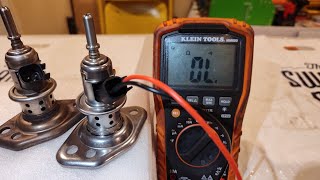
Disconnect the injector and measure electrical resistance between its two pins. A healthy injector reads 11-13 ohms. A reading of zero (short) or infinite (open) confirms the injector is dead and requires replacement.
Tools: Digital Multimeter (DVOM) (Intermediate) - Visually Inspect Wiring and Connectors
Inspect the wiring harness routing to the DEF injector. Look for melted plastic, frayed wires rubbing against the frame, or green corrosion on the connector pins.
Tools: Flashlight (Beginner) - Test the Reductant Injector Circuit Voltage
With the ignition on, check for voltage at the DEF injector's harness connector. A reading below 11V confirms a low voltage problem, indicating a short to ground or high resistance in the wiring.
Tools: Digital Multimeter (DVOM) (Intermediate) - Perform an Active Test with a Scan Tool
Use a bidirectional scanner's 'Active Test' function to command the DEF injector ON. Listen for a distinct clicking sound. No click with verified good wiring confirms a faulty injector.
Tools: Advanced OBD-II Scan Tool (Advanced) - Check the DEF Level and Quality
Verify the DEF tank is full of fresh fluid. Old or contaminated DEF crystallizes and destroys the injector. Drain and refill if the fluid is expired.
Tools: DEF Refractometer (optional) (Beginner) - Check Live Data for DEF System Pressure
Monitor the 'DEF Pressure' live data PID. With a hot exhaust, pressure must stabilize between 120-145 PSI. Low pressure indicates a failing pump, not the injector.
Tools: Advanced OBD-II Scan Tool (Advanced) - Perform a Voltage Drop Test
Connect the positive multimeter lead to the battery positive and the negative lead to the injector power wire. Command the injector ON. A reading above 0.5V proves excessive resistance in the wiring.
Tools: Digital Multimeter (DVOM), Advanced OBD-II Scan Tool (Advanced) - Analyze the Control Signal with an Oscilloscope
Connect an oscilloscope to the injector control wire. A missing or grounded square wave pattern definitively points to a wiring short or a blown PCM driver.
Tools: Oscilloscope, Advanced OBD-II Scan Tool (Professional)
When This Code Triggers (Freeze-Frame Conditions)
- Engine Coolant Temp: 180-200°F (82-93°C) (The fault triggers when the engine is fully warmed up and the SCR system is actively dosing.)
- RPM: 1500-2500 (Sets during steady-state cruising, rarely during idle or heavy acceleration.)
- Engine Load: 30-60% (Occurs under moderate engine load when the ECM actively commands DEF injection.)
- Vehicle Speed: 45-65 mph (Highway driving ensures the exhaust is hot enough for the SCR system to operate, triggering the monitor.)
Related Codes
- P2047 — Reductant Injector Circuit Open. Indicates a completely broken wire or unplugged connector, whereas P2048 indicates a short to ground.
- P2049 — Reductant Injector Circuit High. Indicates a short to a power source, the electrical opposite of P2048.
- P20EE — SCR NOx Catalyst Efficiency Below Threshold. P2048 is the cause; P20EE is the effect. The broken injector stops DEF flow, causing the catalyst to fail its efficiency monitor.
- P202E — Reductant Injector Circuit Range/Performance. Appears alongside P2048 when the injector behaves erratically before failing completely.
- P204F — Reductant System Performance. A general code indicating the SCR system is offline, directly caused by the P2048 injector fault.
Climate & Environmental Factors
- Cold Weather: DEF freezes at 12°F (-11°C) and expands by 7%. Repeated freeze/thaw cycles stress the pump and injector, accelerating mechanical and electrical failure.
- High Humidity and Road Salt: Moisture and salt rapidly corrode the exposed DEF injector connector, causing the exact short-to-ground condition that triggers P2048.
How to Talk to a Mechanic About This Code
Say this: "I have a P2048 code on my diesel truck. Please start by checking for TSBs, inspecting the wiring, and testing the DEF injector's resistance before recommending a module replacement."
This directs the shop toward a logical, cost-effective diagnostic process, focusing on the most common failures (wiring, injector) before suspecting a costly control module.
Avoid saying:
- 'Just fix whatever's wrong'
- 'My check engine light is on, can you look at it?'
- 'Replace the DEF injector'
Questions to ask before authorizing the repair:
- Did you find a blown fuse or a visible wiring problem?
- What was the resistance reading on the DEF injector? Was it within the 11-13 ohm spec?
- Are there any Technical Service Bulletins (TSBs) for my vehicle that require a software update?
- If replacing the injector, can you show me the old part and explain why it failed?
Where to Take It: Dealer vs Independent vs Chain
- Dealer:
Recommended for in-warranty repairs or mandatory TSB software updates.
Best for: Vehicles under powertrain or emissions warranty., Vehicles requiring a TSB software flash (Ford, Nissan)., Complex electrical issues on newer vehicles.
Downsides: Highest labor rates., Defaults to replacing large assemblies rather than repairing components. (Typical cost: +40% vs. baseline) - Independent Shop:
Best overall fit for out-of-warranty repairs, especially at a diesel-specialist shop.
Best for: Out-of-warranty diesel trucks., Cost-effective diagnosis of injector or wiring problems.
Downsides: May lack access to the latest manufacturer software updates. (Typical cost: +0% vs. baseline) - Chain Shop:
AVOID. The risk of misdiagnosis is too high.
Best for: Simple jobs like oil changes.
Downsides: Technicians lack specialized experience for complex diesel emissions systems., High risk of misdiagnosis and unnecessary parts replacement. (Typical cost: -10% vs. baseline)
When to Walk Away From the Repair
If the total estimated repair cost exceeds 40-50% of the vehicle's current private-party value, consider selling or trading it in.
- Car worth $25000, fix is $800: Fix it. This is a standard repair cost well below the threshold.
- Car worth $15000, fix is $2500: Borderline. Get a second opinion before authorizing a repair of this size.
- Car worth $8000, fix is $4000: Walk away. The repair cost is 50% of the vehicle's value.
What Scan Tool You Need for This Code
Minimum: A scan tool with live data streaming and bidirectional control ('Active Tests').
A basic code reader cannot command the DEF injector to turn on or read live DEF pressure data, making proper diagnosis impossible.
Budget: TOPDON TopScan Pro (~$89) — Provides bidirectional controls to command the DEF injector via a smartphone app.
Mid-range: Autel MaxiCOM MK808S / Foxwell NT510 Elite (~$350-400) — Offers robust bidirectional controls to perform an actuator test on the DEF injector and provides full live data graphing.
Professional: Autel MaxiCOM MK900BT / Launch X431 Series (~$500-1200) — Offers advanced ECU coding and access to manufacturer-specific SCR dosing measurement tests.
Rent vs buy: Buy. Free rental tools from auto parts stores lack the bidirectional controls required to diagnose P2048.
How to Clear the Code After You Fix It
- Use an OBD-II scan tool to clear the P2048 code.
- Perform the specific SCR system drive cycle to run the readiness monitors.
- Rescan the vehicle to confirm the code does not return.
Drive cycle (~30 minutes): A complete drive cycle requires a cold start, 3 minutes of idling, 15 minutes of mixed driving, and steady highway speeds of 55 mph for 5+ minutes to heat the exhaust and trigger the SCR monitor.
Readiness monitors affected: NOx/SCR Aftertreatment, Catalyst monitor, Exhaust Gas Sensor
Before emissions retest: drive at least 100 miles to fully set monitors.
Watch out for:
- Disconnecting the battery clears the code but resets all monitors, guaranteeing an emissions test failure.
- The code returns immediately if the root electrical short is not fixed.
- Failing to drive at steady highway speeds prevents the SCR monitor from running.
Will This Fail Emissions / State Inspection?
Yes — this code typically fails an OBD-II emissions inspection.
- California: An active P2048 is an automatic failure. All OBD readiness monitors must be 'Ready' before re-testing. The NOx/SCR monitor requires extensive highway driving to set.
- New York: The NYS DMV emissions inspection includes an OBD-II scan. An illuminated Check Engine Light guarantees immediate failure.
- Texas: In the 17 counties requiring emissions testing, P2048 fails the OBD-II portion. The Check Engine Light must be off and monitors complete.
Most Commonly Affected Vehicles

- Ram 2500/3500 (Cummins) (2013-2020) — Extremely common DEF injector failure. The 10mm mounting bolts seize easily; soak them in penetrating oil for 30 minutes before removal.
- Ford F-250/F-350 Super Duty (Power Stroke) (2011-2019) — For 2017-2018 models, TSB 19-2057 requires a PCM software update to fix false P2048 codes before replacing any hardware.
- Chevrolet / GMC Silverado/Sierra 2500HD/3500HD (Duramax) (2011-2019) — GM bulletin #12-06-04-002A addresses P2048, usually pointing to injector failure or harness chafing.
- Nissan Titan XD (Cummins 5.0L) (2016-2019) — TSB NTB19-011a fixes overly sensitive ECM software. Reprogramming is the mandatory first step for these trucks.
- Mercedes-Benz Sprinter, ML350, GL350 (BlueTEC) (2010-2016) — The DEF wiring harness frequently rubs through against the transmission housing, causing a direct short.
- Volkswagen / Audi Jetta, Golf, Passat, Q5, Touareg (TDI) (2009-2016) — Vehicles modified under the 'Dieselgate' settlement have extended warranties covering the entire DEF system for free.
- BMW X5, 335d (Diesel Models) (2009-2018) — Typically caused by an internally failed DEF injector requiring complete replacement.
- Peugeot / Citroen Boxer, Relay, Expert, Dispatch (2018-2022) — Commonly points to a short in the AdBlue injector control circuit.
Manufacturer-Specific Notes
- Ram/Dodge (Cummins): The two 10mm bolts securing the DEF injector seize and snap easily. Soaking them with penetrating oil is mandatory.
- Ford (Power Stroke): 2017-2018 models require a PCM software update (TSB 19-2057) to resolve false codes before parts are replaced.
- Nissan (Cummins): 2016-2019 Titan XDs require ECM reprogramming (TSB NTB19-011a) to fix overly sensitive software triggers.
- Mercedes-Benz: The DEF wiring harness rubs against the transmission housing on ML350 and Sprinter models, causing shorts.
- Volkswagen/Audi (TDI): The 'TDI fix' emissions settlement provides an extended warranty (often 10 years/120k miles) that covers P2048 repairs for free at the dealer.
Real Owner Stories
2018 Ram 2500 with 145K miles - Straightforward Fix
Received 'Service DEF System' message and a 5MPH countdown. Scanned and found P2048.
What they tried:
- Tested the DEF injector with a multimeter and found an open circuit, confirming it was dead.
- Soaked the mounting bolts in penetrating oil for 30 minutes to prevent snapping.
Outcome: Replaced the DEF injector. The new part showed correct resistance, the warning cleared, and the code did not return.
Lesson: A simple resistance test confirms the most common failure instantly. Soaking the bolts is critical for a successful DIY repair.
2013 Ram 2500 6.7L - Misdiagnosis Avoided
Check engine light and 'Service DEF System' message appeared with code P2048.
What they tried:
- Skipped complex wiring checks and tested the injector's resistance directly.
- The old injector showed 0 ohms (dead short). A new Mopar replacement showed 12.3 ohms.
Outcome: Replacing the injector fixed the issue permanently.
Lesson: Checking the injector's resistance (spec is 11-13 ohms) is the fastest way to condemn or clear the most likely culprit, saving hours of diagnostic time.
2018 Ram 2500 - Unusual Trigger and Self-Clearing Code
Vehicle ran out of fuel, ran poorly after restart, and threw a P2048 code.
What they tried:
- Cleaned the injector in gasoline, which failed.
- Multimeter test confirmed the injector was electrically dead.
- Installed a new injector.
Outcome: The scanner could not clear the code immediately, but it cleared itself after three normal drive cycles.
Lesson: Permanent codes do not always clear immediately with a scanner. The ECM requires several drive cycles to verify the fix before turning off the light.
How to Prevent This Code From Triggering
- Use high-quality, ISO 22241 certified DEF (Every fill-up) — Low-quality DEF crystallizes rapidly, clogging the injector nozzle and causing electrical failure.
- Store DEF properly and use fresh fluid (Ongoing) — DEF degrades above 86°F (30°C). Degraded fluid causes severe crystallization.
- Keep the DEF tank at least half full (During storage periods > 3 weeks) — Minimizes air space, reducing evaporation that concentrates urea and forms crystals.
- Use a DEF anti-crystallization additive (Every fill-up or before storage) — Prevents urea crystals from forming in the tank, lines, and injector.
- Avoid frequent short trips (Daily habit) — Short trips prevent the exhaust from reaching temperatures high enough to burn off crystal deposits.
Frequently Asked Questions
How serious is code P2048?
It is extremely serious for a diesel vehicle. It forces the vehicle into a strict 'limp mode' and causes permanent damage to the SCR catalyst if ignored. Catalyst replacement costs exceed $1,500.
Can I clean a DEF injector to fix P2048?
Sometimes. If crystallized DEF clogs the injector, soaking the nozzle in warm deionized water dissolves the crystals. However, if the injector has an internal electrical short, cleaning fails and replacement is mandatory.
What is the most common misdiagnosis for P2048?
The most common mistake is replacing the expensive DEF injector without performing basic electrical checks. Technicians must check for blown fuses and inspect the wiring harness for damage before condemning the injector.
Can I fix P2048 myself?
Yes, if the problem is a blown fuse, visibly damaged wire, or a bad DEF injector. Replacing the injector is straightforward for a DIYer with basic tools. Diagnosing complex electrical shorts or reprogramming a control module requires a professional.
How can I test the DEF injector at home?
Disconnect the injector and measure resistance across its two pins with a multimeter. A healthy injector reads 11 to 13 Ohms, while zero or infinite (OL) indicates a failed unit. Starting the engine won't test the spray unless commanded by a scan tool.
Will P2048 clear on its own?
No. P2048 indicates a hard electrical or mechanical fault that requires physical repair. After a successful repair, the check engine light turns off after three or four complete drive cycles.
Can low or old DEF fluid cause a P2048 code?
Low DEF fluid triggers separate warnings and does not directly cause the P2048 circuit code. However, running the system with old or contaminated fluid clogs the injector. This blockage leads to the eventual electrical failure that triggers P2048.
What does 'Bank 1 Unit 1' mean?
'Bank 1' refers to the side of the engine containing cylinder #1. 'Unit 1' specifies the first reductant injector in line on that bank. Most trucks and SUVs only have one bank and one unit for this system.
Key Takeaways
- P2048 triggers a severe 'limp mode' within 5 to 10 drive cycles, restricting vehicle speed to a maximum of 5 mph.
- A failed DEF injector causes up to 60% of P2048 codes, followed by damaged wiring harnesses and outdated ECM software.
- Driving with an active P2048 code starves the SCR catalyst of DEF, causing irreversible damage that costs $1,500 to $2,800 to replace.
- Test the DEF injector's resistance before buying parts; a healthy injector measures 11 to 13 Ohms, while 0 Ohms confirms an internal short.
Helpful Videos

The information in this article is provided for general reference and educational purposes only. Vehicle specifications, procedures, and part compatibility can vary by production date, trim level, and region. Always consult your vehicle's factory service manual and verify part numbers before purchasing or performing repairs. Safety-critical components such as airbags, seat belts, and braking systems should be installed by a qualified professional.
- 🎬 Helpful Videos
- What Does P2048 Mean?
- Can I Drive With P2048?
- Common Causes
- Symptoms
- Diagnostic Flowchart
- Common Fixes & Costs
- Used vs. New Parts: Buying Guide
- What Happens If You Wait — Timeline
- Cost of Not Fixing It
- Diagnosis Steps
- When This Code Triggers (Freeze-Frame Conditions)
- Related Codes
- Climate & Environmental Factors
- How to Talk to a Mechanic About This Code
- Where to Take It: Dealer vs Independent vs Chain
- When to Walk Away From the Repair
- What Scan Tool You Need for This Code
- How to Clear the Code After You Fix It
- Will This Fail Emissions / State Inspection?
- Most Commonly Affected Vehicles
- Manufacturer-Specific Notes
- Real Owner Stories
- 2018 Ram 2500 with 145K miles - Straightforward Fix
- 2013 Ram 2500 6.7L - Misdiagnosis Avoided
- 2018 Ram 2500 - Unusual Trigger and Self-Clearing Code
- How to Prevent This Code From Triggering
- Frequently Asked Questions
- How serious is code P2048?
- Can I clean a DEF injector to fix P2048?
- What is the most common misdiagnosis for P2048?
- Can I fix P2048 myself?
- How can I test the DEF injector at home?
- Will P2048 clear on its own?
- Can low or old DEF fluid cause a P2048 code?
- What does 'Bank 1 Unit 1' mean?
- Key Takeaways
- 🎟️ Get 5% Off