

P2017 on 2013-2020 Ram 1500: Intake Runner Sensor Circuit High Causes and Fixes
On a 2013-2020 Ram 1500 with the 5.7L HEMI, code P2017 almost always points to a failed Intake Manifold Runner Control (IMRC) actuator, also called a Short Runner Valve (SRV) actuator. The fix is typically replacing the actuator itself, which is Mopar Part No. 53022137AL (supercedes 53022137AJ). A 'Circuit High' fault specifically means the PCM is seeing a voltage from the sensor that is higher than the expected maximum, often due to a wiring fault or an internal failure in the actuator's integr
- P2017 on a 5.7L HEMI Ram points to a problem with the Short Runner Valve (SRV) system, which controls airflow inside the intake manifold.
- The most likely cause is a failed SRV/IMRC actuator, which contains the position sensor.
- Before replacing parts, always check the actuator's wiring and connector for damage or corrosion, as this is a common and cheaper fix.
- The actuator is relatively easy to access on the front of the intake manifold, making this a manageable DIY repair for many owners.
- This code is often paired with P2008, strongly suggesting the fault lies within the SRV actuator or its circuit.
What's Unique About the 2013-2020 Ram 1500

On the Ram 1500 with the 5.7L HEMI engine, the intake runner position sensor is integrated into the actuator motor assembly. This means you cannot replace just the sensor; the entire actuator must be replaced as a single unit. This design simplifies parts sourcing but means a sensor failure requires replacing the whole actuator. Forum discussions among owners confirm that replacing this actuator is the most common and direct fix for P2017, often appearing alongside code P2008 (SRV Control Circuit). A known issue on these trucks is that the factory wiring harness to the actuator is often too short, causing stress and eventual failure of the wires or connector pins from engine movement and heat.
Diagnostic Flowchart

Tap your situation to follow the diagnostic path that matches what you're seeing on this vehicle.
Generation note: This range covers the end of the fourth generation (2013-2018 and 2019 Classic) and the start of the fifth generation (2019-2020). The 5.7L HEMI engine and its Short Runner Valve (SRV) system are largely consistent across these models, making the causes and fixes for P2017 very similar. The issue is also common on earlier model years, dating back to at least 2009.
Symptoms You May Notice
- Check Engine Light is on
- Reduced engine power and sluggish acceleration, especially at higher RPMs
- Hesitation or surging at certain engine speeds
- Rough or fluctuating idle
- Decreased fuel economy
- A ticking or clicking noise from the actuator area after shutting the engine off, as it attempts to reset its position
- Replacing the entire intake manifold when only the actuator is faulty.
- Replacing the throttle body, which is a separate system.
- Replacing the PCM before thoroughly checking for wiring faults or available software updates.
Most Likely Causes

- Faulty Intake Manifold Runner Control (IMRC) Actuator 🔴 High Probability The position sensor is integrated into the actuator. The internal electronics or motor can fail, causing the high voltage reading. This is the most common failure point. 🎬 Watch this diagnostic walkthrough for P1004 and P2017 codes.
How to confirm: Using a capable scan tool, command the IMRC/SRV actuator to open and close. If it doesn't move, or if the position reading doesn't change, and power/ground are confirmed at the connector, the actuator is bad. The actuator is located on the front of the intake manifold.
Typical fix: Replace the IMRC/SRV actuator assembly on the front of the intake manifold. The part is held on by a few bolts and is accessible after removing the engine cover. 🎬 Watch: How to replace the intake short runner valve actuator.
Est. part cost: $85-$200 - Wiring or Connector Issue 🟡 Medium Probability The factory wiring harness to the actuator is known to be too short, leading to strained wires that can break or short out from engine vibration and heat. This can cause an open or short in the power, ground, or signal wire.
How to confirm: Visually inspect the wiring harness and connector for the IMRC actuator. Look for broken wires, corrosion in the pins, or a loose connection. Use a multimeter to test for ~12V power, continuity to ground, and a signal wire at the connector with the key on.
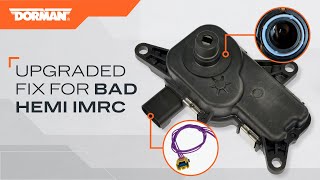
Typical fix: Repair the damaged section of wiring. In many cases, this involves splicing in a new pigtail connector with longer wires to relieve the stress. Dorman offers an OE FIX kit (911-933) specifically for this issue 🎬 See how to restore damaged wiring with this repair kit. which includes a pigtail.
Est. part cost: $25-$60 for a pigtail connector kit. - Blown Fuse ⚪ Low Probability A short in the actuator or its wiring can cause the associated fuse to blow, which will set control circuit codes like P2008 and P2017.
How to confirm: Check the fuse box for the fuse that powers the IMRC circuit. On some models, this has been identified as fuse M21 (20A). If the fuse is blown, it confirms a power issue, likely from a shorted actuator or wire.
Typical fix: Replace the blown fuse. If the fuse blows again immediately, it indicates a persistent short circuit in the actuator or wiring that must be diagnosed and repaired.
Est. part cost: $1-$5 - Stuck or Binding Intake Runner Flaps ⚪ Low Probability Carbon buildup inside the plastic intake manifold can cause the runner flaps to stick, preventing the actuator from moving them through their full range of motion.
How to confirm: With the actuator removed, manually try to move the runner flap linkage. It should move smoothly with little resistance. If it's stuck or requires significant force, the manifold is the issue.
Typical fix: In most cases, the entire intake manifold assembly must be replaced, as the flaps are not serviced separately. This is a significantly more expensive and labor-intensive repair.
Est. part cost: $400-$800
Rare But Worth Checking
- Faulty Powertrain Control Module (PCM): This is extremely rare. All other possibilities, especially the actuator, wiring, and fuses, should be exhaustively ruled out before considering PCM replacement. Some TSBs recommend a PCM software update to improve diagnostic logic for these codes, which should be checked for before hardware replacement.
Diagnosis Steps
- Scan the PCM for any other stored trouble codes. Note codes like P2008, P2016, or P1004 that frequently accompany P2017.
- Check for blown fuses. Specifically, check the fuse for the IMRC system (identified as M21 20A in one forum case) in the under-hood fuse box.
- Locate the IMRC/SRV actuator on the front of the intake manifold, just below the engine cover.
- Inspect the electrical connector and wiring harness going to the actuator. Pay close attention to the area where the harness bends, looking for signs of strain, chafing, or broken wires.
- With the key on and engine off, use a multimeter to verify the actuator connector is receiving correct power (approx. 12V) and has a good ground connection.
- If wiring and fuses are good, use a bidirectional scan tool to command the actuator on and off. Listen for a click and observe the position sensor data to see if it changes. If the actuator does not respond, it has likely failed.
- If you don't have a scan tool, you can remove the actuator (typically held by 2-3 bolts). With the actuator plugged in but removed from the manifold, turn the key on and have an assistant watch to see if the gear on the actuator moves. If it doesn't, it's likely bad.
- With the actuator removed, manually check if the intake runner flaps move freely by turning the linkage. If they are stuck, the intake manifold is the problem.
- If wiring and fuses are good and the flaps move freely, the IMRC actuator is the most likely failed component.
Parts You'll Likely Need
- Intake Manifold Runner Control Actuator
(OEM #53022137AL)— This is the most common failure point for code P2017 on the 5.7L HEMI, as it contains the integrated position sensor that triggers the code. The part number has been superseded multiple times; 53022137AL is the latest version.
Trusted brands: Mopar, Dorman (Part #68513), Standard Motor Products
OEM price range: $150-$220
Aftermarket price range: $85-$150 - IMRC Actuator Connector Pigtail — Needed if the wiring harness is damaged near the connector due to the common issue of the factory harness being too short.
Trusted brands: Dorman (Included in kit 911-933), Various aftermarket pigtails
OEM price range: N/A
Aftermarket price range: $25-$60
Related Codes That Often Appear With This One
- P2008 — P2008 ('Intake Manifold Runner Control Circuit/Open Bank 1') often appears with P2017. This indicates a general electrical fault in the SRV control system, which could be the actuator itself, its wiring, or a blown fuse. [Bulletin #18-103-16 REV. B, 28]
- P2016 — P2016 is the opposite of P2017 ('Intake Manifold Runner Position Sensor Circuit Low'). Seeing it alongside P2017 could indicate an intermittent wiring short or a failing sensor sending erratic signals. [Bulletin #18-103-16 REV. B]
- P1004 — This is a manufacturer-specific code for 'Short Runner Valve Control Performance'. It means the PCM commanded the valve to move and it didn't achieve the expected position in time, which can be caused by a bad actuator or stuck flaps. [Bulletin #18-012-14, 20]
Technical Service Bulletins (TSBs) & Recalls
- Bulletin #18-103-16 REV. B: This TSB involves a PCM software update for 2013-2015 Ram 1500s with the 5.7L engine. It addresses a list of DTCs, including P2017, to improve powertrain system performance and diagnostic accuracy. This suggests that in some cases, a reflash may be required to fix the issue or prevent it from recurring.
- Bulletin #18-012-14: This bulletin for 2013 models also groups P2017 with other SRV circuit and performance codes (P2008, P1004, P2016), indicating a known fault pattern for which a software update was an early remedy.
- Bulletin #18-009-13: While primarily for P1004 on 2009 models, this TSB is relevant as it also lists P2016 and P2017 and calls for a PCM reflash, showing a history of software fixes for this system.
Platform-Specific Known Issues
- Blown Fuse Fix: An owner of a 2011 Ram 5.7L on RamForum.com reported persistent P2008 and P2017 codes even after replacing the actuator and checking wiring. The ultimate solution was a blown 20A fuse in the M21 slot, which resolved the codes immediately after replacement.
- Wiring Harness Too Short: Dorman has identified that the factory wiring harness for the IMRC is often too short, causing strain and failure. They produced a video and an OE FIX kit (911-933) to address this by providing a pigtail to lengthen the harness.
Mechanic-Grade Diagnostic Values
- SRV/IMRC Position Sensor Signal Voltage — expected: Typically 0.5V (closed) to 4.5V (fully open). A specific Dodge example shows expected closed voltage around 1.69V and open around 3.8V.. Failure: A reading consistently above 4.5V, or a static 5V reading, indicates a 'Circuit High' fault.
- SRV/IMRC Actuator Connector - Power Supply — expected: Approximately 12V (battery voltage) on the ASD Relay Output circuit with the ignition on.. Failure: Significantly lower or no voltage indicates an issue with the power supply circuit or a blown fuse.
- SRV/IMRC Actuator Connector - Ground Circuit Resistance — expected: Less than 5.0 Ohms when measured between the harness connector and the PCM.. Failure: Resistance above 5.0 Ohms indicates an open or high resistance in the ground circuit.
Scan Tool Commands That Help
- wiTECH (or capable aftermarket): Short Runner Valve (SRV) Actuator Test or Control State — Use this bidirectional command to actively open and close the SRV. While commanding the valve, monitor the position sensor voltage PID. If the command is sent but the voltage doesn't change and the actuator doesn't make a sound, it strongly suggests a failed actuator or a wiring issue.
- wiTECH: Reprogram Powertrain Control Module (PCM) — TSB #18-012-14 REV. A specifically calls for a PCM software update to address erroneous P2017 codes and improve diagnostic logic. Before replacing hardware, a dealer or equipped shop should check if this update is available and has been applied.
Wiring & Ground Locations
- Engine to Chassis/Body Ground — A primary engine ground strap is typically located on the back of the cylinder head, connecting to the firewall or body. Another ground point is often found on the frame in the driver's side wheel well, forward of the upper control arm.. A poor engine ground can cause floating voltages and erratic sensor readings throughout the engine management system, potentially leading to a false 'Circuit High' code for the SRV sensor.
- SRV Actuator Connector Pinout (Generic) — The 5-pin or 6-pin connector on the SRV actuator itself, located on the front of the intake manifold.. Testing at the connector is critical. A generic 6-pin layout includes: a constant ground, a PCM-supplied ground, a 5V reference signal, a duty-cycle control wire from the PCM, and the position signal wire back to the PCM. Identifying the signal wire (often via a wiring diagram) is key to testing for the high voltage condition directly at the source.
Real Owner Repair Stories
- Mr. DIAGNOSTECH YouTube Channel (2009 Dodge Caliber 2.0L (Note: Different vehicle but identical diagnostic principle for stuck runner flaps)) — Check Engine Light with code P2017, constant 5V reading from the position sensor.
❌ Tried (didn't work) Initial assumption was a failed sensor/actuator or a wiring fault.
✅ What actually fixed it The actuator and sensor were proven to be working correctly when removed from the manifold. The actual cause was heavy carbon buildup inside the intake manifold, which physically prevented the runner flaps from moving. This caused the actuator to be stuck at its limit, resulting in the high voltage reading. The fix was cleaning the intake manifold and replacing the gasket.
OEM Part Supersession History
53022137AE, AF, AG, AH, AI, AJ, AK→53022137AL— Standard part evolution for improved reliability or manufacturing changes.
Heads up: All previous versions are replaced by 53022137AL. While older versions might be found, using the latest 'AL' revision is recommended for the most up-to-date design.
Helpful Videos

Used OEM Parts in Stock
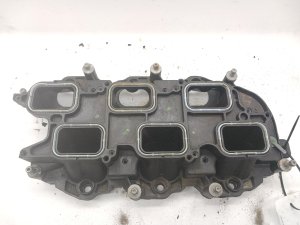


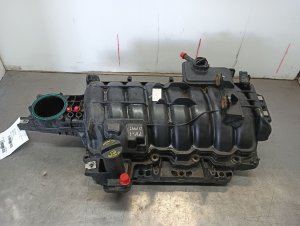

New Aftermarket Parts Available

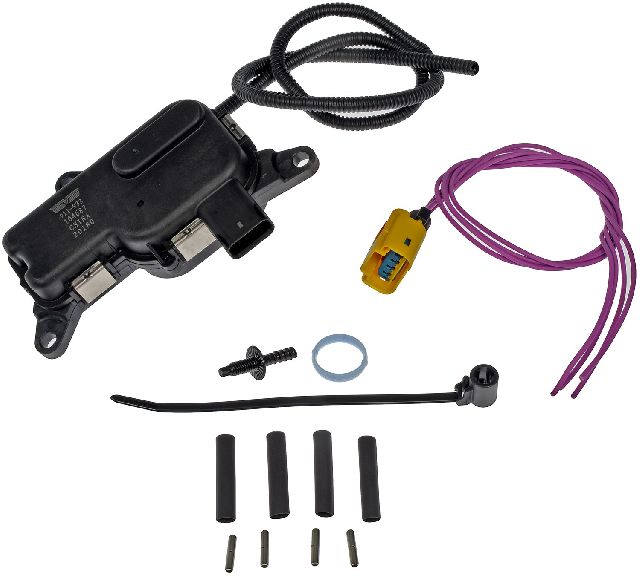


The information in this article is provided for general reference and educational purposes only. Vehicle specifications, procedures, and part compatibility can vary by production date, trim level, and region. Always consult your vehicle's factory service manual and verify part numbers before purchasing or performing repairs. Safety-critical components such as airbags, seat belts, and braking systems should be installed by a qualified professional.
- Ram 1500:
- 🎬 Helpful Videos
- 🛍️ Shop This Part
- What's Unique About the 2013-2020 Ram 1500
- Diagnostic Flowchart
- Symptoms You May Notice
- Most Likely Causes
- Rare But Worth Checking
- Diagnosis Steps
- Parts You'll Likely Need
- Related Codes That Often Appear With This One
- Technical Service Bulletins (TSBs) & Recalls
- Platform-Specific Known Issues
- Mechanic-Grade Diagnostic Values
- Scan Tool Commands That Help
- Wiring & Ground Locations
- Real Owner Repair Stories
- OEM Part Supersession History
- 🎟️ Get 5% Off