

P2016 on 2013-2020 Ram 1500: Intake Manifold Runner Position Sensor Circuit Low Causes & Fixes
This code indicates a low voltage signal from the intake manifold runner position sensor. The most common causes are a faulty sensor, damaged wiring, or a problem with the intake manifold runner control valve itself. The sensor is often located at the back of the intake manifold, making access difficult.
- P2016 on a Ram 1500 points to a low voltage signal from the intake runner position sensor on Bank 1.
- Before replacing parts, carefully inspect the wiring and connector at the back of the intake manifold, as they are prone to damage.
- The most likely culprits are a bad sensor, damaged wiring, or less commonly, a mechanically stuck runner valve.
- Due to the location, accessing the sensor and its wiring can be difficult and may require partial removal of the intake manifold.
- This issue is documented in several manufacturer TSBs, confirming it's a known problem area for this platform.
What's Unique About the 2013-2020 Ram 1500

For the 2013-2020 Ram 1500, particularly those with the 3.6L Pentastar V6 and 5.7L HEMI, the intake manifold is a known area for issues. The manifold is often made of plastic and must be removed for common services like spark plug changes or replacing the notorious oil filter housing that sits beneath it on the 3.6L. This repeated removal and reinstallation can lead to stripped mounting points, cracks, and damage to associated components like the runner position sensor and its wiring. The sensor itself is located at the rear of the manifold on 4th generation (DS) models (up to 2018 and 2019+ 'Classic'), making it susceptible to damage and difficult to access against the firewall. A known issue on some V8 models is insufficient slack in the wiring harness, which can cause the connection to fail over time. On 5th generation (DT) Ram 1500s (2019+), the SRV actuator was moved to the front of the intake manifold.
Diagnostic Flowchart

Tap your situation to follow the diagnostic path that matches what you're seeing on this vehicle.
Generation note: This year range covers the end of the fourth-generation Ram 1500 (DS), which ran until 2018 (and continued as the 'Classic' model), and the beginning of the fifth-generation (DT) from 2019 onwards. While both generations used engines with intake runner control systems (like the 3.6L Pentastar and 5.7L HEMI), the specific intake manifold design and sensor placement can differ. On DS models (2013-2018, and 'Classic' models 2019+), the SRV actuator and sensor are at the rear of the manifold. On the redesigned DT models (2019+), the actuator is at the front. However, the fundamental causes for P2016 (wiring, sensor, mechanical issue) are similar across both generations. TSB 18-103-16 REV. B specifically addresses this code for 2013-2015 models, indicating a known issue early in this range.
Symptoms You May Notice
- Check Engine Light is on
- Reduced engine power and poor acceleration, especially at certain RPMs
- Rough or unstable idle
- Hesitation when accelerating
- Decreased fuel economy
- Engine may feel 'flat' under load
- Replacing the intake manifold when only the external sensor or wiring is faulty.
- Replacing the PCM without verifying that the sensor and its circuit are functioning correctly.
- Failing to check for a PCM software update. TSB 18-103-16 REV. B recommends a reflash for a list of codes including P2016, which may be the only fix required.
Most Likely Causes

- Faulty Intake Manifold Runner Position Sensor 🔴 High Probability The sensor can fail internally from heat cycles and vibration, causing an internal short that pulls the signal voltage to ground. Its location at the rear of the intake manifold on DS models makes it susceptible to physical damage during other repairs like spark plug changes or transmission work.
How to confirm: With the key on and engine off, use a scan tool to view live data for 'Intake Manifold Runner Position Bank 1 (Voltage)'. It will likely read near 0V. Disconnect the sensor; if the voltage on the scan tool jumps to 5V (and may set a P2017 'Circuit High' code), the sensor is shorted internally and is bad. If the voltage stays at 0V, the problem is in the wiring.
Typical fix: Replace the intake manifold runner position sensor. On some engines/years, this sensor is integrated into the runner control valve/actuator and replaced as one unit. On others, it may be part of the entire intake manifold assembly. 🎬 See this walkthrough on how to remove the Hemi intake
Est. part cost: $50-$220 - Wiring or Connector Issue 🟡 Medium Probability The wiring harness to the sensor is in a hot, tight space at the back of the engine. Insufficient harness slack from the factory is a known issue, leading to stretched or broken wires. Wires can also chafe against the engine block or firewall, causing a short to ground. Connectors can also corrode or fill with moisture.
How to confirm: Visually inspect the wiring harness leading to the sensor for any signs of melting, chafing, or breaks. Unplug the connector and check for corrosion, moisture, or bent/broken pins. Perform a continuity test from the sensor connector to the PCM connector to rule out an open or short circuit. A 'wiggle test' on the harness while watching live data can reveal intermittent shorts.
Typical fix: Repair the damaged section of wiring or replace the connector pigtail. 🎬 Watch: How to restore damaged wiring with a repair kit Dorman offers an OE FIX repair kit for some applications to address the lack of slack.
Est. part cost: $20-$70 - Stuck or Binding Intake Manifold Runner Valve ⚪ Low Probability Carbon buildup can cause the runner flaps to stick, preventing them from moving through their full range. This can cause the position sensor to read an incorrect value that doesn't match the PCM's command. While this is a mechanical issue, it can sometimes present with circuit codes if the actuator strains and affects the sensor reading.
How to confirm: With the engine off, try to manually move the runner valve linkage (if accessible). Use a scan tool to command the runners to open and close while observing the live data from the position sensor to see if it moves smoothly or gets stuck. Physical inspection after removing the intake manifold is the most definitive way to confirm.
Typical fix: In some cases, cleaning the intake manifold to remove carbon buildup may free the runners. More often, if the internal mechanism is broken or worn, the entire intake manifold assembly needs to be replaced.
Est. part cost: $200-$600
Rare But Worth Checking
- Faulty Powertrain Control Module (PCM): This is rare. All other possibilities, such as sensor, wiring, and mechanical faults, should be exhaustively ruled out before considering PCM replacement. TSB 18-103-16 REV. B does involve a PCM software update to address this and other codes, suggesting a logic issue can be a cause.
Diagnosis Steps
- Connect an OBD-II scanner and check for P2016 and any other related codes (e.g., P2017, P2008, P1004). Note the freeze-frame data.
- Use the scanner's live data function to monitor 'Intake Manifold Runner Position Sensor Bank 1 (Voltage)'. With the code present, it will likely be near 0 volts.
- Perform the 'Unplug Test': Turn the engine off and disconnect the electrical connector from the runner position sensor at the back of the intake manifold. Turn the key back to the 'On' position (engine off).
- Check the scanner's live data again. If the voltage has jumped to ~5.0V (or a P2017 code is now set), the wiring is good and the sensor has an internal short. The sensor needs to be replaced.
- If the voltage remains at 0V with the sensor unplugged, the signal wire is shorted to ground somewhere in the harness between the sensor and the PCM.
- Visually inspect the wiring harness for obvious damage, melting, or chafing against the engine, firewall, or other components. Pay close attention to areas where the harness bends or is secured.
- If no visual damage is found, use a multimeter to check for continuity to ground on the signal wire. Trace the circuit back to the PCM to find the short.
- If the unplug test points to a good circuit, verify the sensor's power and ground. With the key on, engine off, use a multimeter to confirm a 5-volt reference and a good ground at the sensor connector.
- If the sensor, wiring, and power/ground are all confirmed good, investigate for a PCM software issue. Check if TSB 18-103-16 REV. B applies to your vehicle, as a PCM reflash may be the required fix.
- As a final step, consider a mechanical issue like a stuck runner flap due to carbon buildup, which would require removing the intake manifold for inspection. 🎬 Watch: Step-by-step guide to replacing the 3.6L lower intake manifold
Parts You'll Likely Need
- Intake Manifold Runner Position Sensor / Actuator
(OEM #Mopar 4593839AB, 68166449AA (Note: verify by VIN, may be part of actuator))— This is the most common failure point, either due to internal failure or damage. Often sold as an assembly with the control motor/actuator.
Trusted brands: Mopar, Dorman (e.g., 911-933, 911-904 for older models), Standard Motor Products (e.g., IMA108)
OEM price range: $80-$200
Aftermarket price range: $50-$150 - Upper Intake Manifold — Required if the runner flaps are broken, the sensor is integrated and not sold separately, or if the manifold itself is cracked or damaged.
Trusted brands: Mopar, Dorman
OEM price range: $350-$600
Aftermarket price range: $200-$450 - Wiring Harness Pigtail / Repair Kit — Needed if the connector or wiring right at the sensor is damaged.
Related Codes That Often Appear With This One
- P2017 — This is for 'Intake Manifold Runner Position Sensor Circuit High,' which is the opposite fault for the same sensor. Seeing P2016 turn into P2017 after unplugging the sensor is a key diagnostic step. Seeing both intermittently may indicate a wiring problem.
- P2008 — This code is for 'Intake Manifold Runner Control Circuit/Open.' It points to an issue with the solenoid that actuates the runners, which is part of the same system. The provided TSBs list these codes together.
- P1004 — This code is for 'Short Runner Valve Control Performance.' It indicates a mechanical or performance-related issue with the runner system, often appearing alongside the electrical circuit codes like P2016. TSBs and repair information often group these codes.
Technical Service Bulletins (TSBs) & Recalls
- 18-103-16 REV. B
- 1810016
- 18-012-14
- 18-003-10 (Referenced by Dorman for wiring issue)
Platform-Specific Known Issues
- TSB #18-103-16 REV. B: This is a critical TSB for 2013-2015 models with the 3.6L, 4.7L, or 5.7L engines. It addresses a list of DTCs, including P2016, P2017, P2008, and P1004. The prescribed fix is to reprogram the Powertrain Control Module (PCM) with new software. This should be investigated before replacing any hardware.
- Wiring Harness Tension: On some 5.7L HEMI engines, the factory wiring harness for the short runner valve (SRV) actuator/sensor may be too short. Over time, engine movement and vibration can cause the wires to stretch and break or pull the connector loose, triggering codes P2016, P2017, or P1004.
- Location and Access: The sensor/actuator is located on the back of the intake manifold against the firewall. Access is very tight, especially on the 5.7L HEMI. A user on RamForum.com confirmed this location and the difficulty in accessing it. This makes it prone to damage when other work is performed in that area.
Mechanic-Grade Diagnostic Values
- Sensor Signal Voltage (potentiometer type) — expected: ~0.5V (closed) to ~4.5V (open). Failure: Stuck near 0V for a P2016 code.
- Wiring Harness Resistance — expected: Below 5.0 Ohms on signal, power, and ground circuits.. Failure: Resistance above 5.0 Ohms indicates an open or high resistance in the wire.
- Signal Wire Resistance to Ground — expected: Above 100 Ohms.. Failure: Resistance below 100 Ohms indicates a short to ground.
- SRV Actuator Power Supply (ASD Relay Output) — expected: Bright illumination with a 12-volt test light connected to ground.. Failure: A dim or no light indicates an open or high resistance in the power supply circuit.
Scan Tool Commands That Help
- wiTECH or equivalent professional scan tool: SRV Solenoid Control State / Actuator Test — Use this bidirectional command with the key on, engine off to command the runner valve open and closed. You can physically watch the actuator linkage for movement (if visible) and monitor the position sensor voltage PID on the scan tool to see if it responds correctly. This helps differentiate a mechanical problem (stuck valve) from an electrical one.
Wiring & Ground Locations
- Short Runner Valve (SRV) Connector — On 4th Gen (DS) and 'Classic' models, it's at the rear of the intake manifold, against the firewall, making it very difficult to access. On 5th Gen (DT) models (2019+), it's at the front of the intake manifold.. This is the primary connection point for the sensor and actuator. It is a common failure point due to heat exposure and lack of harness slack stressing the wires and pins.
- SRV Circuits (5.7L) — Within the engine wiring harness between the PCM and the SRV connector.. For detailed electrical tracing on the 5.7L, the specific circuit designators are often: K238 (SRV Control), K237 (Signal), Z903/Z908 (Ground), and F344 (ASD Relay Power). Identifying these on a wiring diagram is crucial for pinpoint testing.
- Engine Ground Strap — There is an important ground strap located at the very back of the driver's side cylinder head.. A loose or corroded main engine ground can cause a variety of electrical issues and sensor faults. While not specific to P2016, verifying all main grounds is a critical step when diagnosing any circuit code.
Real Owner Repair Stories
- RamForum.com user 'Wild one' (2013 Ram 2500 5.7L, 36,000 miles) — Persistent P1004 code (Short Runner Valve Control Performance)
❌ Tried (didn't work) Dealer replaced the SRV actuator., Dealer replaced the entire intake manifold., Dealer replaced and reprogrammed the PCM.
✅ What actually fixed it The code remained after replacing all major components. Chrysler's 'Star' engineering support advised the dealer that the next step was to replace the entire engine wiring harness, suspecting an intermittent short or open within the harness that was not detectable by basic tests. - YouTube channel 'Rainman Ray's Repairs' (2013 Ram 1500 5.7L Hemi, 170,000 miles) — Intermittent check engine light with code P1004, shutter under load.
❌ Tried (didn't work) A dealership had previously replaced the Short Runner Valve (SRV) actuator, but the code returned.
✅ What actually fixed it The technician found that wiring for the MAP sensor, which runs in the same harness as the SRV wiring near the back of the intake, had melted and shorted together. Repairing the melted MAP sensor wiring resolved the SRV-related code.
When the Usual Fixes Don't Work
- In several documented cases, particularly with the related P1004 performance code, replacing the most common parts did not solve the issue. One owner reported that after a dealership replaced the SRV actuator, the intake manifold, and the PCM, the code was still present. The final diagnosis pointed to a fault within the main engine wiring harness itself, which is often overlooked due to the high cost and labor involved in replacement. This highlights that for persistent SRV-related codes, the wiring harness should be considered a primary suspect after the sensor and actuator have been ruled out, rather than immediately suspecting the expensive PCM.
OEM Part Supersession History
68166449AA→Discontinued— Part is no longer manufactured by Mopar.
Heads up: This part number for the SRV actuator is listed by Mopar as discontinued, meaning aftermarket or used parts may be the only option if this specific component fails.
Model Year Variations Within This Range
- 2013-2018 (DS) & 2019+ (Classic): The Short Runner Valve (SRV) actuator and its integrated position sensor are located at the rear of the intake manifold, close to the firewall.
- 2019-2020 (DT 'New Body Style'): The SRV actuator and sensor assembly was moved to the front of the intake manifold. This makes access for diagnosis and replacement significantly easier than on the previous generation. Swapping to this style of manifold on an older truck requires a wiring harness extension.
Helpful Videos
Used OEM Parts in Stock
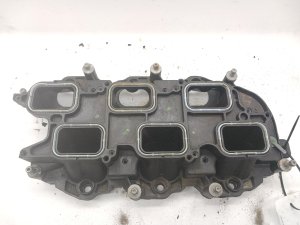


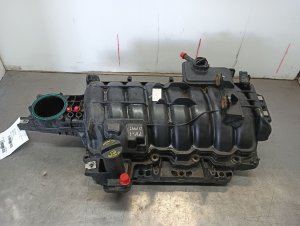

New Aftermarket Parts Available

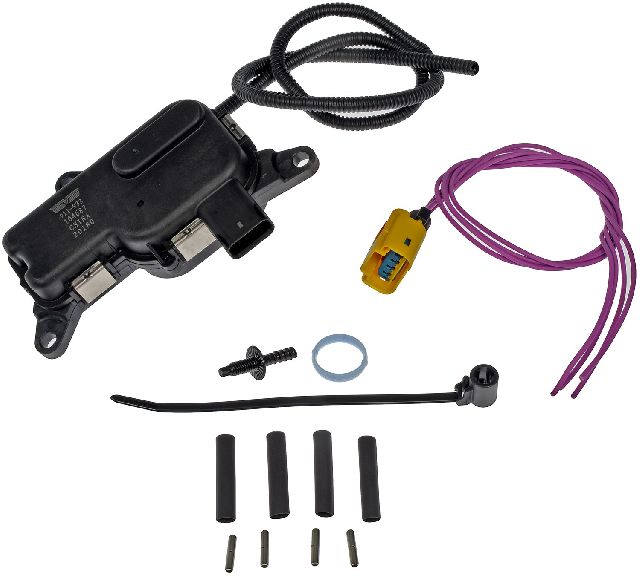


The information in this article is provided for general reference and educational purposes only. Vehicle specifications, procedures, and part compatibility can vary by production date, trim level, and region. Always consult your vehicle's factory service manual and verify part numbers before purchasing or performing repairs. Safety-critical components such as airbags, seat belts, and braking systems should be installed by a qualified professional.
- Ram 1500:
- 🎬 Helpful Videos
- 🛍️ Shop This Part
- What's Unique About the 2013-2020 Ram 1500
- Diagnostic Flowchart
- Symptoms You May Notice
- Most Likely Causes
- Rare But Worth Checking
- Diagnosis Steps
- Parts You'll Likely Need
- Related Codes That Often Appear With This One
- Technical Service Bulletins (TSBs) & Recalls
- Platform-Specific Known Issues
- Mechanic-Grade Diagnostic Values
- Scan Tool Commands That Help
- Wiring & Ground Locations
- Real Owner Repair Stories
- When the Usual Fixes Don't Work
- OEM Part Supersession History
- Model Year Variations Within This Range
- 🎟️ Get 5% Off