

P2015 on 2009-2016 Volkswagen CC: Intake Manifold Runner Fault Causes and Fixes
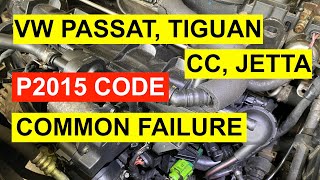
On a 2009-2016 VW CC with the 2.0T TSI engine, code P2015 almost always points to a failed intake manifold. The plastic actuator linkage or its internal stop wears out, causing the position sensor to report an implausible signal. The most common fix is an aftermarket repair bracket (~$60) that limits the actuator's movement. Other solutions include replacing the entire intake manifold (~$250-$500) or, in some cases, addressing vacuum line restrictions.
- P2015 on a 2.0T TSI engine almost always means the intake manifold linkage has failed.
- Before paying for any repairs, contact a VW dealer with your VIN to check for coverage under the 10-year/120,000-mile extended warranty.
- The most affordable and a very common DIY fix is installing an aftermarket repair bracket, which takes less than an hour and costs under $80.
- If you opt for a full replacement, it's a good opportunity to have the intake ports cleaned of carbon buildup at the same time.
What's Unique About the 2009-2016 Volkswagen CC

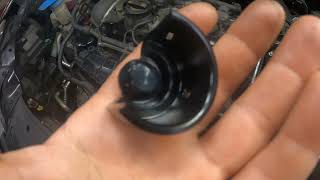
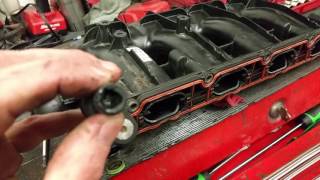
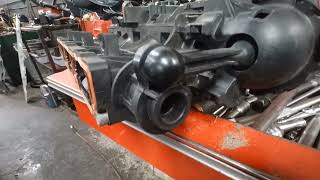
This issue is exceptionally common on Volkswagen's 2.0T TSI engines (codes CCTA/CBFA) from this era due to the design of the plastic intake manifold. The actuator linkage and its small plastic stop are known to wear down or break from heat cycles and vibration, causing the actuator arm to travel too far, which triggers the P2015 code. The position sensor itself is rarely the problem, but because it is integrated into the manifold, a complete replacement was the only official OEM solution for years. This widespread issue led VW to issue an extended warranty (10 years/120,000 miles) and prompted the creation of popular aftermarket repair brackets as a cost-effective alternative that prevents the over-rotation.
🎬 Watch: A detailed explanation of why these manifolds fail.Diagnostic Flowchart

Tap your situation to follow the diagnostic path that matches what you're seeing on this vehicle.
Symptoms You May Notice
- Check Engine Light (MIL) is on
- Reduced engine power and performance, especially at higher RPM
- Rough or unstable idle
- Decreased fuel economy
- Possible vacuum leak noise or a 'whoosh' sound when the actuator arm pops out
- Engine enters 'Limp Mode'
- Replacing only the position sensor, which is not possible as it's integrated into the manifold.
- Assuming the actuator motor itself has failed, when it's usually the plastic linkage or internal stop that is the problem.
- Replacing the intake manifold without first checking for simple vacuum line restrictions as advised by VW TSB 2045138.
Most Likely Causes


- Worn or Broken Intake Manifold Actuator Linkage/Stop 🔴 High Probability The actuator mechanism uses a small plastic stop that wears down or breaks from constant heat and vibration, allowing the arm to over-rotate. This is a well-documented design flaw acknowledged by VW through TSBs and a warranty extension.
How to confirm: Visually inspect the black actuator arm on the driver's side of the intake manifold. Try to gently wiggle it. If it has excessive play or has popped out of its socket, the internal stop is broken. This confirms the most common failure. 🎬 See how to visually diagnose the P2015 code yourself.
Typical fix: Install an aftermarket P2015 repair bracket to limit the arm's travel, or replace the entire intake manifold assembly.
Est. part cost: $50-$70 for a repair bracket, $250-$500 for a new manifold. - Carbon Buildup on Intake Flaps 🟡 Medium Probability Direct injection engines like the 2.0T TSI are highly susceptible to carbon buildup on the intake valves and flaps, as fuel is not sprayed over them to keep them clean. Heavy deposits can restrict the movement of the flaps, causing a range/performance error.
How to confirm: This requires removing the intake manifold to visually inspect the flaps and intake ports for heavy, thick carbon deposits that could physically restrict movement.
Typical fix: Perform a manual carbon cleaning (walnut blasting is the preferred method) of the intake ports and flaps. This is often done at the same time as an intake manifold replacement.
Est. part cost: $20-$50 for cleaning supplies/tools, or $400-$800 for professional service. - Clogged or Leaking Vacuum Lines ⚪ Low Probability Vacuum lines can become brittle and crack over time, or become clogged with debris. VW TSB V241704 / 2045138 specifically mentions that debris can clog vacuum lines or 'T' fittings, affecting manifold operation and causing P2015.
How to confirm: Inspect all vacuum lines connected to the intake manifold actuator for cracks, breaks, or blockages. A vacuum gauge can be used to test for proper vacuum supply at the actuator. TSB 2045138 suggests using a scan tool (MVB 143, field 3) while revving the engine to see if the flap position changes from 0% to 100% instantly; a slow change indicates a restriction.
Typical fix: Replace the damaged or clogged vacuum hose or 'T' fitting.
Est. part cost: $10-$40. - Failed Intake Manifold Runner Position Sensor ⚪ Low Probability While possible, the sensor itself is generally reliable. The code is almost always triggered by a mechanical issue (linkage/stop failure) rather than an electrical failure of the sensor. The sensor is a Hall effect type that reads the position of a magnet on the actuator arm.
How to confirm: After confirming the linkage is intact and flaps move freely, you would test the sensor's circuit and signal with a multimeter or advanced scan tool. However, this is rarely the root cause. Some forum users have replaced the manifold only to have the code return, suggesting a wiring or other issue, but this is uncommon.
Typical fix: The sensor is integrated into the intake manifold and not sold separately by VW, so the entire intake manifold must be replaced.
Est. part cost: $250-$500 for a new manifold.
Rare But Worth Checking
- Clogged screen in the vacuum pump: One owner on a forum reported that after replacing the manifold without success, the P2015 code was finally resolved by cleaning and then removing a small, clogged screen inside the vacuum pump that was restricting vacuum flow. This corroborates TSBs pointing to vacuum restrictions as a possible cause.
- Faulty Actuator Motor: While the linkage is the most common failure, the electric motor (V157) that drives the arm can also fail, though it is less frequent. In some cases, cleaning the motor's internals of carbon dust has resolved the issue.
Diagnosis Steps
- Scan the vehicle's ECM for trouble codes to confirm P2015 and any other related codes like P2004, P2014, or misfires.
- Remove the engine cover. Locate the intake manifold actuator on the driver's side of the engine, near the oil filter housing.
- Visually inspect the actuator arm and its linkage. Gently push on the arm; if it pops out of the manifold, the internal stop is broken. This confirms the most common failure.
- If the linkage seems intact, check for vacuum restrictions per TSB 2045138. Inspect the vacuum lines to the actuator for cracks or blockages. Use a scan tool (like VCDS) to monitor Measuring Block 142, field 3 while revving the engine; a slow response indicates a vacuum restriction.
- If the linkage is broken/loose, the cause is found. The two main repair options are installing a P2015 repair bracket or replacing the entire intake manifold.
- If the linkage and vacuum supply are fine, the issue could be severe carbon buildup preventing flap movement. This requires manifold removal for inspection.
- Before paying for repairs, contact a VW dealer with your VIN. Check if the vehicle is covered by the Intake Manifold Limited Warranty Extension (10 years/120,000 miles).
- After replacing the manifold, an adaptation process using a diagnostic tool like VCDS or ODIS is required.
Parts You'll Likely Need
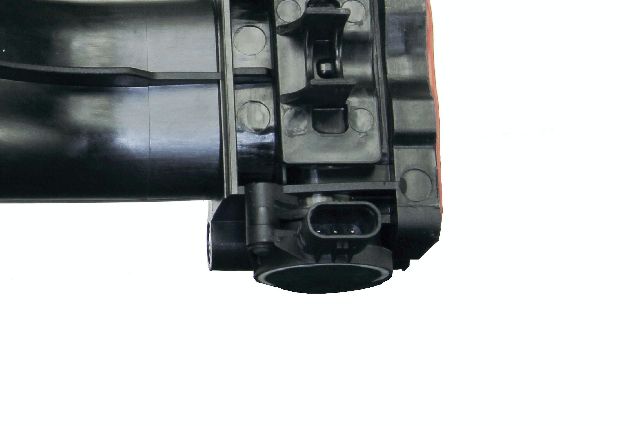
- Intake Manifold Assembly
(OEM #06J133201BH)— This is the official OEM fix, replacing the entire unit including the faulty linkage, integrated sensor, and actuator motor. It is the latest revision and resolves all potential failure points within the manifold. This part number supersedes 06J133201AL, 06J133201AS, 06J133201BD, and 06J133201G.
Trusted brands: Genuine Volkswagen/Audi, URO Parts, Vaico
OEM price range: $350-$500
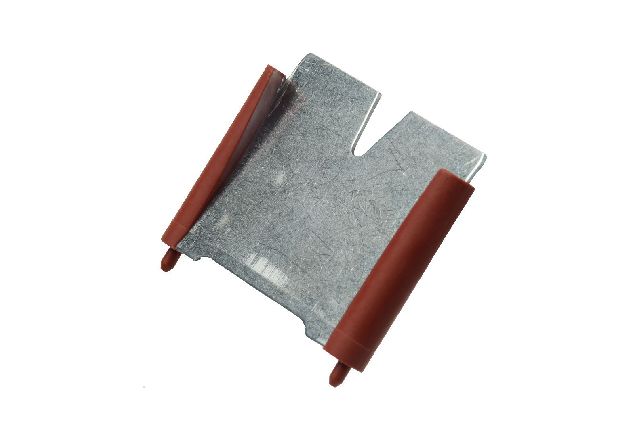
Aftermarket price range: $200-$350 - P2015 Repair Bracket — This is a popular, cost-effective aftermarket solution that provides a new, hard stop for the actuator arm, preventing it from over-traveling and triggering the code. It is only a valid fix if the failure is a worn stop and not an internally broken flap mechanism.
Trusted brands: Dieselgeek, ECS Tuning, URO Parts
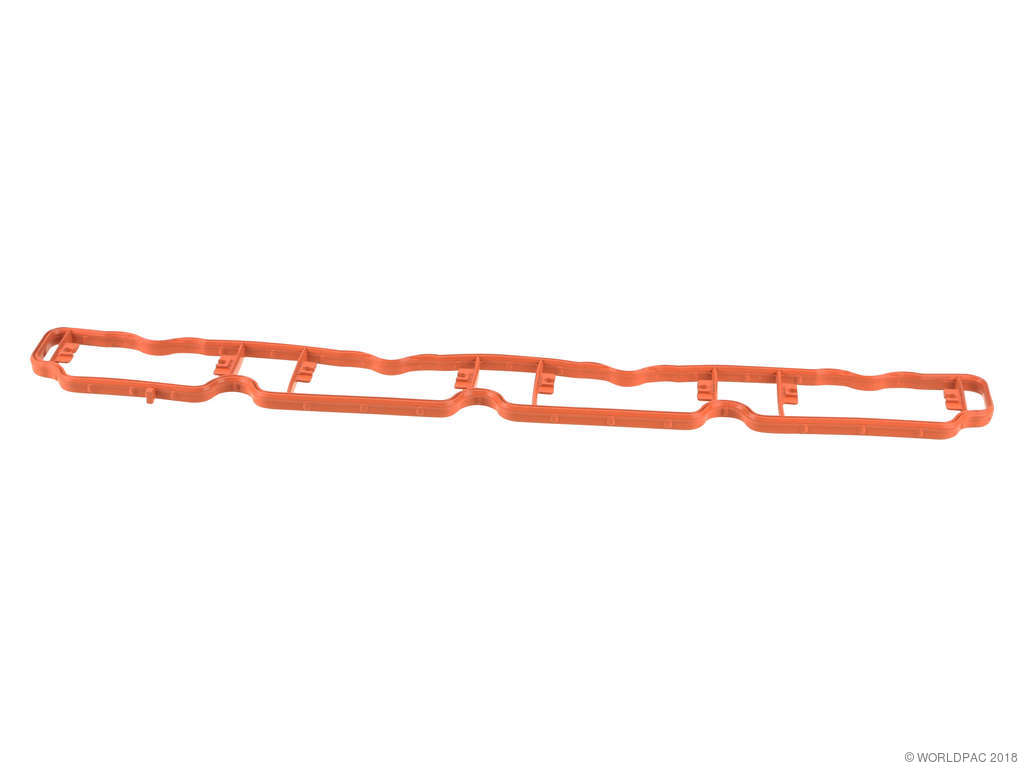
Aftermarket price range: $50-$70 - Intake Manifold Gasket
(OEM #06F129717D)— Required when replacing the intake manifold to ensure a proper seal against the cylinder head. Often included with a new manifold assembly.
Trusted brands: Victor Reinz, Elring, Genuine Volkswagen
OEM price range: $20-$30
Aftermarket price range: $10-$20
Related Codes That Often Appear With This One
- P2004 — This code for 'Intake Manifold Runner Control Stuck Open' often appears with P2015 as it relates to the same system's inability to function correctly.
- P2014 — This is a general circuit fault for the same sensor and can be triggered by the same mechanical failure. TSB 2038161 and 2045138 both group P2014 and P2015 together.
- P0300, P0301, P0302, P0303, P0304 — If the broken linkage creates a significant vacuum leak where the actuator arm pops out of the manifold, it can cause a lean condition and subsequent engine misfires.
- P0101 — A faulty intake manifold or a vacuum leak from it can directly cause the airflow metering issues that trigger a P0101 (Mass Air Flow Sensor Circuit Range/Performance) code.
Technical Service Bulletins (TSBs) & Recalls
- V241704 / 2045138: Supersedes earlier TSBs. Advises checking for vacuum line/tee restrictions from debris before replacing the manifold for DTCs P2004, P2014, and P2015. Also notes an improved manifold design.
- V241504 / 2038161: Supersedes V241501. Discusses diagnosis for P2014 or P2015 faults caused by intake manifold failure and points to an improved manifold design as the production solution.
- VWP-20-03: This is the policy bulletin detailing the Intake Manifold Limited Warranty Extension to 10 years or 120,000 miles for certain models including the CC.
Platform-Specific Known Issues
- Volkswagen issued an extended warranty (VWP-20-03) for the intake manifold on many 2.0T TSI engines (CCTA/CBFA), extending coverage to 10 years or 120,000 miles from the in-service date. Owners should always check with a dealer to see if their vehicle is covered before paying for repairs.
- The failure is so common that multiple aftermarket companies have designed specific repair brackets. The Dieselgeek bracket is frequently cited in forums and videos as a reliable fix.
- A Reddit user on r/Volkswagen with a rebuilt title car, ineligible for the warranty, fixed a recurring P2015 code by using an updated OEM manifold part after a first replacement failed.
Mechanic-Grade Diagnostic Values
- Intake Manifold Runner Position Sensor (G336) Voltage — expected: Approximately 4.5V when flaps are closed (idle) and decreases to approximately 1.2V when flaps are fully open.. Failure: Voltage is stuck, does not change smoothly, or the 'Runner Flap B1 Position Offset' value in VCDS is not ~4.5V at startup.
- VCDS Live Data - Measuring Block 142 - Flap Position (%) — expected: At idle, the flap position should be near 0-5%. As engine RPMs increase over 3,000 RPM, it should move toward 95-99%.. Failure: The actual position value is stuck (e.g., at 100% or 70%), does not match the specified position, or does not change when revving the engine.
Scan Tool Commands That Help
- VCDS (VAG-COM): [01-Engine] -> [Basic Settings - 04] -> Group 142 -> [Go!] — To run the intake manifold flap adaptation. This is required after replacing the intake manifold or actuator to teach the ECU the new component's end stops. An 'ERROR' message at the end of the adaptation indicates a problem.
- VCDS (VAG-COM): [01-Engine] -> [Measuring Blocks - 08] -> Group 142 — For live diagnosis. This allows you to monitor the 'specified' vs 'actual' position of the flaps in real-time while revving the engine to see if the system is responding to commands.
Wiring & Ground Locations
- J623 — Engine Control Unit, located centrally in the plenum chamber at the base of the windshield.. This module controls the V157 motor and reads data from the G336 sensor. All related wiring terminates here.
- V157 Motor Connector Pinout (TDI reference) — The 5-pin electrical connector on the intake manifold flap motor.. Allows for continuity testing of the harness between the actuator motor and the ECU. Pinout for TDI (likely similar for TSI): Pin 1 to ECU Pin 10, Pin 2 to ECU Pin 27, Pin 3 to ECU Pin 51 (Ground), Pin 4 to ECU Pin 35, Pin 5 to ECU Pin 50.
- T94 / T60 — The 94-pin and 60-pin main connectors for the Engine Control Unit (J623).. These are the primary connection points for testing ECU-side wiring for the intake manifold components.
Real Owner Repair Stories
- YouTube channel 'European Auto Repair' (2013 VW GTI (2.0T TSI engine)) — P2015 fault code.
❌ Tried (didn't work) The mechanic did not attempt other fixes, immediately identifying the common failure.
✅ What actually fixed it Installed an ECS Tuning aftermarket repair bracket. The mechanic noted that care must be taken not to overtighten the bracket's set screws, as this can cause the flap mechanism to bind and not return properly. The bracket successfully limited the arm's travel and resolved the code. - YouTube channel 'Monika Borodina' (VW Passat (TDI engine, but same principle)) — Intermittent P2015 check engine light.
❌ Tried (didn't work) A previous repair attempt with a bracket had failed.
✅ What actually fixed it The owner discovered the existing repair bracket was installed incorrectly and was loose, not preventing the actuator arm from over-traveling. The final fix was to correctly reinstall the bracket, ensuring it hooked behind the plastic mechanism and was held securely. This prevented the over-travel and cleared the code. - YouTube channel 'Auto Anatomy' (VW Jetta Diesel (TDI)) — P2015 fault code.
❌ Tried (didn't work) Owner wanted to avoid the expensive dealership quote of ~$900 for a full manifold replacement.
✅ What actually fixed it A $70 repair bracket from Dieselgeek.com was installed in approximately 15 minutes. After installation and clearing the codes, the check engine light on the dashboard turned off, indicating a successful repair.
When the Usual Fixes Don't Work
- While the overwhelming consensus is that the P2015 code is caused by a mechanical failure of the manifold linkage and almost never the sensor itself, there is documented evidence of exceptions. In one case, a vehicle owner replaced the entire intake manifold with a new unit, but the P2015 code persisted and the VCDS adaptation would not complete. The ultimate cause was found to be a faulty position sensor (G336) that was defective from the factory on the brand-new manifold. Replacing just the sensor on the new manifold finally resolved the issue. This demonstrates that while extremely rare, a direct sensor failure can be the root cause, even with a newly installed part.
OEM Part Supersession History
06J133201G, 06J133201AL, 06J133201AS, 06J133201BD, 06J133201AD→06J133201BH— Updated design to address the common failure of the runner flap actuator mechanism and stop.
Heads up: This part is for the transverse 2.0T TSI engine (CCTA/CBFA) only and is not compatible with FSI or diesel engines.
Model Year Variations Within This Range
- 2009-2016 (approx.): The design of the intake manifold at the actuator pivot point can vary. Some manifolds have a flush surface, while others have a small protruding piece of plastic. Aftermarket repair brackets often come with two different shims (one fat, one thin) to accommodate this difference, and using the correct one is critical for proper fitment.
Helpful Videos

Used OEM Parts in Stock

New Aftermarket Parts Available



The information in this article is provided for general reference and educational purposes only. Vehicle specifications, procedures, and part compatibility can vary by production date, trim level, and region. Always consult your vehicle's factory service manual and verify part numbers before purchasing or performing repairs. Safety-critical components such as airbags, seat belts, and braking systems should be installed by a qualified professional.
- Volkswagen CC:
- 🎬 Helpful Videos
- 🛍️ Shop This Part
- What's Unique About the 2009-2016 Volkswagen CC
- Diagnostic Flowchart
- Symptoms You May Notice
- Most Likely Causes
- Rare But Worth Checking
- Diagnosis Steps
- Parts You'll Likely Need
- Related Codes That Often Appear With This One
- Technical Service Bulletins (TSBs) & Recalls
- Platform-Specific Known Issues
- Mechanic-Grade Diagnostic Values
- Scan Tool Commands That Help
- Wiring & Ground Locations
- Real Owner Repair Stories
- When the Usual Fixes Don't Work
- OEM Part Supersession History
- Model Year Variations Within This Range
- 🎟️ Get 5% Off