

P2015 on 2019-2020 Nissan Altima: Cold Weather Intake Manifold Fixes
On a 2019-2020 Nissan Altima, the P2015 code is almost always triggered by starting the engine in extreme cold (below 0°F / -18°C). The official fix from Nissan is to replace the entire intake manifold assembly with an updated part. This is not a simple sensor swap and is a known issue documented in a Technical Service Bulletin (TSB).
- P2015 on a 2019-2020 Altima is very different from other cars; it's specifically linked to starting in extreme cold.
- The problem is well-documented by Nissan in TSB NTB20-083A.
- Do not just replace the sensor. The official and correct repair is to replace the entire intake manifold assembly with the updated part (14001-6CA1B).
- This code is often accompanied by P2004, which points to the same root cause.
- While you can drive the car, expect reduced performance and fuel economy until it is repaired.
What's Unique About the 2019-2020 Nissan ALTIMA
For the 2019-2020 Altima with the PR25DD engine, this code is uniquely tied to cold weather. Nissan issued a Technical Service Bulletin (TSB) NTB20-083A specifically addressing that P2015 (often along with P2004) can be stored after starting the engine in temperatures below 0°F (-18°C). Unlike on many other vehicles where this code points to a faulty sensor or actuator, on this specific Altima the prescribed fix is the replacement of the entire intake manifold assembly due to an internal failure induced by the cold. The original manifold part has been superseded by an updated version.
Diagnostic Flowchart
Tap your situation to follow the diagnostic path that matches what you're seeing on this vehicle.
Symptoms You May Notice
- Check Engine Light is on
- Reduced engine power, especially during acceleration
- Rough or unstable idle
- Decreased fuel economy
- Replacing only the IMRC position sensor. On the 2019-2020 Altima, the TSB-documented issue requires replacing the entire manifold assembly, not just the sensor, to resolve the cold-weather-related failure.
Most Likely Causes
- Internal Intake Manifold Failure Due to Extreme Cold 🔴 High Probability Nissan Technical Service Bulletin NTB20-083A directly links this code on 2019-2020 Altimas to starting the engine in temperatures below 0°F (-18°C). This suggests a component within the manifold assembly is susceptible to failing in these conditions. The repair involves an updated, superseded part number, indicating a design revision.
How to confirm: Confirm that the code appeared after a cold start in freezing temperatures by checking freeze frame data. A technician will follow the diagnostic steps in the Electronic Service Manual (ESM) to rule out wiring or other issues first. If no other fault is found, they will reference TSB NTB20-083A and replace the manifold.
Typical fix: Replace the entire intake manifold assembly with the updated OEM part (14001-6CA1B) and all associated single-use gaskets as specified in the TSB.
Est. part cost: $900-$1300
Rare But Worth Checking
- Wiring or Connector Issue: While the TSB is the most likely cause, it's still possible for a damaged wire or corroded connector in the IMRC position sensor circuit to trigger the code. The TSB directs technicians to perform standard diagnostics from the service manual first to eliminate this possibility before replacing the manifold.
- Faulty IMRC Position Sensor or Actuator: On most cars, a faulty sensor or actuator is the primary cause. While Nissan's TSB points to a manifold replacement for this specific vehicle, a failure of the individual component is still a remote possibility, though less likely given the known cold-weather issue.
Diagnosis Steps
- Use an OBD-II scanner to confirm that P2015 is present and check if P2004 is also stored.
- Note the freeze frame data to see the conditions (especially ambient temperature) under which the code was set.
- Interview the driver to determine if the Check Engine Light appeared after starting the vehicle in very cold weather (below 0°F / -18°C).
- Perform the standard DTC diagnosis per the Electronic Service Manual (ESM) to rule out other problems.
- Visually inspect the wiring harness and connectors going to the intake manifold runner position sensor for any signs of damage, corrosion, or loose connections.
- If the code was set in extreme cold and no wiring or other issues are found, follow the guidance in Nissan TSB NTB20-083A.
- The TSB directs the technician to replace the intake manifold assembly and all specified single-use gaskets.
Parts You'll Likely Need
- Intake Manifold Assembly
(OEM #14001-6CA1B)— This is the official updated repair part specified by Nissan to correct the root cause of the failure that occurs in extreme cold weather. It supersedes the original part, 14001-6CA0C.
Trusted brands: Nissan (OEM)
OEM price range: $975-$1378
Aftermarket price range: Not commonly available. - Intake Manifold Gasket
(OEM #14035-6CA0A)— This is a single-use gasket that must be replaced anytime the intake manifold is removed, as per TSB NTB20-083A.
Trusted brands: Nissan (OEM), Fel-Pro, Mahle
OEM price range: $20-$30
Aftermarket price range: $10-$20 - Insulator Assembly - Intake Port
(OEM #110D0-6CA0A)— This is a single-use part listed in TSB NTB20-083A that must be replaced during the intake manifold replacement.
Trusted brands: Nissan (OEM)
OEM price range: $15-$25
Aftermarket price range: N/A - Gasket - Insulator
(OEM #110D2-6CA0A)— This is a single-use gasket listed in TSB NTB20-083A that must be replaced during the intake manifold replacement.
Trusted brands: Nissan (OEM)
OEM price range: $5-$10
Aftermarket price range: N/A - Gasket - EGR Guide Tube
(OEM #14722-6CA0A)— This is a single-use gasket for the EGR tube listed in TSB NTB20-083A that must be replaced during the intake manifold replacement.
Trusted brands: Nissan (OEM)
OEM price range: $5-$10
Aftermarket price range: N/A - Gasket - Intake Adapter
(OEM #16175-6CA0A)— This is a single-use gasket for the throttle body/adapter listed in TSB NTB20-083A that must be replaced during the intake manifold replacement.
Trusted brands: Nissan (OEM)
OEM price range: $5-$10
Aftermarket price range: N/A
Related Codes That Often Appear With This One
- P2004 — P2004 means 'Intake Manifold Runner Control Stuck Open'. Nissan TSB NTB20-083A explicitly states that P2015 and P2004 are often stored together for the same cold-weather issue. 🎬 See this video for common causes of the P2004 code.
Technical Service Bulletins (TSBs) & Recalls
- NTB20-083A: Addresses DTC P2015 or P2004 being stored after starting the engine in cold weather (below 0°F) on 2019-2020 Altimas. Recommends replacing the intake manifold with an updated part and lists several required single-use gaskets.
Platform-Specific Known Issues
- A known issue documented in Nissan TSB NTB20-083A where starting the engine in temperatures below 0°F (-18°C) can cause codes P2015 and/or P2004 to be stored. The official fix is to replace the intake manifold.
- The lack of detailed owner repair threads in forums for this specific issue may indicate that many cases were resolved under the vehicle's original warranty by dealerships, reducing public documentation of the repair process.
Scan Tool Commands That Help
- Nissan CONSULT-III plus: Active Test / Work Support — The OEM diagnostic tool contains functions like 'Active Test' and 'Work Support' that allow a technician to command specific components to operate, verifying their function. However, for the P2015 cold weather issue, the TSB indicates that standard diagnostics will likely pass, pointing directly to manifold replacement.
Wiring & Ground Locations
- Passenger Compartment Fuse Box — Located under the dashboard, near the driver's side, typically behind a removable cover.. Controls various interior electronic functions; a fault here could potentially affect power to the ECM or related systems, though it is not a primary suspect for P2015.
- Engine Compartment Fuse Box 1 — Located in the engine bay on the driver's side.. Contains fuses and relays for critical engine components. A technician would check fuses related to the ECM and engine sensors here if a wiring issue were suspected.
- Engine Compartment Fuse Box 2 — Located in the engine bay, next to the battery.. Houses additional high-amperage fuses for major systems. This would be checked to rule out broad electrical system failures.
"I Checked Everything" — The Actual Cause
- The official Nissan TSB NTB20-083A follows this exact pattern. The diagnostic procedure instructs the technician to first perform all standard checks from the Electronic Service Manual (ESM). The TSB states that if 'No problem is found' after these checks, and the code was set in extreme cold, the technician should proceed with replacing the entire intake manifold. This implies that tests for wiring, vacuum leaks (like a smoke test), and individual sensor function will pass, yet the root cause is an internal mechanical failure of the manifold assembly itself.
OEM Part Supersession History
14001-6CA0C (and others)→14001-6CA1B— Design revision to address the cold-weather failure mode.
Heads up: The latest part, 14001-6CA1B, is the correct service part. It replaces several previous numbers, including 14001-6CA0B, 14001-6CA0C, 14001-6CA1A, and 14001-6RA0B. A technician should note that the TSB NTB20-083A itself may list an older part number in its table, but the claims procedure directs them to use the electronic parts catalog for the current Primary Failed Part (PFP), which will provide the latest number.
Model Year Variations Within This Range
- 2019-2020: For the P2015 fault related to the PR25DD engine, there are no significant mechanical or electrical differences between the 2019 and 2020 model years. Both are covered under the same TSB (NTB20-083A) with the same diagnostic procedure and repair.
Helpful Videos
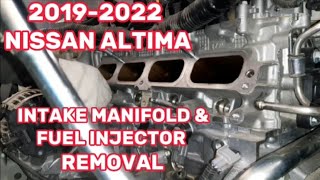
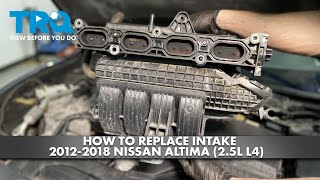

Used OEM Parts in Stock
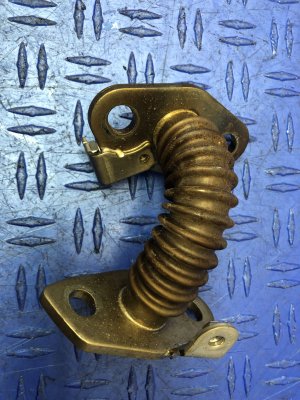


New Aftermarket Parts Available


The information in this article is provided for general reference and educational purposes only. Vehicle specifications, procedures, and part compatibility can vary by production date, trim level, and region. Always consult your vehicle's factory service manual and verify part numbers before purchasing or performing repairs. Safety-critical components such as airbags, seat belts, and braking systems should be installed by a qualified professional.
- Nissan ALTIMA:
- 🎬 Helpful Videos
- 🛍️ Shop This Part
- What's Unique About the 2019-2020 Nissan ALTIMA
- Diagnostic Flowchart
- Symptoms You May Notice
- Most Likely Causes
- Rare But Worth Checking
- Diagnosis Steps
- Parts You'll Likely Need
- Related Codes That Often Appear With This One
- Technical Service Bulletins (TSBs) & Recalls
- Platform-Specific Known Issues
- Scan Tool Commands That Help
- Wiring & Ground Locations
- "I Checked Everything" — The Actual Cause
- OEM Part Supersession History
- Model Year Variations Within This Range
- 🎟️ Get 5% Off